
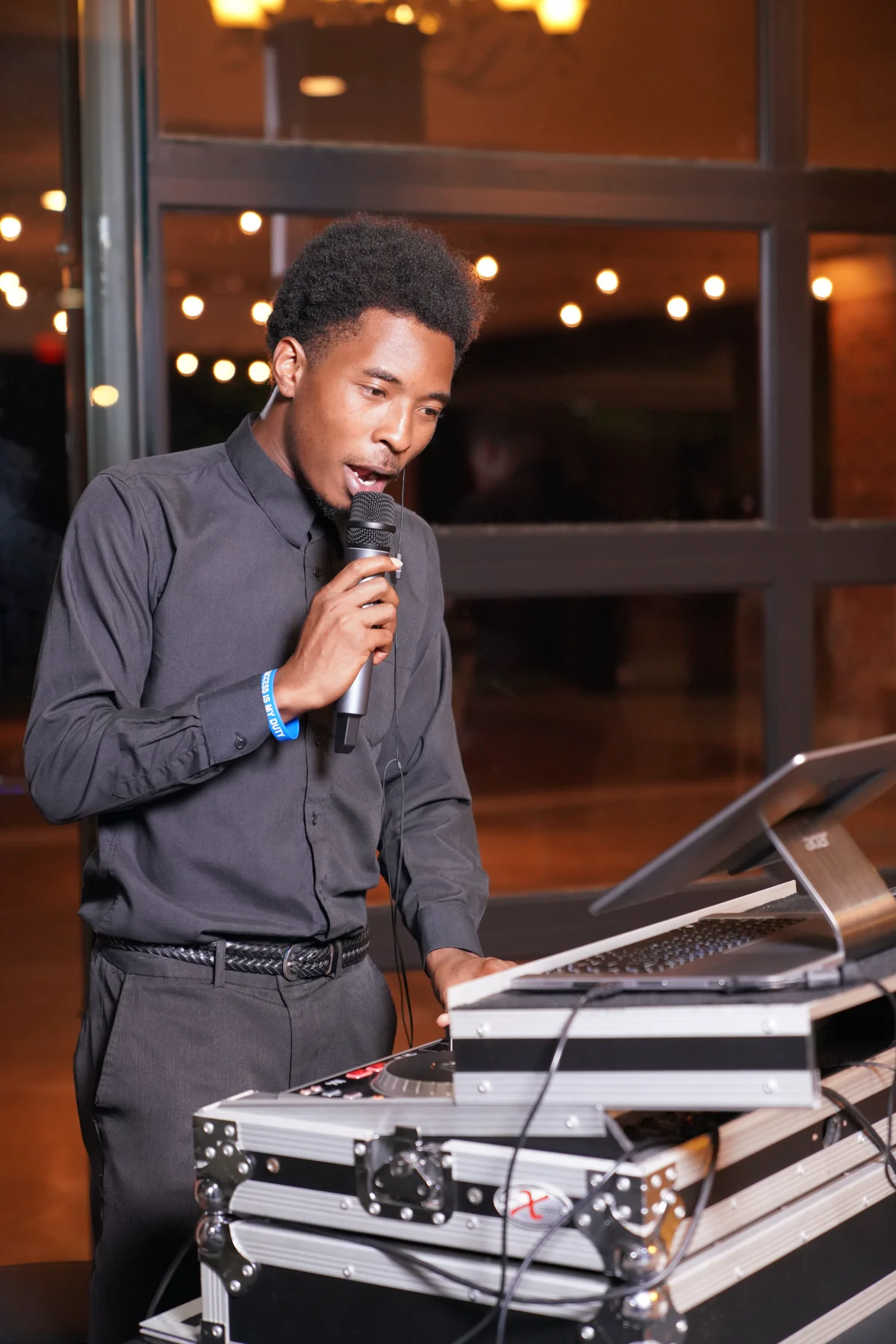
Using Cocktail Hour to Warm Up the Crowd
Here’s a secret most couples never hear: the party doesn’t start when the dance floor opens. It starts an hour earlier. If you use cocktail hour to warm up the crowd, your guests walk into the reception already loose, already smiling, already halfway to dancing. Skip it, and you spend the first thirty minutes of open dancing trying to coax a stiff room off their chairs. The good news? Priming that energy is easy once you know what to play and how to read the room. Let me walk you through it.
In this article
Why cocktail hour sets the whole tone
Think about the last wedding you went to. After the ceremony, everyone floats into a room with drinks and appetizers. That first hour shapes how the entire night feels. If it’s flat and quiet, people settle into “polite guest” mode. If it’s alive, they settle into “let’s have fun” mode. That’s the mood you carry straight to the dance floor.
So cocktail hour isn’t a waiting room. It’s the opening act. It’s your one chance to set the temperature before the real party begins. And the beautiful part is that your guests don’t even know it’s happening. They just feel the room getting warmer, brighter, more comfortable by the minute.
Here’s the angle a lot of planners miss: energy builds in stages. You can’t jump a cold room straight to a packed floor. But if cocktail hour nudges people from “just arrived” to “relaxed and chatting,” the jump to dancing gets tiny. You’ve already done the hard part — you primed the crowd so the dance floor fills faster.
And think about who’s in that room. Half your guests may have just met. Family from both sides, friends from different chapters of your life, coworkers who’ve never crossed paths — all standing in one space. Cocktail hour is where those circles start to blend. The music gives strangers an easy excuse to loosen up and start talking, which is exactly the groundwork a great party needs.
What “warming up” actually means
Let’s define it, because “warm up the crowd” gets thrown around a lot. It doesn’t mean loud. It doesn’t mean dancing during cocktails. It means getting people talking, moving a little, and feeling like they belong in the room.
A warm crowd taps their feet. They laugh louder. They refill their drink and go say hi to someone across the room. That’s the whole goal — low-pressure motion and easy conversation. When people feel that comfortable, they stop guarding themselves, and a relaxed guest is a guest who will dance later.
Cold crowds do the opposite. They stand in tight little clumps with the people they already know. They check their phones. They eye the exits. You’ve seen it, and honestly, the music is usually the reason. Silence or the wrong playlist keeps everyone in their shell.
The music that primes a room
Now the fun part — what to play. The trick during cocktail hour is familiar but not obvious. You want songs people recognize just enough to feel good, without making anyone think it’s time to dance yet. That’s the sweet spot.
Start soft, then climb. Open with mellow, jazzy, or acoustic tracks while people trickle in. As the room fills, slowly raise the tempo. By the last ten minutes of cocktail hour, you should be on upbeat, feel-good songs that have toes tapping. That gentle climb does all the work.
Lean on crowd-pleasers, not deep cuts. Motown, classic soul, easy pop — music that makes people go “oh, I love this song” under their breath. According to The Knot’s cocktail hour music guide, warm and recognizable beats trendy and unfamiliar almost every time at this point in the night.
One more tip: match the music to your crowd, not to a generic list. A Livonia reception with three generations in the room needs a wider mix than a small group of college friends. Read who’s actually standing there and play to them.
Cocktail hour is where you win the dance floor before a single dance song plays. Prime the room right, and the party fills itself.
Getting the volume right
Volume is where a lot of cocktail hours go wrong. Too loud, and people shout over the music, get tired, and start looking for a quiet corner. Too soft, and the room feels dead and awkward.
The right level is simple: guests should be able to talk in a normal voice while still clearly hearing the music. Music should fill the gaps in conversation, not fight it. When you nail that, people feel energized instead of drained, and they carry that energy into the reception.
As the hour goes on, you can creep the volume up a little alongside the tempo. It’s subtle, but the room feels it. Their voices rise to match, the buzz grows, and by the time doors open to the reception, the crowd is already humming. That’s a warm room, ready to move.
Key takeaway: Warming up the crowd means building energy in stages — soft and mellow at first, climbing to upbeat by the end — at a volume that invites talk. Do that, and your guests hit the dance floor already loose instead of stiff.
Common cocktail hour mistakes
Let me save you some headaches. The biggest mistake is treating cocktail hour as background noise — hitting shuffle on a playlist and walking away. A phone can’t feel the room fill up or notice the energy sagging, so it just plays whatever’s next, warm room or cold.
Another common slip is peaking too early. If you play high-energy party songs while only a handful of guests have arrived, you’ve got nowhere to climb. The room feels the same at minute five and minute fifty. Save the build for when the crowd is actually there.
And then there’s the silent cocktail hour — the one where the ceremony music stopped and nothing replaced it. Fifteen minutes of quiet clinking glasses and murmured small talk will chill a room fast. If you want more of these details handled for you, our full wedding day approach covers every transition from ceremony to last dance.
One more slip: forgetting the room’s layout. If the bar’s in one corner and the food’s in another, guests can end up spread thin and quiet. A little planning — where the speakers point, where people naturally gather — keeps the energy pooled instead of scattered. Wedding planners at WeddingWire’s cocktail hour song guide point out that the right music in the right spot is what pulls a room together.
How a DJ builds the energy live
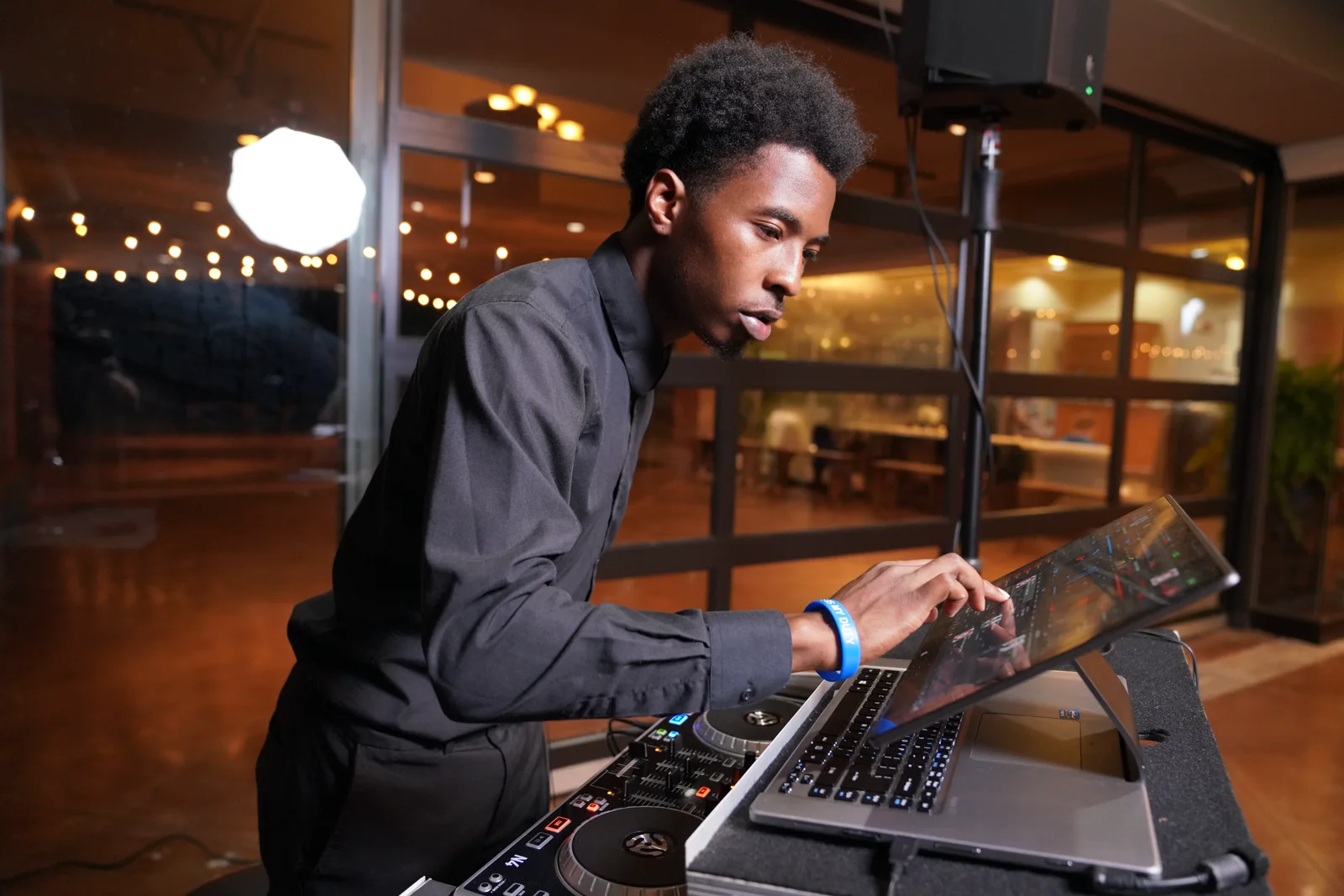
This is where a real person beats a playlist every single time. When I run cocktail hour, I’m watching the room the whole way through. I see who just walked in, I feel when the buzz dips, and I adjust the music on the fly to keep the temperature climbing.
I also use light touches on the mic — a warm welcome, a gentle nudge toward the bar or the appetizers, a quick note about what’s coming next. Nothing heavy. Just enough to make people feel guided and comfortable. When guests know what’s happening, they relax, and relaxed guests warm up fast.
I keep a mental read on a few key spots too — the bar line, the door, the quiet cluster in the corner. If a group looks stranded, I’ll play something that pulls them in. This is the kind of small, live adjustment that a set playlist simply can’t make, and it’s what keeps every guest feeling part of the room instead of stuck on the edge of it.
The payoff comes the moment the reception opens. Because I spent the hour priming the crowd, they don’t need convincing. The first upbeat song hits and people are already up. If you’d like to see how I think about the whole flow of a night, you can meet your DJ and get a feel for my style.
Planning it for your Livonia wedding
So how do you set this up for your own day? Start by talking to your DJ about the goal, not just the songs. Tell them you want cocktail hour to build energy on purpose. A good pro will already have a plan, but saying it out loud gets you on the same page.
Then think about your crowd and your space. A cocktail hour at a Livonia country club spread across a big patio needs a different sound plan than a tight indoor room. Whatever the venue, the same rule holds: start soft, climb slow, and keep the volume friendly to conversation. For a deeper look at how music shapes a whole celebration, this local wedding guide breaks the night down step by step.
At the end of it all, cocktail hour is your quiet head start. Get it right and the dance floor rewards you the moment it opens. If you want a hand building that plan, browse more wedding tips anytime, or reach out and we’ll map your night together. A warm room is a choice — and it’s an easy one to make.