Spotting Energy Dips Before They Happen
Every wedding has a moment where the floor could go either way. One second the party’s roaring, the next a few people drift to their seats — and if nobody catches it, the whole room cools off. Those energy dips are the quiet floor-killers, and the best DJs don’t fix them. They see them coming and steer around them before a single guest sits down. The good news? The warning signs are real and readable. Here’s how I spot a dip before it happens and keep a Clarkston reception moving all night long.
In this article
What an energy dip really is
Let’s define it first. An energy dip is that moment when the room’s momentum starts to slide. The floor isn’t empty yet, but it’s thinning. People are checking phones, drifting toward the bar, or sinking into their chairs. It’s the calm before the party dies.
Here’s the key thing: a dip is a process, not an event. It doesn’t happen all at once. It creeps in over a few songs, which is exactly why it’s beatable. Catch the slide early and one good song brings the room right back. Miss it, and you’re rebuilding from zero.
Most guests never notice a dip while it’s forming — they just feel it later when they say the party “kind of died after dinner.” Your job, and mine, is to feel it in the moment. That’s the whole trick to a night that never stalls.
The early warning signs to watch
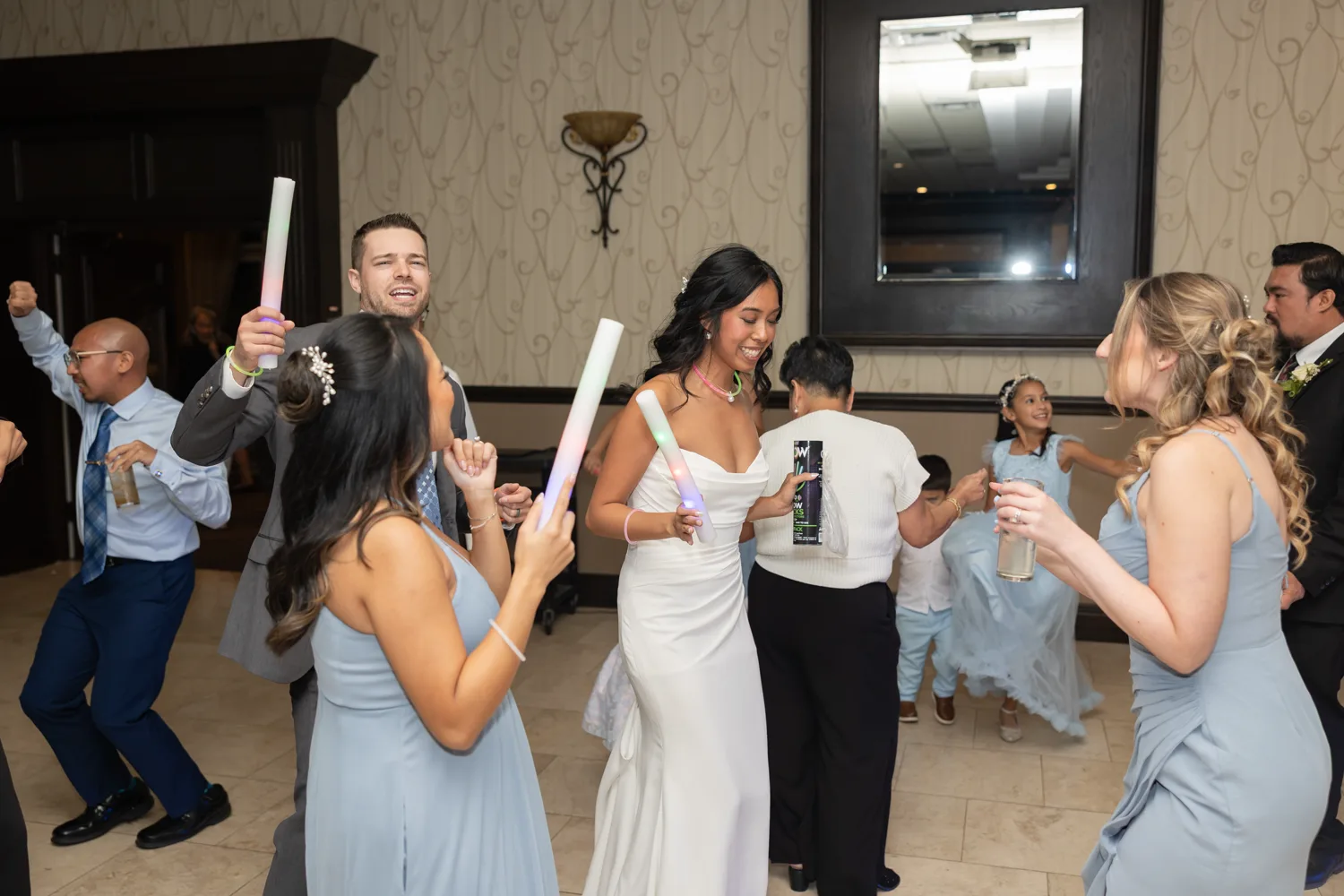
So what does a coming dip actually look like? The signs are physical, and once you know them, you can’t unsee them. The first is the drift — a couple of people wandering off the floor between songs instead of staying put.
Watch the arms and faces, too. When dancers stop raising their arms and start swaying flat-footed, energy’s leaking. When smiles fade to polite nods, the crowd’s attention is slipping. And the big one: a line forming at the bar or bathroom right as a song ends is a red flag that the next track has to land hard.
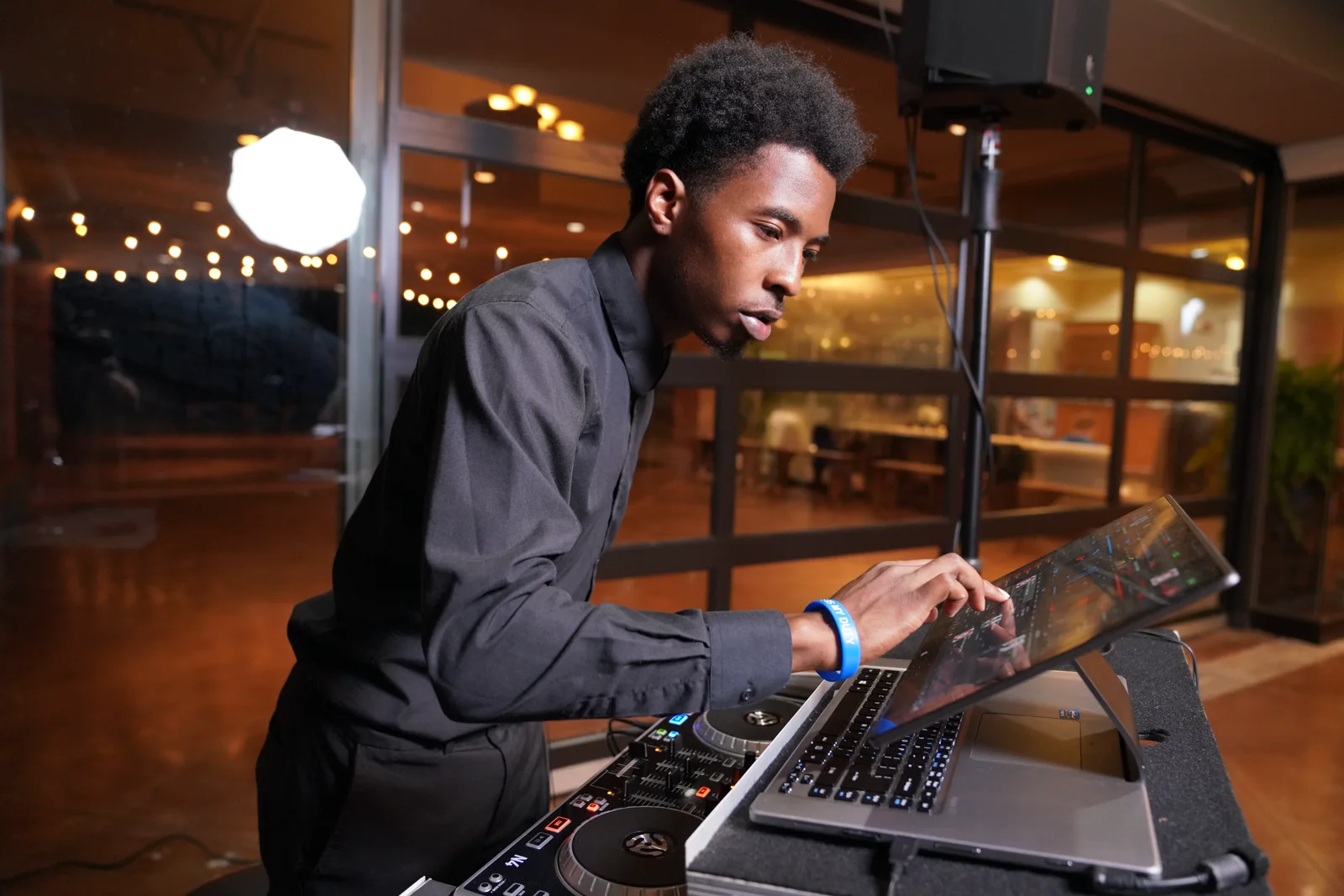
There’s also the clump test. A packed floor spreads out; a cooling floor bunches into a small knot in the middle. When I see that knot shrinking, I know I’ve got maybe one song to turn it around. Reading those signals live is the core of what a good wedding DJ and MC does that a phone never will.
Curious how the pros think about pacing an event? WeddingWire’s reception timeline guide lays out the natural rhythm of a night, which makes it easier to see where dips tend to sneak in.
When dips are most likely
Timing helps you stay ahead. Dips aren’t random — they cluster at predictable spots. Knowing where they hide means you can brace for them before they arrive.
The biggest one is right after dinner. People are full, comfy, and settled into conversation. Getting them up the first time takes a real push. Another common dip comes mid-reception, about an hour into dancing, when the first burst of energy naturally fades and the room needs a fresh spark.
Slow songs are a classic trap, too. A slow dance is lovely, but play two in a row and you’ve handed the room permission to sit. The fix isn’t skipping slow songs — it’s placing them with care and always following with something that rebuilds. The reception-flow pros at The Knot’s timeline guide stress this same peak-and-rest rhythm. You can find more wedding tips on pacing in the blog.
You don’t beat an energy dip by reacting to an empty floor — you beat it by reading a full one and moving before it thins.
The takeaway here is anticipation. If you know the after-dinner slump is coming, you plan your strongest opener for that exact moment. Predictable problems have predictable solutions when you see them coming.
Key takeaway: Energy dips creep in over a few songs and cluster at known spots — after dinner, mid-reception, and after back-to-back slow songs. Watch for the drift, the shrinking clump, and the bar line, then move before anyone sits down.
Preventing a dip before it starts
Prevention beats rescue every time. The best way to handle a dip is to make sure it never fully forms. That starts with pacing — you never want to peak too early and leave the room nowhere to go.
I build the night in waves. A strong run of floor-fillers, a brief breather, then an even bigger run. That rise-and-rest rhythm keeps guests fresh instead of burning them out in the first 30 minutes. A room that’s paced well can dance for hours without crashing.
Song transitions matter just as much. Dead air between tracks is where energy leaks out fast. Smooth, quick transitions keep the floor from ever cooling between songs. When one great track flows right into the next, guests never get that “should I sit down?” window in the first place.
Recovering if one sneaks up
Sometimes a dip slips through anyway — it happens to everyone. The difference is how fast you respond. The moment I feel the room slide, I reach for a guaranteed floor-filler, something the whole crowd knows and loves.
A well-timed classic works wonders here. When energy’s fading, a song like a Motown hit or a huge sing-along chorus can flip the room in seconds. It’s not the time for a deep cut or a risky new track. Recovery mode calls for the sure thing, every single time.
The mic helps too. A quick, warm shout — “Let’s see everyone back out here!” — paired with the right song gives people a friendly nudge. Done well, nobody even realizes the room dipped. They just feel the party surge back. That instinct for the moment is exactly why couples meet your DJ before booking.

Building a dip-proof timeline
A lot of dip prevention happens before the day even starts — in the timeline. A smart schedule stacks the deck in your favor by placing high-energy moments where slumps tend to hit.
Here’s a trick I love: use the formal dances and special moments as reset points. A parent dance or a bouquet toss naturally gathers the crowd, so I place one right where a dip usually lurks. It re-focuses the room, then rolls straight into a big song while everyone’s already gathered. Two problems solved at once.
Local venues matter here too. A sprawling room in the Clarkston area, or an outdoor space near the Mill Pond, can spread guests thin and invite dips. Knowing the room ahead of time lets me plan tighter runs and keep the crowd pulled together. A good timeline is your first line of defense.
Why a live DJ beats a playlist here
This is where the whole thing comes together. A pre-made playlist can’t see the room. It plays the next song no matter what’s happening on the floor. So when a dip starts, a playlist just sails right into it — and the party pays the price.
A live DJ does the opposite. I’m watching every face, every drift, every shrinking clump, and adjusting in real time. The song I planned might get swapped on the spot for the one the room needs right now. That flexibility is the single biggest reason a floor stays full.
At the end of the day, spotting energy dips is a skill you build over hundreds of nights. It’s reading people, not just picking songs. If you want a partner who never takes their eyes off the floor, come chat with me and we’ll plan a Clarkston reception that rises and never stalls. A great party isn’t luck — it’s someone paying close attention all night long.