How to Make Sure Your Vows Are Heard
You wrote your vows. You practiced them in the car, in the shower, maybe in tears. Now here’s the part nobody warns you about: if the sound isn’t set up right, half your guests won’t hear a word. Making sure your vows are heard comes down to microphones, placement, and a person who knows what they’re doing. The good news? It’s simple to get right once you know the moves. Here’s exactly how to make sure every promise you make reaches the very back row at your Shelby Township ceremony.
In this article
Why guests miss the vows
Let’s name the problem first. At most weddings, the couple speaks softly — because vows are emotional, and your voice naturally drops when you’re moved. Meanwhile, your guests are seated 10, 20, even 40 feet away. Add a little breeze or an air conditioner humming, and your words simply don’t travel.
Here’s the frustrating part: it’s the most important thing you’ll say all day, and it’s the moment most likely to get lost. I’ve watched grandmothers lean forward straining to catch a single sentence. That should never happen. With the right setup, it never does.
The fix isn’t complicated. You need a microphone close to your mouths, a speaker aimed at your guests, and someone riding the volume so it’s clear but never harsh. Nail those three things and your vows carry to every seat without you having to shout.
The right microphone for the job
Not all mics are equal for a ceremony. A handheld mic works, but who wants to hold one while holding hands and holding back tears? So most couples reach for something hands-free instead.
Lavalier (lapel) mics are my go-to. They clip discreetly to a jacket or dress and sit close to the mouth, so they pick up soft speech beautifully. They’re tiny, they hide well in photos, and they let you keep both hands free for the moment that matters.
A mic on a stand is the other solid option, placed just off to the side. It’s less invisible but rock-solid reliable, and there’s nothing to clip on or hide. For a smaller ceremony, it’s more than enough.
Whichever you choose, the goal is the same: get the microphone close to the source. Distance is the enemy of clear sound. The closer the mic, the fuller and warmer your voice comes through the speakers.
Where to place the mic
Placement makes or breaks it. Even a great mic sounds thin if it’s in the wrong spot. So let’s get it right.
For a lavalier, clip it high on the chest, about six to eight inches below the chin, and point it up toward the mouth. On a groom, the lapel or shirt placket is perfect. On a bride, a dress neckline or a hidden clip works. The key is keeping it clear of jewelry, buttons, or fabric that rustles — those little scratches get loud on a mic.
If you’re using a stand mic, place it at about mouth height and slightly to one side, so it captures both of you without blocking your faces in photos. A good sound tech will do a quick check before guests arrive, walk to the back row, and confirm every word lands. That thirty-second test is worth its weight in gold. According to WeddingWire’s ceremony planning advice, ceremony audio is one of the most common things couples wish they’d taken more seriously.
Your vows are the whole reason everyone drove out to celebrate you. Make sure the sound honors that — every seat, every word.
Key takeaway: Clear vows come from three things: a close hands-free mic, smart placement about six to eight inches from the mouth, and a person riding the volume live. Get those right and the back row hears you as well as the front.
Outdoor ceremonies and wind
Getting married outside? Beautiful choice — and a bigger sound challenge. Open air swallows sound, and wind turns a lavalier into a roaring mess if it’s not protected. Here’s what a lot of couples miss until it’s too late: an outdoor ceremony needs more gear, not less.
The first fix is a windscreen, a little foam or fur cover over the mic that blocks gusts. It’s cheap, it’s small, and it saves your audio from that awful rumble. The second fix is more speaker coverage. A lawn full of chairs needs sound aimed across the whole seating area, not just the first few rows.
Around Shelby Township, plenty of couples marry outdoors near the Clinton River or in a garden setting, and those spots are gorgeous for it. Just plan the sound to match the space. A phone and a Bluetooth speaker will get eaten alive by open air — a real ceremony rig won’t. This is exactly the kind of thing our full ceremony sound service is built to handle from the first mic check.
Miking your officiant too
Here’s a step couples forget: your officiant needs a mic too. They’re doing a lot of the talking, and if only the couple is miked, half the ceremony still gets lost. So mic all three of you when you can.
The easiest setup is one lavalier on the officiant plus a shared mic that picks up you and your partner during the vows and the “I do.” Some sound techs use a single mic on the officiant that’s positioned to catch everyone standing close together. Either way works — the point is that no speaking part of the ceremony goes unheard.
One more tip: give your officiant a heads-up that they’re being amplified. It helps them slow down, project a little, and pause at the right moments. A calm, clear officiant plus good sound makes the whole ceremony feel polished. For a broader checklist of ceremony details worth nailing down, The Knot’s ceremony planning guide is a handy reference. If you want to see how I coordinate all of this on the day, you can get to know your DJ and how I run a ceremony start to finish.
Backups so nothing fails
Technology hiccups. A battery dies, a clip slips, a mic cuts out. A pro plans for all of it so you never notice. This is the quiet difference between someone who does sound for a living and a well-meaning friend with a speaker.
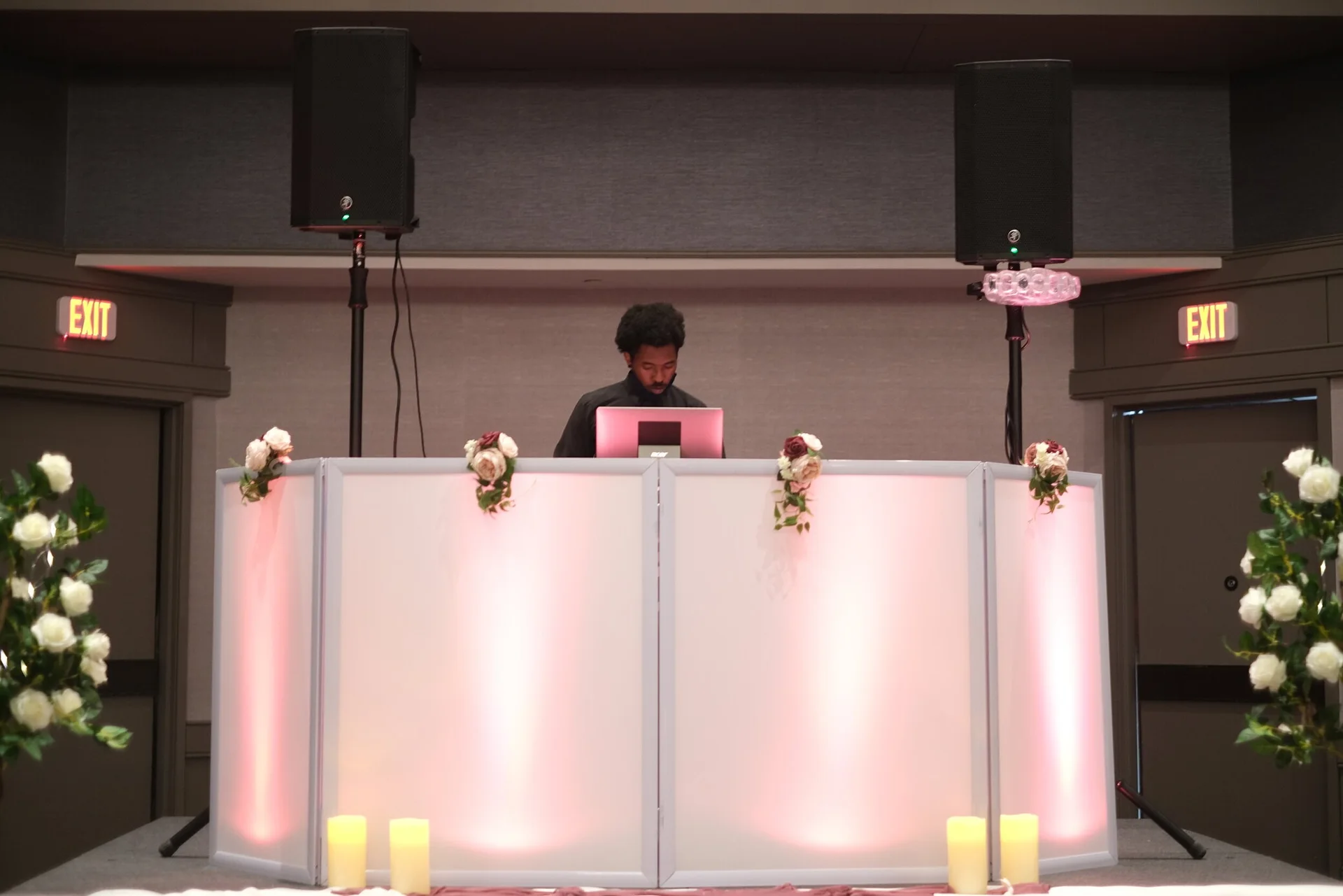
When I run a ceremony, I carry spare batteries, a backup mic, and a second set of everything critical. I test each piece before guests arrive, not during the vows. And I keep the ceremony audio on a separate channel from the music, so switching between them is instant and clean.
Redundancy sounds boring, but it’s the whole game on a day you can’t repeat. You get exactly one shot at your vows. A little preparation behind the scenes means you’ll never have to hope the sound holds — you’ll know it will.
Planning your Shelby Township setup
So how do you bring this all together? Start by telling your DJ or sound tech where you’re getting married and roughly how many guests to expect. Indoor or outdoor, 40 people or 200 — that changes the gear, and knowing early means no surprises.
Next, decide who needs a mic: you, your partner, and your officiant at a minimum. Then trust the pro to handle placement, levels, and backups. Whether you’re marrying at a banquet hall off Van Dyke, a church in the township, or an outdoor spot near the river, the same plan applies: close mics, full speaker coverage, and someone riding the sound live.
That’s really all it takes to make sure every promise reaches every guest. For a full walkthrough of your song and sound moments, our Shelby Township wedding guide covers the whole timeline, and you can always browse more ceremony tips for the finer details. Your words deserve to be heard — let’s make sure they are.