First Dance Timing in Your Reception
Here’s a question I get at almost every planning meeting: when should we do our first dance? It sounds small, but first dance timing quietly shapes the mood of your whole reception. Dance right after your grand entrance and you ride a wave of energy. Wait until after dinner and you build a warmer, calmer moment. Neither one is wrong — they just create different nights. I’m Tevin, and after hundreds of Michigan weddings, I’ll walk you through both so you can pick what fits you and your Clarkston crowd.
In this article
Why first dance timing matters
Let’s start with why this even matters. Your first dance is more than a photo op — it’s a mood-setter. Wherever you place it, it tells the room what kind of night this is going to be. That’s a lot of power for one song.
Good first dance timing uses that power on purpose. Put it early and it launches the party. Put it later and it becomes a tender centerpiece. The mistake couples make is not choosing at all — letting the timeline just happen instead of deciding what feeling they want.
The good news is there’s no single right answer. Both of the popular options work beautifully; they just create a different rhythm. Once you understand what each one does, the choice gets easy.
Dancing right after your entrance
The first popular option is to go straight from your grand entrance into your first dance. You walk in, the room’s already cheering, and you flow right into your song while the energy is peaking. It’s a strong, cinematic open.
The big win here is momentum. You never let that entrance excitement cool off — you spend it. The room is on its feet, everyone’s watching, and your first dance feels like the natural next beat. It also gets the “nervous” moment out of the way early, so you can relax and enjoy dinner.
There’s a practical perk too. Your guests just sat down, so you have their full attention with no competition. According to The Knot’s reception timeline guide, opening with the first dance is one of the most popular modern formats for exactly this reason — it captures the room while everyone’s fresh.
Waiting until after dinner
The second option is to hold your first dance until after dinner, right as you open the floor. Everyone’s fed, relaxed, and ready to move — and your dance becomes the signal that the party’s officially on.
The strength here is the bridge. Your first dance flows straight into open dancing, so there’s no awkward gap between the formal part and the fun part. You dance, you wave the room in, and suddenly the floor is full. It’s a clean, natural handoff into the heart of the night.
This timing also gives late-arriving guests a chance to be there for it, and it lets you settle your nerves over dinner first. Some couples simply feel more themselves after a plate of food and a glass of wine. If that’s you, waiting can make the moment feel easier and more genuine.
There’s no wrong time for a first dance — there’s only the feeling you want. Early launches the party; later becomes its warm centerpiece.
Notice how both paths solve a different problem? Early spends your peak energy; later builds a bridge into dancing. Your job is just to pick which feeling matches you.
Key takeaway: Dance right after your entrance to ride high energy and get nerves out early, or wait until after dinner to bridge cleanly into open dancing. Both work — choose the one that matches the mood you want and the kind of crowd you have.
How to choose between the two
So how do you actually decide? Start with your personality. If you two love being the center of a big, loud moment, dancing right after your entrance will feel amazing. If you’d rather ease in and warm up first, after dinner is your friend.
Next, think about your crowd. A high-energy group that came to party rewards the early, cinematic open. A more laid-back or older crowd often does better with the after-dinner timing, since the dance naturally rolls them onto the floor when they’re ready. Here’s what a lot of couples miss: you can also read your own nerves. I had a Clarkston couple sure they wanted the big early moment, until they admitted they’d be shaking during the entrance. We moved it to after dinner, and their dance was calm, warm, and exactly right. If you want help mapping the whole night, my wedding DJ page breaks down the full timeline.
One more factor: your other formalities. If you’re doing parent dances, those usually pair nicely right after the first dance, wherever you place it. Grouping them keeps the flow tight instead of scattering slow songs across the night.
How long your first dance should run
No matter when you dance, keep it short. A full song can run four or five minutes, and that’s a long time to sway while a room watches. I usually recommend trimming to about two minutes, or two and a half at most.
A good DJ can edit your song cleanly so it fades right after the best chorus. You keep the emotional peak and skip the extra verses that make everyone shuffle their feet. Nobody’s ever wished a first dance were longer. Planners at WeddingWire say the same thing — a tight edit almost always plays better than the full radio cut.
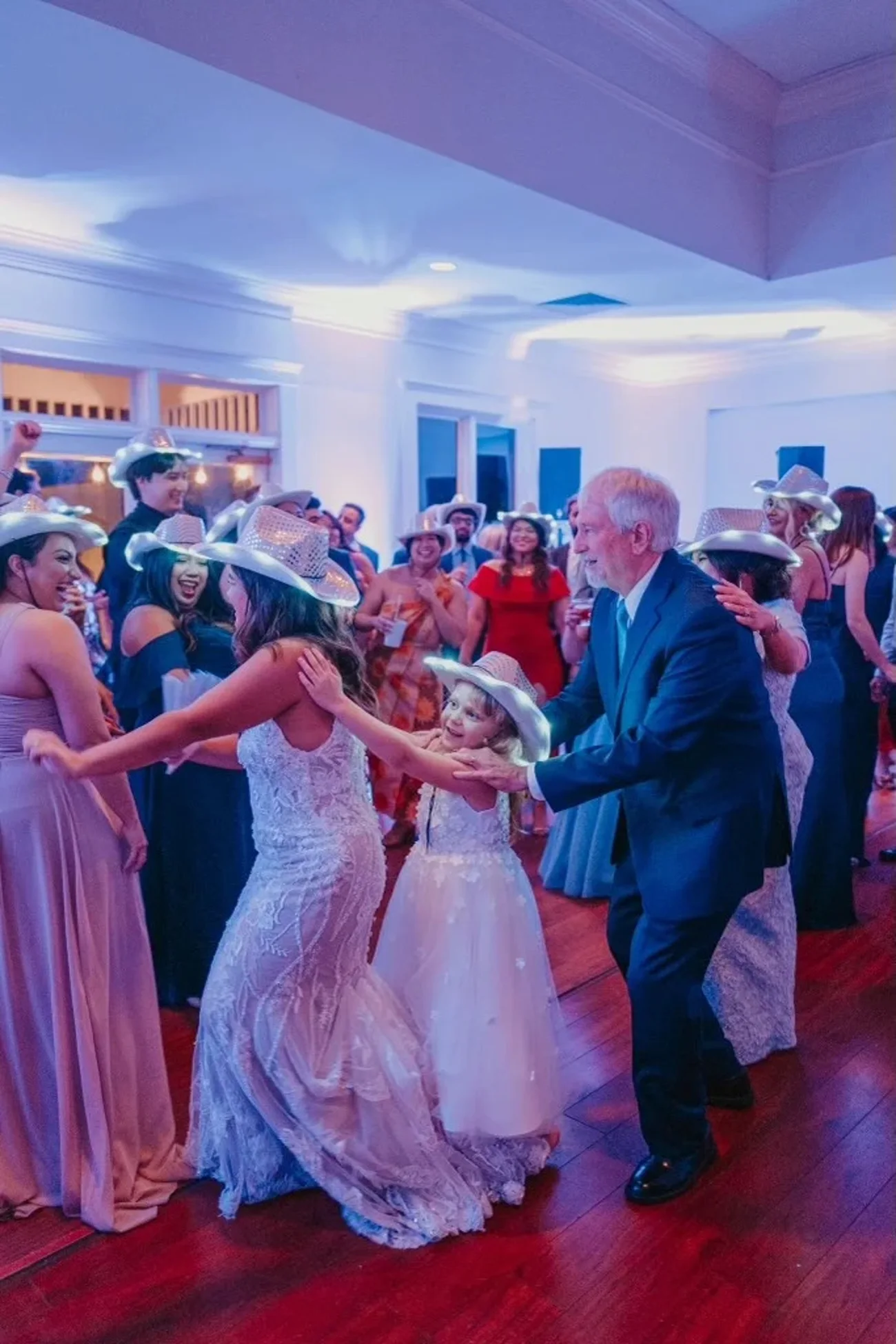
If dancing the whole time makes you nervous, there’s a fun trick. Start slow, then have me switch to an upbeat song halfway and wave the wedding party or guests in to join you. It turns a spotlight into a party and takes the pressure off — a great option no matter which timing you pick.
How your DJ cues the moment
This is where the timing actually comes to life. A first dance isn’t just a song on a list — it’s a cue, a light change, and a mic moment all landing together. That’s a live job.
When I run your first dance, I set the room before the music even starts. Lights dim, uplighting shifts warm, guests get a gentle heads-up to gather round. Then the song comes in clean, edited to your length, and ends on a high note that hands off smoothly into whatever comes next — dinner or open dancing.
I also stay flexible on the day. If the entrance runs late or dinner’s behind, I adjust the cue so the moment still lands right. A printed timeline is a great plan, but a real reception moves, and I move with it so your dance never feels rushed or stalled.
Planning it for your Clarkston wedding
Every venue shapes the moment a little, and Clarkston has some lovely ones — from lakeside spaces near Deer Lake to rustic barns and elegant halls around town. A room with a big open floor invites the early, cinematic dance, while a cozier space can make the after-dinner version feel wonderfully intimate. I scope the room ahead so the lighting and sound fit wherever you celebrate.
My process is simple. We talk through your personality and your crowd, pick the timing that fits, and I cue the whole moment live on the day. If you’d like more planning help, browse more wedding tips anytime, or see how I run a full reception in my Clarkston wedding guide.
Bottom line: there’s no wrong time for your first dance — only the feeling you want to create. Decide on purpose and it’ll be one of the best moments of the night. If you’d like a hand fitting it into your timeline, you can meet your DJ and we’ll build a plan around you.