Cake Cutting Timing for Smooth Flow
Good cake cutting timing is one of those small choices that quietly makes or breaks your reception. Cut too early and you interrupt dinner. Cut too late and guests take it as their cue to grab their cake and head home — right when you want the floor packed. But get the timing right and the cake becomes a spark that pulls people up and keeps the party rolling. Here’s exactly when to cut so your guests stay and the dancing keeps going.
In this article
Why cake timing matters so much
The cake cutting isn’t just a photo op. To your guests, it’s a signal. In a lot of people’s minds, cake means the night is winding down, so once they’ve had a slice, they feel free to slip out.
That’s why cake cutting timing matters more than the cake flavor ever will. Place it wrong and you can empty a room in twenty minutes. Place it right and you use that same signal to your advantage — as a natural break that flows straight into open dancing.
The good news is this is fully in your control. With a smart timeline and a DJ steering the room, the cake becomes a launchpad instead of an exit sign. Let’s look at how to nail it.
The problem with cutting too early
Some couples cut the cake right after dinner, thinking they’ll get it out of the way. The trouble is, the room is still in “seated and eating” mode. People are full, a little sleepy, and not ready to move yet.
Cut here and the cake lands with a soft thud. Worse, you’ve spent your big sweet moment before the energy has had a chance to climb. Now you’re trying to build a dance floor from a room that just watched dessert happen.
There’s a fix, though. Instead of rushing the cake out, let dinner settle and the energy start to rise first. A little patience here pays off big when it’s time to dance. Timing beats hurrying every time.
The problem with cutting too late
Now the opposite mistake. Some couples save the cake for the very end, and that backfires too. Once the dance floor is roaring, stopping everything to cut cake yanks the energy out of the room.
Here’s what a lot of couples miss: when you interrupt a packed floor, you don’t always get it back. People sit, they cool off, and a chunk of them decide it’s a good time to leave. You’ve turned your peak moment into a wind-down by accident.
So very late is risky. If you must cut near the end, do it quickly and slide right back into a floor-filler with no long pause. But there’s a smarter window that dodges the whole problem, and that’s where I like to land it. The planning team at Zola’s reception timeline guide points to the same middle-of-the-night sweet spot.
The sweet spot most couples miss
So when should you cut? My favorite window is right after dinner winds down and just before open dancing kicks off. Usually that’s about 30 to 45 minutes after the meal, once the first dances and any toasts are done.
Why here? Because it turns the cake into a transition. Guests are done eating, the formal moments are wrapped, and the room is ready to shift gears. You cut the cake, everyone gets a sweet bite, and then — boom — the music jumps and the floor opens.
This spot also solves the “cake means leaving” problem. When cake flows straight into dancing, nobody reads it as the end. They read it as the party getting started. That single move keeps a room full for hours longer. If you want a full sample run-of-show to build from, The Knot’s reception timeline guide lays out where every moment fits. For more ways to build a great timeline, browse more wedding tips anytime.
The cake isn’t the end of your night — it’s the doorway into the best part. Time it right and it pulls people onto the floor instead of out the door.
Using the cake as a dance-floor bridge
Here’s the move I love most. Treat the cake cutting as the bridge into open dancing, not a standalone event. The two should flow together like one moment.
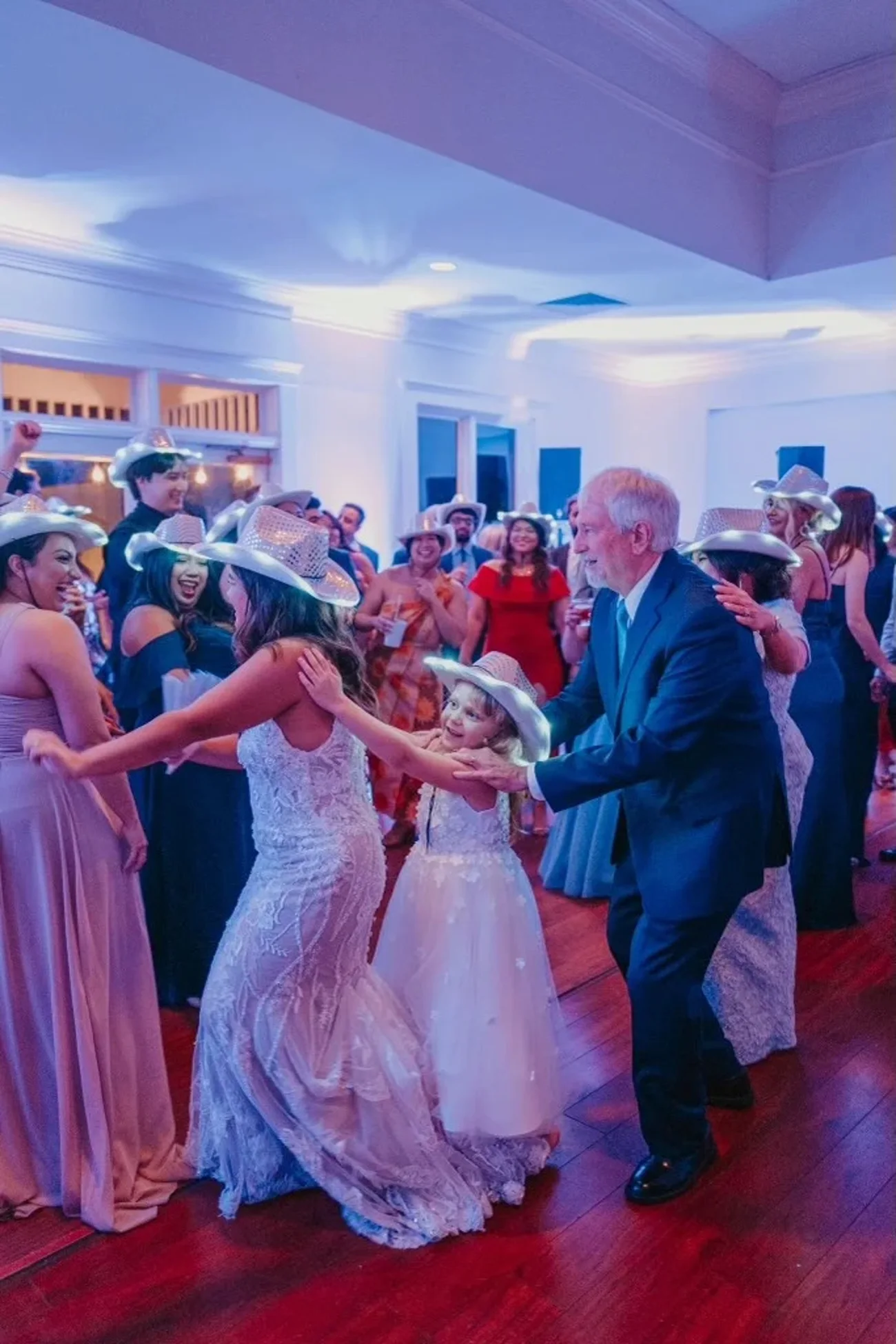
In practice, that looks like this: I gather the room for the cutting with an upbeat song, keep it quick and fun, and the very second the knife’s down, I drop a big floor-filler. No dead air, no “okay, now what?” The sweet moment rolls straight into the first wave of dancing.
Lighting can help here, too. As the cake wraps, the room’s uplighting can shift from a soft dinner glow to full dance-floor color. The change in the room tells everyone, without a word, that it’s time to get up. Sound and light working together make the shift feel effortless.
Key takeaway: Cut the cake about 30 to 45 minutes after dinner, once first dances and toasts are done and just before open dancing. This turns the cake into a bridge onto the floor instead of a cue to leave — and keeps your room full for hours.
How a DJ keeps the flow tight
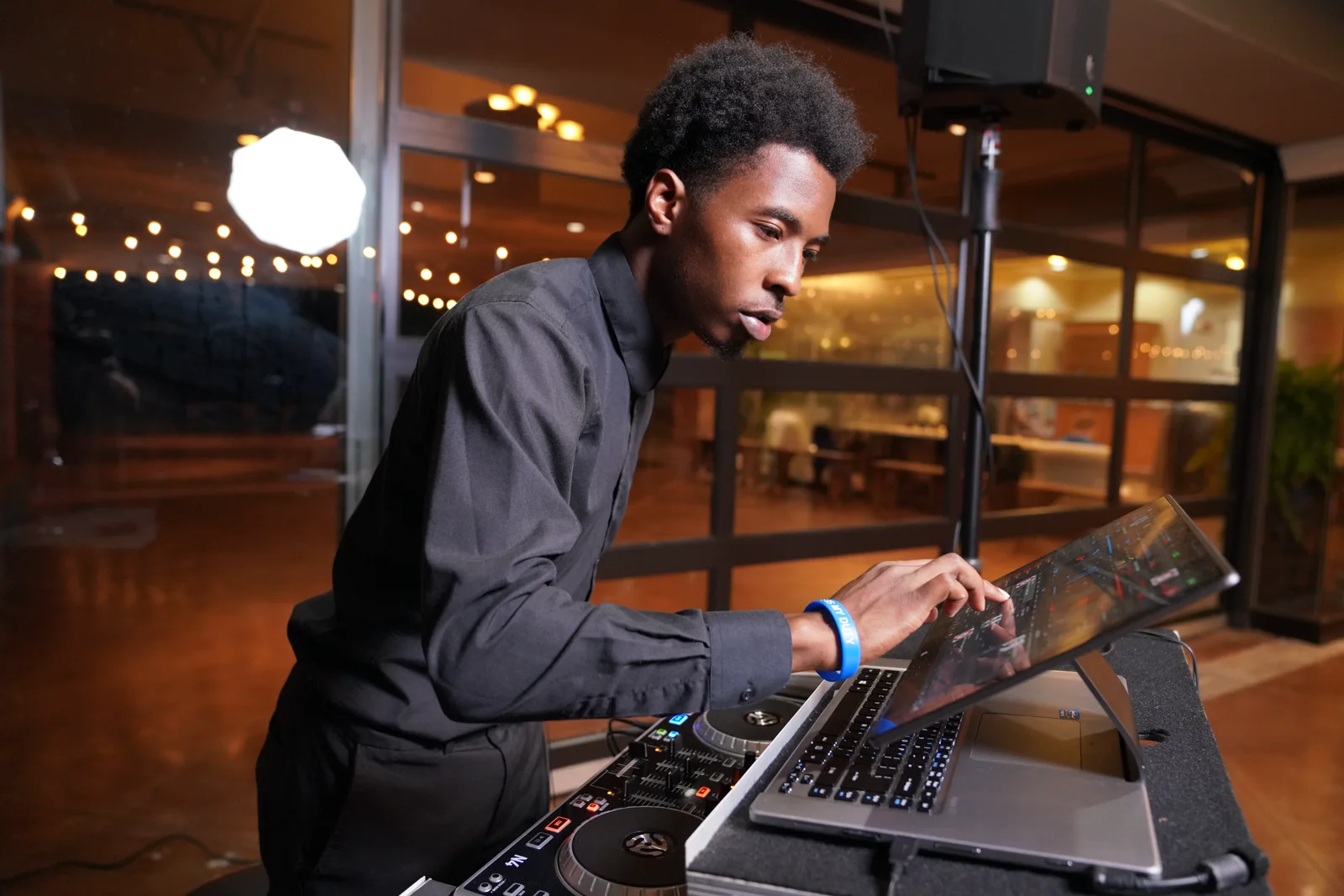
This is where a pro really earns their spot. The cake cutting is a hinge moment in your timeline, and a good DJ makes sure it swings smoothly. I coordinate with your photographer and caterer so everyone’s ready before I gather the room — no awkward waiting while someone finds the cake knife.
I also read the room live. If the energy’s climbing fast, I might nudge the cake a few minutes earlier to ride the wave. If folks are still finishing dinner, I hold a beat. A live DJ can feel that timing in a way a printed schedule never will.
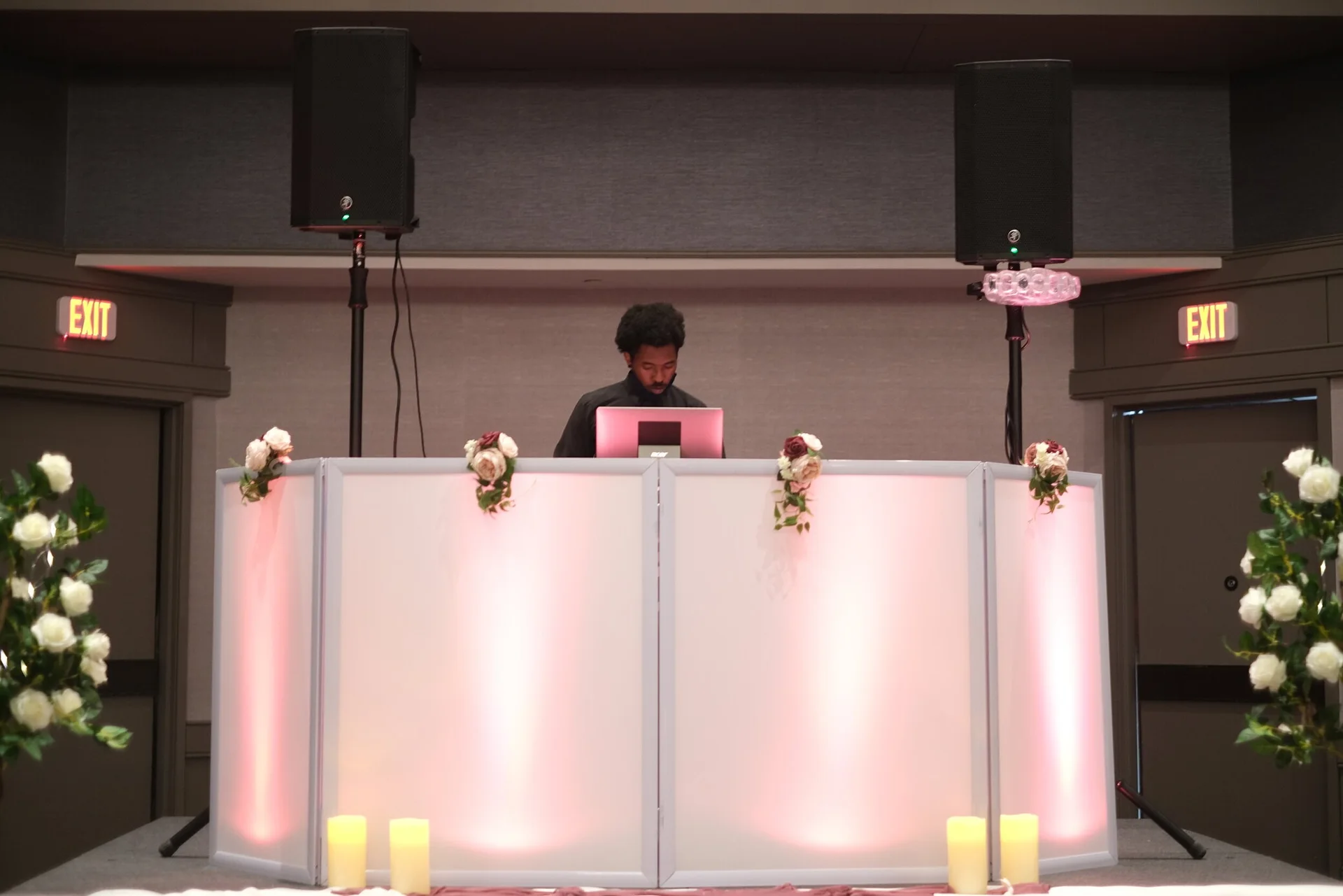
And I handle the hand-off. The transition from cake to dancing is all about that first song and zero dead air. Getting that right is a core part of what I do on my wedding DJ service page — keeping every piece of the night connected so the party never stalls.
Planning it for your Rochester Hills wedding
So how do you set this up? Build your timeline so the cake lands after dinner and the formal dances, right before open dancing. Give your DJ, photographer, and caterer that window so everyone’s on the same page. Then let your DJ handle the live timing on the day.
Whether you’re celebrating near downtown Rochester, out toward Tienken Road, or at a hall along the Clinton River, the same rule holds: cut in the sweet spot, keep it quick, and roll straight into dancing. That one choice keeps your guests around and your floor packed.
At the end of it, the cake is a hinge, not a finish line. Swing it right and it opens the door to the best hours of your reception. If you’d like a hand building your timeline, you can meet your DJ and we’ll map it together. For a fuller look at your city, my Rochester Hills wedding guide covers the whole reception start to finish.