Why Your Timeline Needs Buffer Time
Here’s a secret most couples don’t hear until it’s too late: the smoothest weddings aren’t the ones packed with the most events. They’re the ones with a little buffer time tucked between the big moments. Those small padding minutes — five here, ten there — are what keep a night calm when the photographer runs long or Grandma needs an extra minute to find her seat. Without them, one small delay knocks over everything after it, like dominoes. With them, nobody in the room ever knows a thing slipped. Let me show you exactly where to add that padding so your day flows the way you pictured it.
In this article
What buffer time actually is
Let’s start simple. Buffer time is just breathing room built right into your schedule on purpose. Instead of stacking your grand entrance at 6:00 and first dance at 6:05, you leave a gap. That gap is a cushion, not wasted time.
Think of it like the space between cars on the highway. When traffic’s flowing, you barely notice it. But the second someone taps the brakes, that little bit of room is the only reason you don’t rear-end the car ahead. Your wedding day works the exact same way. Padding minutes give you room to react when something runs a touch behind — and something always does.
The best part? Nobody sees the buffer. Your guests never think, “Wow, they scheduled ten empty minutes here.” They just feel a night that never rushed and never dragged. That easy, relaxed pace is the whole point, and it’s built on purpose long before the day arrives.
Why tight timelines fall apart
Now here’s the trap. When couples plan a wedding, more feels better. More toasts, more dances, more special moments crammed into every hour. It comes from a good place — you want to make the most of your night. But a jam-packed timeline is fragile.
Picture this. Your salad plates take twelve minutes longer to clear than the caterer guessed. No big deal on its own. Except now your toasts start late, which pushes the cake cutting late, which shoves your open dancing back a full half hour. One small hiccup near the start snowballs into a giant one by the end. That’s how a great plan turns stressful.
With buffer time, that same twelve-minute slip just gets quietly absorbed. The salad ran long? Fine — we had a cushion there, and now we’re right back on schedule. As The Knot’s reception timeline guide points out, the couples who feel calm on their wedding day are almost always the ones who left themselves a little wiggle room.
Where to add the padding minutes
So where does the cushion go? Not everywhere — a few key spots do most of the work. These are the moments that run long the most often, so a little padding here pays off big.
After the ceremony. Photos always take longer than couples expect, especially family group shots. Add fifteen minutes here and you’ll thank yourself.
Before your grand entrance. Give your wedding party a beat to line up and catch their breath. Rushing this makes the intro feel frantic instead of fun.
Between dinner and dancing. This is the big one. Plates need to clear, toasts run long, and you want the room ready to move before the first floor-filler drops. Ten minutes of cushion here saves the whole back half of your night.
The couples who feel calm on their wedding day aren’t the ones who planned less — they’re the ones who left a little room to breathe between the big moments.
See the theme? You add buffer time right before your biggest moments, not after. That way you arrive at each highlight relaxed and ready, instead of sprinting to catch up. It’s a small shift in thinking that changes how the whole night feels.
Key takeaway: Buffer time is padding you add on purpose before the biggest moments — after ceremony photos, before your entrance, and between dinner and dancing. It’s invisible to guests but it’s the reason your night never feels rushed or stressed.
How much buffer time you really need
Here’s a fair question: how much is enough? You don’t want so much padding that the party feels slow. The goal is a cushion, not a nap.
My rule of thumb is simple. Add ten to fifteen minutes of buffer around each of the three big transition points I mentioned. That usually adds up to about 30 to 45 minutes of total cushion across a five-hour reception. It sounds like a lot on paper, but it disappears into the flow of the night.
Here’s what a lot of couples miss: you can always fill a little extra time, but you can never make more of it. If you’re running ahead, I’ll stretch a dance set or slide in a fun group song. If you’re running behind, that same cushion is what keeps us on track. One direction is easy to fix. The other one is a scramble. So when in doubt, pad a bit more — extra room never hurt a single wedding.
Buffer time keeps your vendors in sync
Your wedding isn’t just you and your guests. It’s a small team — photographer, caterer, planner, and DJ — all working off the same timeline. When that timeline has no give, one vendor’s delay becomes everyone’s problem.
Say your photographer wants a few golden-hour shots outside. Beautiful idea. But if there’s zero buffer, those ten minutes outside mean your DJ is stalling an empty floor while the caterer sits on plated food. Nobody’s happy. With a cushion built in, that same photo run happens smoothly and everyone stays on the same page.
Good vendors actually plan for this. A solid wedding DJ and MC will ask about your timeline weeks ahead and flag the spots that look too tight. We do this because we’ve watched what happens without padding, and we’d much rather build the cushion in now than improvise later. When your whole team shares one realistic timeline, the day runs like a well-rehearsed show.
What your DJ does when the clock slips
Even with great planning, something will run long. That’s not a failure — it’s a wedding. The real question is what happens next, and that’s where a live DJ earns their spot.
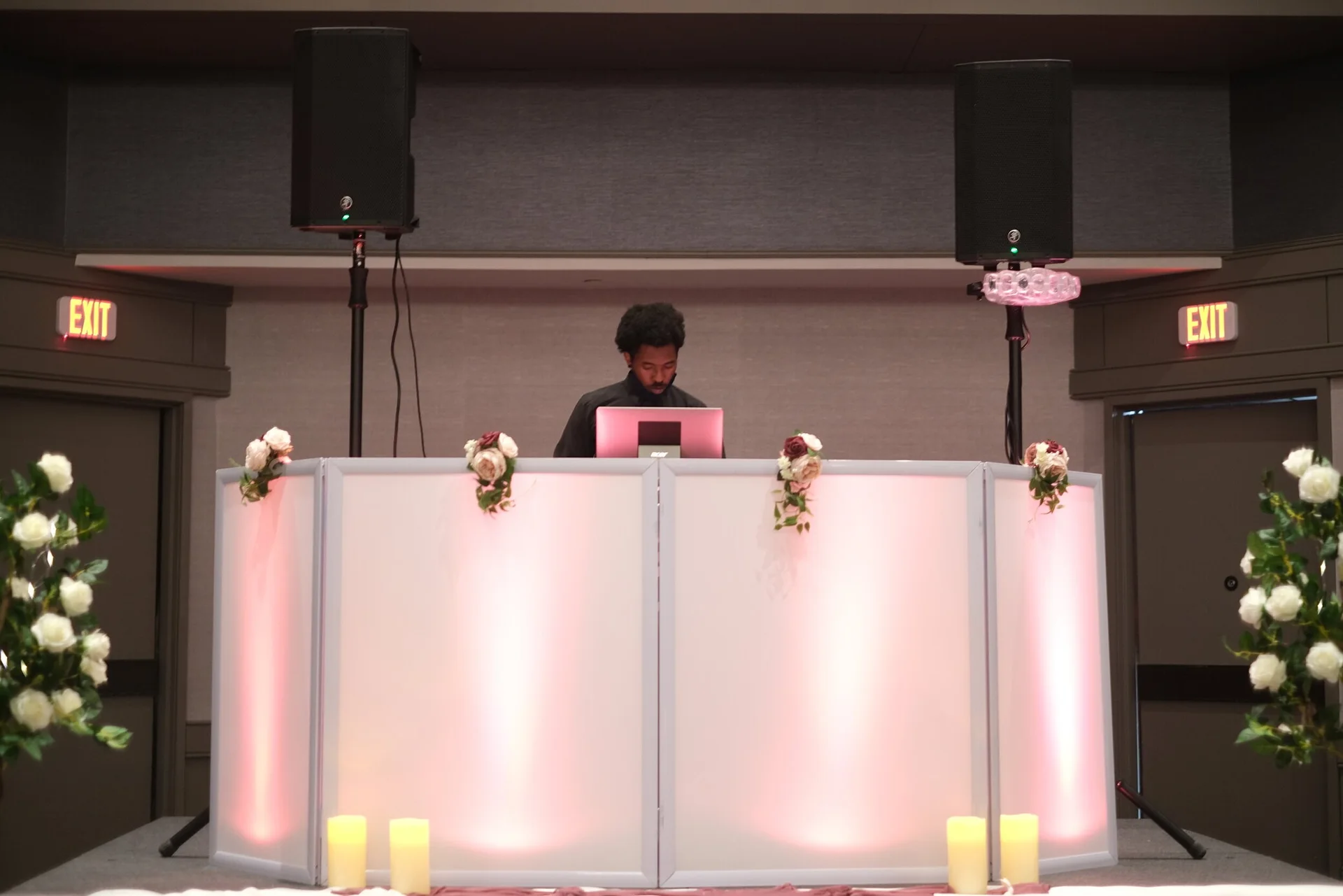
When the clock slips, I read the room and adjust in real time. If dinner’s running late, I’ll keep the dinner playlist rolling and hold the announcements instead of forcing a moment before people are ready. If we’re ahead of schedule, I’ll extend a set so the floor never cools off. A phone on a playlist can’t do that. It just plays the next song whether the room’s ready or not.
That flexibility is exactly what buffer time makes possible. The cushion gives me somewhere to absorb the delay, and the live read tells me how to use it. Together, they’re the difference between a night that feels effortless and one that feels like everyone’s chasing the schedule. According to WeddingWire’s timeline advice, having someone who can adapt on the fly is worth more than any perfectly typed schedule.
Building it into your Ann Arbor wedding
So how do you put this to work for your own day? Start by writing your timeline the way you dream it — every moment, in order. Then go back and add your padding minutes at the three key spots before you lock anything in.
Whether you’re celebrating downtown near Kerrytown, out by the Huron River, or at a barn venue past the edge of Washtenaw County, the same rule holds. Real weddings run a little behind, and a little cushion is what keeps that from ever showing. Build the buffer first, and the rest of the plan gets easier. For more planning help across every part of the day, browse the rest of our wedding tips whenever you like — and if you want to see how the whole night comes together, my Ann Arbor wedding guide walks through it start to finish.
At the end of it all, buffer time isn’t about the schedule. It’s about you actually being present — laughing, dancing, hugging people — instead of glancing at your watch. That’s the wedding you’ll remember. If you’d like a hand building a timeline that breathes, you can meet your DJ and we’ll map the whole night together, cushion and all.