

What Power Your DJ Needs From the Venue
Nothing kills a packed dance floor faster than the music cutting out. One popped breaker, and the room goes dark and silent right in the middle of everyone’s favorite song. The fix is simple, and it happens weeks before the wedding: confirming the venue power your DJ needs. It’s not a glamorous topic, but it’s one of the easiest ways to guarantee a smooth night. Here’s exactly which circuits and outlets to check for your Troy reception, in plain English, so nothing ever goes dark.
In this article
Why power is the detail nobody checks
Couples plan the flowers, the food, and the playlist down to the last song. But power? It almost never comes up until something trips. That’s a shame, because a five-minute conversation early on prevents the single most jarring problem a reception can have.
Confirming venue power is the kind of small, boring task that quietly saves the night. When the circuits are sorted, you never think about them again. When they’re not, you get a dead PA system right as the toasts begin. So let’s give it the five minutes it deserves.
The good news is you don’t need to be an electrician. You just need to know what to ask and who to ask. Let’s break it down.
It helps to picture the worst case, just for a second. A blown breaker doesn’t only stop the song — it kills the microphone, drops the uplights, and leaves the room in a confused hush. Guests look around, the moment dies, and it takes a few minutes to reset even after someone finds the panel. That whole scenario is completely avoidable with one early conversation. That’s why it’s worth the small effort now.
How much power a DJ actually needs
Here’s the reassuring part: a standard wedding DJ setup doesn’t need much. Speakers, a mixer, a laptop, and a couple of lights usually draw far less than a coffee maker or a space heater. The whole rig often runs comfortably on a single 15- or 20-amp circuit.
The trouble isn’t the amount of power — it’s whether that circuit is shared. If your DJ is plugged into the same line as the caterer’s warming trays or the venue’s coffee urns, that’s where breakers pop. It’s rarely about too many watts overall; it’s about too many big draws on one line at once.
Add uplighting to the mix and the picture shifts a little. Modern LED uplights are efficient, but a dozen of them plus fog or a spark machine adds up. If you’re planning a fuller room-lighting setup, that’s exactly the kind of thing to flag to your DJ early so they can plan the circuits around it. Our Troy wedding guide covers how all these pieces fit into one smooth night.
Dedicated circuits vs shared outlets
So here’s the golden rule: your DJ wants a dedicated circuit, or at least an outlet that isn’t sharing a line with the kitchen. “Dedicated” just means that outlet has its own breaker and isn’t tied to other big appliances.
Most banquet halls in Troy already know this and have a spot set aside for entertainment. Older venues, barns, and historic sites are where you have to check carefully. In those buildings, several outlets often trace back to one tired old breaker, and that’s a recipe for a mid-reception blackout.
The circuit that ruins a reception is almost never overloaded on paper. It’s the one quietly shared with the kitchen — check that first.
Here’s what a lot of couples miss: the venue coordinator usually knows exactly where the good outlets are, but they’ll only tell you if you ask. Getting your DJ and the coordinator talking a few weeks out clears this up in one short call. No guesswork on the day.
Key takeaway: A DJ rig doesn’t need much power, but it needs a circuit that isn’t shared with the kitchen. Ask for a dedicated outlet early, connect your DJ with the venue coordinator, and confirm it in writing. That’s 90% of the battle.
Outdoor and tent weddings
Outdoor spaces are where power planning really matters. A tent in a field or a lakeside ceremony has no walls, which means no outlets. So you’re either running long cords from a building or bringing a generator.
Both work, but both need planning. Long extension runs have to be the right gauge so the sound doesn’t suffer, and they need to be taped down for safety. If it’s a generator, it must be quiet and big enough — a cheap loud one will hum right through your first dance. A good DJ will tell you exactly what’s needed based on the site.
For any outdoor plan, walk the space early and note where power lives. According to the OSHA guidance on electrical safety, proper cord sizing and grounding aren’t just about sound quality — they’re about keeping guests safe around cables and connections all night.
The exact questions to ask your venue
Let’s make this easy. Here are the questions to ask your venue coordinator, word for word. First: “Is there a dedicated outlet for the DJ that isn’t shared with the kitchen or catering?” That one question solves most problems on its own.
Then: “How many amps is that circuit, and what else is on it?” Follow with: “Can our DJ contact you directly to confirm the setup?” And for outdoor spaces: “Where’s the nearest power, and do we need a generator?”
Write the answers down and share them with your DJ. That short exchange is worth more than any fancy gear. If you want to see how I handle the whole technical side of a reception, my wedding DJ service page walks through the sound, the setup, and the backups.
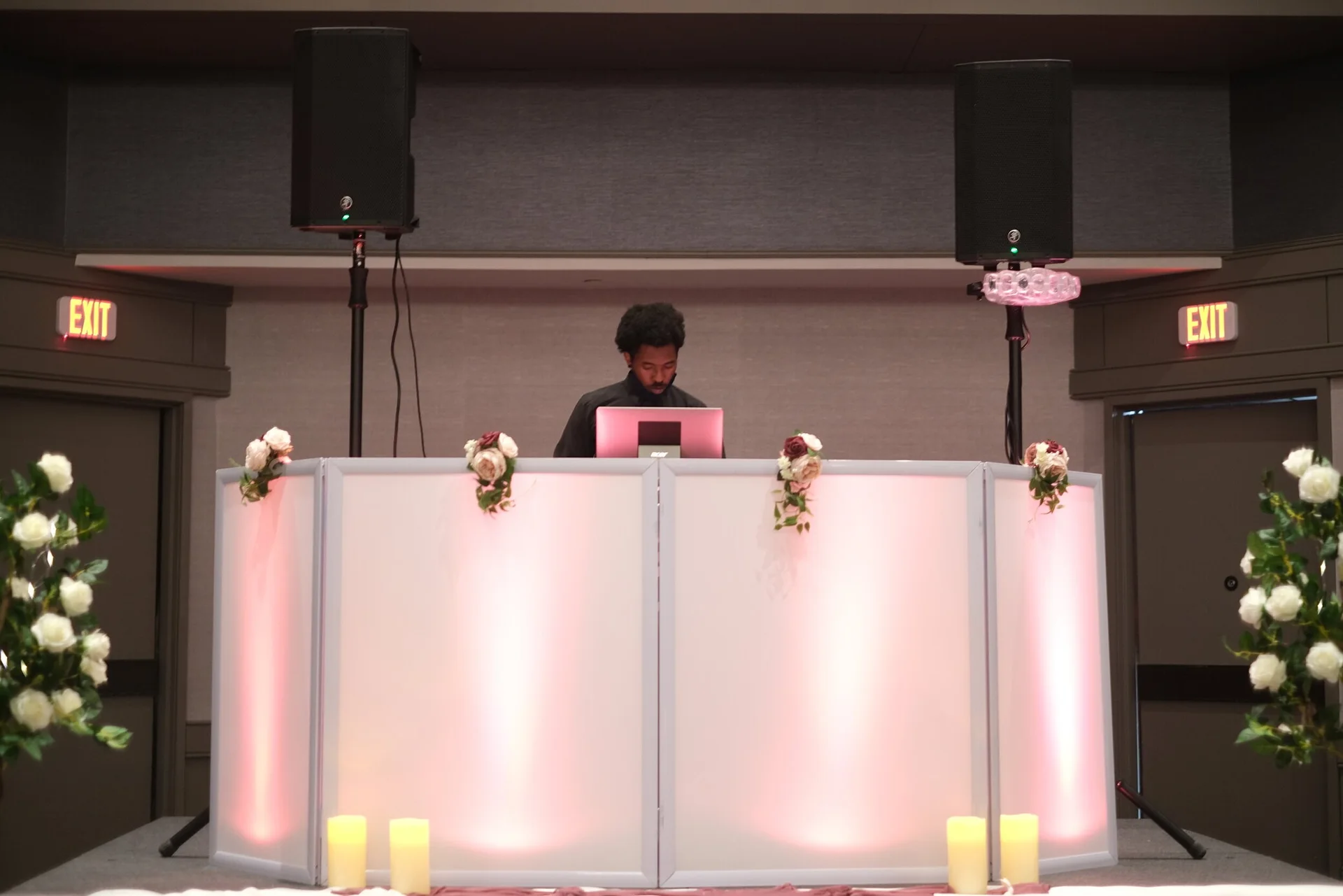
What a good DJ brings as backup
Even with perfect planning, a pro never assumes. That’s why I show up with backups. Surge protectors guard the gear against dips and spikes. Extra cords in different lengths mean I can reach a better outlet if the first one’s shared. And a battery-powered speaker can cover a ceremony spot where power is tight.
The point is redundancy. When one thing fails, another takes over, and your guests never notice a thing. That quiet safety net is a big part of what you’re paying a professional for — not just the music, but the certainty that the music won’t stop.
Experience matters here too. After enough weddings, you learn which venues have quirks and how to plan around them before you ever arrive. Some halls have that one outlet by the stage that everyone warns you about; some barns need a cord run all the way to a back panel. A DJ who’s worked the room before already knows, and that head start is worth a lot. For more behind-the-scenes tips like this one, browse more wedding tips whenever you like.
Your quick power checklist
Let’s boil it all down. Confirm a dedicated outlet not shared with the kitchen. Ask how many amps it is and what else is on the line. Connect your DJ with the venue coordinator a few weeks out. For outdoor sites, locate the nearest power and decide on a generator. And make sure your DJ carries surge protection and backups.
Do those five things and the venue power question is fully handled — you’ll never think about it again on the day. For a broader look at technical planning, WeddingWire’s questions to ask a wedding DJ pairs nicely with this list. And if you’d rather hand the whole technical side to someone who’s done it a hundred times, meet your DJ and we’ll take it from there.
Whether you’re celebrating at a banquet hall off Big Beaver Road or a garden spot around Troy, the same checklist keeps the sound on and the lights up. Sort the power once, and then forget it — that’s exactly how it should be.