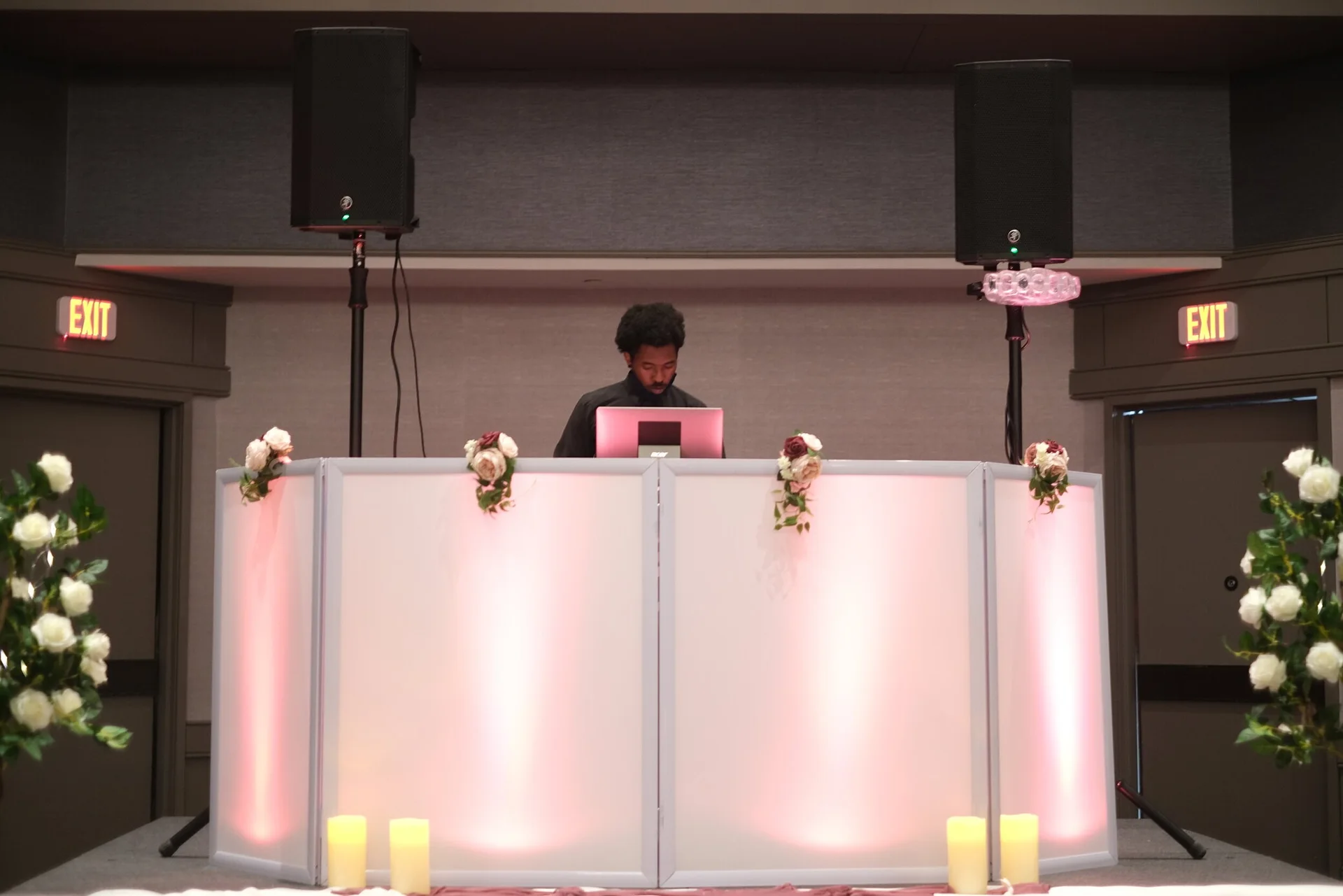
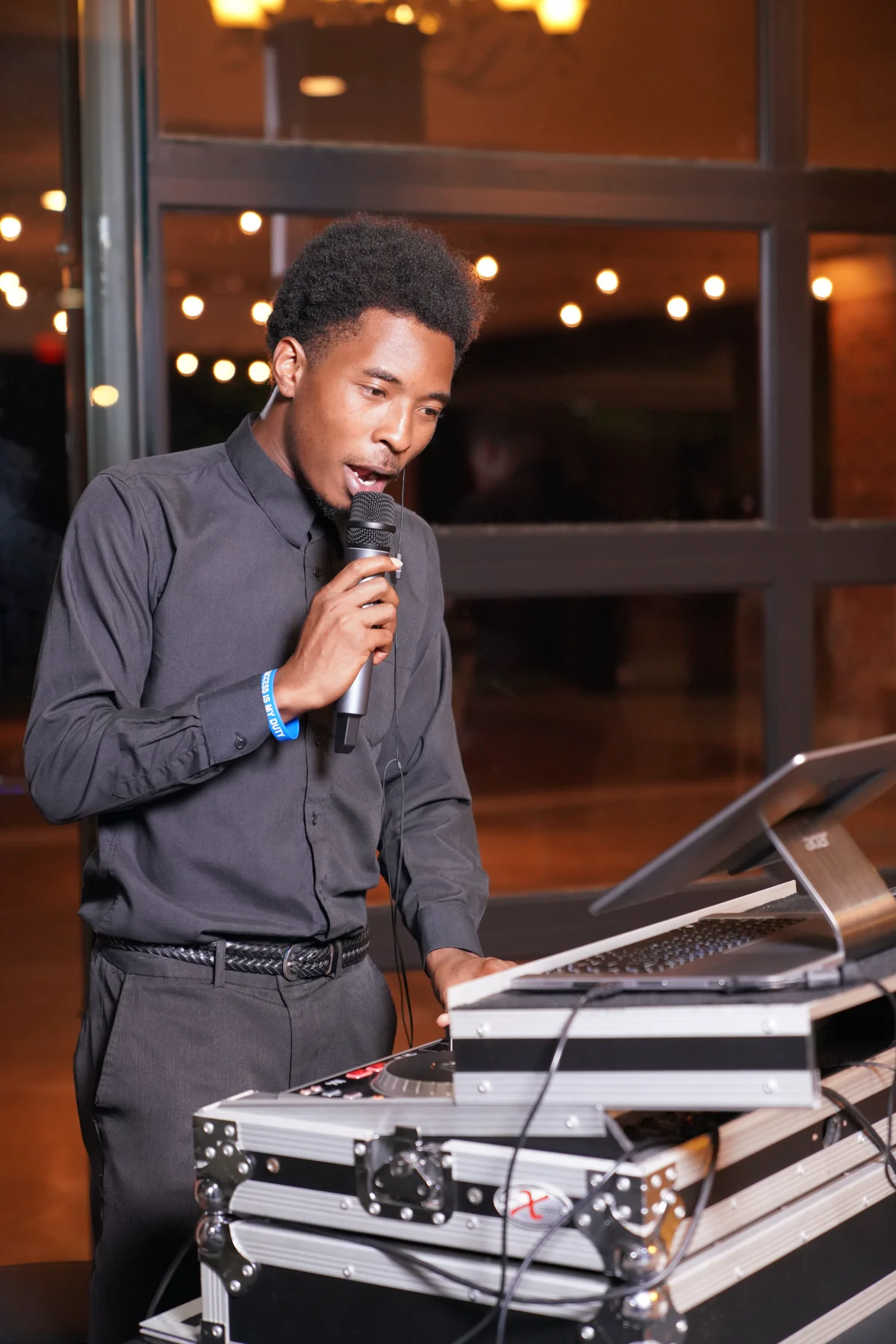
Bilingual MC: Running a Two-Language Room
Picture your reception. Half the room speaks English, and half of it grew up speaking Spanish, Arabic, Polish, or Tagalog. Grandma on one side laughs at the toast; Grandma on the other side just smiles and nods, not sure what she missed. That gap is exactly what a bilingual MC is built to close. When one host works both languages all night, nobody sits on the outside of the joke — and everybody feels like the party is theirs. Here’s how a dual-language emcee keeps a two-language room together, and how to plan it for your Livonia wedding.
In this article
What a bilingual MC actually does
Let’s clear one thing up first. A bilingual MC is not a translator standing in the corner repeating words. That would drag the night to a crawl. Instead, a good dual-language host weaves both languages into the flow so the party never stops moving.
What does that look like in practice? I read the room and pick which moments need both languages and which need just one. A first-dance intro might go out in English and Spanish. A quick “grab a drink, we start toasts in five” might only need one. The goal is understanding, not word-for-word repetition.
It also means matching the energy in each language, not just the meaning. A hype line has to hit the same in both. If the English side is laughing and the Spanish side is polite-clapping, I missed. So I keep the delivery warm, quick, and even, so both halves of the room feel the same spark at the same second.
Reading the room is a bigger part of the job than the vocabulary is. I watch which tables are leaning in and which are drifting, then I lean toward whichever language the moment needs. A quinceañera-style intro for one family, a quick English joke for the other — and I bounce between them the way a good host bounces between generations. That live read is exactly what a canned announcement can never do.
Why “included” beats “translated”
Here’s the heart of it. Your relatives didn’t fly in to hear a language lesson. They came to feel part of the day. So the real job isn’t translation — it’s making sure no guest ever feels like a visitor at your wedding.
Think about your grandparents for a second. If the whole night runs in one language they don’t speak, they’ll smile through it, but they’ll also feel a little lost. Flip that. When a host greets them in their own language, their whole face changes. That one moment tells them, “You belong here.” That’s worth more than any centerpiece.
According to The Knot’s guide to bilingual weddings, the couples who plan for both languages early get the warmest reactions from older relatives. That tracks with everything I’ve seen behind the mic. A little planning up front pays off in real smiles all night.
How the flow works without doubling the time
Now for the worry I hear most: “Won’t saying everything twice make the night twice as long?” Great question, and the answer is no — not when it’s done right.
The trick is to pick your spots. Big moments get both languages, short and clean. Little logistics get one. So a grand entrance might be twenty extra seconds in the second language, not a full re-run of a two-minute speech. Add those little bits up and you’ve spent maybe five minutes across a whole reception. Nobody notices the time; they only notice they understood.
I also lean on rhythm. I’ll deliver the English line, let it land, then roll the second language right into the same breath so it feels like one smooth beat instead of two takes. Done well, guests barely register the switch — they just feel carried along. If you want to see how I handle the whole night start to finish, my wedding day walkthrough lays out every announcement in order.
A two-language room doesn’t need every word twice. It needs the right words, at the right moment, so nobody ever feels like a guest at their own family’s party.
Music that speaks both languages
The mic is only half the job. The other half is the music, and a two-language crowd wants a floor that pulls from both sides of the family tree.
So I build a set that braids the two together. A little cumbia into a Motown classic. A Bollywood favorite next to a current pop hit. Bachata, then a line dance everybody knows. When the older aunties hear their song and the cousins hear theirs in the same hour, the whole floor fills instead of trading off.
Here’s a small thing that means a lot: I always ask each family for their must-play songs early. A wedding I did last summer turned on one Polish polka the bride’s grandfather requested — three generations were up and laughing within seconds. You can’t buy a moment like that. You plan for it.
The trick is the transitions, not the songs themselves. Anyone can play a bachata and then a top-40 hit; the art is blending them so the floor never clears between styles. So I match tempos and keep the energy climbing, which means the cousins who came for the Motown stay out there when the merengue drops. Nobody sits down waiting for “their” song, because every song feels like the party’s song.
Key takeaway: A bilingual MC keeps a two-language room together by matching energy in both languages, doubling only the big moments, and building a playlist that pulls from both families. The goal is always the same — every guest feels included, not translated to.
Mistakes that leave half the room out
Here’s what a lot of couples miss until it’s too late: a friend or uncle who “kind of speaks both” is not the same as a host who works two languages for a living. It’s a kind offer, but it usually goes sideways.
Why? Because hosting is about timing and confidence, not just vocabulary. The volunteer freezes on the mic, forgets to switch, or rushes one language so the other side feels like an afterthought. Then half the room quietly checks out, and the couple never even knows it happened.
Another common miss is treating one language as the “main” one and the other as a quick add-on. Guests feel that ranking instantly. The fix is simple: give both languages equal warmth and equal timing. When both sides get the same energy, the whole family relaxes into the night together.
How we prep your script together
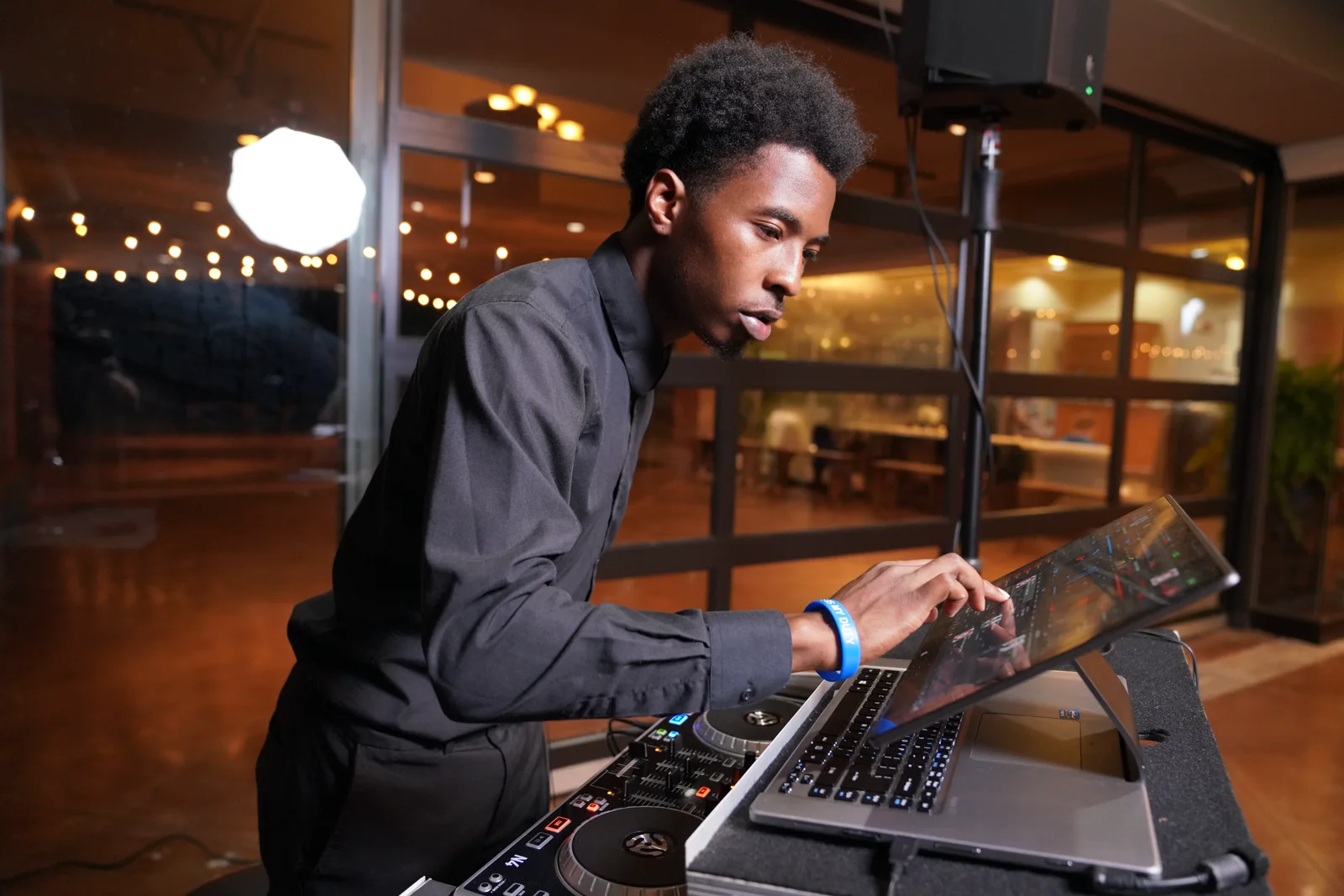
None of this is left to chance. Before your day, we build a simple two-column script — every announcement, in both languages, so nothing gets lost in the moment. You get to check the names, the pronunciations, and the tone.
Names matter more than anything. Mispronouncing a grandmother’s name is the fastest way to make a family wince, so we practice the hard ones until they’re right. I’d rather ask you twice than guess once. Little details like that are what people remember for years.
We also flag the emotional beats ahead of time — the parent dances, the memorial moment, the surprise toast. Those are the spots where both languages matter most, so we plan them carefully. Curious how I approach the rest of the night? You can meet your DJ and get a feel for how I work before we ever lock a date.
Planning a two-language room in Livonia
So how do you pull this together for your own wedding? Start by telling your host both families’ languages the very first time you talk. That one detail shapes the whole plan, from the script to the setlist.
Livonia gives you plenty of great rooms for a big, mixed-family celebration — from ballrooms off Schoolcraft to banquet halls near Laurel Park. Whatever venue you pick, the same rules hold: equal warmth in both languages, big moments doubled, small ones kept clean, and a floor that speaks to everyone. For more planning help across every part of the day, browse more wedding tips whenever you like.
At the end of it all, the win is simple. It’s a room where your English-speaking cousins and your Spanish-speaking abuela are laughing at the same joke, dancing to the same set, and feeling like one family. If you’d like help making that happen, my Livonia wedding guide and I are ready to build a plan around your people. For a deeper look at pronunciation and inclusive planning, the culture experts at Brides offer a helpful starting checklist too.