Dinner or Dancing First?
Here’s a question I get from almost every couple: dinner or dancing first? It sounds small, but the order you choose shapes the whole feel of your reception — and whether your dance floor stays packed or empties out early. The truth is there’s no single right answer. Each order has real strengths and real trade-offs, and the best pick depends on your crowd, your caterer, and the night you’re picturing. So let’s break it down like a straight Q&A. By the end, you’ll know exactly which flow fits your wedding and why.
In this article
The big question, plainly answered
Let’s cut to it. For most weddings, the answer to dinner or dancing first is: dinner first, then dancing — but with the entrance, first dance, and toasts woven in so the night never feels like two separate parties. That’s the classic flow, and it works because it feeds people while they’re hungry and saves the big energy for later.
That said, “dinner first” isn’t a rule handed down from on high. Some couples flip it, and some blend the two. The real goal isn’t following tradition — it’s keeping your guests fed, happy, and on the floor when it counts. Order is just the tool you use to get there.
So think of this less as a right-or-wrong choice and more as picking the flow that matches your people. Let’s look at what each option actually gives you.
Dinner first: the pros and cons
The most common order puts dinner before open dancing. There’s a good reason it’s the default.
The pros: Guests arrive hungry, so feeding them early keeps everyone happy and settled. It gives your caterer a clean, predictable window. And it means the dancing block comes last, so the night builds to a big, uninterrupted finish. Nobody’s ducking off the floor to grab a plate.
The cons: A long, heavy dinner can cool the room down if it drags. Sit people too long and some sink into their chairs. The fix is easy, though — keep the meal moving, weave in the first dance and toasts, and open the floor the moment plates clear. A good MC keeps that momentum alive so dinner never turns into nap time.
Dinner first is my usual recommendation for exactly this reason: it’s predictable and it ends strong. When you handle the transitions well, it gives you the best of both — a relaxed meal and a floor that fills up and stays full. This is a big part of how my wedding DJ and MC service maps out a timeline that never stalls.
Dancing first: the pros and cons
Now let’s flip it. Some couples open a dance set before dinner, right after the entrance. It’s less common, but it can be electric for the right crowd.
The pros: You catch the room at peak excitement, right after the entrance, when adrenaline is high. A short dance set here can set a party tone for the whole night. It’s also great if your meal is a later, lighter affair — people burn energy first, then refuel.
The cons: Hungry guests don’t dance for long, and older relatives may be waiting on food. Push dancing too early and you risk a half-empty floor plus some grumbling stomachs. It also asks more of your caterer to hold the meal. This order needs a confident DJ and a tight plan to pull off well.
The order of dinner and dancing matters far less than the transitions between them — a smooth handoff is what keeps a floor packed.
Dancing first can absolutely work, but it’s the higher-risk play. I only steer couples toward it when their crowd is young, the meal is light, and everyone’s clearly there to party. For most weddings, the safer, stronger choice is still dinner first.
Key takeaway: Dinner first is the reliable default — it feeds guests early and ends the night on the dance floor. Dancing first can spark big energy but risks a hungry, thin crowd. Either way, the smooth transitions between blocks matter more than the order itself.
The hybrid flow most couples love
Here’s what a lot of couples miss: you don’t have to pick one lane. The flow I recommend most is a hybrid that borrows the best of both.
It goes like this: grand entrance, straight into your first dance while all eyes are already on you, then dinner. During the meal, you slot in toasts and maybe the parent dances. As soon as plates clear, the MC opens the floor with a can’t-miss song and the party runs uninterrupted to the end. You get the emotional moments early, the meal in the middle, and a long, unbroken dance block to finish.
This structure keeps energy flowing the whole night. There’s always something happening, so the room never goes flat, and by the time open dancing starts, everyone’s fed and ready. According to Zola’s reception timeline guide, weaving the key moments through dinner is one of the best ways to keep a reception from dragging.
How your crowd should decide it
When couples ask me to settle the debate, my answer is always the same: let your guest list decide. Your crowd is the real tiebreaker.
Got a lot of older relatives and little kids? Dinner first, no question — they want to eat on time and may leave early, so give them the meal and a little dancing before they head out. Got a young, party-ready crowd that’ll close the place down? You have more freedom to play with the order, even to open with a dance set.
Also think about your caterer’s needs and your venue’s timeline. Grosse Pointe venues along the lakeshore often have set service windows, so your flow has to fit their kitchen too. A quick chat with your DJ and your caterer together usually makes the right order obvious in about five minutes. If you want a sample structure to start from, The Knot’s reception timeline lays out a solid default hour by hour.
Timeline mistakes that empty the floor
No matter which order you pick, a few timeline slip-ups can drain a dance floor fast. Let’s dodge them.
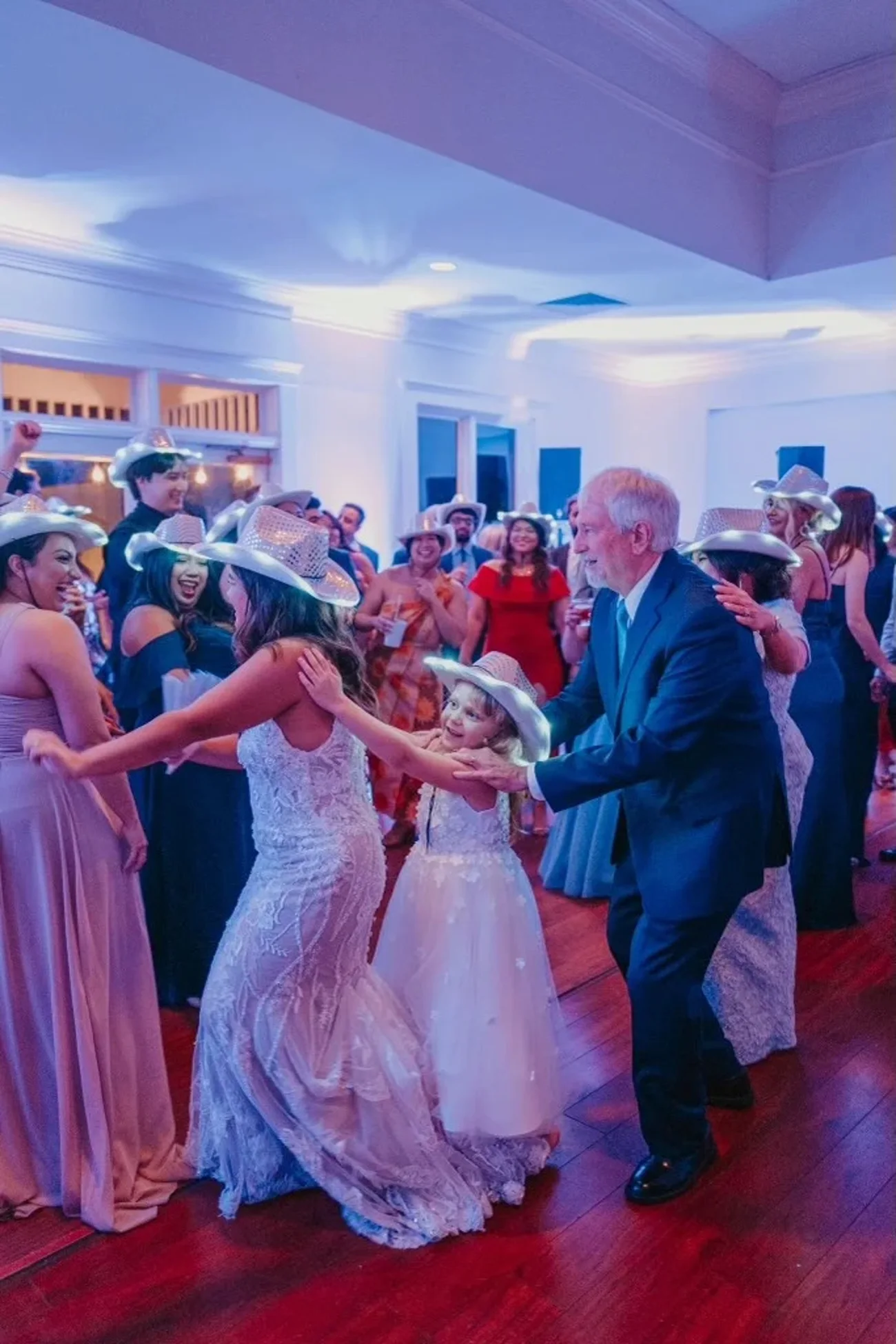
The first is a long gap with nothing happening. Dead air after dinner — while tables are cleared and nobody’s told what’s next — lets the energy leak out of the room. A good MC fills that space and opens the floor before anyone thinks about leaving.
The second is stacking too many formalities back to back. Entrance, then first dance, then parent dances, then toasts, then cake, all in a row, and your guests feel like an audience, not a party. Spread those moments out across the night so there’s always a reason to stay.
The third is ending the dance block too late in the meal timeline, leaving only 30 minutes for open dancing. Protect your dance time. Whatever order you choose, make sure the floor gets a long, uninterrupted run — that’s the part your guests will remember most.
Choosing your flow in Grosse Pointe
So how do you settle it for your own wedding? Start with your crowd and your caterer, then lean toward the classic or hybrid flow unless you’ve got a strong reason to flip it. Nine times out of ten, that’s your answer.
Whether you’re celebrating at a lakeside club along Lake St. Clair or a hall closer to the Village, the same principle holds: order matters, but transitions matter more. For more planning ideas across the whole day, browse more wedding tips whenever you like — and for a full day-of walkthrough, my Grosse Pointe wedding guide covers every moment start to finish.
At the end of it all, the dinner-or-dancing question has a simple heart: keep your people fed, keep them entertained, and give the dance floor its full moment. Get that right and the exact order barely matters. If you’d like a hand mapping your timeline, you can meet your DJ and we’ll build a flow around your crowd and your venue.