Ceremony Sound Checklist for Couples
You spend a year planning the perfect ceremony — and then nobody past row four can hear the vows. It happens more than you’d think, and it’s heartbreaking every time. That’s exactly why a real ceremony sound checklist matters: it’s the difference between guests leaning in to catch your words and guests straining to hear a mumble. Let’s walk through every audio detail to confirm before you walk the aisle, so your Grosse Pointe ceremony sounds as beautiful as it looks.
In this article
Why ceremony sound gets overlooked
Here’s the thing most couples don’t realize: the reception gets all the attention, but the ceremony is where sound matters most. It’s the quiet, meaningful part — the vows, the readings, the officiant’s words. If those get lost, the heart of the day gets lost with them.
A good ceremony sound checklist exists because ceremonies are actually harder to mic than parties. They’re often outdoors, spread out, and full of soft-spoken moments. There’s no thumping bass to cover a weak signal — every whisper has to carry on its own.
The reassuring part? Every one of these problems has a simple fix when you plan ahead. Nobody has to gamble on whether Aunt Carol in the back row hears the “I do.” Planning guides at The Knot stress the same thing: sort the audio early and the ceremony feels effortless. A little preparation turns ceremony sound from a worry into a non-issue.
Microphones: the make-or-break piece
Let’s start with the single most important choice: the mics. For most ceremonies, a lavalier (clip-on) or a small headset mic on the officiant is the gold standard. It picks up the vows clearly and stays out of the photos. One good mic on the officiant usually catches both partners when they’re close.
For readings or a soloist, you’ll want a second mic — often a discreet stand mic set to the side. The mistake couples make is assuming one mic covers everything. It rarely does. Mapping out who speaks and when tells you exactly how many mics you need.
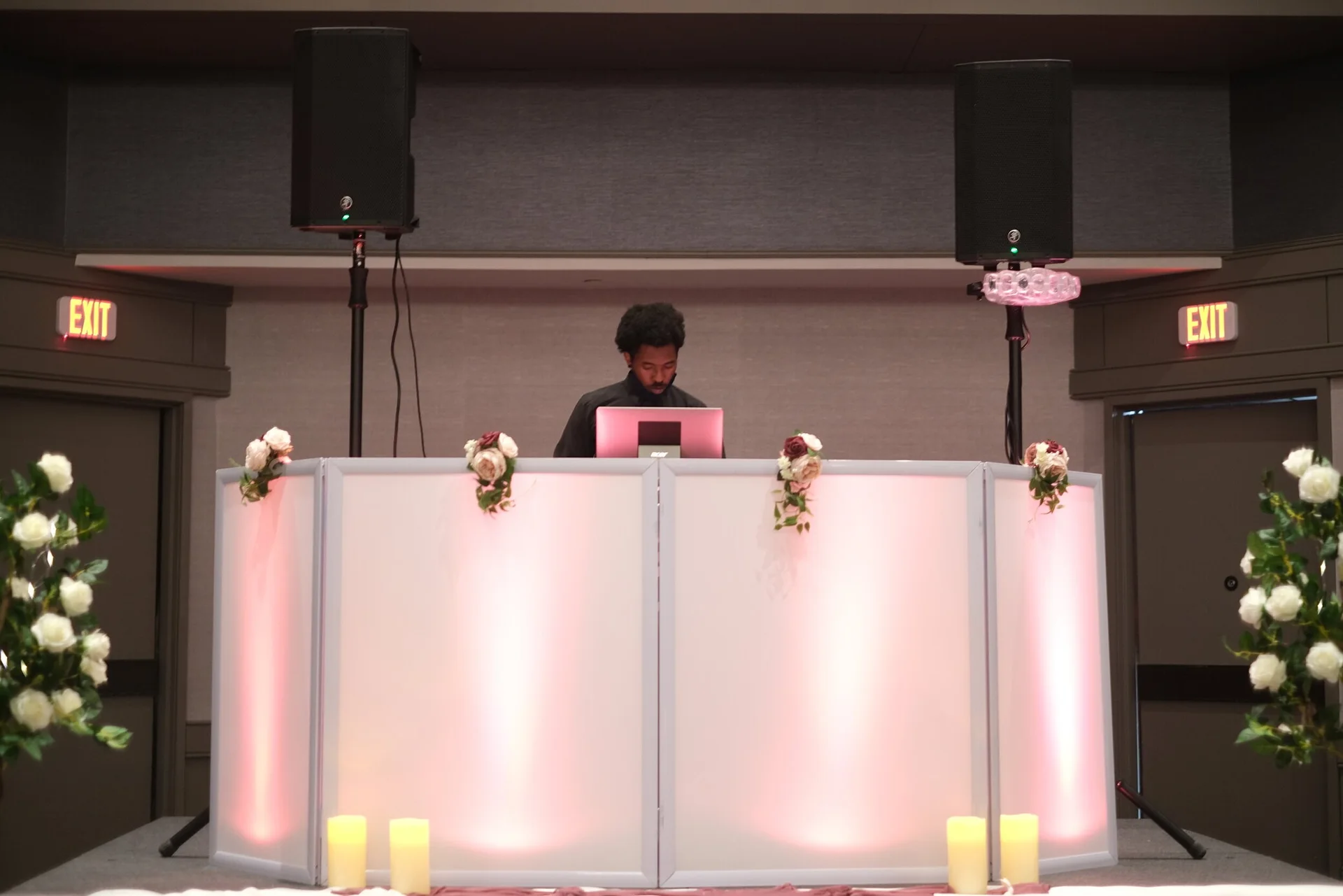
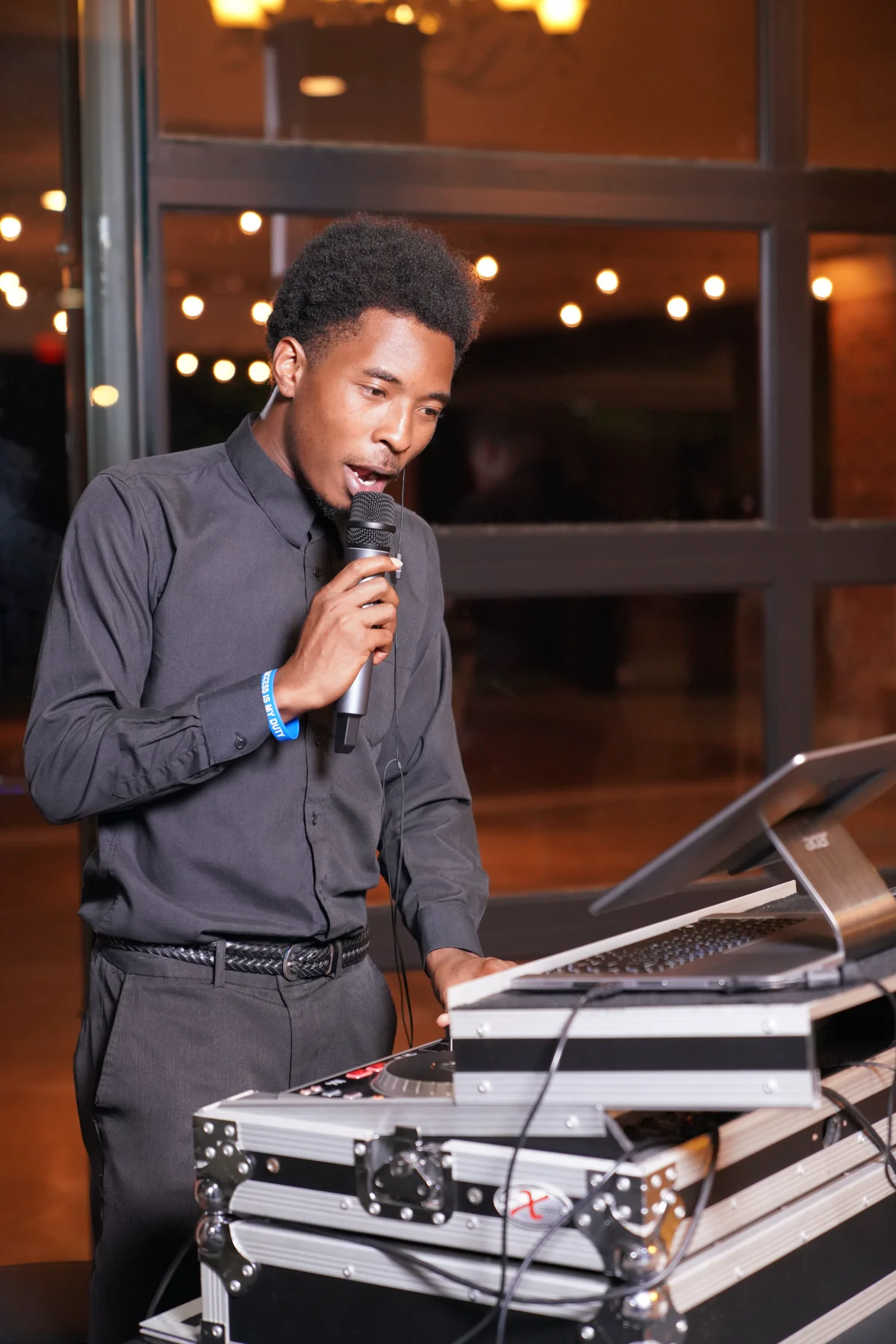
Wireless is almost always the move for ceremonies, so there are no cords snaking across the aisle. But wireless needs fresh batteries and a clear channel — a detail a pro handles without you ever thinking about it. For a full look at how I approach the whole day’s audio, my wedding DJ breakdown covers ceremony through reception.
Music cues and processional timing
Sound isn’t just voices — it’s the music that carries you down the aisle. Your processional, the pause for the big entrance, and the recessional all need clean cues. A song that fades at the wrong second, or starts late, can throw off the most emotional walk of your life.
The fix is a written cue sheet. I map every song to the exact moment it starts and stops: seating music, the wedding party’s entrance, your walk down the aisle, and the joyful exit. When the timing is planned, each moment lands right where it should.
Here’s what a lot of couples miss: someone has to run those cues live. A playlist on a phone can’t feel that the flower girl froze halfway down the aisle and stretch the music to cover it. A real person watching the moment can, and that flexibility is worth everything when the day doesn’t go exactly to script.
Your vows are the most important words you’ll ever say out loud. Every guest in every row deserves to hear them — that’s the whole point of getting the sound right.
Venue and outdoor challenges
Where you say “I do” changes everything about sound. An outdoor ceremony — a garden, a lakeside spot along the Grosse Pointe shoreline, a backyard — has no walls to hold the sound in. Wind, traffic, and open air all fight your vows for attention.
Outdoors, you need more speaker coverage and mics that reject wind noise. A pro brings foam windscreens, positions speakers to cover the whole seating area, and does a real sound check in the actual space. Guessing indoors and hoping outdoors is a recipe for a muddy ceremony.
Indoor venues have their own quirks — echoey stone chapels, low-ceilinged halls, rooms with tricky acoustics. The point is the same: your setup should be tuned to your room, not a generic one. Resources like WeddingWire’s ceremony music guide are a helpful starting point as you think it through.
Key takeaway: Confirm your mic plan (usually a lav on the officiant plus a second mic for readings), a written music cue sheet run by a live person, speaker coverage tuned to your exact space, and backups for power and batteries. Nail those and every guest hears every word.
Power, backups, and the boring stuff
Now for the unglamorous details that quietly save the day. Power is number one. Outdoor and remote ceremonies often have no easy outlet, so you need a battery-powered PA or a generator plan. Finding out there’s no power an hour before is the kind of surprise nobody wants.
Backups matter just as much. A spare mic, extra batteries, and a second speaker mean one hiccup doesn’t become a disaster. I always bring more gear than a ceremony needs, because “just in case” has saved more weddings than I can count. Redundancy is a pro’s quiet superpower.
Don’t forget the little timing details, either — when setup happens, when the sound check fits, and how the ceremony gear moves or hands off to the reception. A smooth plan for all of it is exactly what you get with a seasoned pro at a Grosse Pointe wedding. The boring stuff, handled well, is what makes the beautiful stuff possible.
The full ceremony sound checklist
Let’s pull it all together into one quick list you can actually use. Run through these with your DJ or sound provider before the day:
Microphones — a lav or headset on the officiant, a second mic for readings or a soloist, all wireless with fresh batteries and a clear channel. Music — a written cue sheet for seating, processional, your entrance, and recessional, run live by a real person. Speakers — enough coverage for every seat, positioned and tuned to your exact space.
Power — a confirmed outlet or a battery/generator plan for remote spots. Backups — spare mic, extra batteries, second speaker on hand. Sound check — a real test in the actual space before guests arrive. Six boxes. Check all six and your ceremony sound is handled.

Bringing it to your Grosse Pointe day
So how do you make this easy on yourself? Simple — hire someone who runs through this checklist as a matter of habit, not something you have to remind them about. When you interview a DJ, ask how they handle ceremony sound. A pro will describe a system a lot like the one above.
Then share the details early: your venue, whether it’s indoor or out, who’s speaking, and your song choices. The more your DJ knows ahead of time, the smoother the sound check and the ceremony itself. Preparation on both sides is what makes the day feel effortless.
Want more ways to make your whole wedding day run smoothly? Browse more wedding planning tips whenever you like, and when you’re ready to lock in flawless ceremony sound, meet your DJ and let’s make sure every word of your Grosse Pointe vows is heard loud and clear.