
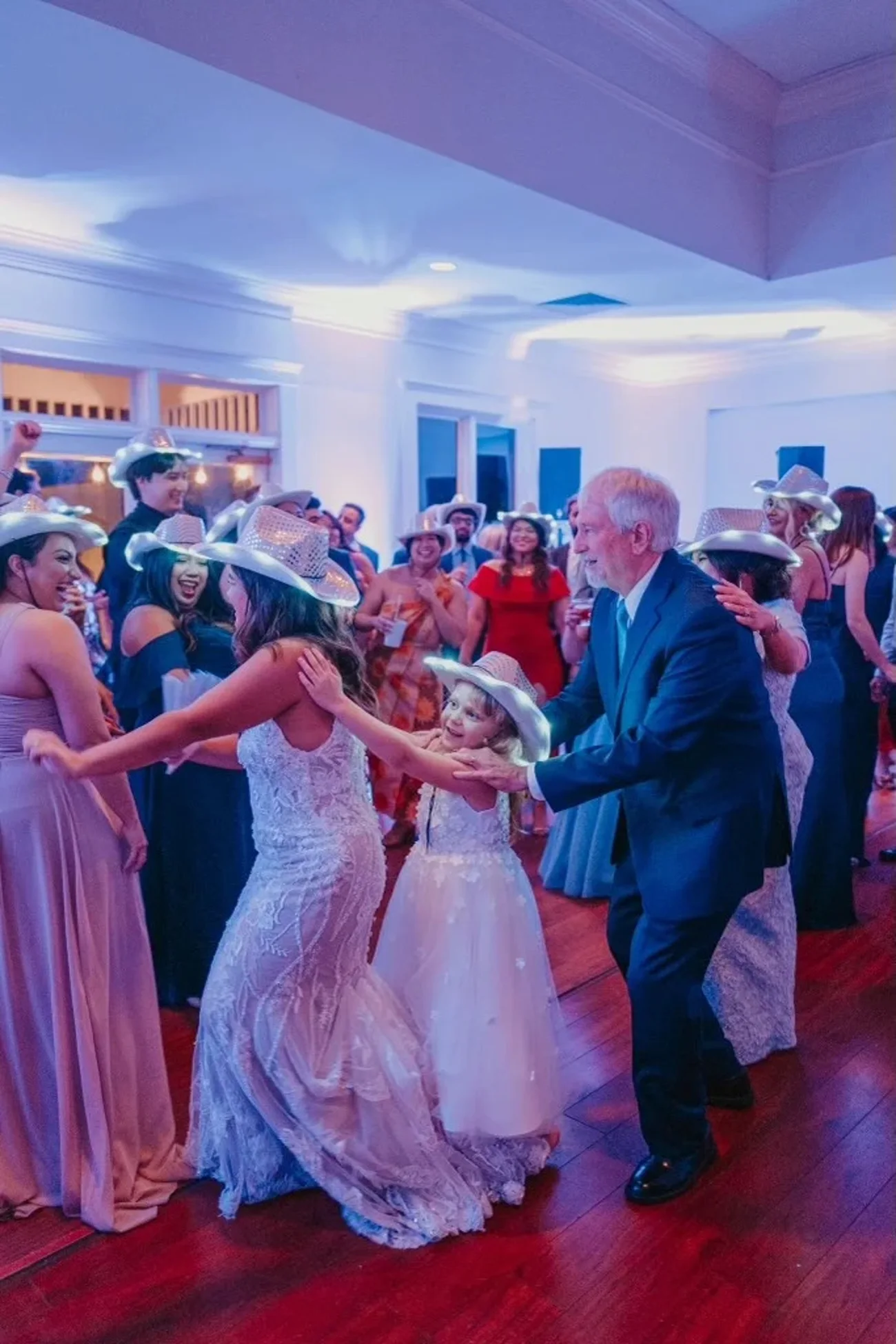
Why a Bluetooth Speaker Won’t Cut It
It’s a tempting idea: skip the DJ, grab a nice Bluetooth speaker, plug in a playlist, and save some money. On paper it sounds smart. In a real reception hall with 120 guests, a dance floor, and a first dance that has to feel huge, it falls apart fast. I’m not here to scare you — I’m here to show you exactly where consumer audio hits its limit and pro sound takes over. Once you see the gap, the choice makes itself.
In this article
The myth: “a speaker is a speaker”
Here’s the belief we need to bust. A lot of couples assume a highly-rated Bluetooth speaker and a DJ’s rig do basically the same job, just at different price points. It feels reasonable. It’s also completely wrong, and the difference isn’t small.
A portable speaker is built for a backyard hang or a beach afternoon — a dozen people, a few feet away, background music. A wedding is a different animal entirely. You’ve got a big room, hard walls, a hungry dance floor, and moments that need to hit like a wave. Those are two different tools for two different jobs.
Think of it like this: a great pocket knife is genuinely useful, but you wouldn’t build a house with it. Same energy here. The speaker isn’t bad — it’s just built for the wrong room. Let’s look at exactly where it runs out of road.
Power and coverage in a real room
The first wall you hit is volume, and not the kind you fix by turning a knob to max. A portable speaker maxes out and then starts to distort — the sound gets harsh, muddy, and thin. Push it harder and it just gets uglier, never louder in a good way.
Then there’s coverage. One little speaker throws sound in a narrow cone. Guests up close get blasted while the folks by the cake can barely hear. A pro setup uses multiple speakers placed to spread sound evenly across the whole room, so every table gets the same clean level. Nobody’s yelling over it, nobody’s straining to hear it.
And bass? A dance floor lives on bass you can feel in your chest. Small speakers physically can’t move enough air to make that happen. That’s not an opinion, it’s physics. The CDC’s guidance on sound levels is a good reminder that clean, controlled volume beats a maxed-out little speaker every time — louder and worse is not the goal.
Sound quality when it actually matters
Let’s talk about the moments that matter most. Your first dance. The father-daughter song. That one track that empties every chair. These aren’t background music — they’re the emotional peaks of the whole night.
On a portable speaker, a tender ballad sounds flat and small. The warmth is gone, the detail’s gone, and a song that should give you chills just sort of… plays. Pro speakers reproduce the full range, so a slow song feels intimate and a floor-filler feels enormous. That range is the whole point.
There’s also the matter of who’s steering. A playlist can’t read the room, but a live DJ can. When the energy dips, I change course. When a song’s landing, I ride it. That instinct, paired with real speakers, is what turns a good night into a great one — and it’s the heart of what I do as a wedding DJ.
A Bluetooth speaker plays your songs. A pro system makes your guests feel them — and on a wedding day, feeling is the entire point.
Key takeaway: A portable speaker is built for a small, quiet crowd — not a full reception. It runs out of volume, coverage, and bass exactly when your biggest moments need them most. Pro sound isn’t a luxury; it’s what makes the emotional peaks actually land.
The mic problem nobody thinks about
Here’s a part almost everyone forgets until it’s too late: the microphone. Your reception isn’t just music. It’s toasts, welcomes, a blessing, maybe a surprise speech from a cousin who “wasn’t going to say anything.”
Most Bluetooth speakers can’t take a proper mic at all, and the ones that do usually sound tinny and feed back with an ear-splitting squeal. Now picture your best man’s heartfelt toast crackling out of a little speaker while Grandma cups her ear. That’s the moment the DIY plan really shows its seams.
A pro system handles wireless mics cleanly, with the volume and clarity a speech deserves. Toasts land, laughs hit, and the quiet emotional lines actually reach the back of the room. This is the piece couples underestimate the most, and it’s the one guests remember.
Reliability: dropouts, dead batteries, and bad timing
Now for the gremlins. Bluetooth is convenient right up until it isn’t. A text notification cuts the music. Someone walks too far with the phone and it drops. The battery dies three songs into open dancing. Every one of these is common, and every one hits at the worst possible second.
Here’s what a lot of couples miss: even a rare glitch feels enormous on a wedding day, because the day only happens once. A ten-second dropout during your first dance isn’t a minor bug — it’s the story people retell for years. That risk just isn’t worth the savings.
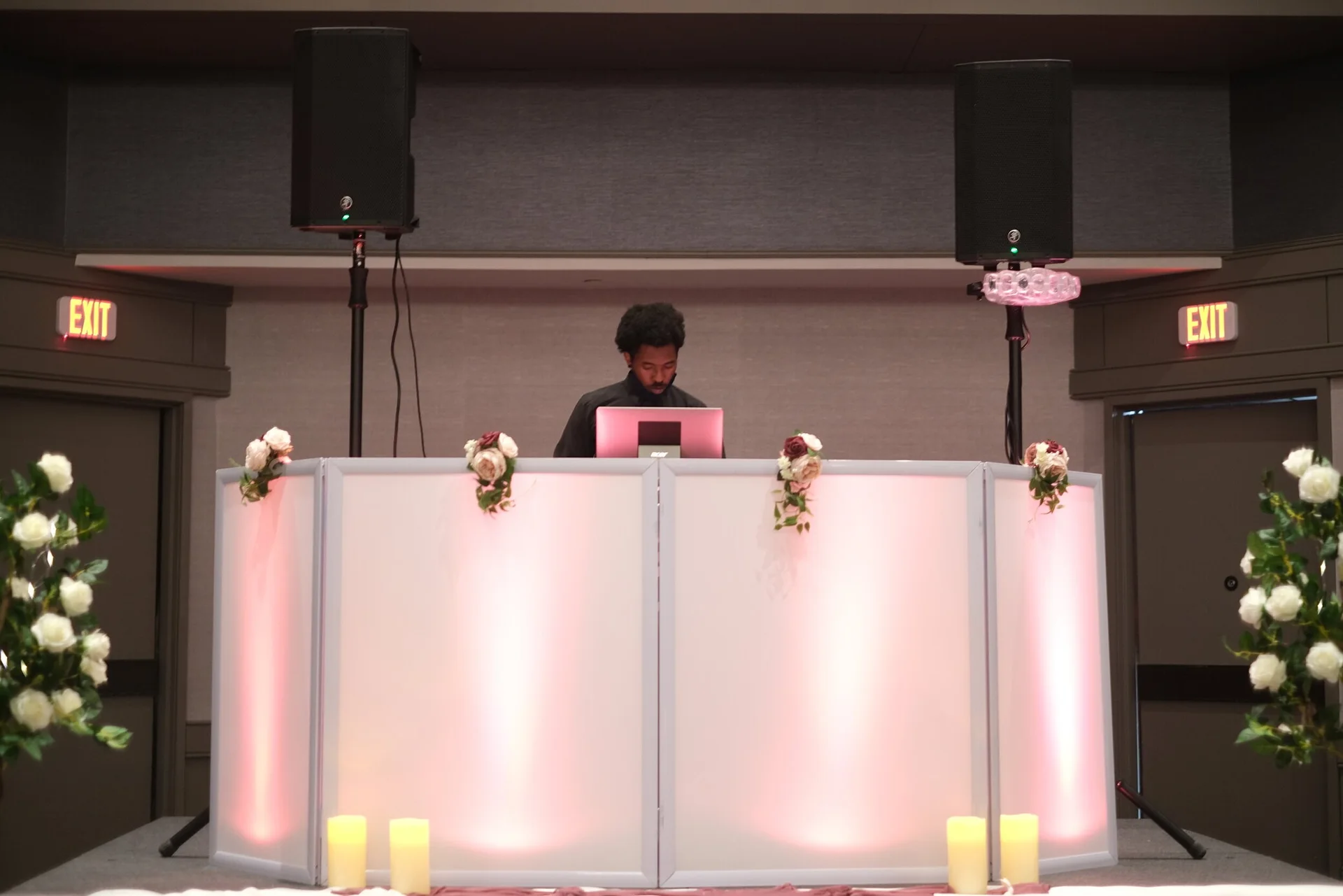
Pro gear runs on wired, hardwired-reliable connections with backup everything — spare cables, spare power, a second source ready to go. It’s built so the music never, ever stops. Boring reliability is exactly what you want humming in the background of the best night of your life.
The real cost of “saving money”
Let’s be fair about the money, because that’s the whole reason the idea comes up. Yes, a DJ costs more than a speaker on a stand. No argument there. But look at what that cost is actually protecting.
You’re spending real money on the venue, the dress, the flowers, the food, the photographer. The one thing that decides whether people dance or drift to their cars early is the music and the person running it. Skimp there and you risk flattening the entire night everything else was building toward.
I’ve heard from couples who cut the DJ to save a bit and told me later it was their one big regret. The photos were gorgeous, the food was great, and the dance floor sat empty by 9 p.m. because nobody was steering the energy. That’s an expensive way to save money. If you’re weighing vendors, The Knot’s breakdown on hiring a DJ lays out the same math from a planner’s angle.
What Dearborn couples actually need
So what’s the move for your day? Match the sound to the room. A small backyard gathering of 20 people near Michigan Avenue might genuinely be fine with a good speaker and a playlist — I’ll be the first to say it. Honest advice beats an upsell every time.
But a real reception at a Dearborn banquet hall, with a full guest list and a dance floor you’re hoping stays packed, needs pro sound and a pro running it. That’s not me being fancy; it’s just the right tool for the room. Want more straight talk on planning? Browse more wedding tips anytime, and if you’re local, my Dearborn wedding guide covers venues and timing near you.
At the end of the day, a wedding is worth the sound that carries it. That’s the honest truth. If you’d like to talk it through with zero pressure, you can meet your DJ and I’ll give you a straight answer about what your day actually needs. Sometimes that’s a full rig, and sometimes it’s a friendly nudge toward a simpler plan — either way, you’ll know.