
Wireless vs Wired Uplighting: Which to Choose
When you start pricing out lighting, you’ll hit one question fast: wireless uplighting or the old-school wired kind? It sounds technical, but the choice is really about freedom versus reliability — and honestly, both can give you a stunning room. I set up lights every weekend across Novi and Metro Detroit, so let me break down what each type does well, where each one struggles, and how to pick the right fit for your venue without the sales-speak. By the end, you’ll know exactly which one belongs at your reception.
In this article
The real difference between the two
Let’s clear this up in plain English. Both types shine colored light up your walls the exact same way. The only real difference is how they get power and how they’re controlled. That’s it — everything else is a knock-on effect of those two things.
Wireless uplighting runs on a rechargeable battery and is controlled by radio signal. No cords, no outlets, no gaffer tape across the floor. Wired uplighting plugs into wall power and often daisy-chains together with cables. So the trade is simple: wireless buys you freedom, wired buys you unlimited runtime. Neither one is “better” — they’re just built for different rooms.
Here’s the part that matters for you: at most modern weddings, wireless has become the default. Venues love it because there are no cords to trip guests, and couples love it because lights can go literally anywhere. But wired hasn’t disappeared, and there are real cases where it’s the smarter pick. Let’s look at both.
Where wireless wins
Freedom is the whole pitch, and it’s a good one. Because wireless fixtures carry their own power, I can tuck them behind a sweetheart table, line them up a staircase, or ring a garden tent — places no outlet exists. That flexibility opens up looks that wired simply can’t reach.
Safety is the other big win. No power cords means nothing snaking across your dance floor for Aunt Carol to catch her heel on. At a packed Novi reception, that peace of mind is worth a lot. Wireless uplighting also sets up faster, so there’s less fuss during your tight vendor window.
Then there’s the clean look. Cords are ugly, and hiding them takes time and tape. Wireless fixtures just sit there glowing with nothing trailing behind, so your photos stay clean and your room stays polished. For most weddings I do, that combination of freedom, safety, and clean lines makes wireless the easy call.
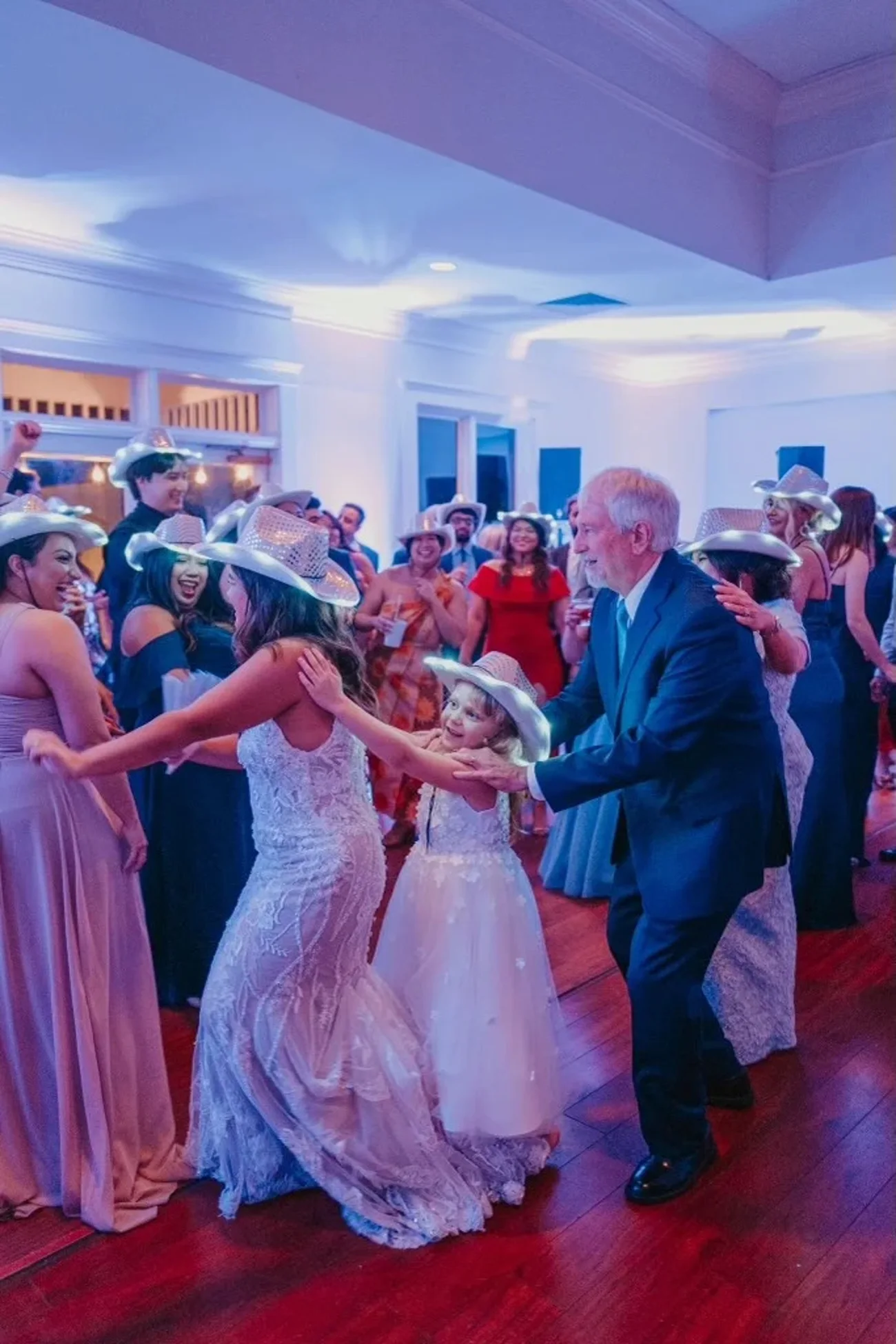
See how those lights sit clean against the wall with nothing trailing? That freedom is exactly why wireless has taken over most receptions. Industry pros at WeddingWire note that cord-free lighting is now the standard couples expect, largely for the safety and clean look.
Where wired still makes sense
Now, let’s be fair to wired, because it isn’t obsolete. In a few situations it’s actually the stronger choice, and a good DJ will tell you when that’s the case instead of just pushing the trendy option.
Very long events are wired’s home turf. If your celebration runs many hours — think a full day of ceremony, cocktails, dinner, and late-night dancing — a wired light never worries about battery. It just glows as long as there’s power. So for marathon receptions, wired removes a variable entirely.
Wired can also run brighter without draining down over time. A fixture pulling constant wall power can push more intense color for the whole night, which matters in big rooms or with deep, light-hungry colors like navy and emerald. So if you’ve got a huge ballroom and bold colors in mind, wired earns a second look.
There’s a quiet reliability angle, too. With wired, there’s simply no battery to think about — the light is on because it’s plugged in, full stop. For a control-loving planner, that certainty can be worth the extra cords. And in a permanent installation, like a hall that keeps its lighting up year-round, wired makes total sense because nobody wants to recharge fixtures every week. So wired isn’t a downgrade; it’s just built for a different job than a one-night wireless wedding.
The best lighting choice isn’t the trendiest one — it’s the one that fits your room, your hours, and your colors so you never have to think about it again.
Key takeaway: Wireless uplighting wins on freedom, safety, and clean setup, which is why it fits most weddings. Wired still shines for very long events, huge rooms, and deep colors that need constant power. Match the tool to your night, not the trend.
The battery question everyone asks
Here’s the worry I hear most: “What if the wireless lights die halfway through?” It’s a fair question, so let me put it to rest. Good professional fixtures hold a charge far longer than a wedding lasts.
A quality wireless uplight runs 8 to 12 hours on a full charge — longer than nearly any reception. And here’s what a lot of couples miss: the pros show up with every fixture fully charged and often carry backups. The horror stories almost always come from cheap DIY lights or gear that wasn’t charged the night before, not from the technology itself.
So the battery fear is really a “who’s running your lights” question. Hire someone who does this weekly and charges their kit properly, and a dead light just isn’t on the table. To see how I handle the setup and the little details, my room lighting service page lays out exactly what comes with your night.
Does one cost more than the other?
Money matters, so let’s talk price honestly. For most weddings, wireless and wired cost about the same per fixture to rent. The color you get on the wall is identical, so you’re not paying extra for prettier light either way.
Where costs can shift is labor and setup. Wired lights take longer to run and hide cables, which in some setups adds time. Wireless sets up faster but the fixtures themselves are a bit pricier to own, so a rental company factors that in. In practice, these tend to wash out, and the quotes land close together.
My honest take: don’t choose based on a few dollars. Choose based on your room and your night, because the wrong fit costs you more in headaches than the right one ever costs in cash. When lighting comes bundled with a DJ, you also skip separate delivery and setup fees, which is often the real savings. You can meet your DJ and we’ll fold it all into one simple plan.
Matching the choice to your venue
Your venue usually makes the decision for you, once you know what to look for. So walk your space and ask three quick questions.
Are there outlets where you want light? If the prettiest spots have no nearby power — a garden, a tent, the middle of a big wall — wireless is your answer. How long is your event? A standard 6-to-8-hour reception is easy for wireless; a very long affair might favor wired. Does the venue ban floor cords? Many modern Novi venues do, and that settles it instantly.
For most weddings around Novi, those three questions point straight to wireless, which is why it’s what I bring by default. But I always check the room first, because a good answer starts with the actual space, not a guess. That’s the difference between lighting that just works and lighting you have to fuss over all night.
Planning it for your Novi wedding
So how do you lock this in for your own day? Start by picturing where you want color. Walk your Novi venue and note the walls, corners, and features you’d love to glow. That wish list tells you instantly whether cords could even reach those spots.
Then think about your timeline and your palette. A normal-length reception in gentle colors is textbook wireless territory. A long, bold, big-room affair might lean wired. If you’re not sure, that’s exactly what your DJ is for — a quick chat sorts it out fast. Planning experts at The Knot point out that the right lighting setup should be invisible in the best way: you notice the glow, never the gear.
At the end of the day, both types can give you a breathtaking room. The goal is simply to pick the one that fits your space so you can forget about it and enjoy your night. If you’re celebrating close by, our Novi wedding guide covers the whole night start to finish. And for more ideas before the big day, browse more wedding tips anytime, and when you’re ready to plan your glow, I’m just a message away. Let’s make your room look exactly the way you pictured it.