
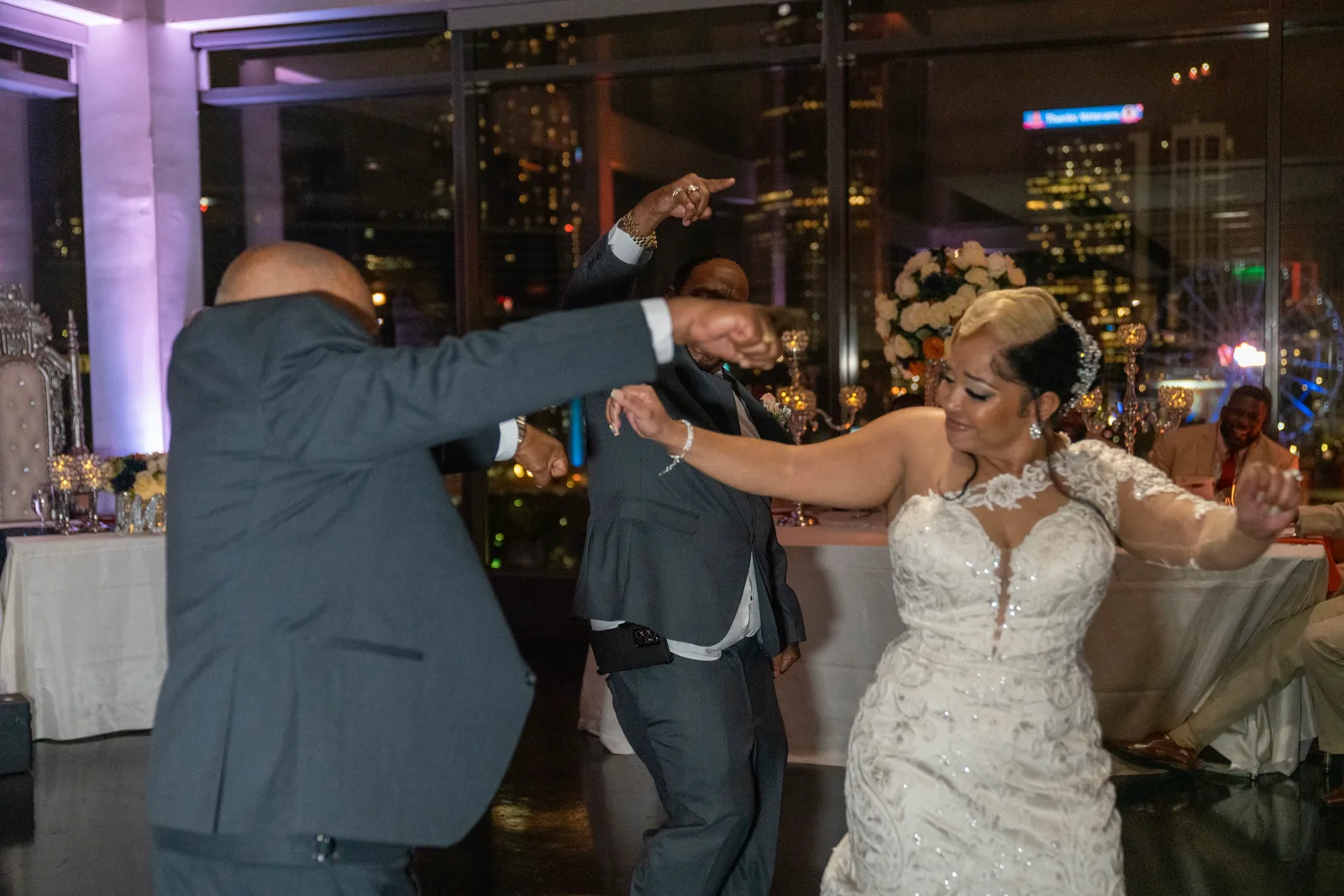
Color-Changing Uplighting Through the Night
Picture your reception at 7 p.m. and again at 10 p.m. Those should feel like two different rooms — and with color changing uplights, they can. Soft, warm amber while everyone’s eating. A romantic blush during the first dance. Then bold, punchy colors the second the dance floor opens. The same lights do all of it, shifting right along with the mood of the night. Here’s how that palette moves from dinner to dance party, and why one set of lights can do so much heavy lifting.
In this article
What color-changing uplighting actually does
Let’s start with the basics. Color changing uplights are small, wireless fixtures placed around the edges of your room, aimed up the walls. Each one can glow in nearly any color and switch on cue — no wires taped across the floor, no bulbs to swap. One tap and the whole room changes character.
That flexibility is the magic. A plain banquet hall becomes your space the second the color comes on. And because the fixtures are programmable, they don’t have to sit on one shade all night. They can breathe with the party.
Think of them as mood lighting with a memory. Warm for dinner, romantic for the dances, electric for the floor — all from the same fixtures, all timed to the flow of your night. That’s the whole idea, and it’s simpler than it sounds.
The dinner glow: warm and soft
The night opens gently, and your lighting should match. During dinner, you want people relaxed, chatting, and looking their best. So the palette starts warm — soft amber, candlelight gold, or a gentle blush. Nothing loud, nothing flashing.
Why warm? Because warm tones flatter skin, make food look better, and keep the room feeling intimate. Guests settle in without even knowing why. It’s the same trick a nice restaurant uses when it dims the lights and everything suddenly feels cozier.
Here’s a bonus: warm uplighting photographs beautifully. Your dinner shots get a golden, film-like glow instead of the flat white of overhead venue lights. Little detail, big difference in the album you’ll keep forever. Planning pros at WeddingWire’s lighting guide agree that warm early tones set the most inviting mood for a seated meal.
Shifting into first dance and toasts
Now the night starts to build. As dinner winds down and the big moments arrive, the room can shift with them. This is where color-changing really shows off, because each moment gets its own look without anyone lifting a finger.
For the first dance, I’ll often ease the room into a soft, romantic tone — a deep blush or a gentle purple that wraps the couple in color. For toasts, a warm, even glow keeps eyes on the speaker. Each shift is subtle, but you feel it. The room leans in with you.
The pros at The Knot’s uplighting guide point out that lighting is one of the cheapest ways to change how an entire room feels. A single color change can turn a dinner space into a stage for your first dance in about two seconds flat.
Great uplighting doesn’t just pick one pretty color — it moves with your night, so the room at midnight feels nothing like the room at dinner.
Dance floor mode: bold and alive
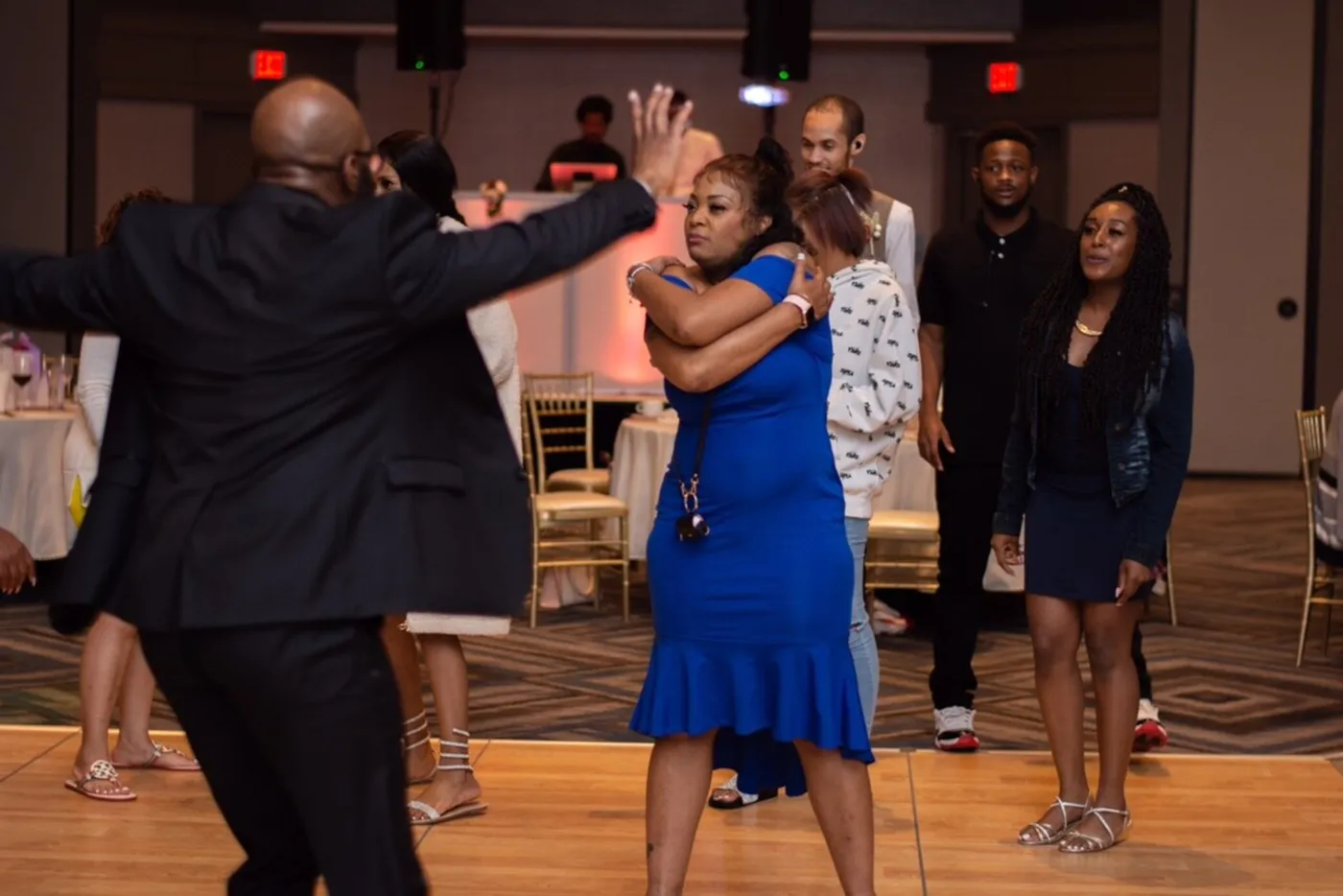
Then the fun really kicks in. The moment the dance floor opens, the whole vibe should change — and your lights lead the charge. Out go the soft ambers. In come the bold, saturated colors that say “it’s time to move.”
This is where color-changing uplights earn their keep. They can pulse, shift, and even chase the beat of the music, throwing rich blues, hot pinks, deep purples, and greens across the room. The energy jumps the second the palette turns electric. Guests feel the switch flip before they’ve even thought about it.
Best of all, it all comes from the same fixtures that gave you that cozy dinner glow. No new equipment, no reset. Just a programmed shift that turns your reception into a nightclub for the last few hours. If you want to see the full range, my room lighting and ambiance page breaks down every look, dinner to dance floor.
Key takeaway: Color-changing uplights let one set of fixtures carry your whole night — warm and soft at dinner, romantic for the dances, and bold and beat-driven for the dance floor. It’s the easiest way to make each part of the evening feel completely its own.
Matching your colors and decor
Here’s what a lot of couples miss: your uplighting can pull straight from your color palette. Got a blush-and-navy wedding? Your lights can echo it. Deep emerald and gold? Same. The room becomes an extension of your theme instead of fighting it.
A quick tip, though: pick one or two core colors, not six. Too many shades at once turns pretty into chaos. I usually suggest a warm base for the calm moments and one or two signature colors that pop for the dances. Restraint reads as elegant; overload reads as a carnival.
And don’t forget the walls themselves. Light-colored walls take color beautifully and glow bright. Dark or brick walls drink up light, so we lean into richer, deeper tones there. A quick look at your Canton venue tells me exactly what will pop, so we plan the palette around your real room.
Why timing the shift matters
Here’s the part that separates okay lighting from unforgettable lighting: when the colors change. A color shift at the wrong second is just a light flicking. A color shift timed to the exact moment the dance floor opens? That’s a jolt of energy the whole room feels.
Because I run the music and the lights together, I can line up every change with the night. The romantic tone lands right as your first-dance song starts. The bold colors hit the instant the beat drops. Nothing feels random, because nothing is. It’s all cued to the flow.
That’s the advantage of one person handling sound and light as a team. A separate lighting person guessing from across the room can’t nail those cues the way a DJ living inside the music can. The shifts feel like part of the show — because they are.
Planning it for your Canton reception
Ready to give your room a wardrobe change through the night? Start by picturing your key moments — dinner, first dance, dance floor — and how you want each to feel. From there, we build a palette that moves right along with them.
Whether you’re celebrating near Cherry Hill Village, at a banquet hall off Ford Road, or anywhere around Canton, the same approach works: warm and soft early, romantic in the middle, bold at the end. One set of lights, three completely different rooms.
For more ideas on making your day feel custom, browse more wedding tips anytime — and if you want the full picture of your celebration, my Canton wedding guide covers the whole night. Curious how I sync the lights to the music? You can meet your DJ and we’ll map your palette together. The best receptions don’t stay the same all night — they grow with the party, and your lighting should lead the way.