
CO2 Jets: Bringing Club Energy to the Floor
You’ve felt it at a concert or a packed club: the beat builds, everybody’s hands go up, and then — whoosh — a wall of white fog shoots into the air and the whole room loses it. That’s what CO2 jets do, and yes, you can have that exact moment at your own party. They turn a peak song into a memory people talk about for weeks. Here’s how they work, when to fire them, and how a good DJ builds the perfect blast so it lands at the loudest, happiest second of the night.
In this article
What are CO2 jets, really?
Let’s clear up the mystery first. CO2 jets are handheld or stand-mounted nozzles hooked to a tank of liquid carbon dioxide. When the trigger fires, that liquid expands fast and shoots out as a thick plume of cold, white fog. It looks like a special-effects moment from a stadium show, and it climbs 15 to 20 feet in a second.
Here’s the part people love: the fog is cold and dry, so it doesn’t leave your floor slippery or your guests damp. It hangs in the air for a beat, then vanishes. No residue, no mess, no sticky cleanup. That’s a big reason venues are comfortable with them.
And the sound matters just as much as the sight. That sharp hiss punches right through the music and tells everybody, without a word, that something big just happened. It’s a signal your whole body reacts to before your brain catches up.
Why they bring club energy to the floor
So why do these little bursts pack such a punch? Because energy on a dance floor is all about peaks. A great night isn’t loud the whole time — it climbs, breathes, and climbs again. The peaks are what people remember, and a CO2 blast marks the very top of one.
Think about the last show that gave you goosebumps. Odds are there was a drop, a burst of light or fog, and a crowd losing its mind all at once. That’s the club formula, and you can borrow it for a wedding reception, a sweet sixteen, or a corporate after-party. The blast tells the room, “This is the moment. Give it everything.”
There’s a bit of science behind it, too. A shared surprise — a flash, a bang, a burst of fog — bonds a crowd in a single second. Everybody gasps together, laughs together, and dances harder together. You can’t fake that with a playlist alone.
According to The Knot’s guide to reception special effects, the details that wow guests most are the ones that hit all the senses at once. A CO2 jet does exactly that: you see it, you hear it, and you feel the cool air roll over the floor.
When to fire the blast during the night
Timing is everything here. Fire a CO2 jet at the wrong moment and it’s just noise. Fire it at the right one and the room erupts. So when’s the right one? Always at a peak, never during a slow build.
My favorite spots: the exact drop of the biggest song of the night, the second a grand entrance hits the doors, or the final chorus of a closer everybody’s screaming along to. Save it for two or three moments, tops. Fire it every song and it stops feeling special — it just becomes background.
Here’s a rule I live by: less is more. A single, perfectly-placed blast beats ten random ones. Guests should be caught a little off guard each time, so the surprise stays fresh. Overuse is the fastest way to turn a jaw-dropper into a shrug.
A CO2 blast doesn’t make a moment big. It marks a moment that’s already big — and that timing is the whole art.
Are CO2 jets safe indoors?
Good question, and an important one. The short answer: yes, when they’re run by a pro in a room that fits them. The fog is just carbon dioxide, the same gas in your sparkling water, and it warms up and clears in seconds. It won’t set off most smoke alarms because there’s no actual smoke or heat.
That said, a few things matter. The ceiling needs enough height so the plume has room to rise. The venue should know it’s happening ahead of time. And the operator has to aim away from faces and keep the tank secured. Handled right, it’s a clean, controlled effect — not a fire hazard.
Before any event, I check with the venue and confirm their rules. Plenty of Ann Arbor spaces are happy to allow CO2 as long as it’s cleared in advance. The safety folks at WeddingWire say the same: always loop in your venue early, and use an operator who does this for a living.
Key takeaway: CO2 jets shoot cold, dry fog that leaves no mess and clears in seconds. Save the blast for two or three real peaks, clear it with your venue first, and let a pro handle the trigger — that’s how you get the wow without the worry.
CO2 jets vs. other special effects
Here’s what a lot of people miss when they start comparing effects: each one does a different job. CO2 is the punch. It’s loud, fast, and all about energy. It’s built for the peak of a party, not a soft romantic moment.
Cold sparklers, by contrast, are the glamour move — those gold fountains for a first dance or grand entrance. Dry-ice fog is the dreamy one, the low cloud that makes a first dance look like it’s floating on air. And uplighting is the mood-setter that glows all night long in the background.
The magic really shows up when you mix them. Uplighting paints the room, cold sparklers frame the entrance, and CO2 marks the wildest song. If you want to see how lighting and effects work together across a whole event, my room lighting and effects page breaks down what pairs well and what to skip.
How a DJ builds a moment around it
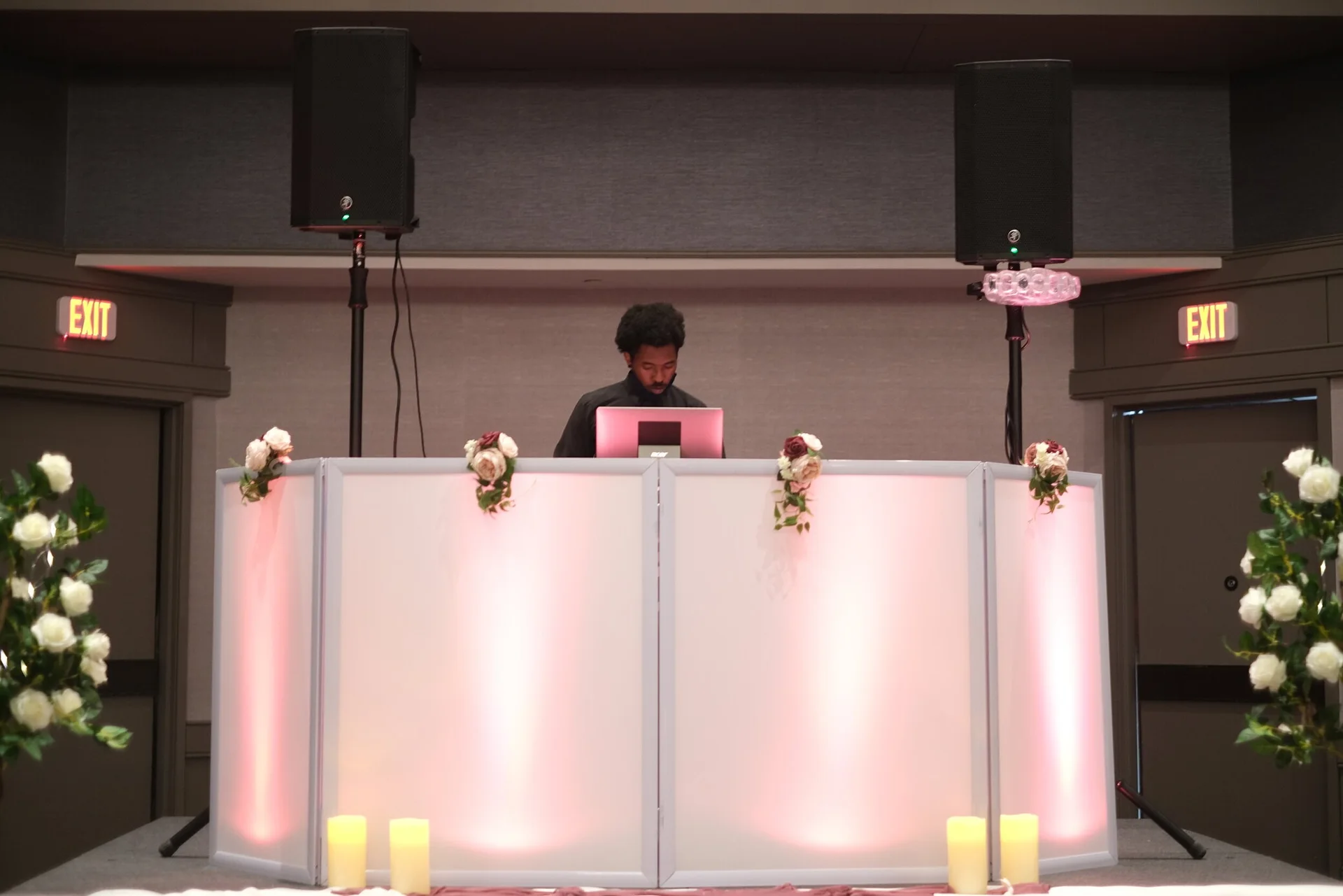
This is where the effect goes from cool gadget to unforgettable memory. A CO2 jet on its own is fun. A CO2 jet fired at the exact right beat, right as the bass drops and the crowd screams, is electric. The difference is the person on the decks.
When I run a blast, I read the floor first. I watch the energy climb, I feel the crowd lean in, and I hold the trigger until the peak lands — not a second early, not a second late. That instinct is something a phone playlist simply can’t do. A machine doesn’t know your cousins just stormed the floor.
I also build a little runway to it. I’ll stack two or three songs that keep raising the temperature, drop the volume for a half-second so the room holds its breath, then bring it all back with the blast. That tension-and-release is the trick, and it’s why a live DJ makes effects hit ten times harder.
Planning it for your Ann Arbor event
Ready to add some club energy to your night? Start by picturing your two or three biggest moments. Is it the grand entrance, the last dance, the birthday countdown? Those are your blast spots. You don’t need CO2 all night — you need it exactly when it counts.
Next, check your venue. Whether you’re celebrating downtown near Main Street, out by the university, or in a ballroom off Washtenaw Avenue, a quick call about ceiling height and effects rules saves any surprise. Most Ann Arbor spaces are on board once they know the plan.
Then let your DJ handle the rest live. For more ideas across every kind of party, browse more event tips anytime — and if you’re planning a wedding, my Ann Arbor wedding guide walks through the whole night, effects and all. Want to talk it through? You can meet your DJ and we’ll map out the moments that deserve a blast. The goal isn’t fog for the sake of fog. It’s a room full of people who felt the biggest second of the night in their chest.