What Makes a Great School Dance DJ
Booking the wrong school dance DJ is the fastest way to empty a gym floor. You’ve seen it: kids leaning on the walls, arms crossed, phones out, while somebody plays a random playlist off a laptop. It doesn’t have to go that way. The right DJ can turn that same room into a packed, screaming, happy crowd in one song. So what actually separates a great school-dance DJ from a guy with a speaker? Let’s break down the real qualities that matter, so your Royal Oak dance is the one everybody talks about Monday morning.
In this article
Why school dances are their own beast
Here’s the thing most people miss. A great school dance DJ is not the same as a great wedding or club DJ. The crowd is tougher, the room is harder, and the rules are stricter. A gym echoes like crazy. The music has to stay clean. And teens will call your bluff in about four seconds if the songs feel out of touch.
So a DJ who kills it at a 50th birthday might totally bomb at a high school homecoming. The songs are different, the energy curve is different, and honestly, the pressure is higher. Teenagers don’t fake it to be polite. If they’re bored, they’ll show you. That’s actually a good thing, though — it means a DJ who can pack a teen floor really knows what they’re doing.
The best ones treat a school dance as a craft, not an afterthought. They plan for the room, the crowd, and the school’s rules ahead of time. That prep is why the night looks effortless. If you want a sense of how a full event gets planned start to finish, our events and parties page walks through the same care we bring to every booking.
Reading a teen crowd (the real skill)
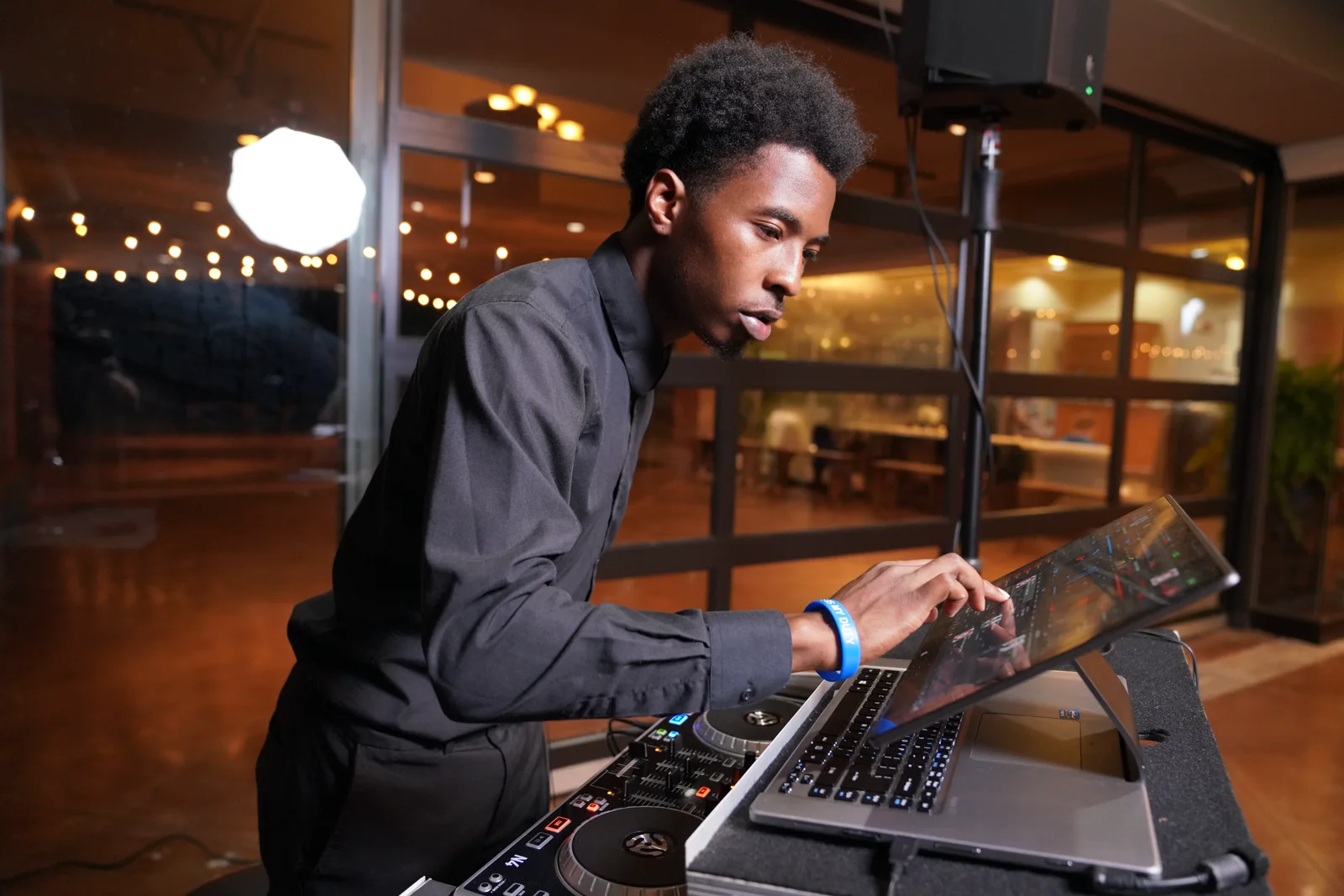
This is the one thing you can’t fake, and it’s the biggest difference between good and great. Reading the room means watching how kids react to each song and adjusting in real time. A live DJ feels the floor. A playlist just plays whatever’s next, even if the room clears out.
When I run a dance, I’m watching hands, feet, and faces the whole night. If a song is landing, I ride it and stack another that hits the same energy. If the floor thins out, I switch gears fast — before the room goes cold, not after. That instinct comes from years of reps, and it’s why a phone playlist will never match a real DJ.
Teens also move in waves. One group starts, then the shy kids join, then suddenly everyone’s out there. A great DJ builds toward those waves on purpose. They don’t blow the biggest song at 7:15 when the room’s half empty. They save it, stack the energy, and drop it when the floor is ready to explode.
Here’s a bonus most folks don’t think about: a DJ who reads the crowd also handles the awkward moments. A slow song where nobody’s coupled up? They know to keep it short. A trend that just died last week? They skip it. Small calls like these add up to a night that flows instead of stalls.
Clean music without killing the vibe
Every school has rules, and clean lyrics are non-negotiable. But here’s the catch: the radio edit isn’t always clean enough, and a truly clean edit can feel flat if the DJ isn’t careful. A great school-dance DJ keeps a library of proper clean versions that still slap.
I build my school sets from vetted clean edits, not whatever pops up first online. That way the energy stays high and no teacher has to come cut the music mid-song. Trust me, nothing kills a floor faster than a sudden silence because a bad word slipped through. Preparation prevents that entirely.
Staying current matters too. The charts move weekly, and what’s hot at a February dance may be old news by May. I keep an eye on the Billboard Hot 100 and, more importantly, on what the students at each school are actually requesting. The chart tells you what’s popular nationally; the request line tells you what this crowd wants tonight.
A great school dance DJ keeps the music clean and current — without ever letting the energy dip for a single song.
Key takeaway: The DJ makes or breaks a school dance. Look for someone who reads a teen crowd live, keeps a real library of clean edits, brings gym-sized gear, and knows exactly when to grab the mic and when to let the music ride.
Gear that fills a gym, not a garage
Sound is where a lot of cheap bookings fall apart. A gym is a big, hard, echoey box. A pair of small speakers that sound fine in a living room will turn to mush against those cinderblock walls. You need real gear, placed right, and tuned for the space.
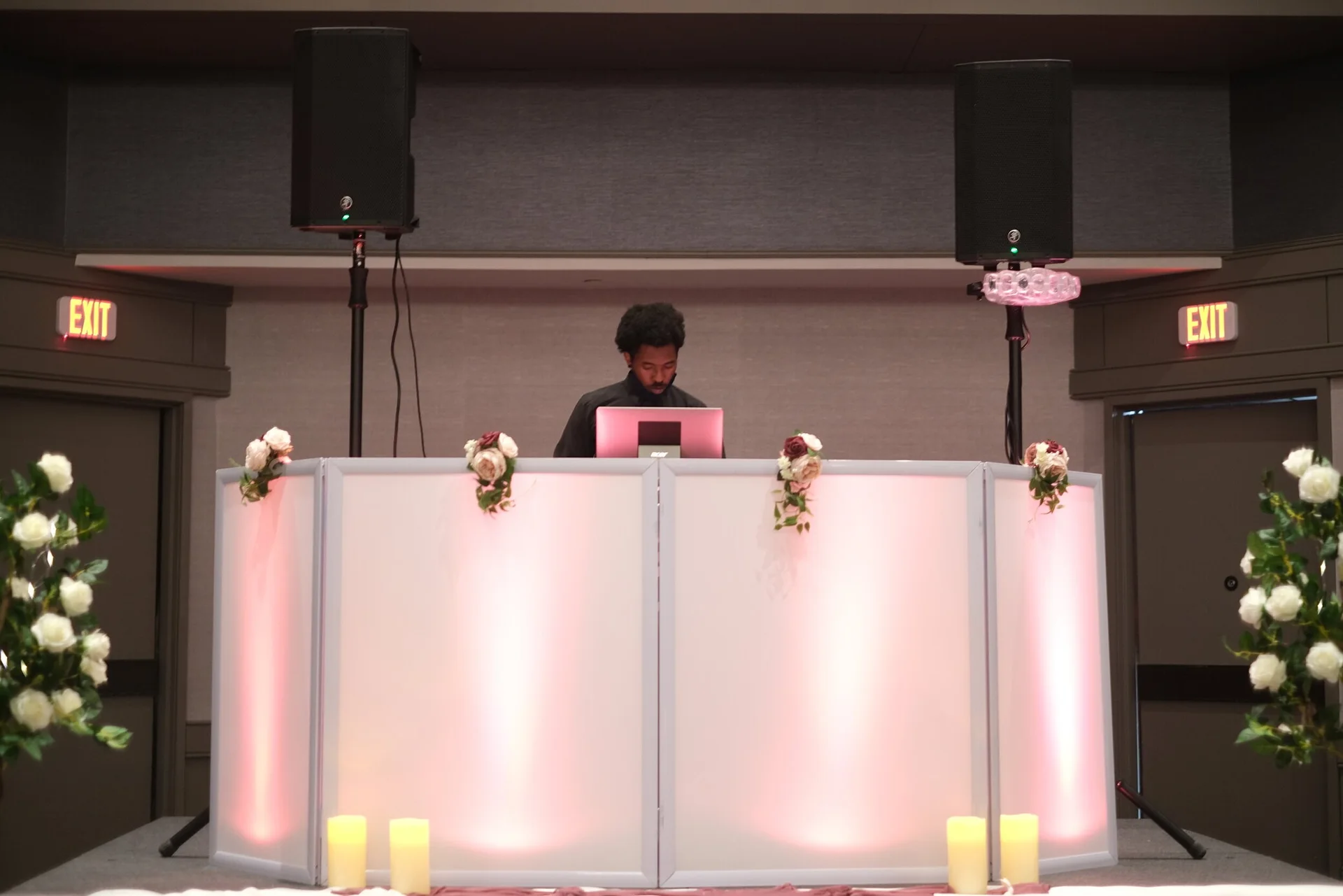
A pro brings a system sized for the room and knows how to aim it so the beat hits clean on the far wall without blowing out the front row. Lighting matters too — a dark gym feels like a study hall, but a floor washed in color feels like a party. Good color uplighting is one of the cheapest ways to make a plain gym feel like an event.
Backup gear is the quiet hero here. Cables fail. Laptops freeze. A great DJ carries spares of everything, so a hiccup never becomes a ten-minute silence. You’ll never notice it went wrong, because a real pro fixes it before the room even knows.
Knowing when to talk and when to shut up
Mic skills are a real thing, and they cut both ways. A great school-dance DJ knows how to hype a crowd, run a quick contest, or announce the court — and just as importantly, when to say nothing and let a huge song breathe.
The worst move is a DJ who talks over every track like a morning radio host. Teens hate that. They came to dance, not to hear a stranger narrate. So the mic should be a spice, not the main dish. A few well-timed words to lift the energy, then step back and let the music do its job.
Timing announcements is an art too. You don’t stop a packed floor to make a slow announcement about the coat room. You wait for a natural break, keep it short, and roll right back into the beat. That respect for the room’s energy is exactly what separates a pro from a hobbyist.
Keeping it fun and safe for everyone
Here’s what a lot of parents and planners miss: a great school-dance DJ is also a partner to the staff. They show up early, check in with the teachers running the event, and know the school’s rules before the first song plays. No surprises, no drama.
That means keeping the content clean, keeping the volume at a safe level, and working with chaperones instead of against them. If a teacher signals to skip a song or lower the mood for a minute, a pro reads that instantly and adjusts. The goal is a night everyone enjoys — students, staff, and the parents who trusted the school with a great evening.
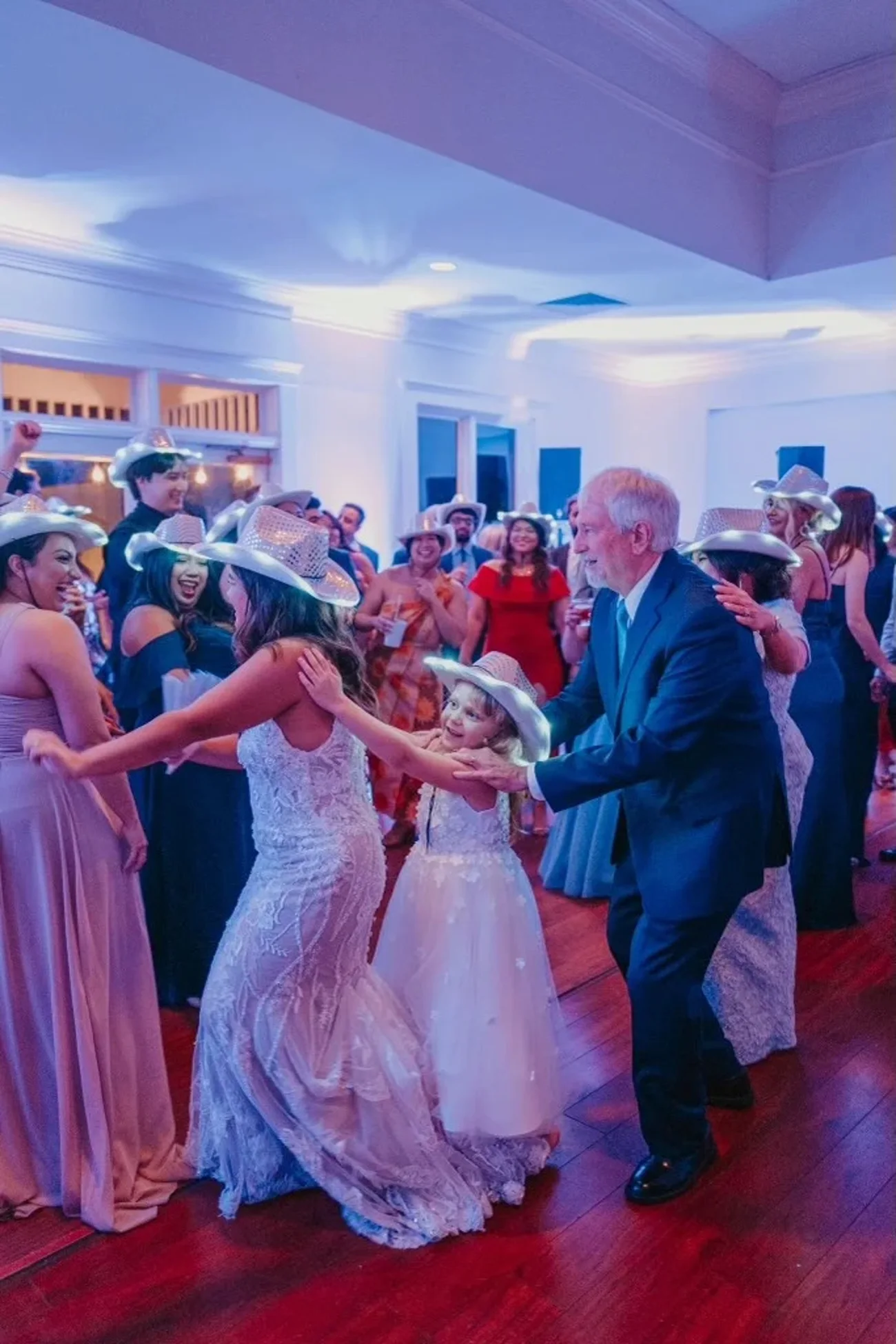
Inclusion matters, too. A strong DJ mixes genres so every group finds their song, not just the loudest table. Hip-hop, pop, a throwback, a line dance everyone knows — when the whole room gets a turn, the whole room stays on the floor. Groups like the community over at WeddingWire say the same thing about any dance floor: variety is what keeps a mixed crowd moving all night.
Booking the right DJ in Royal Oak
So how do you actually find the right one? Start by asking specific questions. Have they done school dances before? Do they carry clean edits? What’s their backup plan if gear fails? A confident pro will have quick, clear answers. A hobbyist will get vague.
Ask about the room, too. A DJ who asks you about the gym size, the power outlets, and the school’s rules is already thinking like a pro. Whether your dance is at a Royal Oak high school, a middle school cafeteria, or a rented hall nearby, the right DJ plans for that exact space before the date.
Want more tips on picking entertainment for any event? Browse more DJ and party tips any time. And if you’d like to talk through your school’s dance, you can meet your DJ and we’ll build a plan that fits your crowd, your rules, and your budget. A great night isn’t luck — it’s the right person behind the decks. If you’re also planning a wedding or bigger celebration down the road, my Detroit wedding DJ guide covers that whole night too.