Arabic Wedding Music & Attire Timeline (Dearborn)
Here’s something a lot of couples miss: Arabic wedding music and the bride’s attire move together, hour by hour, like two dancers who know the steps. The dress changes. The energy climbs. The dabke sets land right when the room is ready to explode. Get that timing wrong and the night feels choppy. Get it right and every outfit change becomes its own grand entrance. In Dearborn, where big, beautiful Arabic weddings are a weekly thing, that sync is what separates a good reception from one people talk about for years. Let’s walk the whole night, dress by dress and beat by beat.
In this article
Why music and attire move together
Think of an Arabic wedding as a story told in chapters. Each chapter has its own outfit and its own sound. The bride might start in one gown, switch to a second look mid-night, and the music has to rise and fall around those moments so nothing feels rushed.
When the Arabic wedding music and the attire are in step, every dress change gets a soundtrack that announces it. The room turns. Phones come out. The moment lands. When they’re out of step, the bride re-enters in a stunning second gown and the DJ is still mid-slow-song. Nobody notices. That’s the mistake to avoid.
So the fix is simple: plan the music around the outfit map, not the other way around. Once you know when each look appears, the beats fall into place. That’s the whole secret, and it’s easier than it sounds.
The zaffe: the grand entrance
The night really begins with the zaffe — the loud, drum-driven procession that walks the couple into the hall. This is the highest-energy entrance in any wedding, full stop. Drummers, sometimes a live band, sometimes recorded tracks with a mic call over the top.
The bride and groom are in their showpiece looks here: the big gown, the sharp suit. So the music matches the grandeur. Think heavy tabla, a soaring vocal, and a beat everyone claps along to. In Dearborn halls along Ford Road and Michigan Avenue, I’ve seen zaffe entrances that stop conversation cold. That’s the goal.
One tip: coordinate the zaffe timing with your photographer and the hall staff. The doors, the lights, and the first beat all need to hit together. When they do, the entrance photo is unforgettable.
First look, first dress, first slow set
After the zaffe cools, the room settles for the couple’s first dance and a slower romantic set. The bride is still in her main gown, so the music stays elegant and warm. This is your Arabic ballad window — a Fairuz classic, a soft Um Kulthum-inspired moment, or a modern love song the couple picked.
This calmer stretch matters. It gives guests a breather after the big entrance and it gives the couple a tender moment before the party ramps up again. Pace is everything. You can’t run at full volume all night, or the peak hour has nowhere left to climb.
It’s also the natural spot for family dances and any speeches. Keep the music soft under the mic so every word carries. The same care I bring to any wedding reception timeline applies double here, because there are more moving parts to line up.
In an Arabic wedding, the dress doesn’t just change the look of the night — it changes the beat. Match the two and every entrance becomes an event.
Dabke sets and the outfit change
Now the heart of the night: the dabke. This is the line dance that gets every generation on their feet, arms linked, stomping in rhythm. And it usually lines up with the bride’s second look, a lighter dress or a more dance-friendly gown.
Here’s the sync in action. As the bride steps out in her second outfit, I roll into a dabke set that builds fast. The room reads the new dress as the signal: it’s time to dance. Suddenly the floor is a full circle, uncles leading the line, kids copying the steps. If you want to see how the classic steps and staging work, the folklore write-ups at the Smithsonian Center for Folklife give a nice cultural backdrop before you personalize your own set.
The trick is not to blow the dabke too early. Save it for when the room is warm and fed. A dabke at the right moment is the loudest, happiest ten minutes of the whole wedding.
Key takeaway: Map the bride’s outfit changes first, then hang the music on that frame. Zaffe for the grand entrance, a soft set for the first look, and the dabke timed to the second dress. That sync is what makes an Arabic wedding flow.
Peak hour and the modern mix
Later in the night, the crowd wants range. This is where I blend Arabic hits with the pop, hip-hop, and Motown the younger guests grew up on. In Dearborn, that mix is the norm, not the exception — a room full of people who love both a Nancy Ajram track and a Detroit throwback in the same set. Planning resources like The Knot’s multicultural wedding guide echo the same idea: honor the traditions first, then let the modern floor open up.
The bride might be in her final, most comfortable look by now, ready to actually dance. So the music opens up. One song in Arabic, the next in English, back and forth, keeping every corner of the room on the floor. Nobody sits out when the mix is done right.
This is also where reading the crowd really counts. If the older guests are still going strong, I keep the Arabic sets deep. If the floor skews young, I lean the mix forward. A live DJ feels that shift and rides it — a fixed playlist just plays whatever’s next and hopes.
How a DJ syncs the timeline
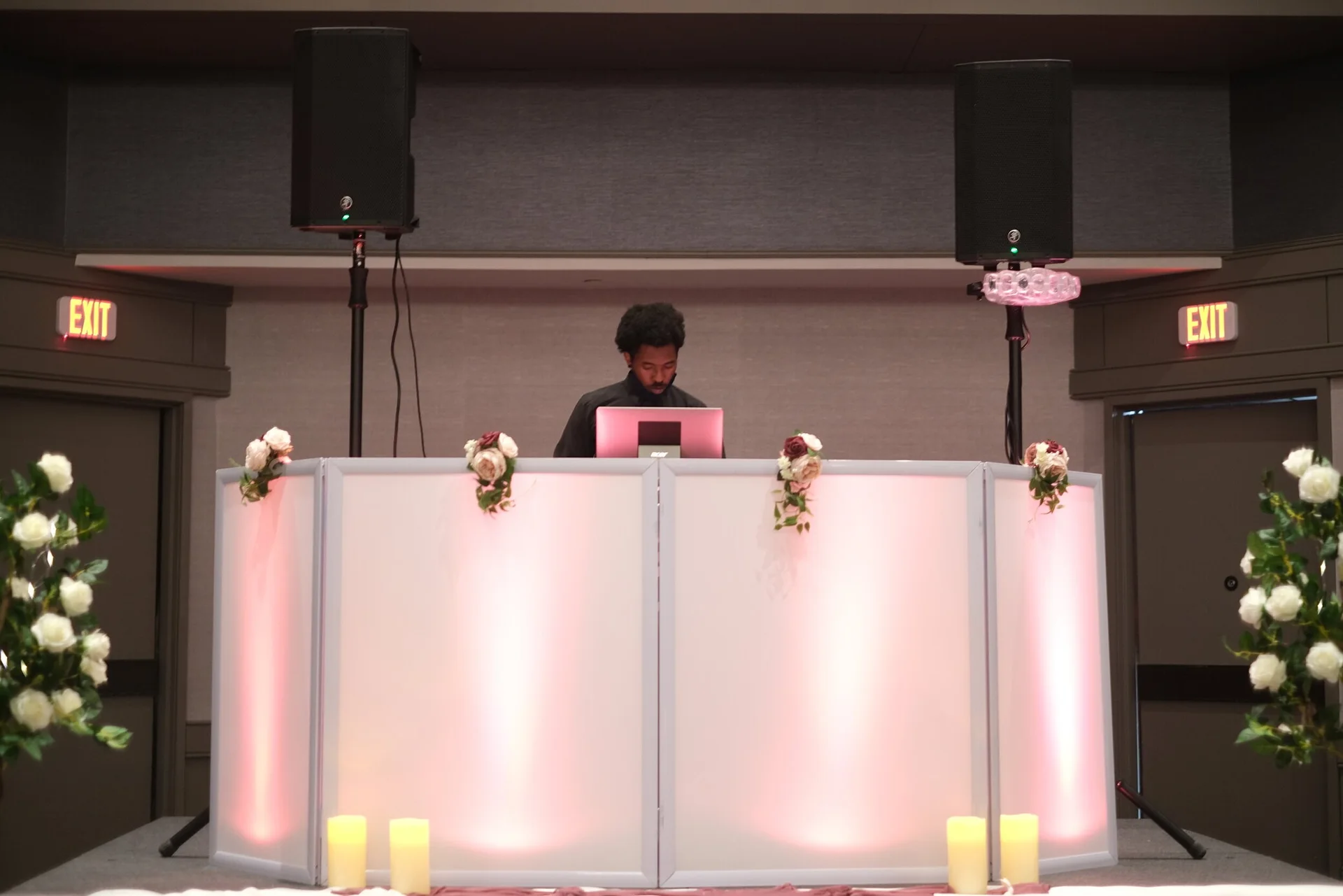
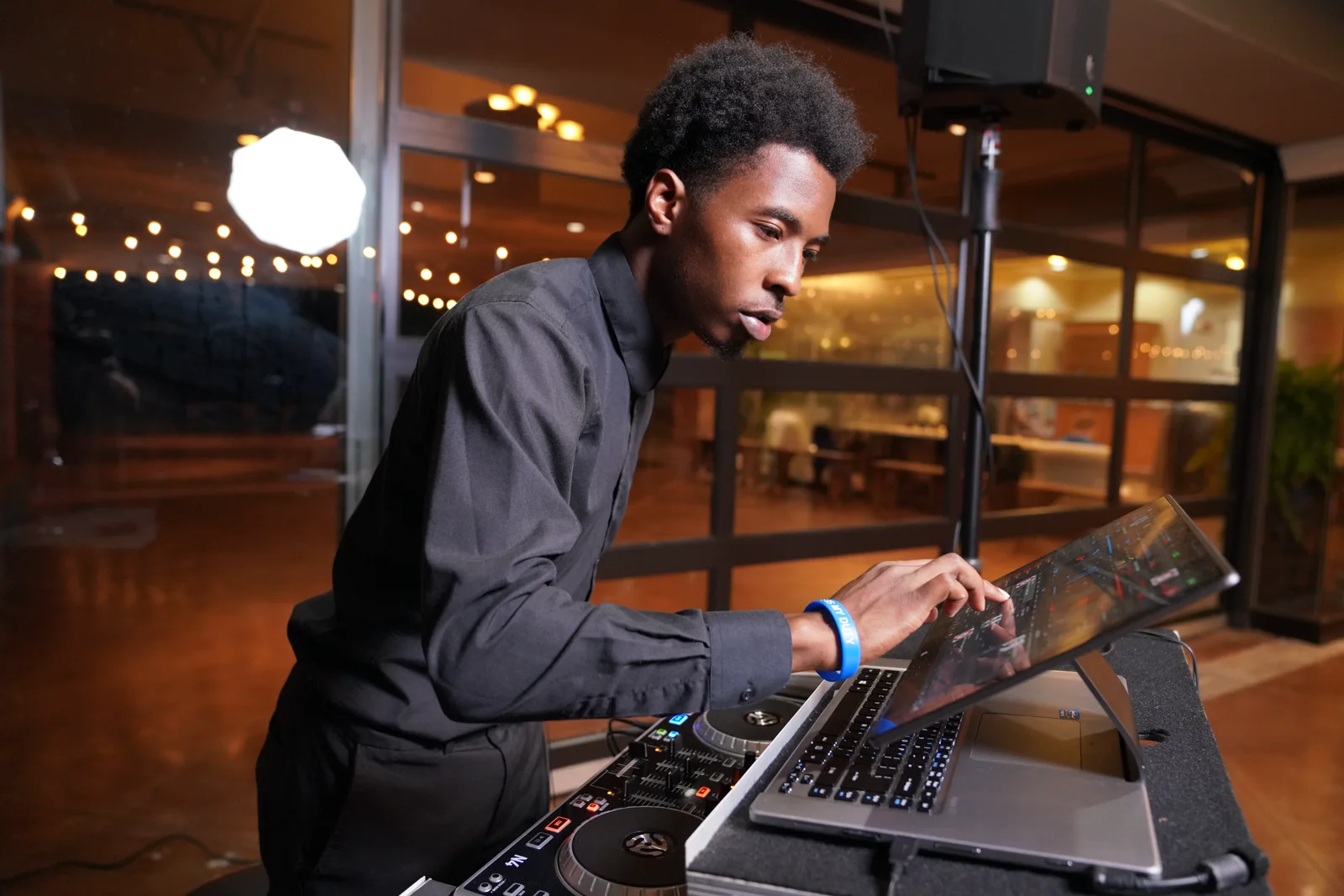
This is the real work behind the scenes. Before the wedding, I sit down with the couple and build a run-sheet that maps each outfit change to a music cue. Second dress at roughly 9:00? The dabke set is queued and ready. Cake at 10:00? A soft transition track waits in the wings.
On the night, I keep an eye on the bridal suite and the coordinator so I know when a change is close. The second I get the nod, the energy shifts on the floor to meet the bride as she reappears. That coordination is invisible to guests, and that’s exactly the point. It should feel effortless, even though a lot is happening.
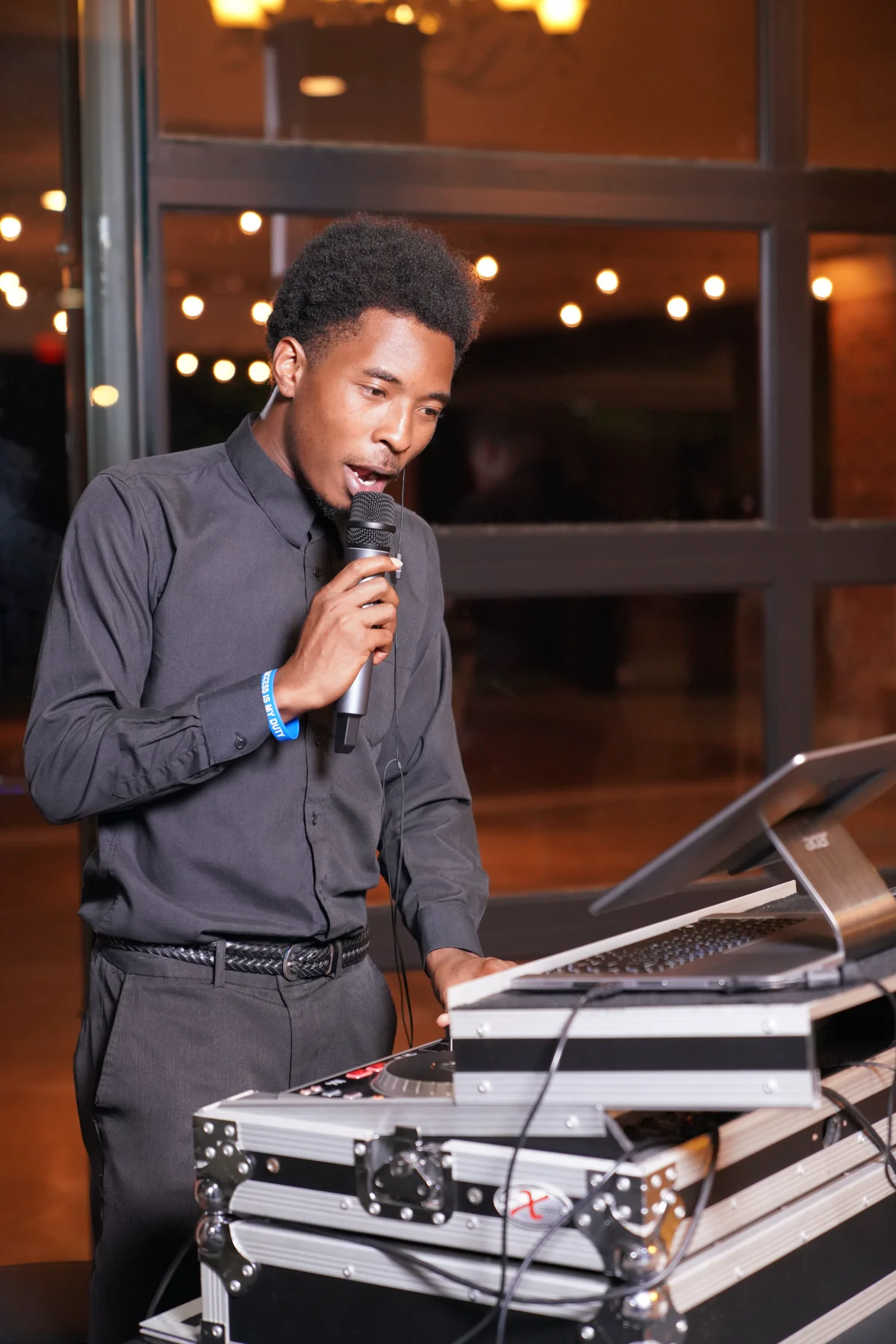
I also handle the bilingual mic work — announcements in a way that respects both the elders and the younger crowd. Small touches like that tell a family you understand their day. It’s the difference between a DJ who plays songs and one who runs a wedding.
Planning your Dearborn wedding
Ready to map your own night? Start with your dresses. Write down each look and roughly when it appears. Then we build the music around those beats: zaffe, first look, dabke, peak hour. Once the frame is set, the playlist almost writes itself.
Whether you’re celebrating at a grand hall near Warren Avenue, a banquet space in east Dearborn, or a venue out toward the airport, the same rhythm holds: honor the traditions, respect the pace, and let each outfit change be its own entrance. For more ideas across every kind of celebration, browse more wedding tips any time, and for a fuller local picture you can see how I run a Dearborn wedding from the first drum to the last song.
At the end of the night, all that planning gives you one thing: a wedding that flows like a story instead of a stack of songs. That’s the goal. If you’d like a hand syncing it all, you can meet your DJ and we’ll build the run-sheet together, dress by dress.