La Hora Loca: The Crazy Hour Explained
La hora loca — the “crazy hour” — is the moment a good wedding turns into a night people talk about for years. Out come the masks, the glow sticks, the noisemakers, and a wall of Latin beats that yank every single guest onto the floor. If you’ve never seen one, picture the party hitting a second peak just when energy usually fades. That’s the whole point. Here’s what la hora loca is, where it comes from, and how a Detroit DJ pulls it off so it lands like a bomb instead of a fizzle.
In this article
What la hora loca actually is
Let’s clear up the name first. La hora loca means “the crazy hour” in Spanish, and it’s a burst of pure party energy dropped into the middle of a reception. For about 30 to 60 minutes, the lights go wild, the music turns up, and props fly out to the crowd. It’s controlled chaos, in the best possible way.
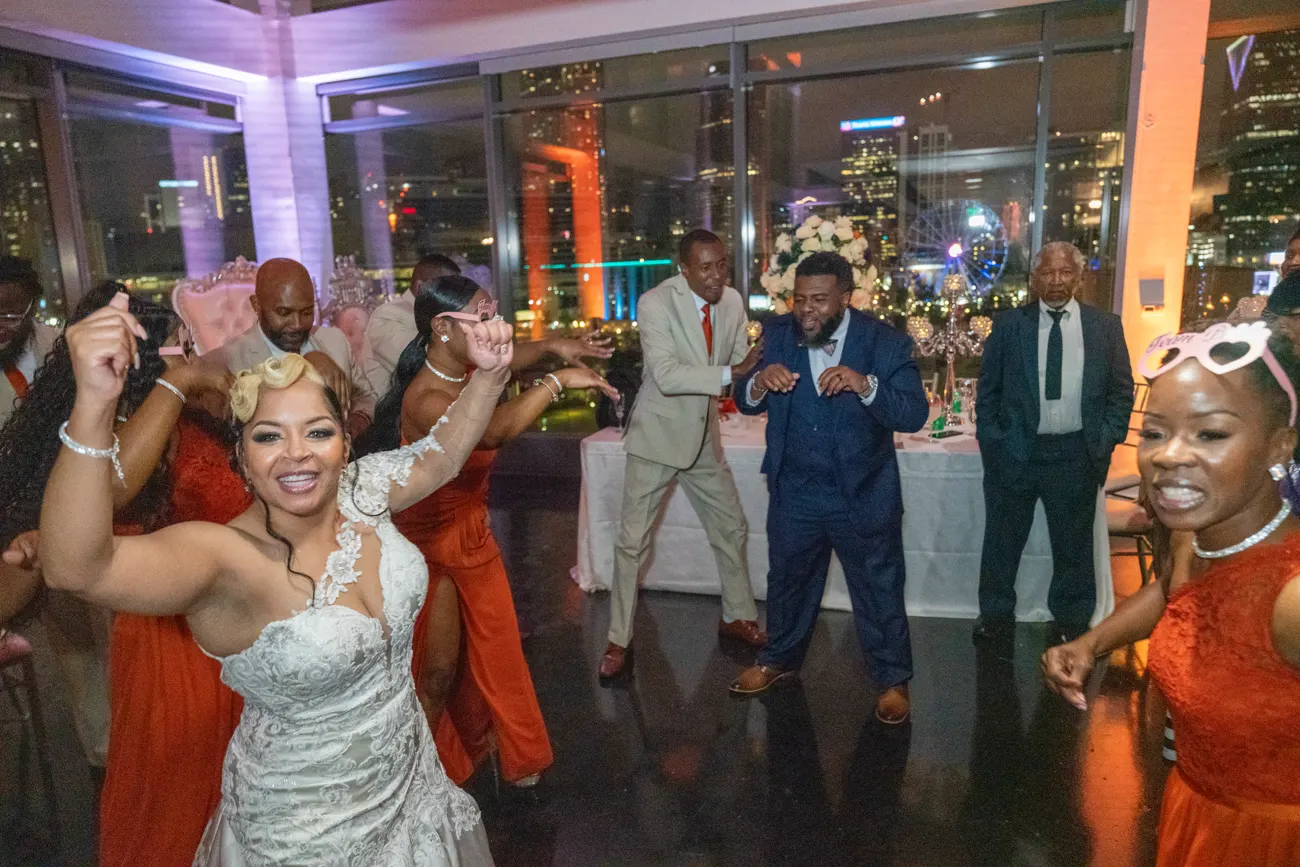
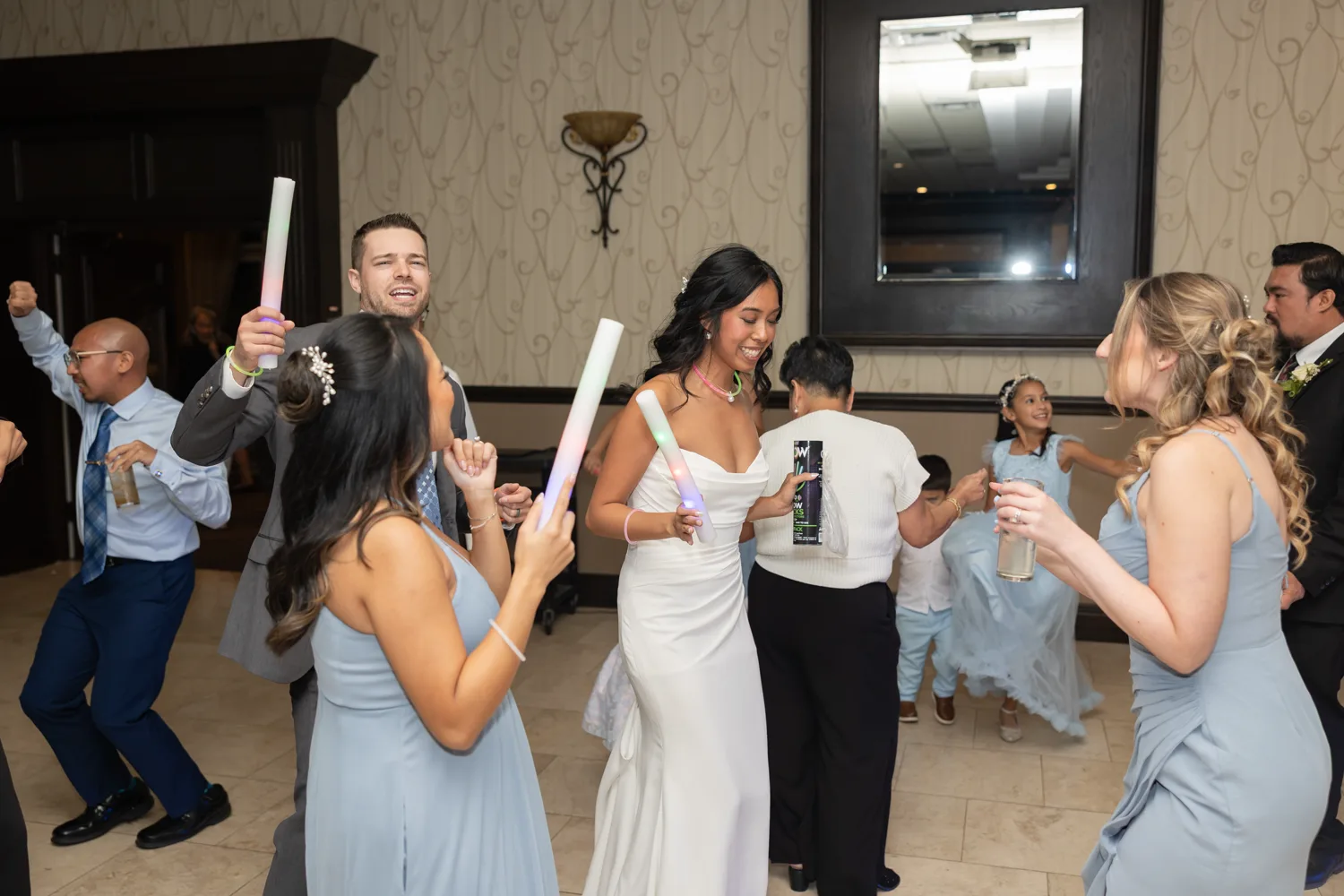
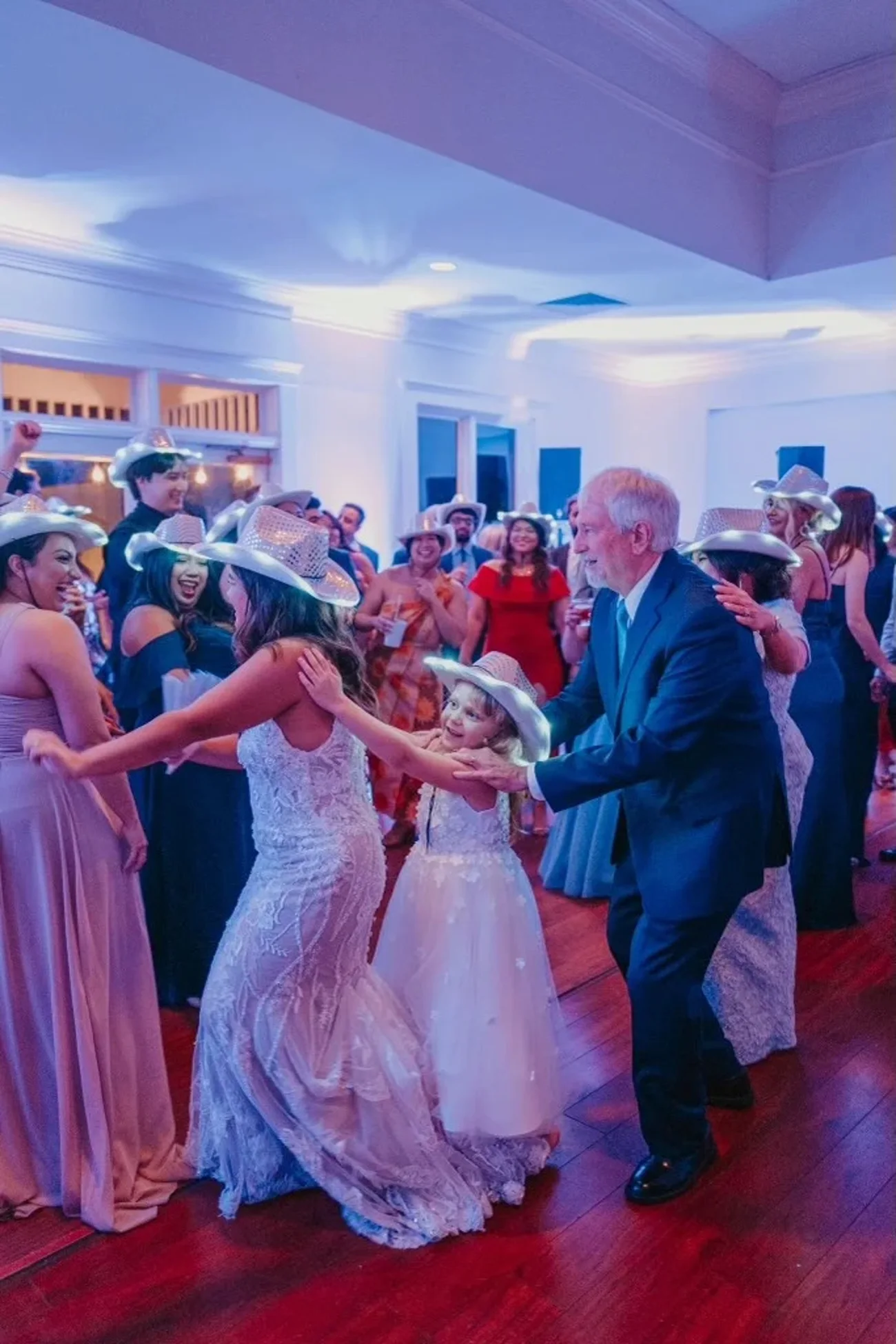
Here’s the feeling it creates: guests who were sitting suddenly can’t stay in their chairs. Grandma’s got a feather boa on, the groomsmen are wearing light-up glasses, and everyone’s laughing. It’s the part of the night nobody photographs politely — they’re too busy dancing. That’s exactly what you want.
People sometimes think it’s just “more dancing,” but it’s more deliberate than that. La hora loca is a planned surge. It has a start, a peak, and a landing, and a good host builds it like a rollercoaster. Done right, it re-energizes a room that might otherwise be winding down.
Where the tradition comes from
La hora loca has deep roots in Latin American celebrations, especially in Venezuela, and it spread through Colombia, the Caribbean, and beyond. Over the years it became a staple at quinceañeras and weddings, and now you’ll find it at receptions all over the United States, Detroit very much included.
Part of why it traveled so well is that it’s joyful and welcoming. You don’t need to know the steps or speak the language to grab a maraca and jump in. That open-door spirit is a big reason couples of all backgrounds have fallen in love with it. As The Knot explains in its hora loca guide, the tradition is all about pulling every guest into one shared explosion of fun.
When the crazy hour hits
Timing is everything with la hora loca. The classic spot is later in the reception, usually after dinner and the traditional dances, when the energy might normally start to dip. That dip is your opening. Instead of letting the party cool, you blow the roof off it.
A lot of couples run it around the two-hour mark of open dancing. The idea is to catch the crowd right before they get tired, hand them a second wind, and ride it into the late-night stretch. Get the timing wrong — too early and there’s no dip to fix, too late and half your guests have left — and even the best props fall flat.
My move is to read the room rather than watch the clock. If I see the floor thinning at 10 p.m., that’s my cue. I build a couple of songs of anticipation, then drop the hour when the crowd is primed. Feeling that exact moment is something only a live DJ can do.
La hora loca isn’t just more dancing — it’s a planned surge that catches the crowd right before they tire and hands the whole room a second wind.
Props, masks, and the toolkit
Now for the fun part: the stuff. The props are what make la hora loca feel like a carnival broke out at your wedding. The classics include feather masks, glow sticks, light-up glasses, foam batons, maracas, noisemakers, and sometimes big LED puppets or a stilt walker if you want to go all out.
Here’s what a lot of couples miss: more props isn’t automatically better. A pile of cheap junk that breaks in five minutes just makes a mess. A tight, quality kit handed out at the right beat — that’s what creates the magic. I help couples pick a prop set that matches their crowd and their budget, so the money goes to impact, not clutter.
Lighting is the other half of the toolkit. When the crazy hour drops, the room should change color instantly. Bold uplighting and moving beams turn a calm ballroom into a nightclub in one second. Party planners at Zola’s expert advice hub point out that the lighting change is what tells guests the party just shifted gears. Pair the lights with the props and the effect is unforgettable.
Key takeaway: La hora loca is a planned mid-reception energy surge — roughly 30 to 60 minutes of Latin beats, bold lighting, and props that pull every guest onto the floor. Time it to the crowd’s dip, keep the prop kit tight and quality, and let a live DJ build the drop.
The music that drives it
The heartbeat of la hora loca is the music, and it needs to be relentless. Think fast, loud, and impossible to sit through: salsa, merengue, reggaeton, cumbia, Latin pop, and a few crossover hits that everyone knows. The tempo stays high the entire time — this is not the moment for a breather.
What makes it sing is the mix. You want tracks that a Latin crowd will scream for, plus a handful of global smashes that pull in guests who don’t usually dance to Spanish-language music. That blend keeps the whole room in it, not just part of it. Nobody stands on the sidelines during a well-built crazy hour.
Pacing matters here too. I stack the biggest bangers back to back and use quick, tight transitions so there’s never a gap for the energy to escape. The second one song ends, the next is already hitting. For more ideas on reading a crowd and keeping a floor packed, browse more wedding tips anytime.
How a DJ makes or breaks it
Here’s the truth: la hora loca is a performance, and it needs a conductor. A playlist can’t sense the room, build the anticipation, or drop the props at the perfect beat. A live DJ can. This is one moment where the difference between a pro and a speaker is night and day.
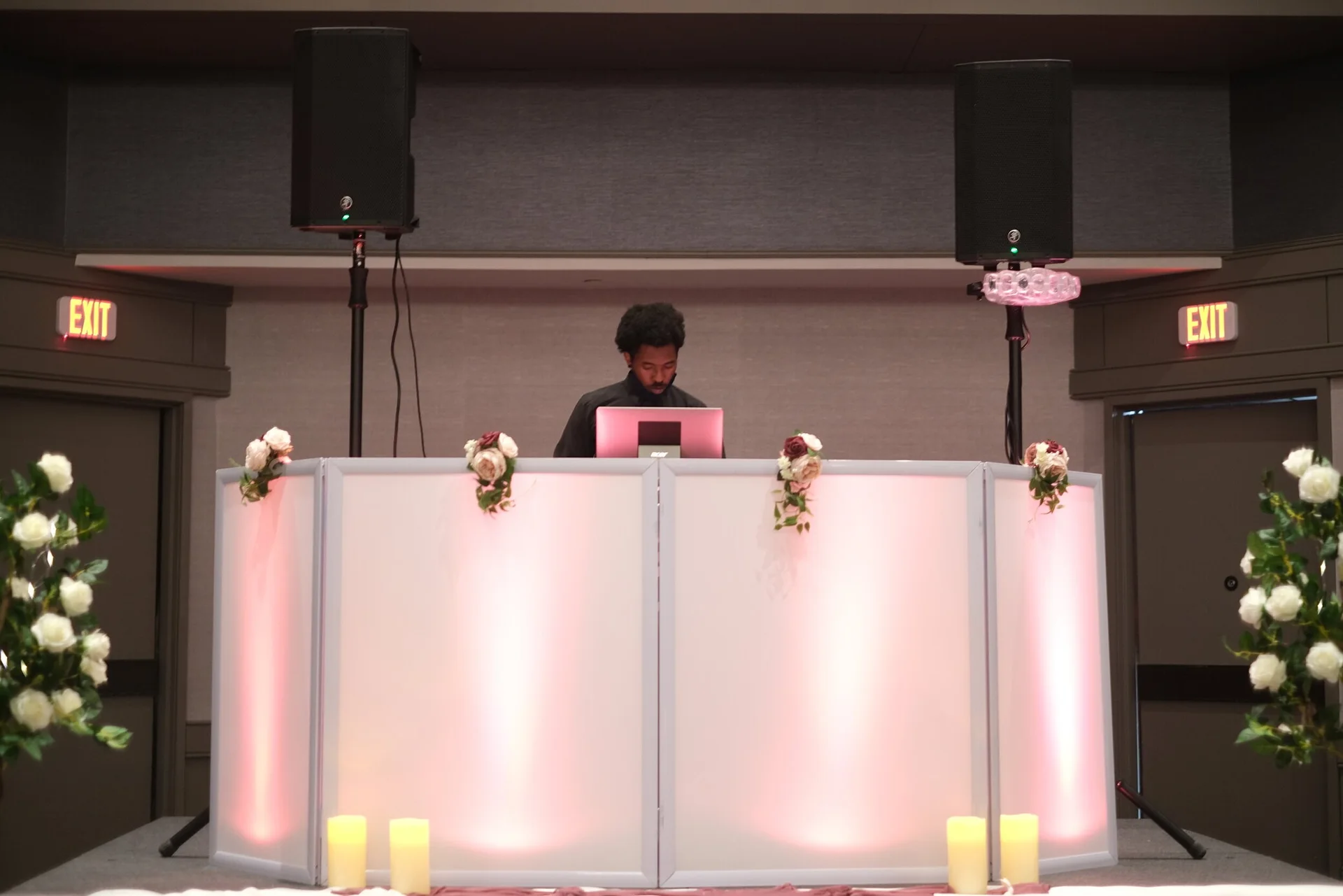
When I run the crazy hour, I’m doing three jobs at once — watching the floor, working the mic to hype the crowd, and cueing the lighting and props to hit on the beat. I build the tension, I release it, and I keep the surge going for as long as the room can take it. Then I land it smoothly so the night rolls on instead of crashing. If you want the full breakdown of how I run a reception, our wedding DJ and MC page walks through every moment.
Planning la hora loca in Detroit
So how do you bring the crazy hour to your own reception? Start by deciding how big you want it. A simple version is props plus a killer Latin set. A full production adds LED performers, stilt walkers, and CO2 blasts. Both are a blast — it just depends on your vibe and your budget.
Next, talk timing and music with your DJ. Share the Latin artists your family loves, the crossover hits you can’t skip, and roughly when you want the surge. Whether you’re celebrating downtown near the riverfront or at a hall out in the suburbs, a clear plan lets your DJ drop the crazy hour at the perfect moment. Detroit crowds love a big party, so this tradition fits right in.
If you’d like a hand designing your crazy hour, you can meet your DJ and we’ll map out the timing, the music, and the props together. And to see how the whole night flows around it, my Detroit wedding guide covers the full reception start to finish. When the crowd starts to fade, la hora loca is how you bring the house down — let’s make yours legendary.