Greek Wedding Dances: Kalamatiano & More
If you’ve ever been to a Greek reception, you already know: the dancing is the party. Greek wedding dances like the Kalamatiano turn strangers into one big circle, arms linked, moving as a group around the floor. It’s joyful, it’s communal, and honestly, it’s some of the most fun a DJ gets to run. Here’s how these circle dances work, what the classics are, and how a good DJ leads the line so every single guest feels welcome to join.
In this article
Why the circle is the heart of it
Let’s start with what makes these dances special. Most party dancing is every-person-for-themselves, but Greek wedding dances are the opposite — they’re built around the group. Guests hold hands or link shoulders and move together in an open circle, so nobody dances alone and nobody’s on the sidelines.
That’s the magic. A grandmother, a groomsman, and a five-year-old can all be in the same line, following the same steps. The dance carries everyone along, which is exactly why these moments become the photos couples treasure most. It’s community you can actually see.
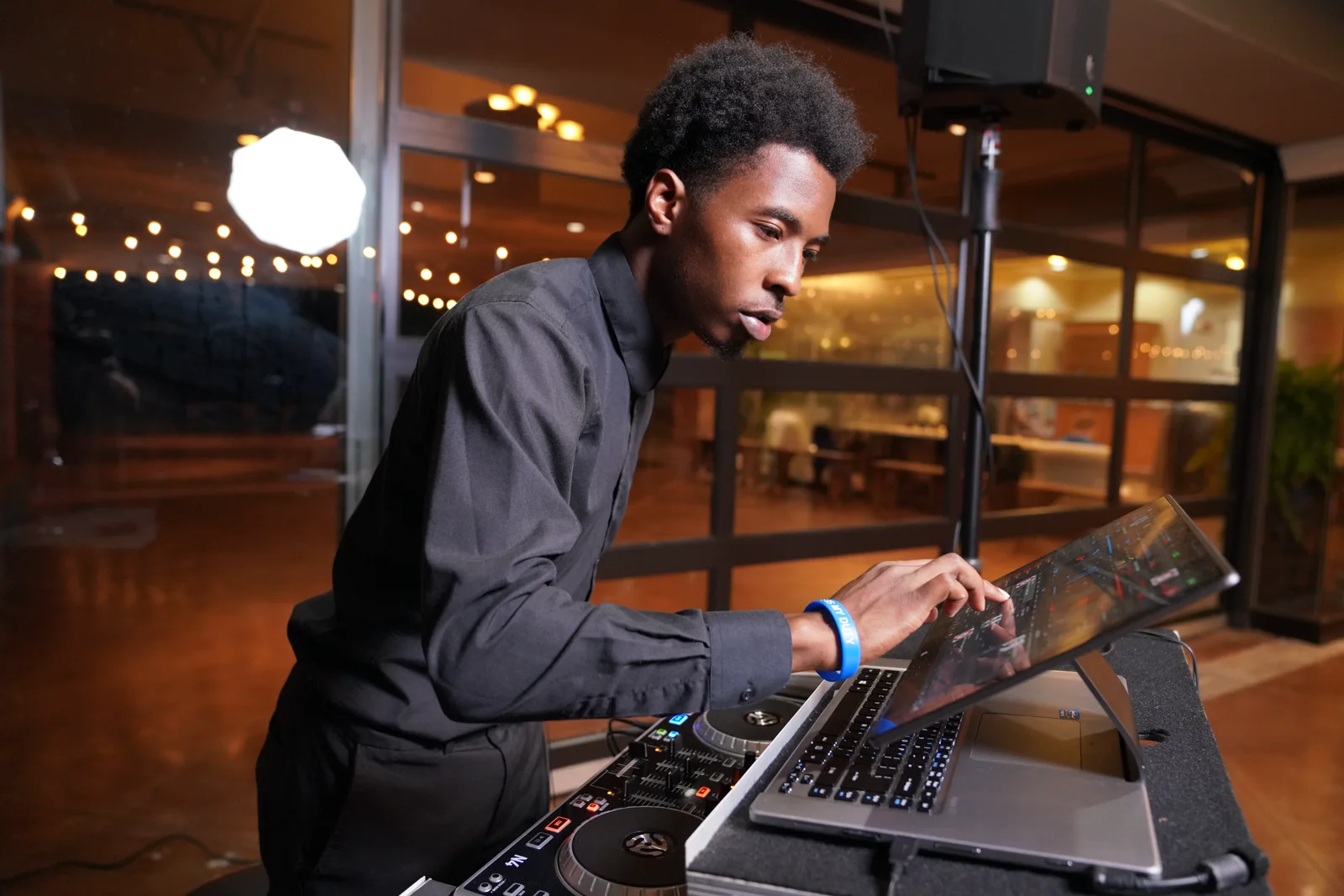
For a DJ, that changes the job. I’m not just playing a song — I’m helping build and hold a living circle. Detroit has a proud Greek community, from the historic Greektown district downtown to families across the metro, so these receptions run deep on tradition. Honoring that properly is a big part of getting the night right.
The Kalamatiano, step by step
The Kalamatiano is the one most people picture. It’s the classic Greek circle dance, danced in a 7/8 rhythm that sounds tricky but feels natural once the line gets going. The lead dancer holds the front, often waving a handkerchief, and everyone else follows the basic twelve-step pattern.
Here’s the good news for nervous guests: you do not need to know the steps. The beauty of the Kalamatiano is that the person next to you carries you along, and after a few bars, your feet just figure it out. That’s why I always announce it warmly and wave people in — the more who join, the easier it gets.
As the DJ, my job is to give the dance room to breathe. The Greek Orthodox Archdiocese notes how central these traditional dances are to celebration and heritage, so I don’t cut them short. I let the circle build, grow, and peak before I bring it home.
Key takeaway: No guest needs to know the steps. In a Greek circle dance, the line carries everyone — so the DJ’s real job is to invite people in warmly and give the dance enough time to grow before it peaks.
Tsamiko, Zeibekiko, and more
The Kalamatiano may open the door, but there’s a whole family of dances behind it. The Tsamiko is slower and prouder, with a bouncing, dignified step that the older generation especially loves. It’s a beautiful change of pace after the fast circle work.
Then there’s the Zeibekiko, which flips the whole idea. Instead of a group, it’s a solo dance — usually one person expressing emotion while friends kneel around, clap, and cheer them on. It’s raw and personal, and when it happens, the whole room falls in behind it. I always leave space for one if the family wants it.
You’ll also see the Syrtos, a smoother, flowing circle dance that’s gentle enough for anyone, and the fast, high-energy Hasapiko later in the night. Knowing when to place each one is the craft — and it’s the same read-the-room skill I bring to every part of your reception.
A Greek reception isn’t measured by how loud it gets. It’s measured by how long the circle stays unbroken — and how many people it pulls in before the night ends.
How a DJ leads the line
Here’s what a lot of couples miss: these dances don’t run themselves. Someone has to spark them, announce them, and keep the energy from stalling — and that’s the DJ. A great one reads the floor and knows the exact moment the room is ready for a circle.
So I time it. I don’t drop the Kalamatiano cold into a quiet room; I build the energy first, then invite people in over the mic so the line starts strong. Once it’s moving, I watch the circle — if it starts to tire, I bridge into the next dance before anyone sits down. Momentum is everything with circle dances.
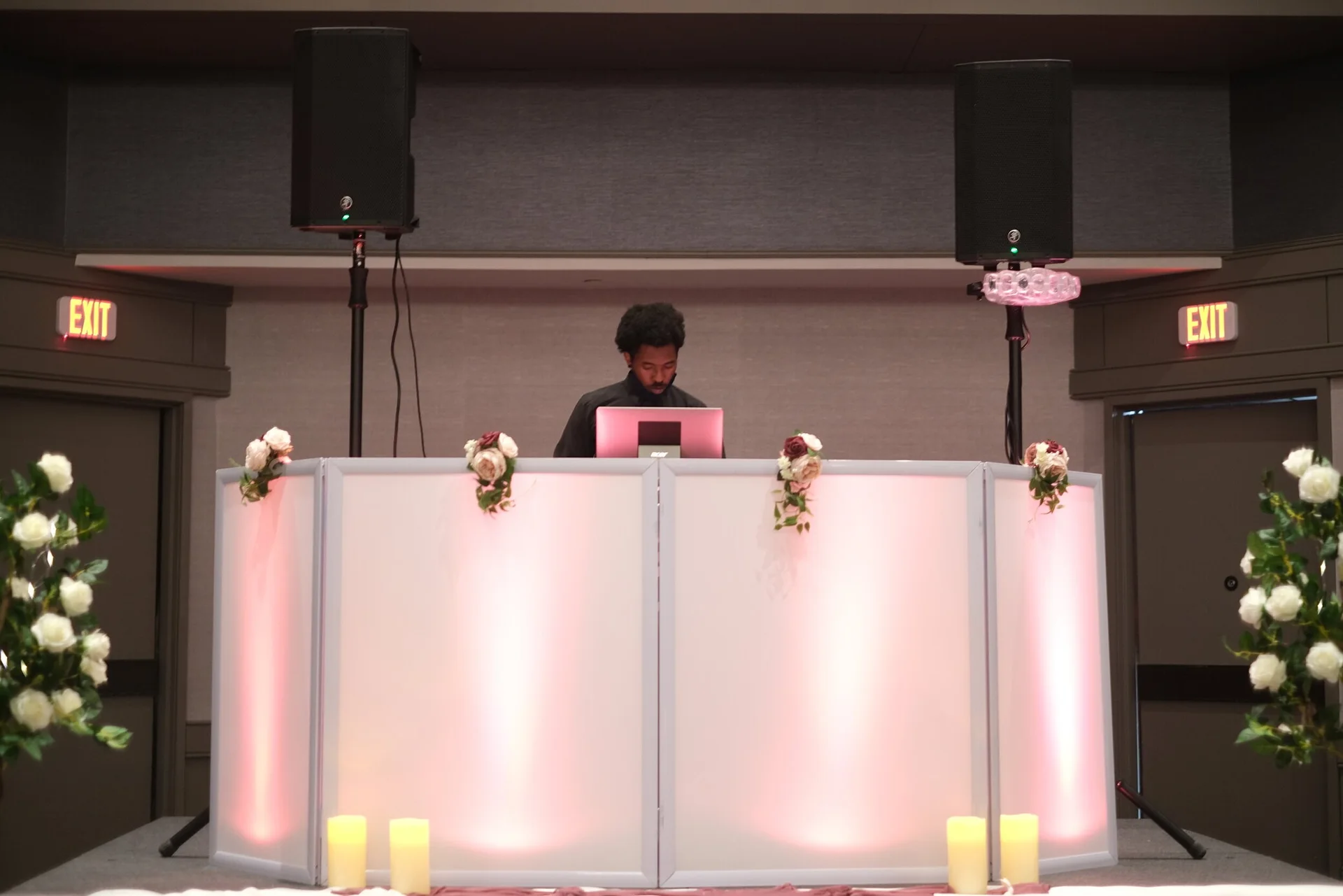
Clean, punchy sound matters too, because the beat is what holds the line together. A muddy mix throws off the steps and the whole circle wobbles. So I tune the system to the room ahead of time, keep the rhythm crisp, and make sure the front and back of the line hear the same clean beat.
Mixing Greek and modern hits
Most Greek-American weddings aren’t only traditional dances, and that’s a good thing. Your younger cousins came to hear today’s hits, and your college friends want to dance too. The art is weaving the modern set in without breaking the traditional spirit of the night.
The way I handle it is to treat the Greek dances as the anchors and build the modern music around them. I’ll run a strong block of circle dances, then swing into current pop and throwbacks while the floor’s still warm, then circle back to a Tsamiko or Hasapiko later to reunite the whole family. Nobody feels like they got the “other” wedding.
According to wedding planners at The Knot, blending heritage dances with a modern set is exactly what keeps a multi-generation crowd happy all night — and that balance is what I plan for from the start.

Planning your dance set
A great Greek reception starts with a good planning chat. Before your date, we’ll map which dances matter most to your family, who’s leading them, and where they fall in the night. The more you tell me, the more natural it all feels on the day.
I’ll ask for your must-have dances — is a Zeibekiko happening? Which relative leads the Kalamatiano? — plus your modern must-plays and any songs that are off the table. I’ll also confirm the order so the traditional and modern sets flow instead of clashing. Nailing this down early is what makes the night feel effortless.
Because I only take one wedding a day, your reception gets my full attention, never a rushed setup between events. If you want a wider look at local weddings and venues, my Detroit wedding guide covers the whole picture for couples across the metro, with more wedding tips on the blog whenever you like.
Why couples pick Skan
There are plenty of DJs in Metro Detroit, so why do Greek-American couples keep booking me? It comes down to respect for the tradition and the skill to run it live. I don’t treat the circle dances as background — I lead them, time them, and give them room to grow.
I’ve got the library, the mic presence, and the crowd-reading to keep a circle unbroken and then flip the room into a modern party without missing a beat. Add a 5.0 Google rating and over a decade behind the decks, and you get a DJ who shows up ready, not guessing his way through your heritage.
Most of all, I love these weddings — the community, the energy, the way one dance pulls in the whole room. If you want to know who you’re hiring before you book, you can meet your DJ here, and then we’ll check your date. Prime weekends fill fast in wedding season, so let’s lock yours while it’s open.