Polish Wedding Songs & Must-Play Polkas
If your family has roots in Poland, you already know a reception isn’t complete without the right music. Great Polish wedding songs pull four generations onto the floor at once — Babcia and the little cousins spinning to the same polka. Sterling Heights has one of the biggest Polish communities in Michigan, so I get asked for this list a lot. Here are the must-play polkas and classics I keep loaded, plus when to drop each one.
In this article
Why the music carries the whole night
A Polish reception is built around togetherness, and the music is the glue. The dances aren’t a sideshow — they are the celebration. When the accordion kicks in, nobody sits down. That’s the beauty of it, and it’s exactly why picking the right Polish wedding songs matters so much for your big day.
Here’s what makes this so fun for a DJ. The older guests grew up on these tunes and light up the second they hear them. The younger crowd may not know every word, but the energy is contagious, so they jump in anyway. One good polka does what a dozen modern songs can’t — it gets everyone, every age, moving together.
So my job is part historian and part party-starter. I keep the classics your grandparents expect, then weave in the current hits your friends want, so the floor never empties. Get that balance right and the whole night feels like one big, joyful family.
Sterling Heights makes this easy, honestly. With such a strong Polish-American community here, half the room already knows the steps. My job is to feed that energy the right songs at the right time, and let the tradition do the rest.
The must-play polkas
Let’s get to the heart of it — the polkas. These are the ones that pack a Polish dance floor every single time. “Beer Barrel Polka” (Roll Out the Barrel) is the crowd anthem; the second it starts, arms link and the whole room bounces. “The Pennsylvania Polka” and “Who Stole the Kishka?” are close behind, both guaranteed to get laughs and feet moving.
Don’t skip “Clarinet Polka” and “The Too Fat Polka” either — they’re pure joy and the older guests will cheer. For a slower, sweeter moment, “In Heaven There Is No Beer” gets the whole crowd singing along together, arms swaying. I keep polka legends like Frankie Yankovic and Jimmy Sturr in the crate, because their versions are the ones your family grew up on.
When the accordion hits at a Polish wedding, chairs empty on their own. My job is just to keep that feeling going all night long.
A quick tip: polkas are high-energy, so I space them out rather than stacking them back to back. That way the floor stays full without wearing everyone out before the cake. A polka every so often keeps the tradition alive and the dancers fresh.
Songs for the big traditional moments
Beyond the polkas, a Polish reception has signature moments that deserve their own music. The Grand March, or “Poloneza,” is a classic opener where the whole party parades around the room behind the newlyweds. A stately polonaise sets the perfect tone and gets everyone involved from the start.
Then there’s the last dance of the night. Many Polish families close with a gentle, sentimental tune — something that lets the room sway together one final time before the send-off. I always confirm the couple’s pick for this, because it’s the memory guests carry out the door.
These moments are where a little planning pays off. I coordinate the timing with your full reception timeline so the Grand March, the toasts, and the traditional dances flow without an awkward gap. When the music lines up with the schedule, the night feels effortless.
Key takeaway: A Polish reception runs on its traditions — the Grand March, the polkas, the money dance, and the bread & salt welcome. Keep the classics your elders expect, weave in modern hits for the younger crowd, and space the high-energy polkas so the floor stays full all night.
The money dance and the bread & salt
Here’s what a lot of couples forget to plan: the traditional dollar dance. In Polish custom, guests pin money to the bride’s dress or pay for a quick spin with the newlyweds, often while an emcee or family member keeps things lively. I keep upbeat, familiar songs cycling during this so the line moves and the laughs keep coming.
Many families also open with the bread and salt greeting, where the parents welcome the couple with bread (so they never go hungry) and salt (for life’s hardships). It’s a quiet, heartfelt moment, so I keep the music soft and warm underneath it — present but never in the way. According to Brides magazine’s guide to Polish wedding traditions, these rituals are among the most cherished parts of the day, so getting the tone right matters.
The oczepiny, or unveiling, is another peak moment in many families — a playful transition from bride to wife, often with games and group songs. As The Knot’s overview of Polish wedding customs notes, families keep these rituals in their own way, so I plan the music around whichever traditions yours holds — no two Polish weddings run exactly the same.
Blending Polish classics with modern hits
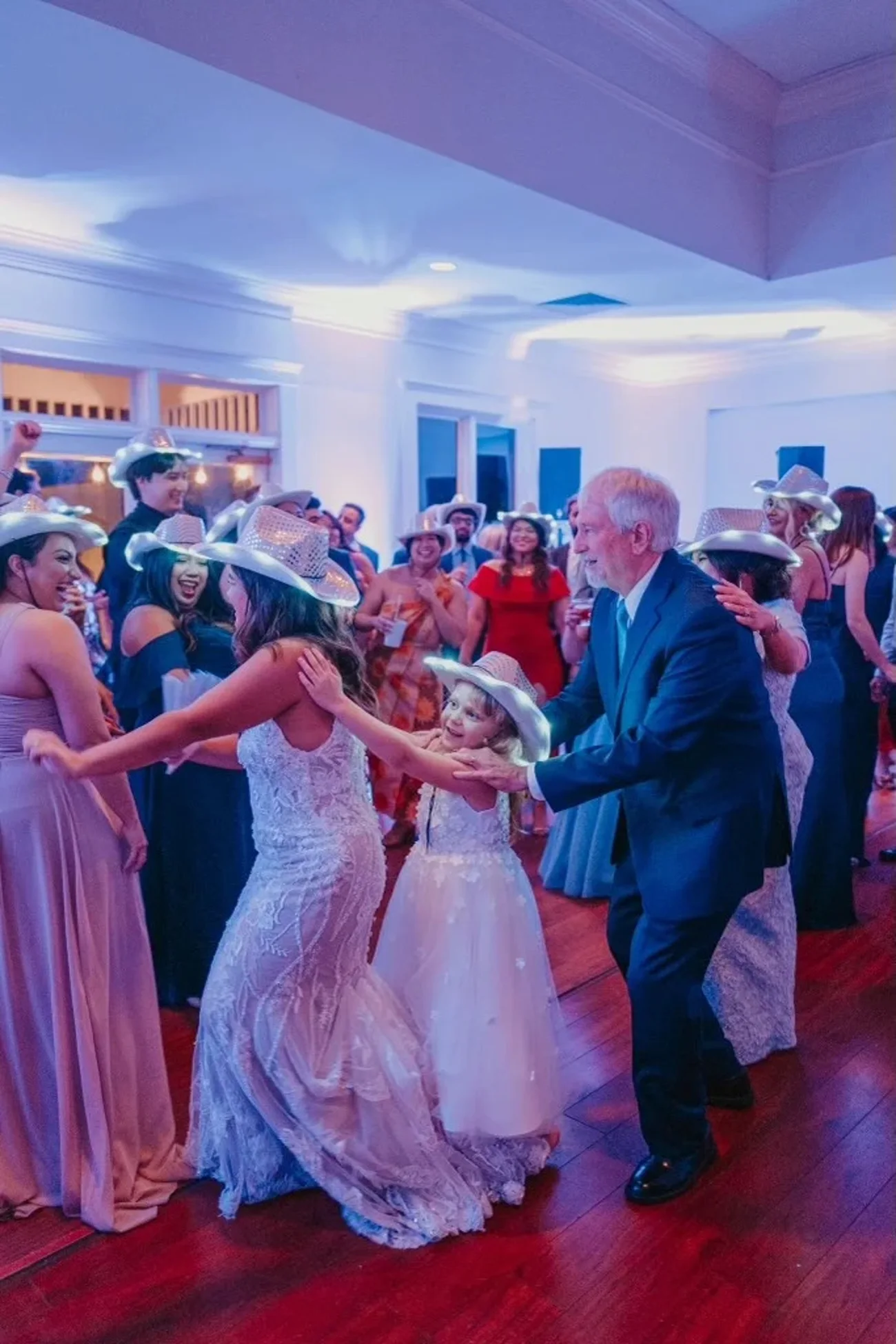
Here’s the balance every modern Polish couple wants: honor the traditions without turning the whole night into a polka marathon. The trick is weaving eras together. I’ll run a beloved polka, then slide into a current pop or dance hit, then back to a classic before the energy dips. Nobody notices the switch — they just never want to sit down.
This mix is where reading the room really counts. When the older crowd is fired up, I lean into the traditional set. When the younger half is peaking, I ride the modern hits, then bring everyone back together with a polka the whole family knows. That back-and-forth keeps grandparents and college friends on the floor at the same time.
You get to steer it, too. Some couples want a heavily traditional night, others want just a few signature Polish moments sprinkled into a modern reception. Both are great — it’s your day, and I build the set around your family’s taste, not a template.
How I order the set through the night
Song order makes or breaks the flow. I usually open the formal dancing with a couple of traditional numbers to honor the elders and set the tone. Through dinner, the music stays warm and easy so people can talk. Then, as the night builds, I alternate polkas with modern floor-fillers to keep every age group in the mix.
I save a big polka or two for the late peak, when the whole room is loose and ready to go all in. Then we close with the sentimental last dance your family chose. That arc — tradition, build, peak, tender finish — is what makes a Polish reception feel complete. For more ideas across the whole day, browse more wedding tips anytime.
Planning your list with your DJ
The best Polish weddings I play start with a real conversation. You tell me the must-plays your family expects, the traditions you’re keeping, and your absolute no-list. Then I fill the gaps live by reading the floor. That mix of your input and my experience is what keeps the night personal instead of generic.
If you’ve got a Sterling Heights reception coming up, I’d love to help you build the perfect set — polkas, classics, modern hits, and all. My rundown of how I run Detroit-area weddings shows the whole approach, and you can always meet your DJ before you book. Let’s give your family a night they’ll be humming about for years. Na zdrowie!