Dabke Line Dance: An Arab Wedding Tradition
If you’ve been to an Arab wedding, you already know the moment. A driving drumbeat kicks in, someone grabs the person next to them, and within seconds a long line is stomping and spinning across the floor. That’s the dabke line dance — the beating heart of a celebration across the Levant and, here in Dearborn, one of the most joyful traditions I get to run. Let me walk you through what it means and, more importantly, how a DJ actually keeps that line moving all night.
In this article
What is the dabke, exactly?
At its simplest, the dabke line dance is a group folk dance where people link hands or shoulders, form a line, and move together through a set of stomps, kicks, and steps. It comes from the Levant — Lebanon, Syria, Palestine, Jordan — and it’s danced at weddings, festivals, and just about any happy gathering.
The leader of the line, often called the lawweeh, holds the front spot and sets the pace. That person usually waves a handkerchief or beads and adds flair while the rest of the line keeps the rhythm. As the Arab American National Museum in Dearborn highlights in its cultural programming, dances like this are living history — passed down, not taught from a book.
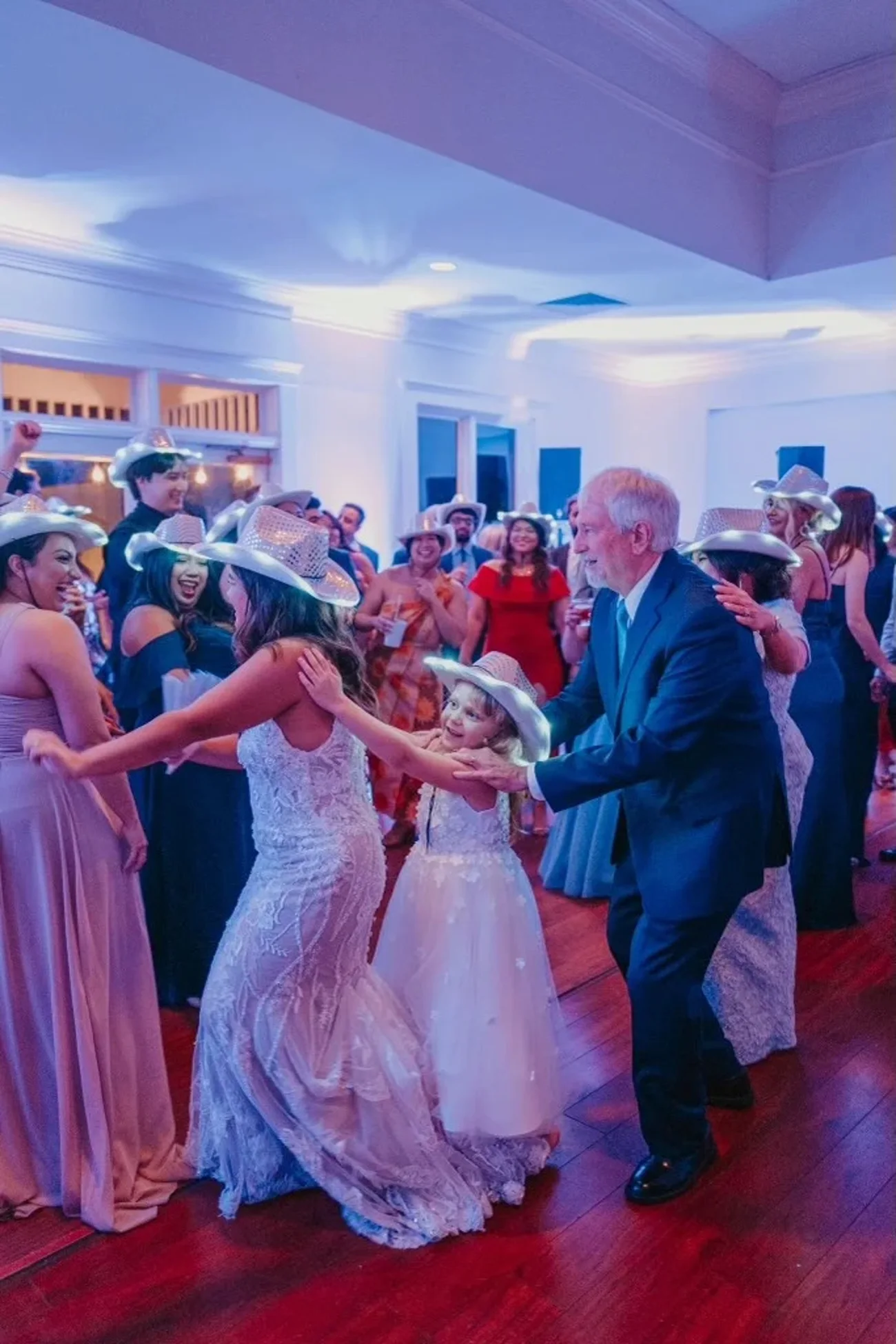
Here’s the part I love: nobody has to be an expert. The line carries you. A grandmother, a ten-year-old, and a nervous out-of-town guest can all end up in the same line, laughing, and none of them needs a single lesson. That openness is the whole point.
Why it matters at a Dearborn wedding
Dearborn is home to one of the largest Arab American communities in the country, so dabke isn’t a novelty here — it’s expected. When I play a wedding in the area, the dabke set is often the emotional peak of the entire night, bigger even than the first dance for a lot of families.
The reason is connection. Dabke is a dance that literally links people together, hand to hand. In a culture where family and community run deep, that image of three generations locked in one moving line says everything. Organizations like Arab America often point to dabke as one of the clearest symbols of shared heritage and pride.
So when a couple books me for a Dearborn wedding, I don’t treat dabke as an add-on. I treat it as a headline event. Getting it right shows the family that I respect their traditions — and honestly, it’s the most fun part of my job.
How a DJ cues the dabke set
Cueing dabke is a craft. You can’t just drop a random track and hope. The set usually starts a little slower, giving the line time to form and find its feet, then builds in tempo as more people join and the energy climbs. I read that build in real time and pick each next song to match it.
Transitions are where a lot of DJs stumble. Dabke tracks have a specific feel and drum pattern, and cutting from one to the next clumsily breaks the line’s momentum. I mix so the beat carries through — the line never has to stop and restart. That seamless flow is exactly what keeps people locked in for twenty minutes straight.
Timing in the night matters too. I usually place the big dabke set after guests have eaten and loosened up, when the floor is ready to explode. Coordinating that with the family and the zaffa (the wedding procession) is part of how I plan a full reception, the same careful way I map every wedding reception timeline.
Key takeaway: A great dabke set is built like a wave — start slower so the line can form, then climb in tempo while mixing so the beat never breaks. Placing it after dinner, when the floor is loose and ready, turns it into the loudest moment of the night.
Reading the line and keeping it moving
Here’s what a lot of couples don’t realize: the DJ’s job during dabke isn’t finished once the music starts. The real skill is watching the line and feeding it. When the line grows long and strong, I ride the energy and keep the tempo up. When it starts to thin, I bring in a track that pulls people back off their chairs.
I also watch the leader. A confident lawweeh can carry a huge line, and I’ll give that person room to show off with a longer track. If the leader looks like they want a breather, I’ll shift into a slightly easier groove so a new person can take the front. Reading those small cues is what separates a DJ who plays dabke from one who truly runs it.
And I keep an eye on the whole room, not just the floor. When the elders are clapping along from their tables, I know the set is landing. When aunties start pulling reluctant cousins into the line, I know we’ve hit the sweet spot — and I hold it there as long as the floor will let me.
Dabke isn’t a song you play. It’s a line you feed — my job is to keep the beat alive so nobody in that line ever wants to let go.
The music and rhythms behind it
Dabke rides on a distinctive drum pattern, traditionally played on the tabla (a hand drum) and the mijwiz, a reedy double-pipe instrument with an unmistakable buzz. Modern dabke often blends those classic sounds with electronic production, which is great news for a DJ — there’s a deep well of both traditional and current tracks to pull from.
Every family has favorites, and regional styles differ. A Lebanese family may love different artists than a Palestinian or Syrian one, and there are beloved wedding-specific songs that guests expect to hear. That’s why I always plan the dabke playlist with the couple first, gathering must-plays and checking pronunciation of any songs I’ll announce.
I keep a strong dabke library ready and refresh it often, because new tracks catch fire in the community all the time. Still, the couple’s list always leads. My job is to blend their essential songs with the crowd-tested classics so the line never hits a track that makes it lose steam.
Blending dabke with the rest of the night
Most weddings I play in Dearborn aren’t only dabke. Many couples want a mix — dabke and Arabic pop for one crowd, plus Motown, hip-hop, or current hits for cousins who grew up here. The trick is honoring the tradition without boxing the night into a single sound.
So I build the reception in movements. There’s the zaffa entrance, the big dabke sets, and then bridges into other genres as the night rolls on. Done right, an eighteen-year-old and a grandfather each get their moment, and the floor never empties. Blending two musical worlds in one night is one of my favorite challenges.
The key is smooth handoffs. When I move from a dabke set into a Western track, I do it on a natural high point so the room feels rewarded, not interrupted. If you want to see how I structure a whole multi-part reception, our flagship Detroit wedding guide lays out the full flow from entrance to last song.
Working with a DJ who knows dabke
Here’s the honest truth: not every DJ can run a dabke set well, and it shows fast. A DJ who doesn’t know the music will play the wrong tracks, mix them clumsily, and let the line die. Guests notice immediately, because for many of them this dance is deeply personal.
When you hire a DJ who genuinely knows dabke, you get someone who reads the line, respects the leader, mixes the beat clean, and treats the tradition as the centerpiece it is. That’s the experience I bring to every Arab wedding I play in Metro Detroit — I plan the set with your family, not around them.
Want more ideas before you book? Browse more reception ideas on the blog, or meet your DJ and hear how I approach cultural weddings. If your date’s coming up, let’s talk soon — the best weekends fill quickly.