What a Corporate Event DJ Actually Does
Ask most people what a corporate event DJ does and they’ll say “plays music.” Fair guess — but it’s about ten percent of the real job. A great corporate DJ is part sound engineer, part timeline manager, and part quiet host who keeps a business event flowing without ever stealing the spotlight. It’s a completely different craft than a wedding, even though the gear looks the same. Here’s the behind-the-scenes look at what actually happens, and why it matters for your Bloomfield Hills event.
In this article
The work that happens before the event
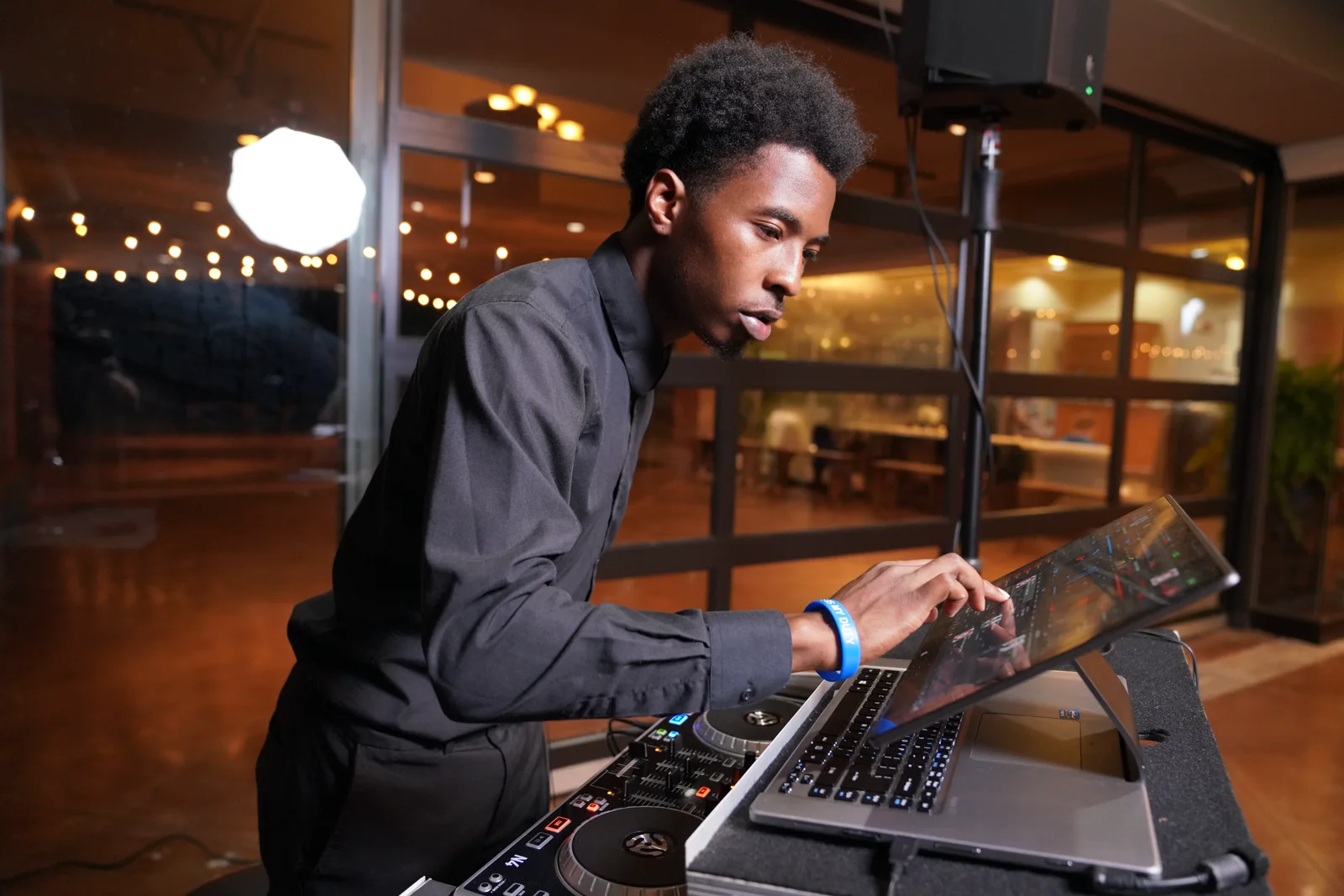
Most of a corporate event DJ‘s job is done before a single guest arrives. That’s the part nobody sees. Weeks out, I’m talking with the planner about the schedule, the room, the power, and what the company actually wants the night to feel like.
Is this an awards dinner that needs to stay polished? A holiday party that should end in a packed floor? A product reveal that needs a big musical hit at the exact right second? Each one calls for a different plan. So I build a run-of-show that maps every announcement, walk-up, and transition to the minute.
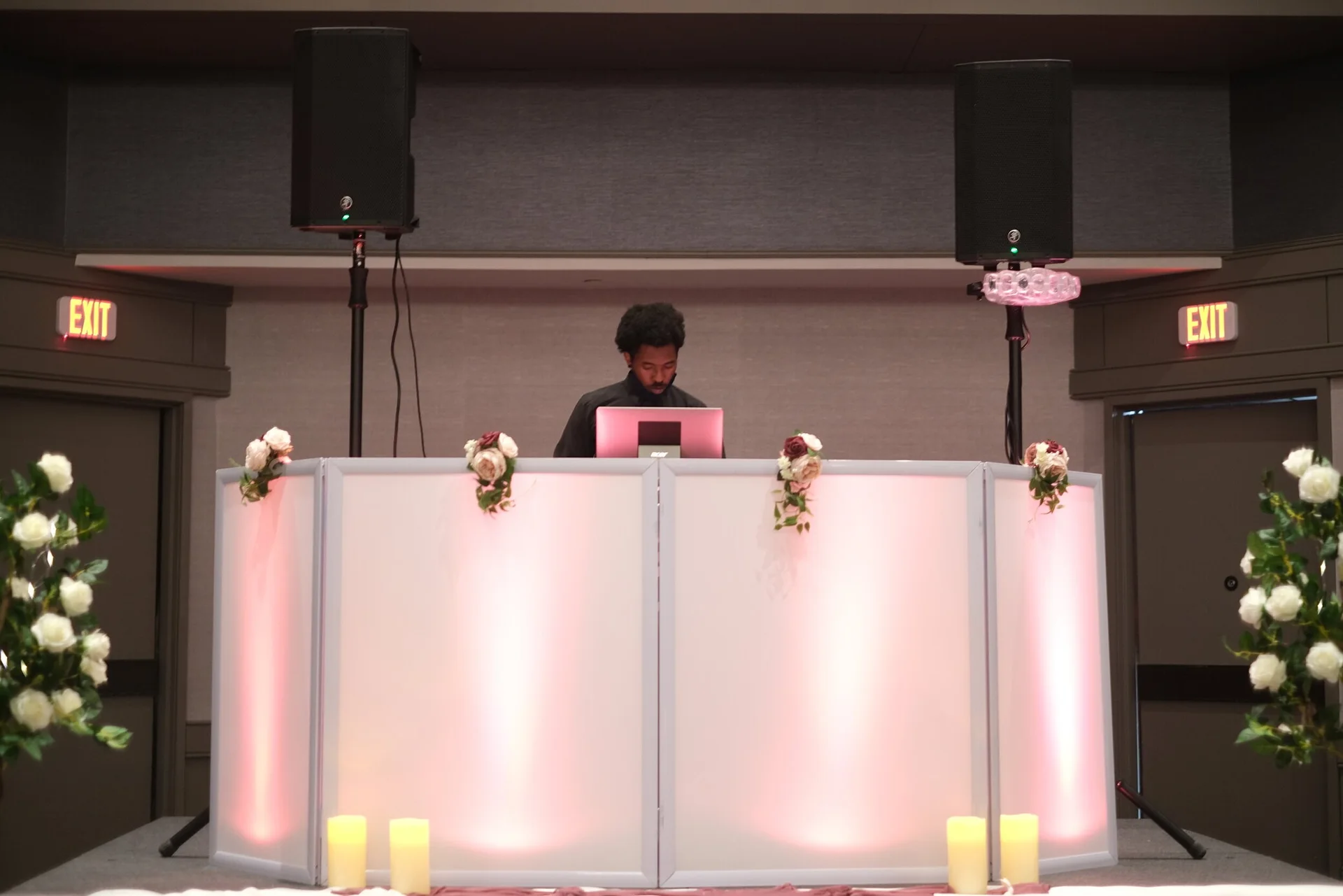
Then there’s the tech. I confirm the mic setup for presenters, plan where speakers go so the back of the room hears clearly, and coordinate with the AV team if there are screens or a livestream. By the time I load in, nothing is left to chance. That prep is exactly what keeps a business event from stalling.
Music prep matters here too, and it’s trickier than people think. I’ll ask the planner about the company culture, the age range in the room, and anything that’s off-limits — a song tied to a rival brand, lyrics that don’t fit a professional setting, that kind of thing. Then I build a walk-up list for award winners and a dinner set that fits the tone. Getting all of that sorted before the day means I’m never scrambling to please the room in the moment.
Running sound for speeches, not just songs
Here’s a truth that surprises people: at most corporate events, the spoken word matters more than the music. A CEO’s remarks, an award presentation, a keynote — if those sound muddy or a mic cuts out, the whole event feels cheap. So sound quality is everything.
I run clean, reliable microphones with backups ready, and I ride the levels live so a soft-spoken presenter is just as clear as a loud one. Music sits underneath as a bed — walk-up songs, transitions, dinner ambiance — tuned so people can still talk across the table without shouting.
According to the Professional Convention Management Association, audio problems are among the most common complaints at business events, and they’re almost always preventable with proper setup. That’s why a corporate DJ tests everything twice and never treats sound as an afterthought.
Managing the run-of-show
A corporate event lives and dies by timing. Dinner has to clear before the awards. The CEO can’t be left standing at a dead mic. The raffle can’t run long and eat the dance time. Someone has to keep all those pieces moving — and often, that someone is the DJ.
I act as the quiet stage manager. I cue presenters, play the walk-on music, watch the clock, and adjust on the fly when a speech runs long or a course is late. When the program needs to speed up, I tighten transitions. When it needs a breath, I stretch the music. The planner should be able to relax knowing the flow is handled.
At a company event, my job is to be the calm in the room — keeping every moment on time so the people in charge can focus on their guests, not the schedule.
Key takeaway: A corporate event DJ is far more than a music player. The role blends pre-event planning, pro-grade speech sound, run-of-show management, and crowd reading — all aimed at keeping a business event polished and perfectly on time.
Reading a business crowd (not a wedding)
Here’s what a lot of companies miss: a business crowd behaves nothing like a wedding crowd. At a wedding, everyone’s family, everyone’s ready to dance, and the emotion carries the room. At a corporate event, you’ve got coworkers, bosses, and clients who may be sizing each other up. The energy is more careful.
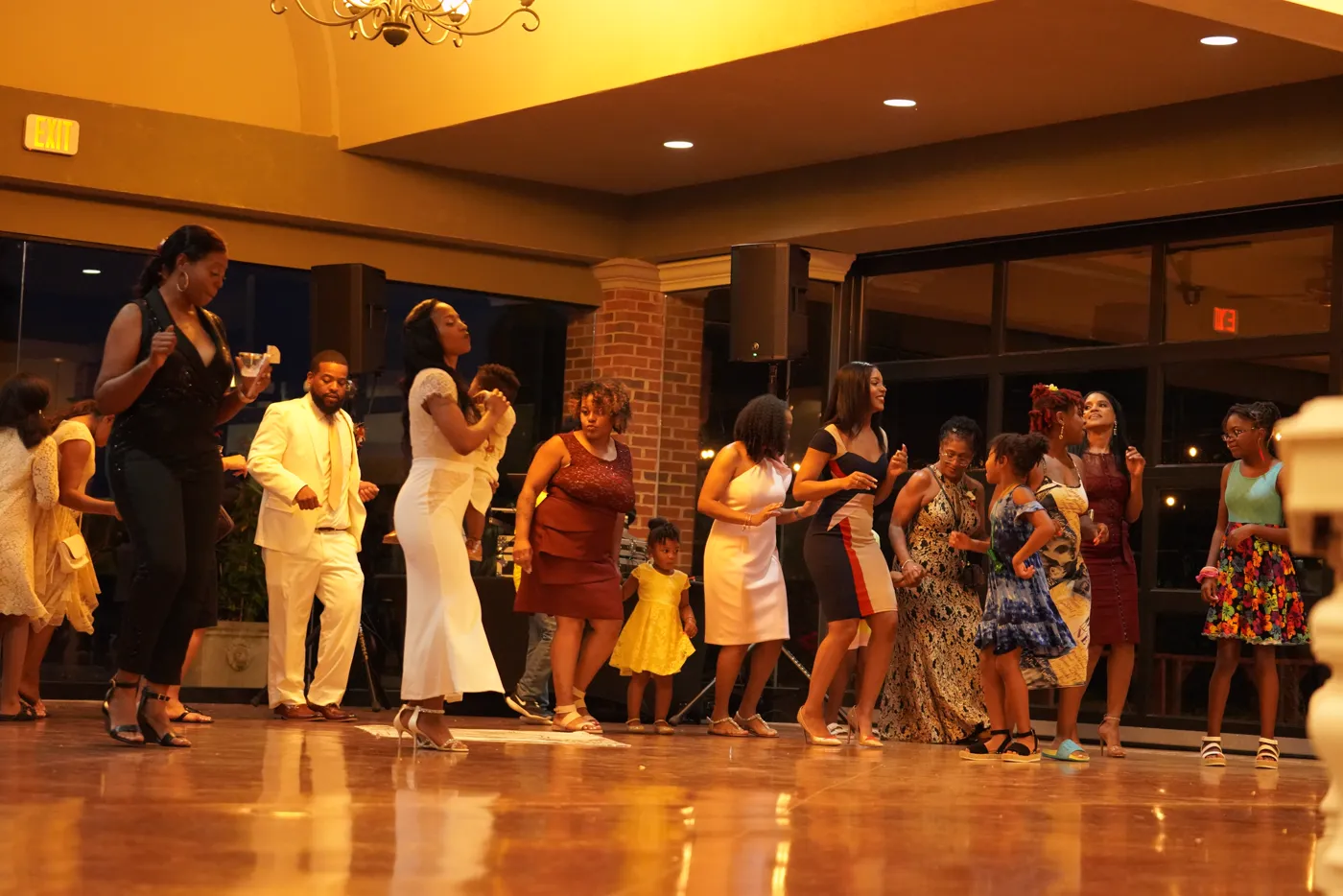
So I read it differently. Early on, the music stays lighter and lets people network and mingle. I don’t rush the floor — pushing dancing too soon at a work event just empties the room. Instead, I build slowly, watch who’s loosening up, and pick the exact moment the crowd is ready. Then I bring it.
The music choices differ too. A corporate floor needs songs that pull three generations of coworkers together without anything that feels risky or off-brand for the company. It’s a tightrope, and walking it well is a skill you only get from doing a lot of these. To see how I plan the whole flow, here’s how I approach corporate parties and events.
Corporate DJ vs. wedding DJ: the real differences
People assume a wedding DJ and a corporate DJ are the same person doing the same job. Same gear, sure — but the mindset is different. Let me break down where they split.
A wedding DJ serves two people and their story. Everything is personal: the first dance, the family traditions, the inside jokes. A corporate event DJ serves a brand and a business goal. The night has to reflect the company, hit a schedule, and make leadership look good. There’s less emotion and more precision.
The pacing differs, too. Weddings build to a long, loud dance party. Corporate events often peak briefly and end early, so timing the energy is trickier. And the stakes are professional — a wedding hiccup is a funny story later, but a botched awards presentation can embarrass a company in front of clients. A pro respects that difference.
Event-industry coverage from BizBash makes the same point: at a corporate event, the entertainment is judged as part of the company’s brand, not just as a party. That framing is exactly why I plan a business event so differently from a wedding — the room is watching how buttoned-up everything feels.
The events a corporate DJ handles
Corporate DJ work covers a lot more than the annual holiday party. Once you know the range, it’s easier to see why the planning matters so much.
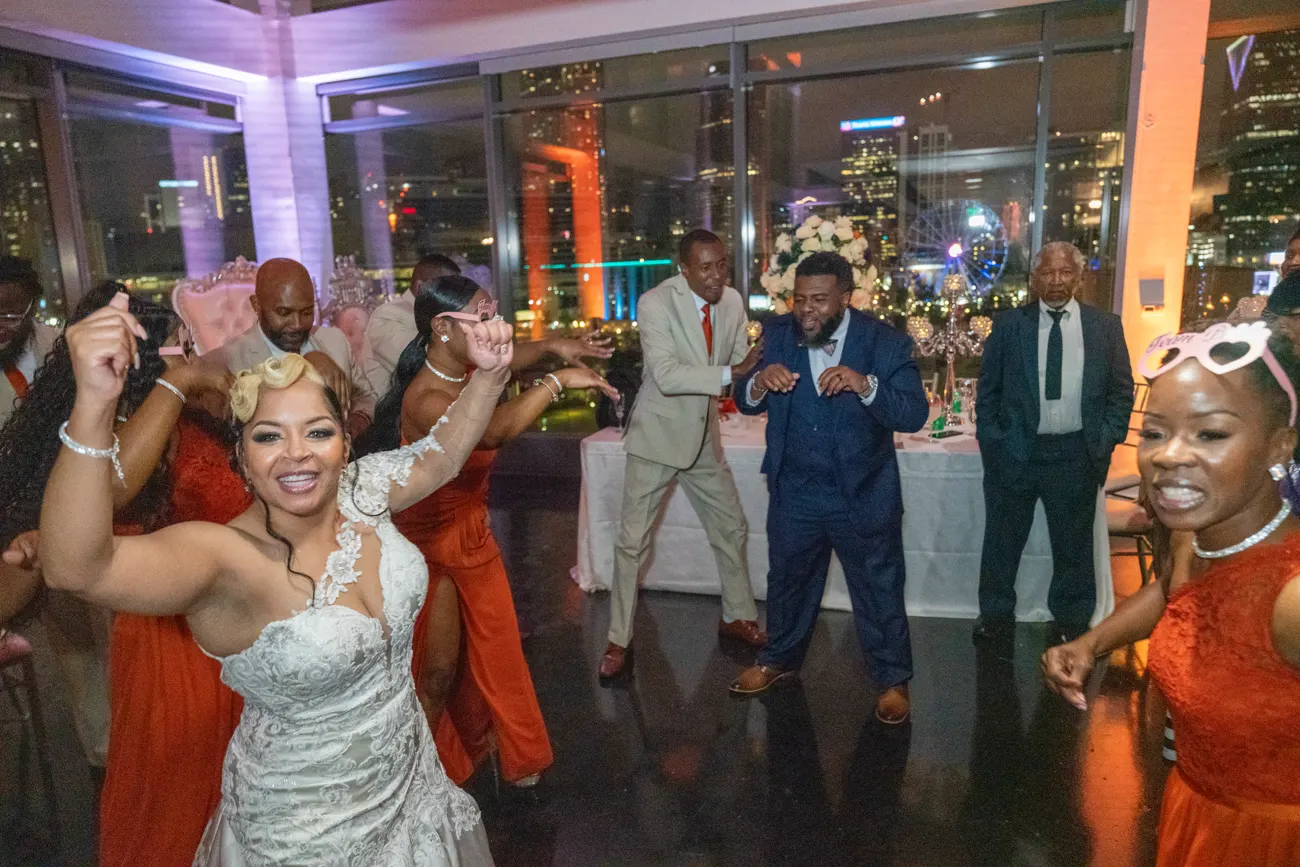
Holiday parties are the classic. But there are also awards galas, product launches, company milestones, conferences, networking mixers, and grand openings. Each has its own rhythm. A gala stays elegant and speech-forward. A launch needs a big hit at the reveal. A mixer needs music that helps people talk, not drown them out.
The thread through all of them is professionalism. The DJ has to fit the company’s image, work cleanly with vendors and AV, and never become the loud problem in the room. When it’s done right, guests leave saying the event felt smooth and fun — without ever thinking about the person who made it that way.
Dress and demeanor count more than folks expect, too. At a wedding, a DJ can loosen up and match the party. At a formal company event, I show up looking the part and keep my mic work polished and professional. The announcements are clear and brief, never over-the-top. A corporate crowd notices the difference immediately, and it shapes how they judge the whole event.
What to look for when you hire one
So how do you pick the right person? Look past the music for a second and check the fundamentals.
First, ask about corporate experience specifically — not just weddings. The skills overlap, but the run-of-show and speech-sound side is its own craft. Second, confirm backup gear and reliability, because a work event can’t survive dead air in front of clients. Third, look for someone easy to plan with, who asks about your goals and your brand, not just your playlist.
Whether your event is downtown, near Cranbrook, or at a hotel ballroom off Telegraph, the same standards hold. I’ve run business events across Metro Detroit, and I treat each one like the company’s reputation is riding on it — because it is. Browse more event planning tips for the details, take a look at my Detroit event guide for the bigger picture, or meet your DJ and let’s talk through your run-of-show. A great corporate event looks effortless from the floor — and that’s the whole point.