Indian Baraat & Dhol: The Groom’s Entrance
If there’s one moment that stops an Indian wedding in its tracks — in the best way — it’s the Indian baraat. This is the groom’s grand procession to the ceremony, powered by a thundering live dhol drum and a crowd that’s dancing before they even reach the door. Around Novi and Metro Detroit, families pull out all the stops for it. So let me walk you through what the baraat is, how the dhol drives it, and how a DJ makes the whole thing land at full volume.
In this article
What is the Indian baraat?
Let’s set the scene. The Indian baraat is the groom’s joyful arrival at the wedding, surrounded by his family and friends. Traditionally the groom rides in on a decorated horse — sometimes a car or even an elephant — while everyone around him dances their way toward the ceremony. It’s part parade, part dance party, and 100% celebration.
The whole point is joy. The groom’s side is welcoming him to the biggest day of his life with music, dancing, and a lot of happy noise. By the time the procession reaches the venue doors, everyone is warmed up, grinning, and ready for the ceremony. It sets the emotional tone for the entire day.
You’ll find baraats celebrated with full energy across the Detroit area’s South Asian community. As Brides magazine notes in its guide to Indian wedding traditions, the baraat is one of the most beloved and photographed moments of the day — and for good reason.
Here’s the thing that surprises people: a baraat isn’t a quiet, formal march. It’s loud, it’s sweaty, and it’s supposed to be. Getting that energy right takes real planning, and that’s where the music team earns its stripes.
The dhol: the heartbeat of the procession
You can’t talk about the baraat without talking about the dhol. This double-headed drum, slung over the player’s shoulder and struck on both ends, is the beating heart of the whole procession. Its deep, booming rhythm is what gets everyone dancing — you literally feel it in your chest.
A live dhol player brings something recorded music simply can’t. They read the crowd, speed up when the energy peaks, and lead call-and-response moments that pull people in. When that drum kicks in, arms go up and the whole street starts to move. It’s pure, primal celebration.
That said, the dhol doesn’t work alone. Paired with a DJ laying down bhangra and Bollywood beats underneath, the drum has a full sound to ride on top of. The combo is what makes a baraat feel massive instead of thin. One without the other only tells half the story.
Key takeaway: The dhol is the soul of the Indian baraat, but it shines brightest over a DJ’s bhangra and Bollywood tracks. Pairing a live drummer with a DJ gives the procession a big, full sound — and a crowd that dances the whole way to the doors.
How a DJ and dhol player work together
Here’s what a lot of families miss: the baraat sounds incredible when the DJ and dhol player are locked in — and messy when they’re not. Tempo has to match. Cues have to be clear. If the drum and the track are fighting, the whole procession feels off.
The way I run it, I set the tempo from the deck and keep it steady so the dhol player has a rock-solid beat to build on. We plan the peak moments ahead of time — where the drum drops out for a beat, where it comes roaring back, where the crowd chants along. That coordination turns two performers into one unstoppable wall of sound.
Because this is a live, moving event, I stay flexible too. If the procession slows because the horse is being, well, a horse, I stretch the music. If the crowd surges, I ride it. If you want to see how I plan every cultural moment with the same care, my wedding DJ approach lays it all out.
When the dhol drops and the bhangra kicks in, nobody’s a stranger anymore. My job is to keep that wave rolling from the parking lot all the way to the mandap.
Building the baraat playlist
The music makes or breaks the energy, so let’s talk tracks. Bhangra is the go-to — those high-energy Punjabi dance beats are basically built for a procession. Big Bollywood anthems layer in perfectly too, especially the ones your guests already know by heart. Familiar songs get more people moving faster.
I always plan the baraat playlist with the couple and family in advance. Every family has favorites, and some have specific songs that matter for cultural or personal reasons. So we build a set that honors those requests while keeping the tempo high and the momentum climbing toward the doors. It’s a curated build, not a shuffle.
One pro move: I keep a few extra bangers in reserve. If the procession runs long or the crowd is on fire, I’ve got more fuel ready. Running out of music mid-baraat is a mood-killer, and it never happens on my watch. For more planning ideas, browse more wedding tips anytime.
Sound, space, and outdoor challenges
Baraats usually start outdoors — a parking lot, a driveway, a hotel entrance — and outdoor sound is its own beast. Wind carries the music away, there’s no ceiling to bounce off of, and power outlets aren’t always close. None of that is a problem if you plan for it. All of it is a problem if you don’t.
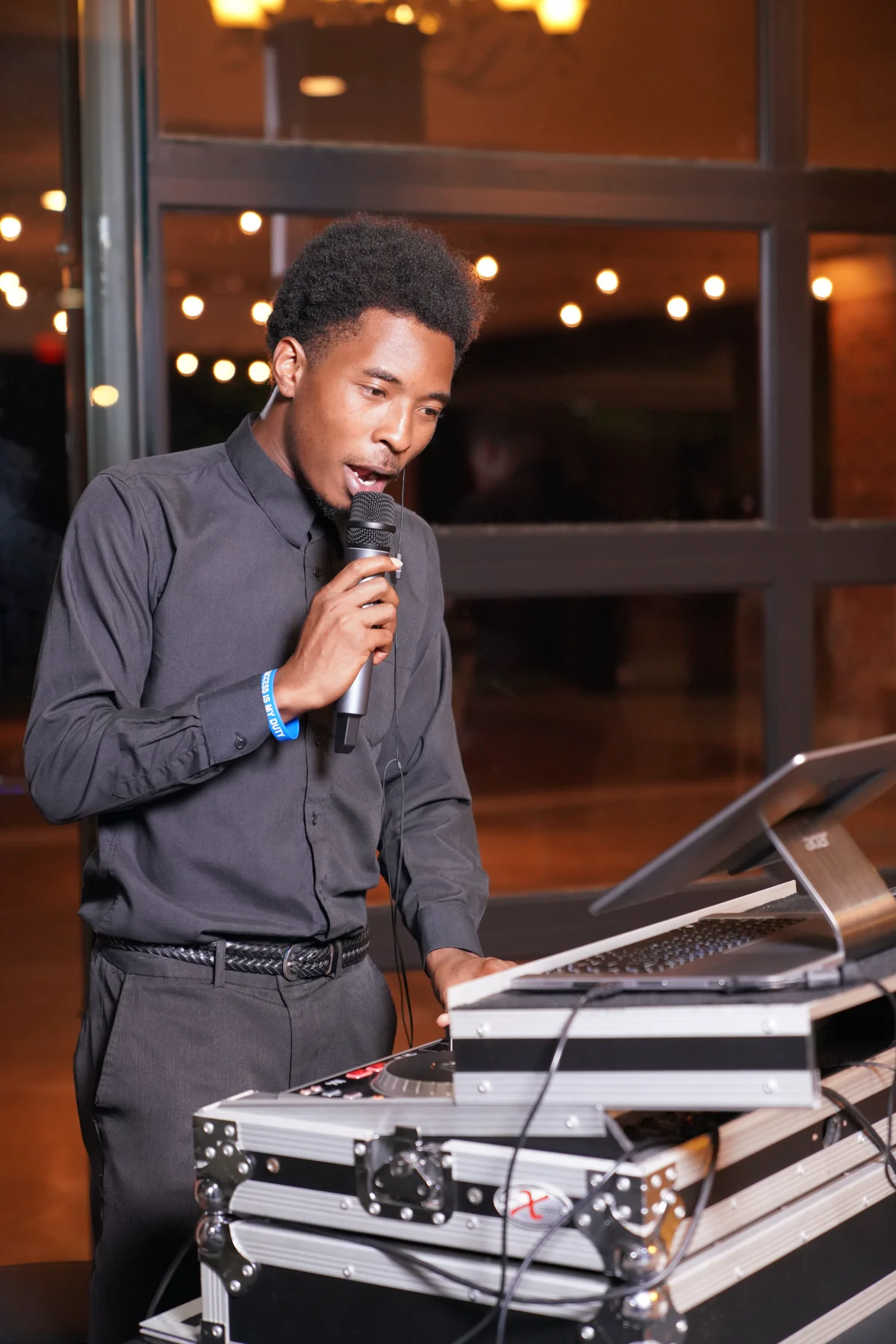
For a baraat, I bring a system that can throw sound across an open space, plus battery power so we’re not tethered to a wall. I scout the entrance and path ahead of time so I know exactly where to set up and how the procession will flow. That prep is why the drum and the tracks stay loud and clear the whole way in.
Venues around Novi and Metro Detroit each have their own quirks — where you can gather, how far the procession travels, what the noise rules are. Knowing those details in advance keeps your baraat from getting cut short or crammed into a tight corner. Local experience really does pay off here.
From baraat into the milni and beyond
The baraat doesn’t just end — it hands off. Once the procession reaches the venue, it usually flows into the milni, where the two families formally greet each other. A good music team eases that transition so the energy settles from high-octane dancing into a warm, respectful welcome without an awkward silence.
From there, the day rolls into the ceremony and, later, the reception, where the party fires right back up. The beauty of hiring one coordinated team is that every handoff feels smooth — baraat to milni to ceremony to reception — instead of a series of stops and starts. It all flows as one continuous celebration.
That’s the mindset I bring to every South Asian wedding: honor the traditions, plan every transition, and keep the joy moving. Your culture leads, and I make sure the sound carries it.
Why an experienced DJ makes the difference
You could piece together a drummer and a playlist and hope it clicks. But the baraat is too big a moment to leave to chance. It needs a DJ who’s done it — someone who knows how to sync with the dhol, handle outdoor sound, read a moving crowd, and roll the energy into the milni without a hitch.
I’ve powered baraats across Metro Detroit, and I love them. There’s nothing like watching a whole family dance the groom to his ceremony. When you plan with me, we map the music, the dhol coordination, and the logistics so the whole thing hits its peak exactly when it should.
So if you’re planning a wedding around Novi and you want your baraat to feel enormous, let’s build it together. See how I handle celebrations close to home in my Novi wedding guide, and feel free to meet your DJ before you book. Dates fill fast in wedding season, so if yours is set, let’s check it while it’s open.