Polish Grand March: A Detroit Wedding Tradition
If your family has Polish roots, there’s a good chance someone at your wedding is going to ask about the Polish grand march — the Wielki Marsz. And here’s the fun part: it’s one of the easiest ways to get every single guest on their feet at once. Around Metro Detroit, from the old parishes to the halls out in Livonia, this tradition is alive and well. So let me walk you through what it is, when it happens, and how a good DJ leads it so nobody feels lost.
In this article
What is the Polish grand march?
Let’s start simple. The Polish grand march is a joyful parade around the reception hall, led by the newlyweds, with all the guests falling in line behind them. In Polish, it’s called the Wielki Marsz, which just means “great march.” Think of it less like a stiff ceremony and more like a happy, winding conga line with better manners.
The couple leads. Then the wedding party joins. Then parents, grandparents, cousins, and every guest who’s ever loved a party links up too. You wind around the room, sometimes splitting into pairs, sometimes forming little arches with your arms. By the end, the whole room is up, laughing, and warmed up for the night. That’s the magic of it.
Here in the Detroit area, this tradition traveled over with Polish families generations ago and never left. You’ll find it at weddings from Hamtramck to the western suburbs. The Polish American Cultural Center keeps a lot of these customs documented, and the grand march sits right at the heart of them.
The best part? You don’t need to rehearse it. There’s no choreography to memorize and no wrong way to do it. If you can walk and smile, you can lead a grand march. That’s exactly why couples love it — it feels special without any stress.
Where it fits in your reception timeline
Timing is everything with this one. Most couples put the Polish grand march right at the start of the reception, often as the grand entrance itself. It doubles as your big “here come the newlyweds” moment and your first crowd-pleaser, all in one. Two birds, one very fun stone.
Some families prefer to hold it until after dinner instead, as a way to reopen the dance floor once plates are cleared. Both work. What matters is picking your spot ahead of time so your DJ can set it up cleanly. According to The Knot’s reception timeline guide, the smoothest receptions are the ones where every big moment has a planned home. The grand march is no different.
My advice? If your guest list leans older or leans big, do it early. A room that’s just been fed and seated can be slow to get up. But a fresh, excited crowd walking in the door will follow you anywhere. Momentum is easier to build than to rebuild.
Key takeaway: Decide early whether your Polish grand march opens the reception or reopens the floor after dinner. Either way, lock the spot in your timeline so your DJ can announce it clearly and keep the whole room moving as one.
The music that carries the march
Here’s where a DJ earns their keep. The march needs music with a steady, walkable beat — something with a clear pulse that a hundred people can step to without thinking. Traditional Polish polka is the classic choice, and for good reason. It’s bright, it’s bouncy, and it practically pulls people out of their chairs.
That said, you’re not locked into polka the whole way through. Lots of couples like to start with a traditional tune and then slide into something modern once the room is up and grinning. I might open with a rolling polka and then blend into a crowd anthem everyone knows. The handoff has to be smooth, though, or the energy stalls. That blend is a mixing skill, not a playlist button.
You’ll want the tempo to sit in that sweet spot — fast enough to feel lively, slow enough that Grandma can keep up in her heels. Too fast and you lose the elders. Too slow and the young cousins start checking their phones. Reading that balance in real time is the whole job.
How the DJ actually leads it
A grand march without clear directions turns into a confused shuffle, and nobody wants that. So the DJ becomes the guide. On the mic, I explain it in plain words before the music starts: the couple leads, everyone lines up behind, follow the path, have fun. Twenty seconds of clear instructions saves five minutes of confusion.
Then I cue the couple, start the music, and keep gentle prompts going as the line grows. “Grab a partner, fall in behind, here we go.” When it’s time to split into twos or make those little arches, I call it out so people aren’t guessing. Good emcee work is what turns a nice idea into a moment your guests actually remember.
Because I only take one wedding a day, your grand march gets planned in advance — not improvised on the spot. If you want to see how I map out every announcement and moment from entrance to last song, my full wedding day approach breaks it all down step by step.
The grand march is the rare tradition where the shyest guest and the loudest guest both end up on the floor. My job is just to point the way and keep the beat rolling.
Blending the tradition with a modern floor
Here’s what a lot of couples miss: you don’t have to choose between “traditional” and “fun.” The grand march is proof. You can honor your heritage and throw a modern, high-energy party in the same night. In fact, the march is often the bridge between the two.
Picture it. You open with the Wielki Marsz to honor the family. The older generation lights up because they remember doing it at their own weddings. Then, as the last of the line winds back to the floor, I roll straight into today’s hits and the party keeps rolling. No awkward reset, no dead air — one continuous wave of energy.
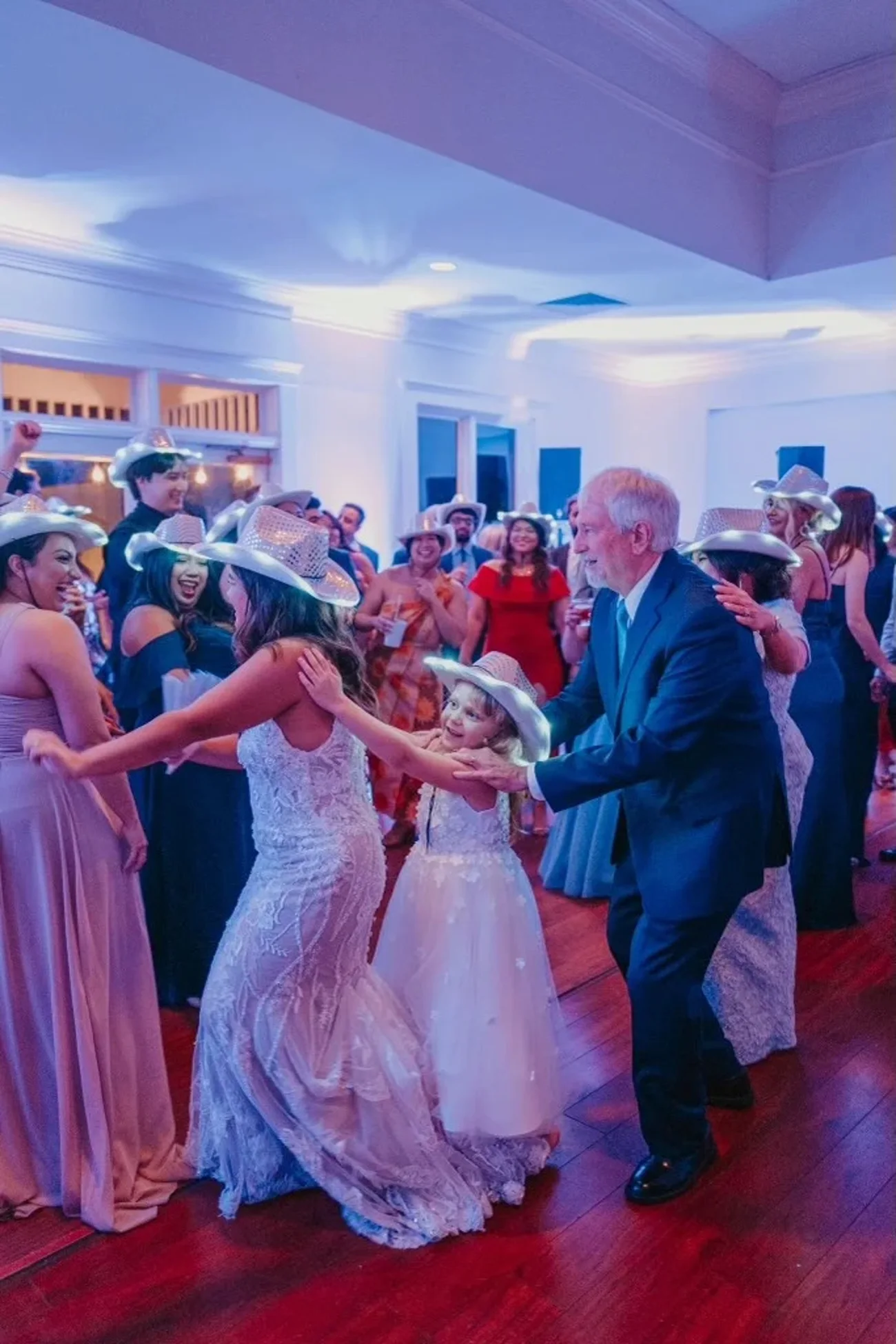
That’s the beauty of hiring someone who plans with you. We talk through your must-plays, your family’s traditions, and the vibe you want, and then I build a flow that honors all of it. Your night should feel like you — roots and all.
Polka, the elders, and keeping it fun
Let’s give the polka its due. For a lot of Polish families in Metro Detroit, polka isn’t a novelty — it’s the sound of every wedding they’ve ever loved. Playing it during the march is a quiet way of telling your grandparents, “This night is for you too.” That means more than you’d think.
And the elders will surprise you. I’ve watched 80-year-olds outlast the college crowd during a good march, hands linked, grinning ear to ear. When the older generation is happy, the whole room relaxes and the party gets warmer. So I always keep a few extra polka and classic tracks ready in case the floor is asking for more.
After the march winds down, that same energy makes it easy to keep people dancing. The room is loose, the ice is broken, and folks who “don’t dance” are already out there. From there, we can go anywhere. Want more ideas like this? Browse more wedding planning tips whenever you like.
Why a DJ who knows the march matters
You could hand a playlist to a friend and hope for the best. But a tradition like the Polish grand march lives or dies on the leading — the timing, the mic work, the smooth music handoff. That’s not a job for a laptop on shuffle. It’s a job for someone who’s done it before.
I’ve led plenty of these across the Detroit area, and I know how to read the room while the line is forming. When the energy’s high, I ride it. When people hesitate, I coax them up with the right words and the right song. Little adjustments like that are the difference between a march that fizzles and one your guests talk about for years.
So if your family’s traditions matter to you — and they should — let’s plan a night that honors them and still packs the floor till the lights come up. You can see how I handle weddings close to home in my Livonia wedding guide, and you’re always welcome to meet your DJ before you book. Detroit dates fill fast in wedding season, so if yours is set, let’s check it while it’s still open.