Wedding DJ vs Band Plymouth: Honest Guide
Stuck on the wedding DJ vs band Plymouth decision? Take a breath — there’s no wrong answer here, only the one that fits your day best. Both a great band and a great DJ can turn a Plymouth reception into a party people talk about for years. The catch is that they cost different amounts, play different ways, and fit different rooms. I’m Tevin, and after hundreds of Michigan weddings I’ll walk you through the real trade-offs, plainly and honestly, so you can decide without second-guessing.
In this article
The basic trade-off in one minute
Let’s boil it down. A live band brings performers, instruments, and the buzz of watching music made in front of you. A DJ brings the actual recordings your guests already love, mixed nonstop to keep bodies moving. Both are legit. They simply hand you the night in different shapes.
Think of it as spectacle versus range. A band is a show. A DJ is an ocean of songs plus a host who steers the whole evening. When couples raise the wedding DJ vs band Plymouth question, that framing usually settles half the debate on its own.
Neither option is the “premium” pick, either. A tired band and a bored DJ are both bad news. What actually matters is the pro’s experience and how well they read your crowd — and that’s true whichever route you take. If you want an outside opinion while you weigh it, The Knot’s band-vs-DJ guide walks through the same trade-offs and reaches a similar conclusion: pick the format that fits your crowd, then hire the best pro you can in that lane.
Budget: where your money goes
Money talk, no dancing around it. A live wedding band usually lands somewhere between $4,000 and $10,000, because you’re paying a whole roster of musicians plus their gear, travel, and rehearsal time. It’s a real production and the price shows it.
A seasoned wedding DJ runs a good deal less. My packages start at $999 for six hours and $1,299 for eight, and that already includes emcee service, pro sound, and backup gear. The savings aren’t a compromise — they’re money you can redirect toward the photographer, the food, or a longer honeymoon.
Still, don’t shop on price alone. A rock-bottom “DJ” with a borrowed speaker is not the same animal as an experienced pro, and the difference shows the instant the floor gets quiet. WeddingWire’s cost breakdown pegs a typical wedding DJ around $1,400, and that experience is what protects your dance floor all night.
Energy and keeping the floor full
Here’s the part that decides most receptions: does the floor stay full? A band builds energy through performance, and when they’re on, it’s electric. But bands take breaks, and every break is a moment where the room can cool off unless something fills the gap.
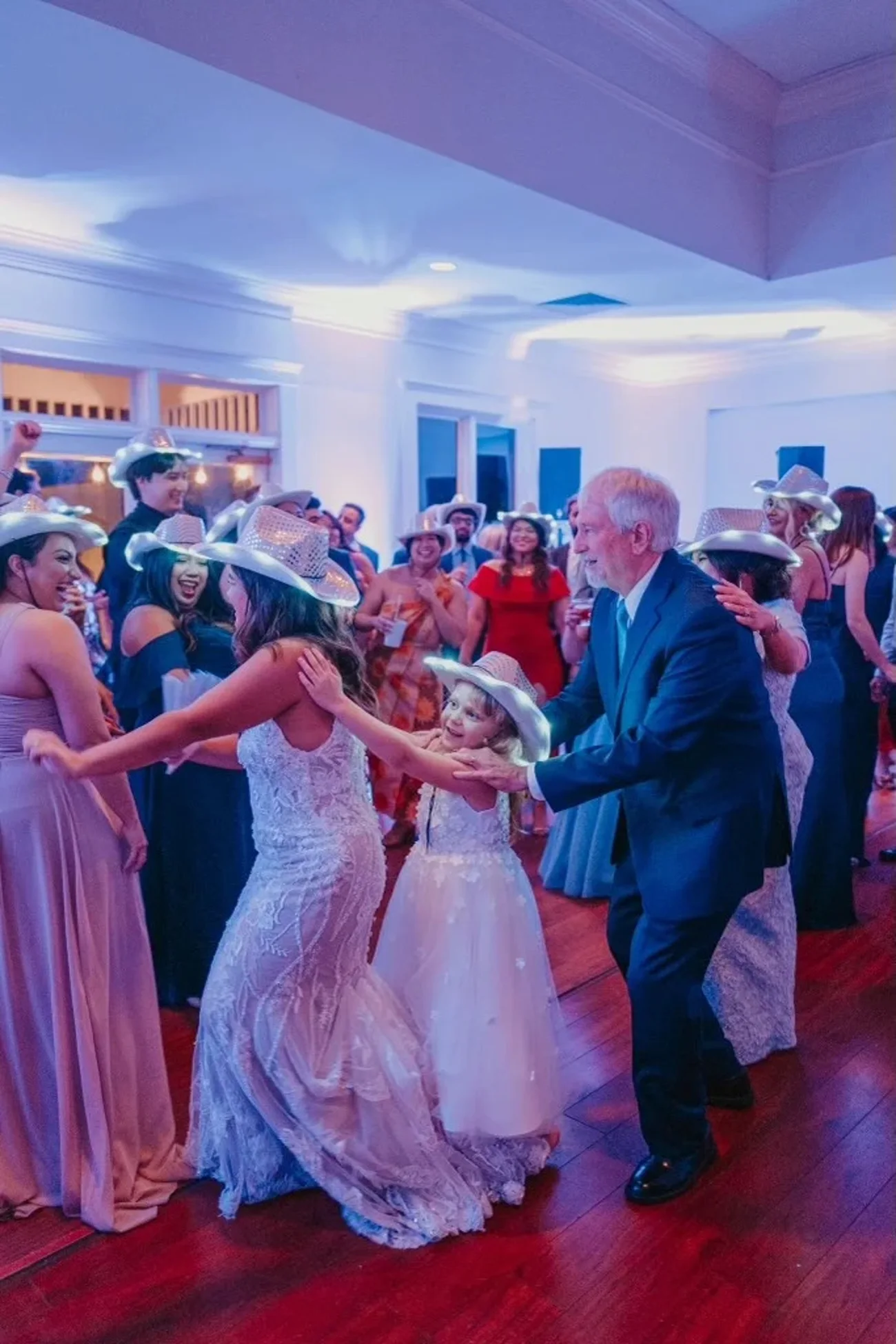
A DJ never stops. The music flows straight through dinner, toasts, and dancing with no dead air, and I can pivot in a single beat when the crowd’s mood shifts. Read a lull? I drop the song that fixes it. That live steering is the DJ’s superpower, and it’s why floors tend to stay packed.
The magic isn’t live versus recorded. It’s whether whoever’s up there can feel the room change and answer it in real time.
Requests fold into that, too. When a guest asks for their song, a DJ can usually deliver it within minutes; a band either knows it or doesn’t. If a guest-driven, keep-it-moving night is your goal, the DJ has a clear edge. My rundown of how we run your whole day shows exactly how I map that energy from the first dance to the last song.
Your Plymouth venue and its space
Space is the factor couples overlook until it’s too late. A full band needs a sizable stage, dependable power, and elbow room for instruments and monitors. In some Plymouth rooms, that footprint quietly steals seats from your guest list or shrinks your dance floor.
Plymouth’s venues run the gamut, from big halls like the Inn at St. John’s to charming downtown spaces near Kellogg Park that seat a tighter crowd. In an intimate room, a ten-piece band can swamp both the square footage and the sound. A DJ tucks into almost any corner and tunes the volume to the space, so the music fills the room without pinning Grandma to the wall.
Volume flexibility is bigger than it sounds. From one console, a DJ can keep dinner soft enough for real conversation, then lift the energy the moment it’s time to dance. If your venue enforces a sound limit, that fine control turns from nice-to-have into genuinely important.
Key takeaway: A DJ typically wins on budget, nonstop energy, and fitting your room, while a band wins on live spectacle. Rank what matters most to you and your Plymouth crowd — that ranking is your answer.
Common myths, busted
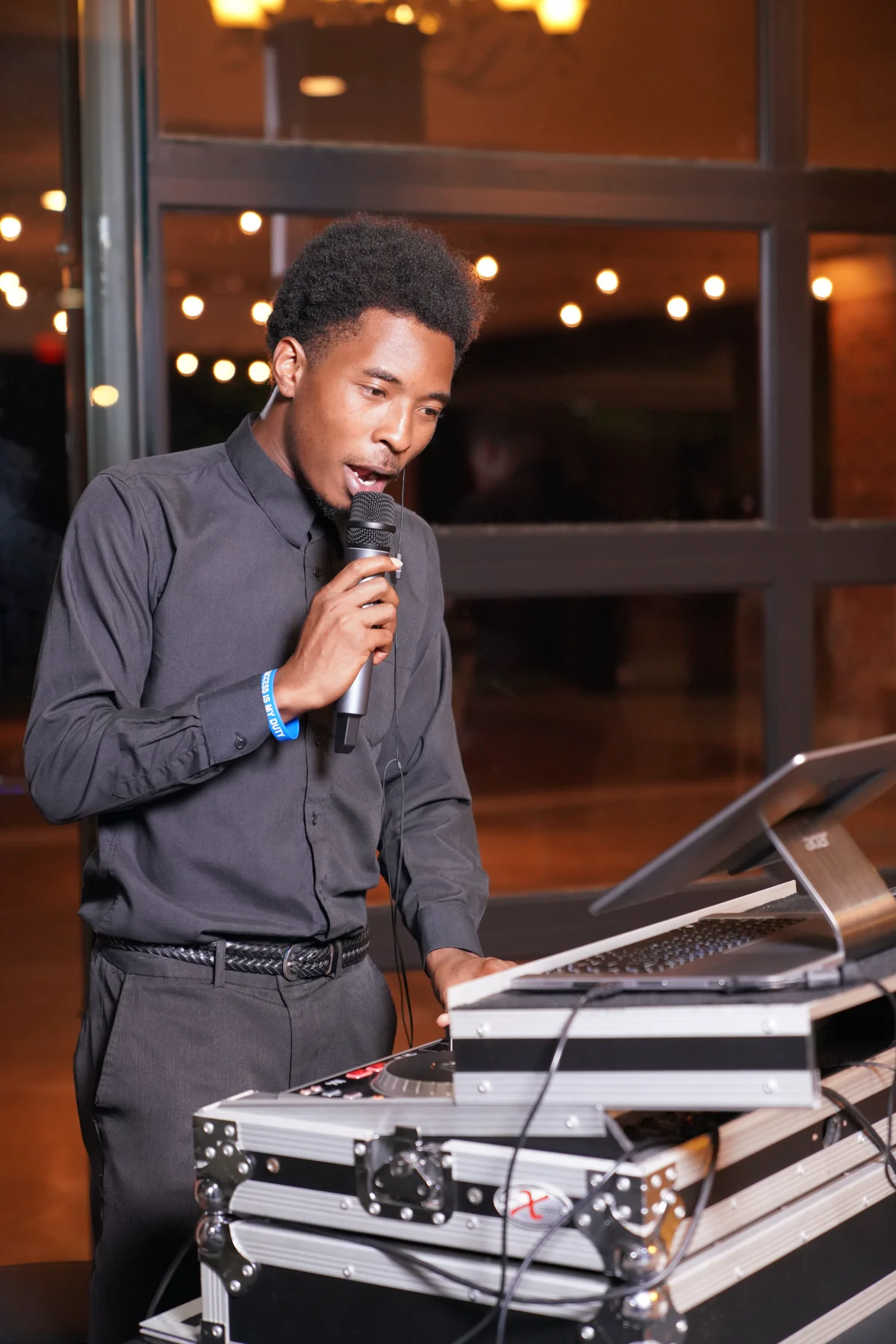
Here’s what a lot of couples miss: some of the “facts” steering this choice are just myths. Myth one — “a DJ just presses play.” Not even close. A real DJ reads the floor, beat-matches transitions, and emcees the whole night; the laptop is the least interesting part of the job.
Myth two — “bands feel more special.” A band can be magical, sure, but a skilled DJ playing the exact songs your people scream along to is every bit as memorable. Special comes from the moment, not the format. Myth three — “a DJ can’t do live energy.” Pair a DJ with a sax or a percussionist and you get live flair layered right over the mix.
The last myth is the sneaky one: “cheaper means worse.” Price and quality aren’t the same thing. A great DJ costs less than a full band and can absolutely throw the better party for your crowd. Judge the pro, not the category.
The hybrid option couples love
Can’t choose? You may not have to. A favorite setup is live music for the ceremony and cocktail hour — a string trio or a soloist — then a DJ once the reception floor opens. You get graceful live moments early and endless variety when it’s time to dance.
There’s also the DJ-plus-live-add-on route: a DJ handling the full night with a sax player or drummer jumping in on the biggest tracks. It delivers that live spark without a full band’s price tag or stage footprint. Not every couple needs it, but it’s a great card to have in your hand when you plan.
Making your decision
Ready to decide? Start with the budget number you’re comfortable with, since that trims the options quickly. Next, rank your priorities: cost, live show, song variety, or room fit. Whatever sits at the top of that list is usually pointing right at your answer.
Then, no matter the format, hire experience. Read the reviews, ask how many weddings they play each year, and confirm the person you meet is the person who shows up on your date — that last one matters most with DJs. Keep exploring the details with more wedding tips as you plan the rest of the day.
If a DJ feels right, I’d be honored to be considered. Over ten years behind the decks, a 5.0 Google rating, and only one wedding a day so your night has my full attention. For a closer look at how I run receptions in the area, my Plymouth wedding guide lays it all out, and you’re always welcome to meet your DJ first. Plymouth dates book up fast in season, so if you have one circled, let’s check it while it’s still open.