
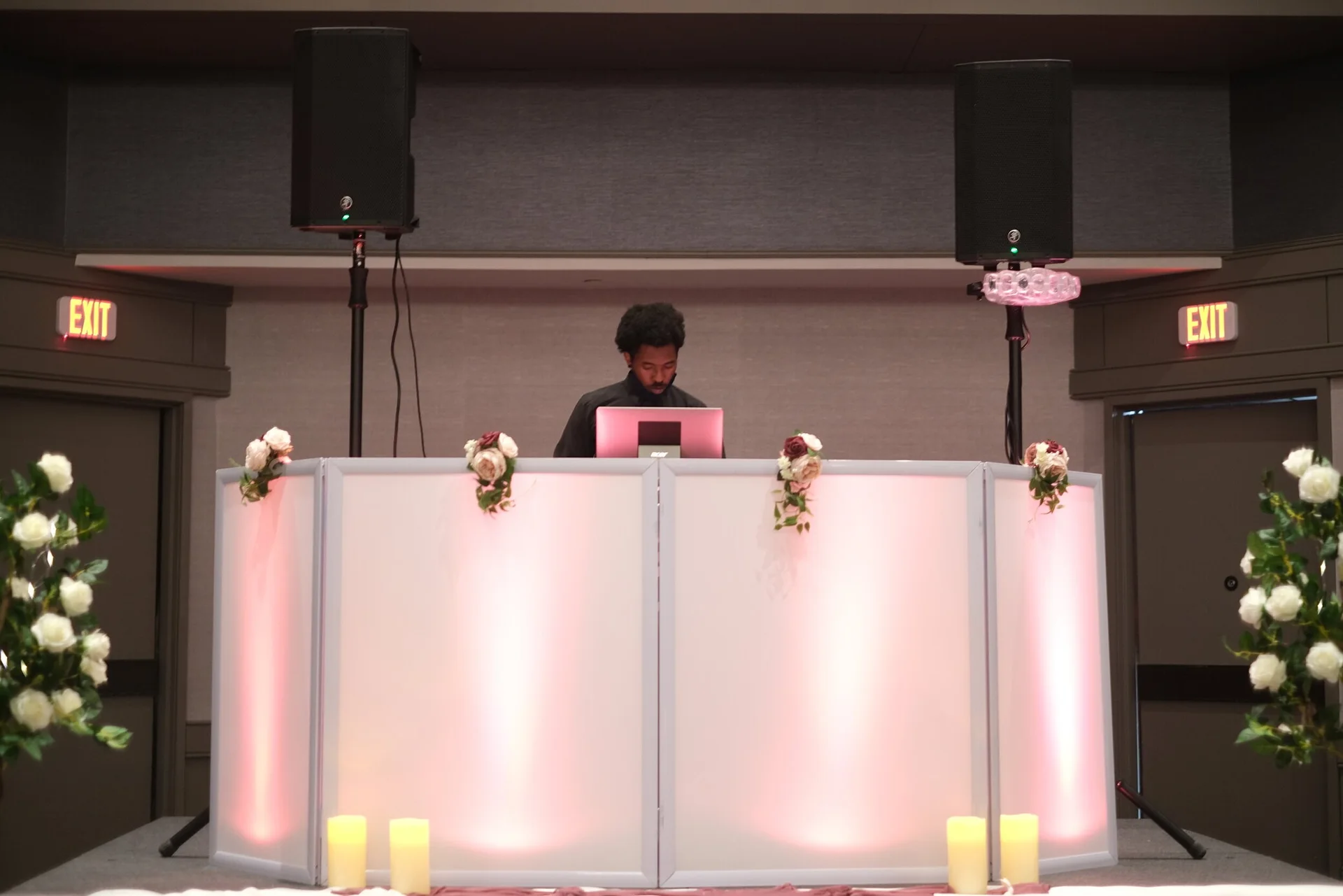
How to Allocate Your Wedding Entertainment Budget
Your entertainment budget is the line item couples guess at the most and plan the least. Flowers get a Pinterest board. The dress gets three appointments. Then the music — the thing your guests will actually talk about on the ride home — gets whatever’s left in the envelope. Let’s fix that. Below is a plain, honest breakdown of where the DJ fits, what lighting and add-ons really cost around Clinton Township and the rest of Macomb County, and how to spend smart instead of just spending less.
In this article
What your entertainment budget actually covers
First, let’s agree on what we’re even talking about. When most couples say “DJ money,” they picture one guy and a speaker. In reality, the entertainment budget covers everything your guests hear, see, and feel from the moment they park to the moment the lights come up.
That list usually includes ceremony sound, cocktail hour music, reception sound, the microphone work that keeps your night moving, and any lighting you add on top. Some couples also fold in a photo booth, a cold-spark or dancing-on-a-cloud moment, or live musicians for the ceremony. Bundle it all under one heading and you stop getting surprised.
Here’s why that matters. When entertainment sits in five different places on your spreadsheet, you never see the true total — and you never notice the gap until a vendor asks about ceremony sound and you realize nobody’s covering it. One heading, one number, zero surprises.
What percentage should go to entertainment?
Now the question everybody wants answered. The old planning rule puts entertainment somewhere around 8–12% of your total wedding spend. On a $35,000 Michigan wedding, that’s roughly $2,800 to $4,200 for everything above.
Is that rule perfect? No. It’s a starting line, not a law. If a packed dance floor is the thing you care about most, push toward the top of that range or past it. If your crowd is small and mellow and you’d rather put money into the meal, sit lower. Both are right answers, as long as you decided on purpose.
One thing I’d gently push back on: the couples who budget 2% for music. I’ve watched that math play out plenty of times, and the ending is the same. Guests remember two things about a wedding — whether the food was good and whether the party was fun. National cost data from The Knot’s annual wedding study backs that up: entertainment consistently ranks among the spends couples say they’d protect if they had to plan again.
Where the DJ line item fits
The DJ is the anchor of the whole category, and it’s usually 60–75% of your entertainment total. Around metro Detroit, a full-service wedding DJ typically runs $1,400 to $2,800 for a standard five-to-six-hour reception, with experienced MCs and larger setups landing higher.
What moves that number? Hours, first of all. Adding ceremony coverage and cocktail hour means a second sound system in a second room, plus two extra hours on site. Guest count matters too — a 90-person room in Clinton Township needs far less gear than 250 people in a big hall off Hall Road.
Then there’s the part that doesn’t show up on a gear list: planning time. A good DJ spends hours before your date on your timeline, your song list, your pronunciations, and your vendor calls. That’s baked into the price, and it’s the reason two quotes that look identical can perform nothing alike. If you want to see how that prep works in practice, our wedding day approach walks through it start to finish.
My honest advice: book the DJ first, at the number you can actually afford, then build the rest of the entertainment category around what’s left. Reversing that order is how couples end up with beautiful uplighting and a sound system that cuts out during toasts.
Nobody has ever left a reception saying the napkins were incredible. They leave talking about the last hour on the dance floor.
Lighting and the popular add-ons
Lighting is where an ordinary room turns into your room, and it’s the best dollar-for-dollar upgrade in this whole category. Uplighting typically runs $300 to $700 depending on how many fixtures the space needs. A ballroom with 30-foot walls eats more fixtures than a smaller banquet room, so ask your venue for a square-footage number before you guess.
Beyond uplights, here’s what couples ask about most and roughly what to set aside:
Monogram or name projection — $150 to $350. It’s a small spend with a big photo payoff, especially on a blank dance floor or a plain wall.
Dance floor lighting — $200 to $500. This is the moving color that makes the floor feel alive after dinner. Skip it and the room stays flat all night.
Cold sparks or low-fog — $400 to $800. Gorgeous for a first dance or a grand entrance. Always confirm your venue allows it before you pay a deposit.
Photo booth — $500 to $900. Great for a crowd with lots of kids and grandparents who won’t dance but love a keepsake.
You don’t need all of it. Pick the one or two that match how you want the night to feel, and put the rest of the money somewhere it’ll get used. Our room color and glow options page shows what different setups actually look like in a real Michigan hall, which beats guessing from a stock photo.
Key takeaway: Plan entertainment as one category at roughly 8–12% of your total. Book the DJ first with 60–75% of that number, then add lighting and one signature extra. Everything else is optional.
The extras people forget to budget for
Here’s what a lot of couples miss, and it’s rarely the big stuff. It’s the small line items that show up three weeks out and quietly add $400 to the total.
Ceremony sound is number one. If you’re getting married outdoors, at a church, or in a different room than the reception, that’s a separate system, separate mics, and separate setup time. Plenty of couples assume it’s included. Ask directly, in writing.
Overtime is number two. Most contracts cover a set number of hours, and an extra hour usually runs $150 to $300. If your crowd is the kind that keeps going, budget one overtime hour up front and be pleasantly surprised if you don’t need it.
Then the little ones: travel fees for venues outside a service radius, an early-setup fee if your venue needs gear in place hours before guests arrive, and gratuity. Tipping isn’t required, but 10–15% is a kind gesture for a vendor who worked your whole night. WeddingWire’s tipping guide lays out the norms if you’d rather not guess.
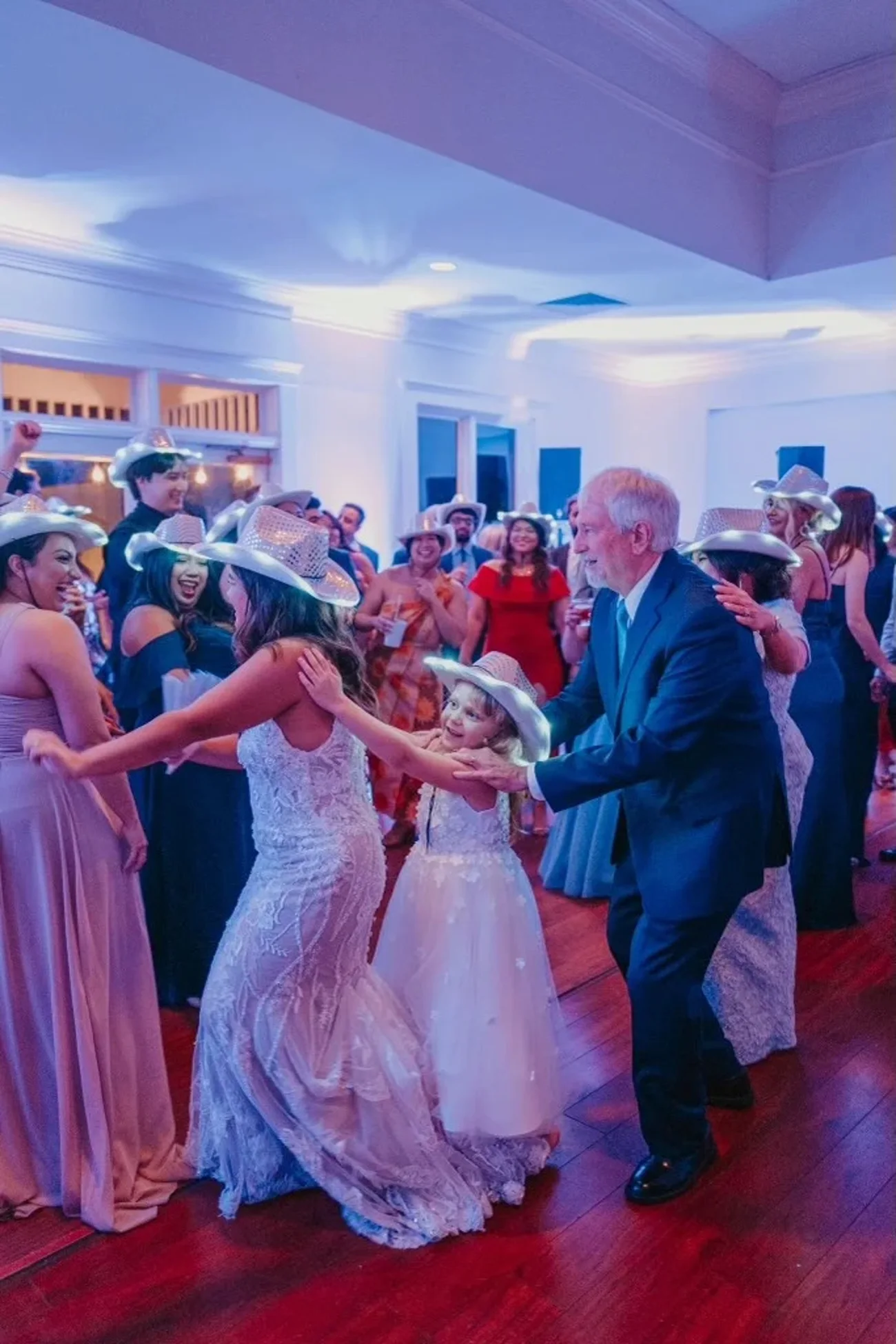
How to trim without hurting the party
Say your number came in high. Good news — there’s plenty of room to cut before you touch the things that make the night work.
Start with hours. Trimming a six-hour reception to five saves real money and honestly changes very little, because the last hour of a long night is usually thin anyway. Next, skip the specialty effects. Cold sparks are stunning, but they last eleven seconds. Uplighting glows for five hours.
Consider a Friday or Sunday date, too. Many Michigan vendors price those days lower, and in Macomb County you’ll often find better venue availability as a bonus. A November or January wedding saves even more.
What I’d never cut: the person on the microphone. A cheap DJ is not a savings — it’s a risk you take with the one part of the day that can’t be re-shot or re-served. Cut a fog machine. Keep the pro. Want more ways to stretch a wedding budget? There’s a whole shelf of practical planning reads waiting for you.
Building your number, step by step
Let’s put it together. Take your total wedding budget and multiply by 0.10 — that’s your working entertainment budget. On $30,000, that’s $3,000. Now split it.
Give roughly $2,000 to the DJ, including ceremony sound and cocktail hour. Set aside $500 for uplighting. Hold $250 for one signature extra, like a monogram or a dance-floor lighting package. Keep the last $250 as your cushion for overtime and gratuity. That’s a complete, realistic plan with no holes in it.
Then adjust for your crowd. Big family, lots of dancers, a hall off M-59 that seats 250? Push the DJ number up and skip the extras. Fifty guests at a restaurant reception near Partridge Creek? You’ll spend less across the board and still have a great night.
One last thing. Get every quote itemized. Not “wedding package — $2,400,” but a real list showing hours, rooms, gear, and what an extra hour costs. Itemized quotes are how you compare vendors honestly, and they’re how you catch the gaps early. If you’d like a hand building your own breakdown, say hello to Tevin and we’ll walk through your numbers together — no pressure, no pitch. And if you’re planning around the city itself, our Detroit reception guide covers venues, timing, and what local couples actually spend.