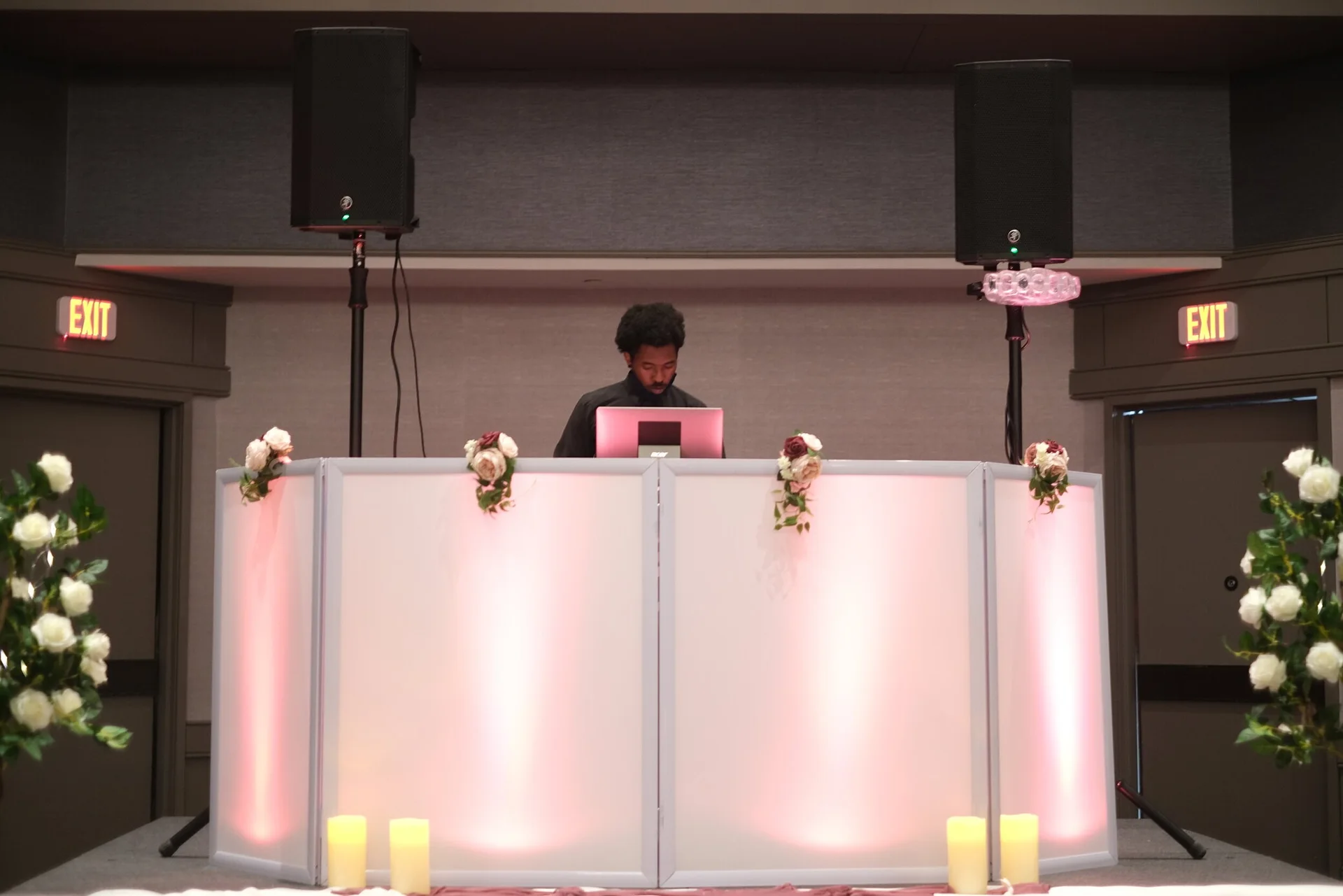
Do You Really Need a Wedding DJ? An Honest Answer
I’m a DJ, so you’d expect me to say you absolutely need a DJ at your wedding. But that’s not the honest answer, and honest is more useful. The truth is that some weddings get enormous value from a DJ, and a small handful genuinely don’t. So let’s talk about both sides. Below I’ll walk you through exactly when a DJ earns its keep, when your money is better spent somewhere else, and the questions that make the choice easy for your Ann Arbor wedding.
In this article
The real question behind “do I need a DJ?”
Most couples who ask this aren’t really asking about music. They’re asking whether a DJ is worth a line item that usually runs somewhere between $1,200 and $2,500 in Michigan. That’s a fair question, and it deserves a straight answer instead of a sales pitch.
Here’s how I’d reframe it. A DJ isn’t a music vendor. A DJ is the person who keeps your reception moving from one moment to the next without anybody having to figure it out. Music is the tool. Flow is the product. Once you see it that way, the answer gets a lot clearer.
So ask yourself a simpler question: if nobody was hired to run the night, who would? Your maid of honor? Your cousin with the good speaker? Somebody has to make the announcements, cue the first dance, and read whether the floor is filling or fading. If that person doesn’t exist yet, you probably need a DJ more than you think.
When a DJ earns every dollar
Let’s start with the clear yes. A DJ pays for itself when your guest list crosses about 60 people, when your reception runs more than three hours, or when your crowd spans three or four generations. Those three things all create the same problem: a room that can drift.
Big rooms drift fast. At 120 guests, a playlist that felt perfect in your kitchen turns into background noise by the salad course. Somebody has to notice that the floor thinned out after a slow song and fix it in the next 30 seconds. That’s a live read, and no app makes it.
Multi-generational crowds are the other big one. Your grandmother, your college roommates, and your seven-year-old flower girl all want a moment on that floor. Getting all three without losing anyone is the whole craft. I’ll ride a Motown run into ’90s hip-hop into current pop, and the trick is picking the exact bridge song that keeps the older crowd from walking off.
Outdoor and multi-room weddings also tilt hard toward yes. Ceremony on a lawn, cocktails on a patio, dinner inside — that’s three separate sound zones. Each one needs its own gear, its own volume, and its own cue. Handling that with a phone and one speaker is a rough afternoon.
When you honestly can skip one
Now the other side, because it’s real. If you’re having 30 guests in a backyard off Huron River Drive with dinner at long tables and no formal dances, you may not need a DJ at all. A good speaker, a well-built playlist, and one friend who’s willing to hit play can absolutely carry that night.
Same goes for a brunch reception that wraps by 3 p.m., a courthouse wedding with a restaurant dinner after, or any celebration where dancing was never the point. If nobody in your family dances and you know it, don’t buy a dance floor solution. Spend that money on the food or the photos instead.
A third case: some venues include a house sound system with an in-house tech who runs announcements. It’s rare, but it happens. Ask. If it’s already covered and your night is simple, that’s a legitimate save.
I’d rather tell you that up front than take a booking that doesn’t help you. A wedding I can’t make better isn’t a wedding I want on my calendar.
A DJ isn’t a music vendor. A DJ is the person who makes sure nobody in the room ever has to wonder what happens next.
The part nobody thinks about: the microphone
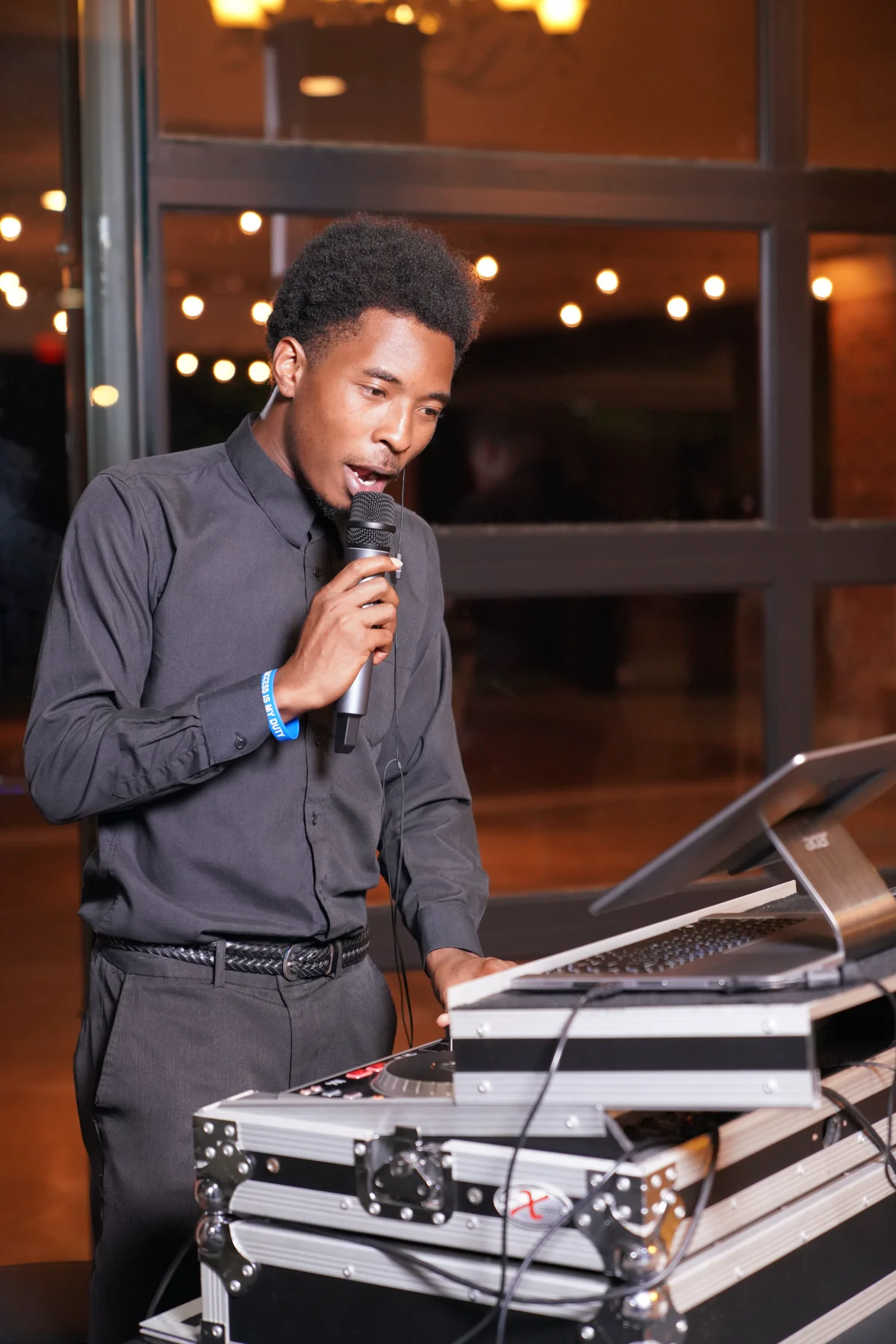
Here’s what a lot of couples miss entirely. When they picture a DJ, they picture songs. Then the wedding arrives and the mic turns out to be the thing they can’t live without.
Think about how many moments run through a microphone. The officiant needs the back row to hear the vows. Your dad’s toast needs to land without feedback squealing over the punch line. Somebody has to tell 100 people that dinner is served by table, then call the cake cutting, then get everyone outside for the send-off.
Every one of those is a mic moment, and each one either flows or stalls. Stalls are what people remember. A ten-minute lull after dinner because nobody knew what came next — that’s the memory you’re trying to avoid. Strong wedding day sound and MC work is really what you’re paying for. The songs come free with it.
Key takeaway: If your wedding has more than 60 guests, more than one location, formal dances, or a mixed-age crowd, a DJ earns its cost through flow and mic work alone. If you’re under 40 guests with no formal moments, a playlist can genuinely do the job.
The hidden costs of going without
Skipping the DJ looks like saving $1,800. Sometimes it is. But there are costs that don’t show up on the spreadsheet, and it’s worth counting them honestly.
First, you’re assigning a job to a guest. That friend running the playlist doesn’t get to relax, doesn’t get to dance, and spends your reception staring at a battery indicator. That’s a real thing you’re spending — a person’s night.
Second, gear costs add up quietly. Renting speakers, a mixer, a wireless mic, and stands for one day frequently lands around $400 to $600 in the Detroit metro. Add the pickup, the setup, and the return the next morning. You’ve now spent a third of a DJ’s fee and still don’t have anyone running the room.
Third, there’s the failure risk. Phones ring mid-song. Bluetooth drops. A laptop picks 6:40 p.m. to install an update. Vendor research from WeddingWire’s wedding DJ cost breakdown shows how much of a DJ’s fee covers backup gear and redundancy, not just labor. Pros carry a second everything for exactly this reason.
Five questions that settle it
Still on the fence? Run through these. They take two minutes and they’re honest.
1. How many guests? Under 40, a playlist can work. Over 75, hire someone.
2. Do you want a packed dance floor? If dancing is the memory you’re after, that’s a live-read job. Full stop.
3. How many announcements will there be? Count them. Grand entrance, blessing, toasts, first dance, parent dances, cake, bouquet, send-off. If you counted more than four, you need a host.
4. Is your crowd all one age group? One age group is easy to please. Four age groups is a craft.
5. Who’s willing to give up their night? If the answer is nobody — and it usually is — you have your answer.
Planning guides like The Knot’s wedding DJ cost guide land in the same place: the entertainment line is one of the few that guests actually feel all night long.
Making the call for your day
Here’s my honest summary. Small, short, low-key wedding with no formal moments? Save the money and build a great playlist. I mean that. Anything bigger, longer, or louder than that, and a DJ stops being a luxury and starts being the thing holding your timeline together.
Ann Arbor makes this pretty easy to picture. A 30-person dinner in a Kerrytown backyard is one kind of night. A 140-guest reception downtown with a cocktail hour, three toasts, and a floor that has to stay full until midnight is a completely different animal. Same city, totally different answer.
If you’re somewhere in the middle, talk to someone before you decide. I’ll tell you straight if I think you can do without me — that conversation costs nothing and it’s a lot cheaper than guessing. You can meet your DJ first, or read through more planning advice until the picture gets clear. And if you want to see how a full night actually runs start to finish, my Detroit wedding guide lays out the whole timeline.
Whatever you choose, choose it on purpose. The couples who regret this decision are almost never the ones who thought it through. They’re the ones who left it to the last month and hoped it would work out.