
Playlist Mistakes That Kill the Dance Floor
A good playlist and a full dance floor are not the same thing. I’ve watched couples spend six weeks building a 200-song list they genuinely love, then stand in an empty room at 9:40 wondering what went wrong. Almost every time, it comes down to the same handful of wedding playlist mistakes — and every one of them is fixable in an afternoon. Here’s what empties a floor, why it happens, and exactly how to correct it before your date.
In this article
Mistake 1: Building it for you, not the room
This is the big one, and it’s the most understandable. It’s your wedding, so of course you fill the list with songs that mean something to you. The problem is that meaning and momentum are two different jobs.
A deep cut from the album you two listened to on your first road trip is beautiful. It’s also unknown to 180 of your 200 guests, so the floor clears while it plays. Multiply that by 15 personal favorites and you’ve built 45 minutes of quiet into your night.
Here’s the fix, and it costs you nothing. Move those songs to the moments where nobody needs to dance: cocktail hour, dinner, the getting-ready playlist, your first dance. They still get played. They just stop competing with the dance block.
Then judge every open-dancing song by one test: would at least half this room recognize it in three seconds? If yes, it stays. If no, it moves earlier in the night. That single rule prevents more wedding playlist mistakes than any other advice I give.
Mistake 2: No energy curve
Most self-built playlists are flat. They’re either all bangers or a random shuffle, and both fail for the same reason: a room needs a shape, not a setting.
All-bangers sounds smart until you live it. Guests hit peak energy in 20 minutes, get tired, and sit down for good at 9:15. You’ve spent your whole night’s fuel in the first block.
Shuffle is worse. A slow ballad landing between two peak-hour hits is a floor-clearing event, and shuffle guarantees it happens four or five times. Once people sit, getting them back up costs three songs, not one.
There’s a simple sign you got the curve wrong. If your floor is fullest at 9:00 and thinnest at 10:30, the energy peaked too early. A healthy night looks like the opposite — steady growth, with the biggest crowd of the evening standing there during the last two songs.
What works is a wave. Start moderate to pull people out, build to a peak, drop to a mid-tempo crowd-pleaser so people can breathe, then build higher than before. Repeat that shape three or four times across the night. Each peak should be a little bigger than the last, and the biggest one belongs in the final 30 minutes.
Mistake 3: Ignoring how songs end
Here’s what a lot of couples miss entirely. On a phone playlist, every song plays start to finish, including the 40-second fade-out and the two seconds of silence before the next one.
That silence is where dance floors die. Guests hear a gap, their brain says “the song is over,” and three people head for the bar. Do that 25 times in a night and you’ve handed your crowd 25 chances to leave.
Live mixing removes those gaps. I’m bringing the next track in under the outgoing one, usually 20 to 30 seconds before it ends, so the beat literally never stops. Guests don’t consciously notice. They just never get a reason to walk away.
If you’re truly going the self-DJ route, at least trim the fade-outs and turn crossfade on. It’s an imperfect fix, but it beats silence. Cutting long intros helps too — a 90-second buildup is dead time when a floor is already full.
Dance floors rarely empty because of one bad song. They empty in the two seconds of silence between two good ones.
Mistake 4: Skipping the do-not-play list
Almost every couple writes a must-play list. Maybe a third write a do-not-play list. That second one prevents more disasters than the first one creates good moments.
It isn’t just about songs you find annoying. It’s about landmines. The song from a previous relationship. The track that will make your grandmother leave the room. The one an uncle will absolutely request at 10 p.m. because he doesn’t know the history.
Write those down. Ten seconds of typing saves a very uncomfortable moment. And be specific: “no Chicken Dance” is clear, while “nothing cheesy” means nothing, because your definition of cheesy and mine are not the same.
The same goes for explicit versions. If you’d rather your guests not hear certain language in front of the kids’ table, say so once and it’s handled all night. Most planning checklists, including the ones at Zola’s expert advice hub, put the do-not-play list right alongside the must-play list for exactly this reason.
Key takeaway: Move your personal favorites to dinner and cocktail hour, give the night a rising energy curve instead of a flat one, kill the silence between songs, and write a real do-not-play list. Those four moves fix most empty dance floors before the wedding day even arrives.
Mistake 5: Too many songs, too little order
Couples often send me 300 songs. It feels thorough. In practice, a four-hour reception fits about 60 songs, so a 300-song list isn’t a plan — it’s a wish jar.
Worse, a giant list with no structure hides the important stuff. If your five true must-plays are buried at position 212, they may never get played at all, and you’ll notice at 11:15 when it’s too late.
The better format is short and tiered. Ten to fifteen must-plays. Twenty or thirty maybes that describe the vibe you want. Then ten do-not-plays. That’s it. Under 60 songs total, and every one of them carries a clear instruction.
Genre balance hides in here too. Scan your list and count how many songs come from each decade and each style. If 40 of your 60 dance songs are from one five-year window, a big chunk of your guest list is going to spend the night watching. Two minutes with a highlighter catches that before your DJ ever sees it.
Crowdsourced lists have the same trap. Asking every guest for a request on the RSVP card sounds fun, and it produces 140 songs in 14 genres with no through-line. Use those as a flavor guide, not a running order, and let your DJ pick which ones actually fit the block they land in.
What a live read fixes that a list can’t
Let me tell you about a Rochester Hills reception a couple summers back. The couple’s list was heavy on 2010s pop, but 20 minutes into open dancing, the floor was mostly guests over 50 doing their best with it.
So I pivoted. I dropped a Motown block, filled the floor to about 90 people, then walked the tempo forward song by song until we were back in their pop set with everybody still out there. The list they wrote still got played. The order just changed.
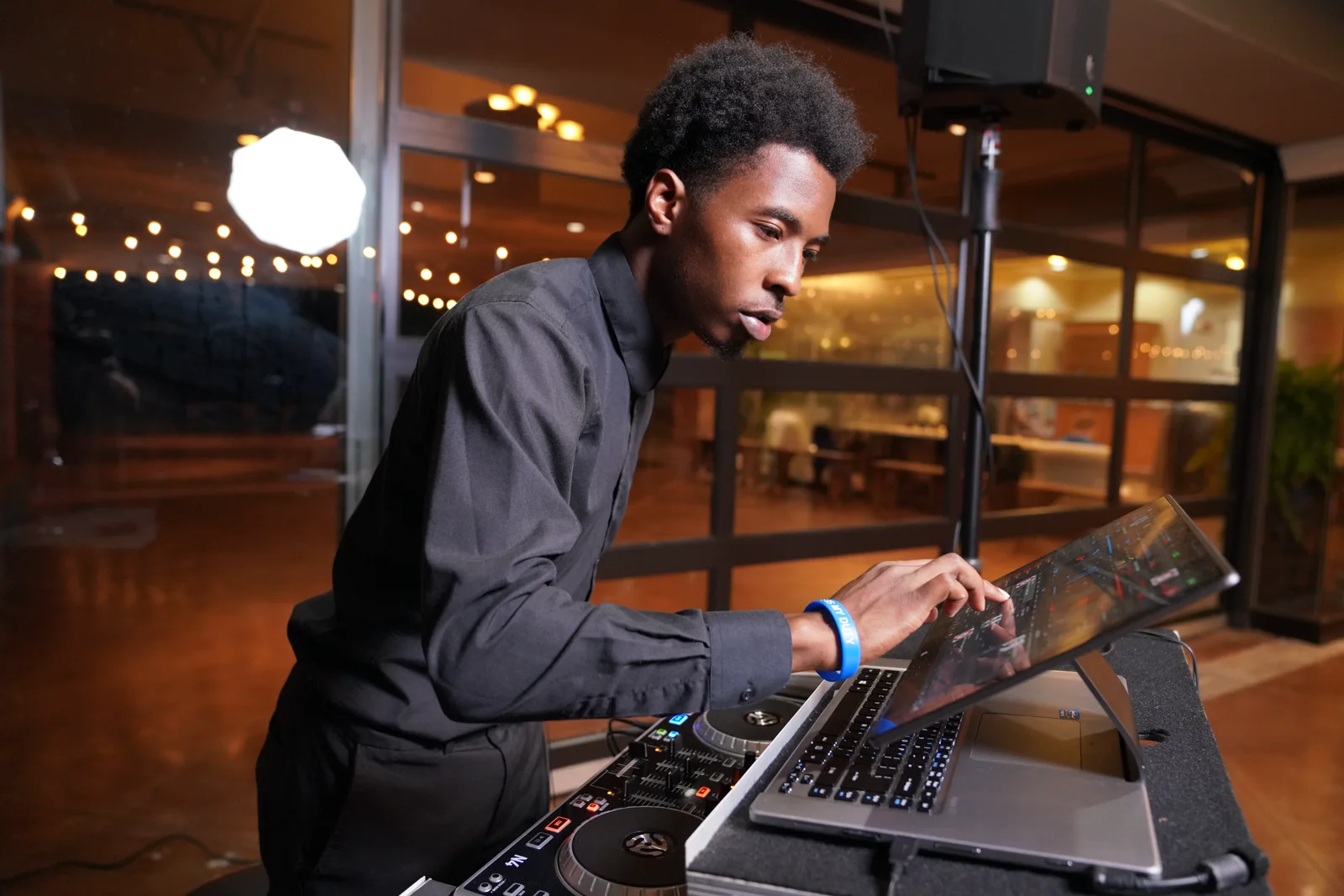
That’s the piece no playlist can do. A list can’t see three tables sit down. It can’t tell that the bar line just got long, or that grandma is finally up and this is the moment for her song. Reading a room takes eyes, and it takes a plan flexible enough to move.
It matters for the schedule too. Toasts run long, dinner service slips, the photographer needs ten more minutes outside. A wedding DJ and MC absorbs all of that live and adjusts the music around it. A speaker on a stand plays right through the chaos, exactly as programmed.
Fixing your list before the wedding
Ready to audit yours? Do these four passes and you’ll catch nearly everything. First, move every personal deep cut to dinner or cocktail hour. Second, check that your dance songs rise and fall instead of sitting at one level.
Third, trim the list to under 60 songs with clear tiers. Fourth, write ten do-not-plays. That whole process takes about an hour, and it’s the highest-value hour you’ll spend on your music.
One local note: Rochester Hills receptions often pull guests from both Oakland and Macomb counties, which usually means a genuinely mixed age range in the room. Broad, recognizable songs matter more with a crowd like that than they would at a 120-guest wedding of college friends. If you’re still mapping out your evening, The Knot’s reception timeline guide shows where the dance blocks usually fall.
For more help sorting songs by moment, there are plenty more reception music guides to work through, and my Rochester Hills wedding guide covers the full night in order. Want a second set of eyes on your list? You can meet your DJ and we’ll go through it together, song by song. Your favorites deserve a full floor — they just need the right order to get one.