
Chill Songs for a Laid-Back Reception
Not every couple wants a packed floor and a fog machine, and that’s completely fine. Some of the best receptions I’ve played were slow, warm nights where people talked, laughed, ate too much cake, and swayed a little. That’s what chill wedding songs are for — a mellow set that keeps a room feeling alive without ever pushing it. The trick is that “low-key” doesn’t mean “low effort.” A relaxed night still needs shape. Here’s how I build one, song type by song type, so your reception feels easy instead of empty.
In this article
What makes a song feel chill
Let’s define the target, because “chill” means five different things to five different people. To one couple it’s acoustic folk. To another it’s smooth soul. To another it’s indie with a little reverb on everything.
Musically, though, chill wedding songs share a few traits. The tempo usually sits between 70 and 105 beats per minute. The drums are soft or brushed instead of punchy. The vocal is close and conversational rather than belted. And there’s space in the mix — you can hear the room around the instruments.
That last part matters more than people realize. A song with lots of space lets guests talk over it comfortably. A dense, busy track forces everyone to raise their voice, and by hour two the room is tired even if the music is technically quiet.
Here’s my simple test. Play the song and try to have a normal conversation over it. If you find yourself leaning in and repeating yourself, it’s not a chill song — it’s just a quiet loud song. Real mellow music makes talking easier, not harder.
Arrival and cocktail hour
This is the easiest hour to get right and the one people put the least thought into. Guests are walking in, finding the bar, and figuring out where they know each other from. Your music’s whole job is to make that feel warm.
I lean on soul and Motown instrumentals here, plus soft indie and a little bossa nova. Nothing with a heavy hook. You want people to notice the room, not the playlist.
Volume during arrival should sit noticeably lower than dinner. I usually run cocktail hour around conversation level minus a notch, then bring it up as the room fills. More bodies absorb more sound, so a level that felt perfect at 5:15 with twelve people will feel thin at 5:45 with ninety.
Song count wise, plan about eighteen to twenty tracks for a one-hour cocktail window. That gives room for a longer receiving line without repeats. And skip anything with a chorus your guests will want to sing — save the singalongs for later, when they’ll actually land.
Dinner: the warmest hour
Dinner is where a mellow reception either shines or stalls. Get it right and the whole room settles into a good mood that carries all night.
My approach is simple: familiar, but not obvious. Older soul, acoustic covers of songs people half-remember, singer-songwriter stuff with a gentle groove. Guests should recognize maybe one in three tracks. That ratio keeps a room comfortable without turning dinner into a trivia game.
I also build a slow lift across the hour. The first fifteen minutes sit lowest, then the tempo creeps up by five or ten beats per minute every few songs. By dessert, the music has quietly moved from “background” to “hmm, I like this.” Nobody notices the climb, which is exactly the point.
One thing to avoid: the all-instrumental dinner playlist. It sounds nice in theory and turns into elevator music in practice. Vocals give a room warmth, and warmth is the whole goal here. If you want a fuller picture of how these hours connect, my wedding reception planning page walks through the full timeline.
A laid-back reception isn’t a quiet one. It’s a room where nobody feels pressured — and that takes just as much planning as a packed dance floor.
The golden-hour set
If you’re getting married between May and September in Michigan, the light around 8 p.m. is genuinely beautiful. That window deserves its own short set, and it’s my favorite twenty minutes of a chill reception.
This is where I put the songs that make people stop talking for a second. Warm, mid-tempo, a little nostalgic. Think the tracks your guests will hear years later and immediately picture your wedding.
Practically, I pick six to eight songs and pair them with whatever your photographer is doing outside. If they’re taking golden-hour portraits, the music inside keeps guests happy while you’re gone. When you walk back in, I roll into something slightly bigger so your return feels like a small event without an announcement.
Couples browsing WeddingWire’s wedding song guides often collect a pile of beautiful tracks with no idea where they go. This is where they go. Golden hour is the perfect home for the songs that are too pretty for the dance floor and too special for dinner.
Key takeaway: A chill reception still needs a shape. Keep cocktail hour lowest, lift dinner by 5–10 BPM every few songs, drop a 6–8 song golden-hour set around 8 p.m., and save your singalongs for after dessert.
Chill songs people still dance to
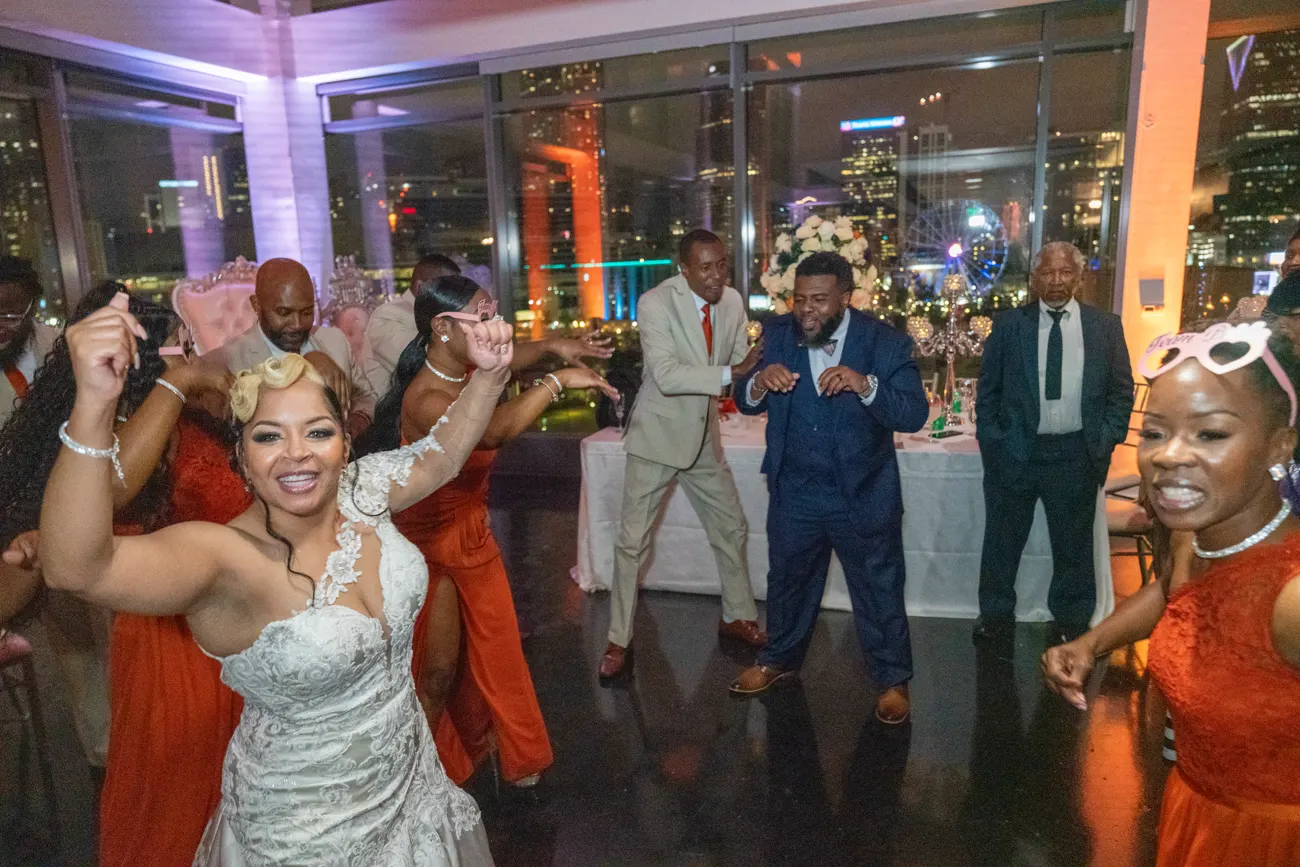
Here’s what a lot of couples miss: choosing a low-key vibe doesn’t mean nobody dances. It means the dancing looks different. Fewer arms in the air, more swaying, more people staying out there for six songs straight instead of three.
The sweet spot is a mellow groove with a real backbeat — around 100 to 115 beats per minute. Old soul does this beautifully. So does classic reggae, mid-tempo R&B, and a lot of ’70s pop. The rhythm is clear enough to move to and soft enough that nobody feels like they’re at a club.
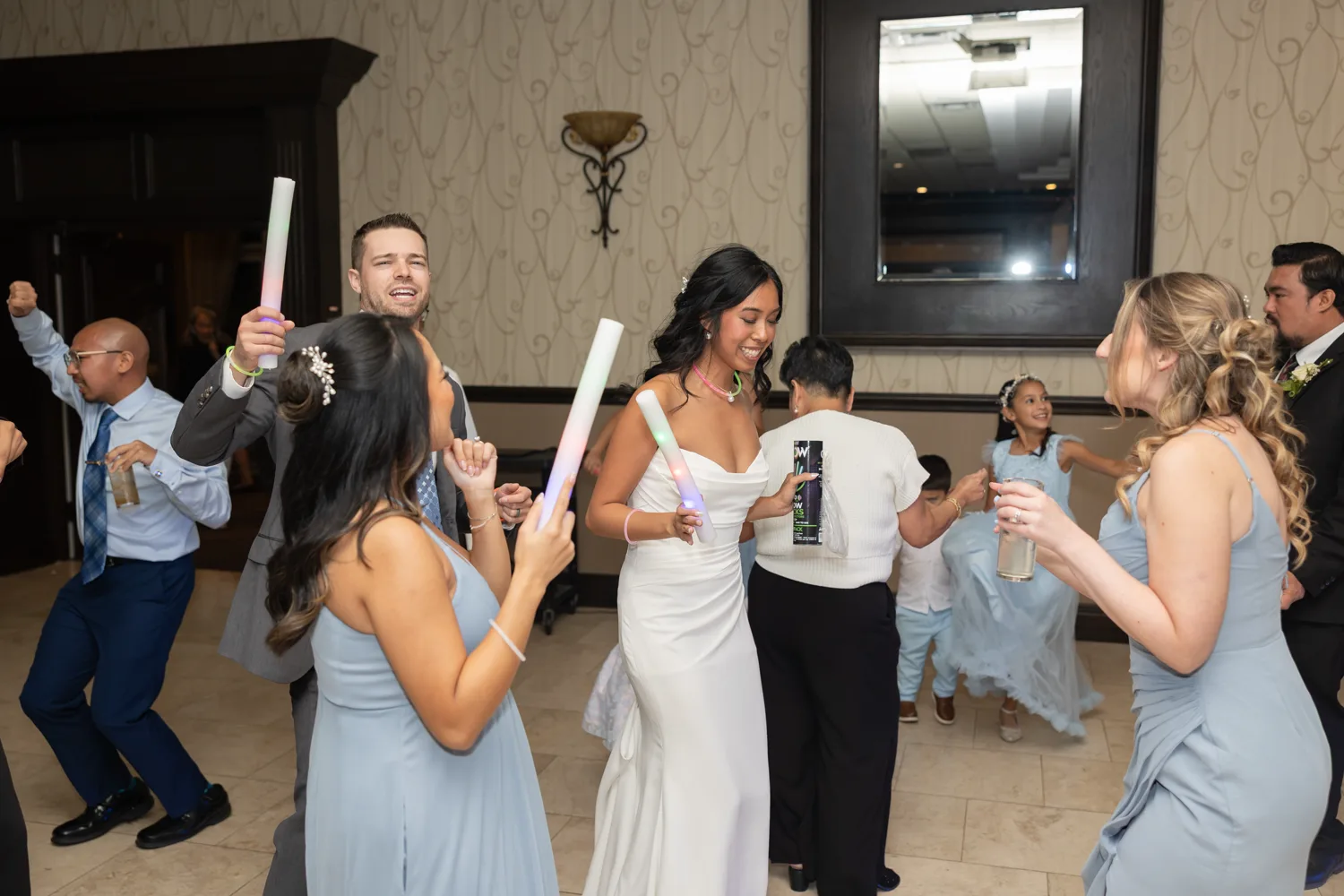
I like to open a chill dance set with a song everybody’s parents love. It gives permission. Once the older crowd is up, the younger crowd stops worrying about looking silly, and suddenly you’ve got a floor with three generations on it. That’s the whole trick, and it works almost every time.
Then I hold the tempo steady instead of climbing. At a high-energy wedding I’d keep pushing. At a laid-back one, I park in the pocket and let people stay comfortable. Nobody gets winded, nobody sits down, and the floor holds for a long, easy stretch.
One more thing about a mellow dance set: length beats intensity. At a high-energy wedding, the peak might run twenty minutes and then fade. At a laid-back one, I’ve watched the same forty people stay out there for a full hour because nothing ever asked too much of them. That’s a different kind of win, and honestly it photographs beautifully — lots of smiling, lots of talking, nobody red-faced.
If you’re worried the floor might stay empty, here’s the reassurance: it won’t. People dance when they feel comfortable, and a room that isn’t shouting at them is the most comfortable room there is.
Mistakes that make mellow feel flat
Low-key goes wrong in predictable ways. Let’s cover them so yours doesn’t.
Too quiet, too long. There’s a floor below which music stops being music and starts being a hum. If guests can hear the kitchen doors, it’s too low.
No tempo variety at all. Forty straight songs at 78 beats per minute is a nap, not a reception. Vary it. Even a mellow night wants a small wave every twenty minutes.
All sad songs. A lot of gorgeous acoustic music is also kind of melancholy. Pile up six in a row and the room quietly deflates. Mix in songs that are gentle and happy.
Ignoring the end of the night. Even a chill wedding deserves a last song that feels like an ending. Pick one on purpose — don’t let the playlist just run out.
Skipping a DJ entirely. I’m biased, sure. But a playlist can’t hear that dinner ran twenty minutes long or that the room just got quiet. Somebody has to adjust, and a phone won’t.
Building your set in Canton
Ready to put yours together? Start with five anchor songs — tracks that are unmistakably you. Everything else gets built around those, and they tell me your taste faster than any questionnaire.
Next, name the feeling for each block. “Cozy” for cocktail hour, “warm and familiar” for dinner, “pretty” for golden hour, “easy groove” for dancing. Four words, and I can fill in eighty songs that fit.
Then think about your room. A lot of Canton receptions happen in banquet halls off Ford Road or Michigan Avenue with high ceilings and hard floors, and those rooms carry sound farther than you’d expect. In a space like that, mellow music can drift and lose warmth, so speaker placement does real work. Ask about it — a good setup makes a quiet set feel intimate instead of distant.
Guides like Zola’s wedding music advice are great for gathering ideas, but the ordering is what turns a pile of songs into a night. That part’s on your DJ, and it’s the part I genuinely enjoy.
If you want a hand shaping yours, meet your DJ and send over those five anchors. You can also read my Detroit wedding day guide for the full-night view, or dig into more music ideas whenever inspiration strikes. Relaxed doesn’t mean unplanned — it just means the plan is invisible.