
Wedding DJ Etiquette Guests Wish Couples Knew
Nobody hands you a rulebook when you book a reception. Still, there’s a whole set of unspoken rules — call it DJ etiquette — that decides whether your night feels warm and easy or a little tense around the edges. Your guests can’t name these rules, but they absolutely feel them. After more than a decade behind the booth at Michigan weddings, I’ve watched the same small choices make the difference again and again. Here’s what guests quietly wish couples knew, and how to get it right without overthinking a single thing.
In this article
What DJ etiquette really means
Let’s clear something up first. Good DJ etiquette isn’t about being stiff or formal. It’s about respect — for your guests, for your timeline, and for the moments you spent a year planning.
Think of it as a set of small courtesies. Don’t talk over a toast. Don’t blast the volume at grandma’s table. Don’t ignore the flower girl’s mom when she asks for one song her daughter will remember. None of that is complicated. It just requires someone paying attention.
Here’s the part that surprises couples: most etiquette problems at a wedding aren’t caused by rude people. They’re caused by nobody deciding in advance. When there’s no plan for requests, guests invent one. When there’s no plan for the mic, someone grabs it. Decide early and the whole night runs kinder.
The other thing worth saying is that etiquette runs both ways. A DJ owes you professionalism, and you owe your DJ a little information. Neither side can read minds. Trade a few honest sentences beforehand and about ninety percent of the awkward stuff disappears before it starts.
The rules guests wish you knew
I’ve talked to a lot of guests over the years, usually near the bar around 9 p.m. Their wishes are pretty consistent, and they’re all small.
Feed the vendors before the dancing starts. Guests notice a DJ eating standing up at 10 p.m. more than you’d think, and it reads as unkind even when it isn’t meant that way.
Keep the formal stuff tight. Four toasts is generous. Seven is a lot. Guests came to celebrate you, and they’ll stay warmer if the speeches don’t stretch past twenty-five minutes total.
Give the older crowd their window. A block of familiar music between dinner and the late-night set lets your aunts and uncles dance before they head out. It costs you fifteen minutes and buys you a room full of stories.
Don’t surprise people from the mic. Nobody wants to be called up out of nowhere. If you want a moment with a specific guest, tell them earlier that day. Consent turns a cringe into a highlight.
Etiquette writers at The Knot’s reception etiquette guide back up the same theme: guests forgive almost anything except being made uncomfortable.
Song requests: who gets a say?
This is the big one. Requests cause more quiet friction than anything else at a reception, and it’s completely avoidable.
You have three basic options. Open requests means anyone can ask and the DJ decides what fits. Filtered requests means guests can ask, but your do-not-play list wins every time. No requests means the DJ runs the plan you built together and politely declines the rest.
My honest recommendation? Filtered. It keeps guests feeling included without handing your dance floor to whoever walks up first. And it protects the moments that matter to you.
Here’s the etiquette part. If you’re saying no to requests, tell me why, and I’ll say no gracefully instead of coldly. “They’ve got a set plan for tonight, but let me see if I can work something in” lands very differently than a flat no. Same answer, kinder delivery.
One more thing: the request that keeps coming back is usually a signal. If four different people ask for the same throwback, the room is telling you what it wants. A good DJ hears that and adjusts. If you want to see how I build a request plan into the rest of the night, my wedding reception music page lays it out.
Etiquette isn’t about rules. It’s about making sure nobody in the room feels like an afterthought — including the people working it.
Volume and the table nobody thinks about
Volume is etiquette you can measure. Too quiet and the floor never fills. Too loud and half your guests move to the hallway to talk.
The trick is zones. During dinner, music should sit under conversation — you notice it, but you never raise your voice. Once dancing starts, the floor gets louder while the far tables stay livable. Speaker placement does most of that work, not the volume knob.
Now the table nobody thinks about. There’s almost always one round of older relatives seated closest to the booth, because that’s where the leftover seats end up. Move them. Seriously, put your loudest cousins by the speakers and your grandparents on the far side. It’s a five-minute change to a seating chart that saves someone’s whole evening.
Here’s what a lot of couples miss: guests rarely complain about volume to you. They complain to each other, then they leave early. So if you’d rather have people stay until last call, ask your DJ how they handle levels before you book. Anyone who says “as loud as you want” hasn’t thought about it much.
Key takeaway: Decide three things early — your request policy, your speech count, and where the speakers point. Those choices cover most of the etiquette that guests actually notice, and each one takes about five minutes to settle.
Mic manners for toasts and shout-outs
The microphone is the most powerful thing in the room. Handled well, it’s warm. Handled badly, it’s a long, long night.
Start with a speech order and a rough time limit. Two to three minutes each is plenty. Tell your speakers ahead of time — nobody’s offended by a heads-up, and everyone’s grateful for a shorter cousin’s speech.
Then there’s the open-mic question. My take: don’t. An open mic at a wedding is a coin flip, and one over-served guest can undo an hour of good energy. If you want extra voices, pick two people yourself and ask them privately.
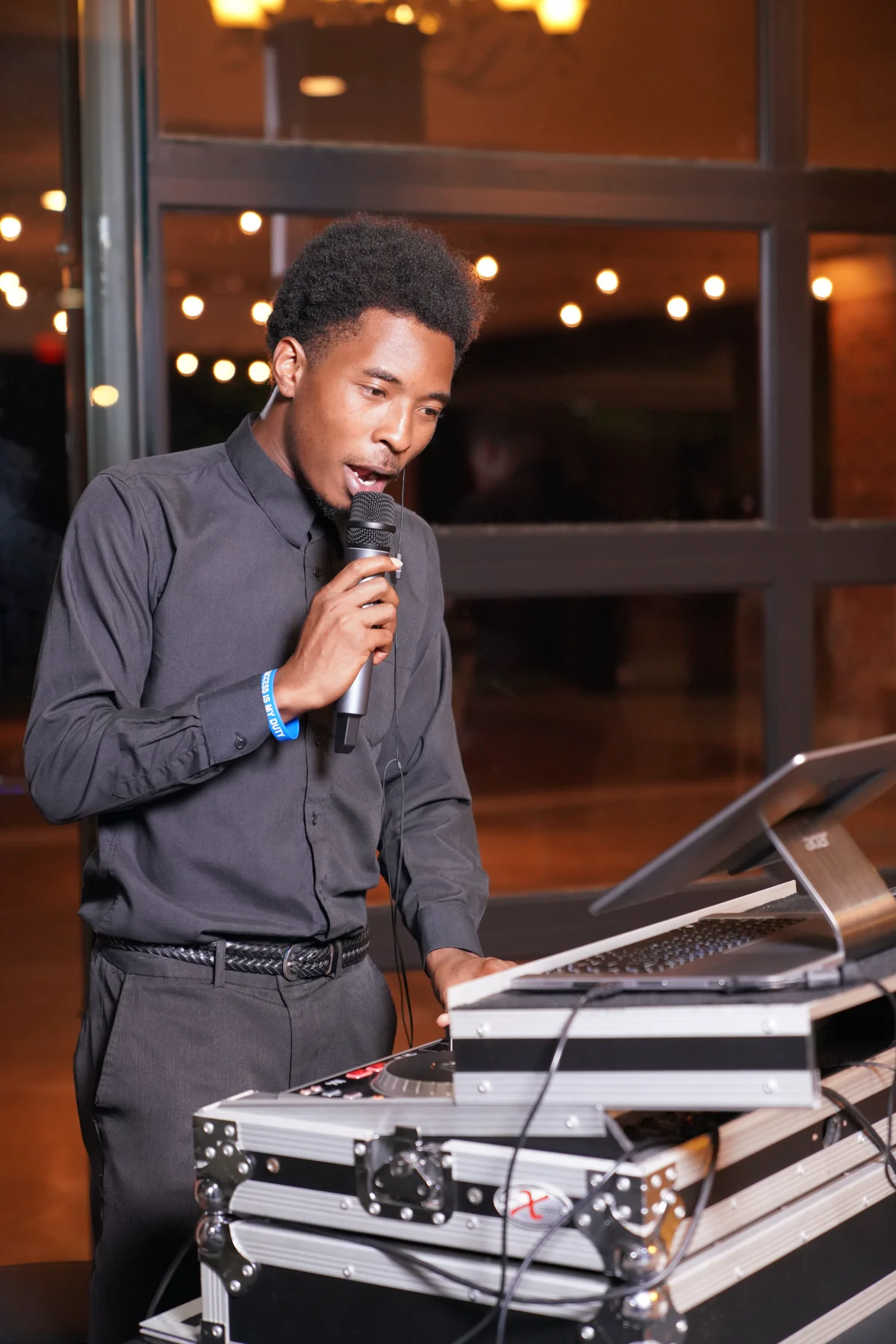
DJ mic etiquette matters too. My job is to introduce, guide, and get out of the way. Long announcements, inside jokes, and constant hype talk pull attention toward the booth instead of toward you. I keep it short, clear, and warm — then I let the music do the talking.
Small detail with a big payoff: hand the mic to the speaker instead of handing it to the room. It keeps the flow tidy and stops the “who’s next?” pause that kills momentum every time.
How couples and DJs work best together
Let’s flip the lens. Etiquette isn’t only what your DJ owes your guests. There’s a small list that makes your DJ’s job easier, and a happier DJ runs a better party. That’s just true.
Share your do-not-play list honestly. If a song reminds you of an ex, say so. I promise I’ve heard stranger reasons, and I’ve never once judged one.
Pick a single point person for the night. When four people are giving the DJ different instructions, someone’s plan is getting dropped. Usually it’s yours.
Give a heads-up on family dynamics. Divorced parents, a name that shouldn’t get announced, a relative who shouldn’t be handed the mic — that information stays private and it prevents real hurt. Zola’s expert advice hub makes the same point about vendor briefings, and I’d underline it twice.
Finally, trust the read. You hired someone who has watched hundreds of dance floors fill and empty. If I say the room isn’t ready for that song yet, it’s not a no — it’s a “give me eleven minutes.” Nine times out of ten, the wait pays off.
Making it easy at your Birmingham reception
So how do you turn all of this into a plan? Keep it short. One page, five decisions, done.
Write down your request policy, your must-play songs, your do-not-play songs, your speech order, and your one point person. That’s it. Everything else can be handled live by whoever’s running your night.
Local logistics help too. Downtown Birmingham venues near Old Woodward often have tighter rooms and earlier noise cutoffs than a big banquet hall out in the suburbs, so ask about the end time before you build your late-night set. Knowing you have until midnight instead of 11 changes how the last hour gets planned.
And give yourself permission to keep it simple. Your guests aren’t grading your reception. They just want to feel included, hear their people’s stories, and dance a little. Get those three things right and the etiquette takes care of itself.
If you’d like help building that one-pager, get to know Tevin and we’ll go through it together in about twenty minutes. You can also read my Detroit wedding day guide for how a full timeline fits together, or browse more planning tips whenever you’ve got a spare coffee break. A kind reception isn’t luck. It’s a handful of small, thoughtful calls made early.