
How to Shorten a Song Without Ruining It
You picked the perfect song. Then you played it all the way through and realized it runs five minutes and forty seconds. That’s a long time to sway in front of ninety people. Good news: how to shorten a song is one of the easiest problems in wedding planning to solve, and when it’s done right, nobody in the room can tell an edit happened. I trim tracks like this almost every weekend. Here’s exactly where the cuts go, why some spots work and others sound broken, and how to get an edit you’ll actually love.
In this article
Why long songs need a trim
Here’s the thing nobody warns you about. A song that feels short in your car feels very different when a room full of people is watching you dance to it. Four minutes on the couch is a nice slow tune. Four minutes on a dance floor, under a spotlight, with your grandma’s phone pointed at you, feels like a small eternity.
It’s not that guests get bored of the song. They get bored of watching. Attention starts to drift right around the three-minute mark, and by four minutes people are checking their drinks. That’s not rude — it’s just how watching works. So we cut the song, not the moment.
Second reason: most pop songs are built with padding. Long intros, a repeated chorus at the end, and a fade-out that goes nowhere. Those parts serve the radio, not your reception. When you trim them, what’s left is the emotional core of the track — and that part hits harder because there’s less around it.
Third, timing matters for your whole night. Every minute you save early gives you a minute back on the dance floor later. Shave ninety seconds off three formal dances and you’ve just handed your guests an extra song, maybe two. That trade is almost always worth it.
The right length for each moment
Before you cut anything, decide the target. Different moments want different run times, and guessing is how people end up with awkward edits.
For a first dance, aim for 2:30 to 3:00. That’s long enough to feel real and short enough that everyone’s still smiling at the end. If you learned choreography, follow the routine’s length instead — your instructor already picked the cut.
For a parent dance, go a little shorter: 2:00 to 2:30. These often carry more emotion, and shorter usually means fewer tears in the makeup. For a processional, you’re timing to people walking, so 1:30 to 2:00 per group usually covers it.
Cake cutting? Ninety seconds is plenty. Nobody has ever asked for a longer cake song. And for a bouquet toss or a grand entrance, sixty to ninety seconds of the loudest, best part of the track does more than the full version ever would.
Wedding pros at The Knot’s first dance song guide land in the same range, and it matches what I see on real dance floors across Washtenaw County. Pick your number first, then cut toward it.
Where to make the cut
This is the part that separates a clean edit from a choppy one. You can’t cut anywhere. You cut on the song’s own structure.
Almost every popular song is built in 4-bar and 8-bar blocks. Verse, chorus, verse, chorus, bridge, chorus. If you remove a whole block, the song still makes sense. If you cut in the middle of a block, the ear notices instantly — even people who “don’t know music” will feel that something’s off.
So the safest cut is simple: remove one full verse or one full chorus repeat. On a five-minute ballad, dropping the second verse and one final chorus usually gets you right to 3:00 without touching anything anyone loves.
The second-safest cut is the intro. Lots of tracks open with fifteen or twenty seconds of atmosphere before the vocal starts. That’s a long time to stand still. Trimming the intro down to four or eight beats gets you into the song fast and keeps the walk-out from feeling like a stall.
Last, the outro. Fade-outs are the easiest thing in the world to cut, because you just end on the last strong downbeat instead of letting the track drift into nothing. A clean ending gives guests a natural place to clap, which is a small thing that makes a big difference.
A great edit doesn’t sound shorter. It sounds like the song was always supposed to be that length.
How to shorten a song, step by step
Here’s the actual process I follow, and you can follow the same one if you want to test ideas at home before we finalize it.
Step one: listen once with a timer and write down what happens when. Intro ends at 0:18. First chorus at 1:04. Bridge at 2:47. You now have a map instead of a guess.
Step two: circle the parts you’d be sad to lose. Usually it’s the first chorus, one lyric that means something to you, and the big moment near the end. Everything not circled is fair game.
Step three: pick your blocks to remove and check the total. If you’re at 5:20 and want 2:45, you need to cut about two and a half minutes, which is usually one verse plus one chorus plus the fade.
Step four: make the cut on the beat, not on the second. This is the step most DIY edits skip. Line the end of one block up with the start of the next so the drum pattern never stumbles.
When I learn how to shorten a song for a couple, I usually send two versions. One is a tight cut and one keeps a bit more of the middle. Hearing them side by side makes the choice obvious in about ten seconds. If you want to see how the rest of the night gets built the same careful way, my wedding day music planning page walks through it.
Key takeaway: Cut whole sections, never partial ones. Remove a verse, a repeated chorus, the long intro, or the fade-out — and always make the splice land on a downbeat. Aim for 2:30–3:00 on a first dance and 2:00–2:30 on parent dances.
DJ tools vs. free phone apps
Here’s what a lot of couples miss: the free trimmer app on your phone can cut a song, but it can’t cut it musically. Those apps work in seconds. Music works in beats. That mismatch is why homemade edits so often have a tiny hiccup right at the splice.
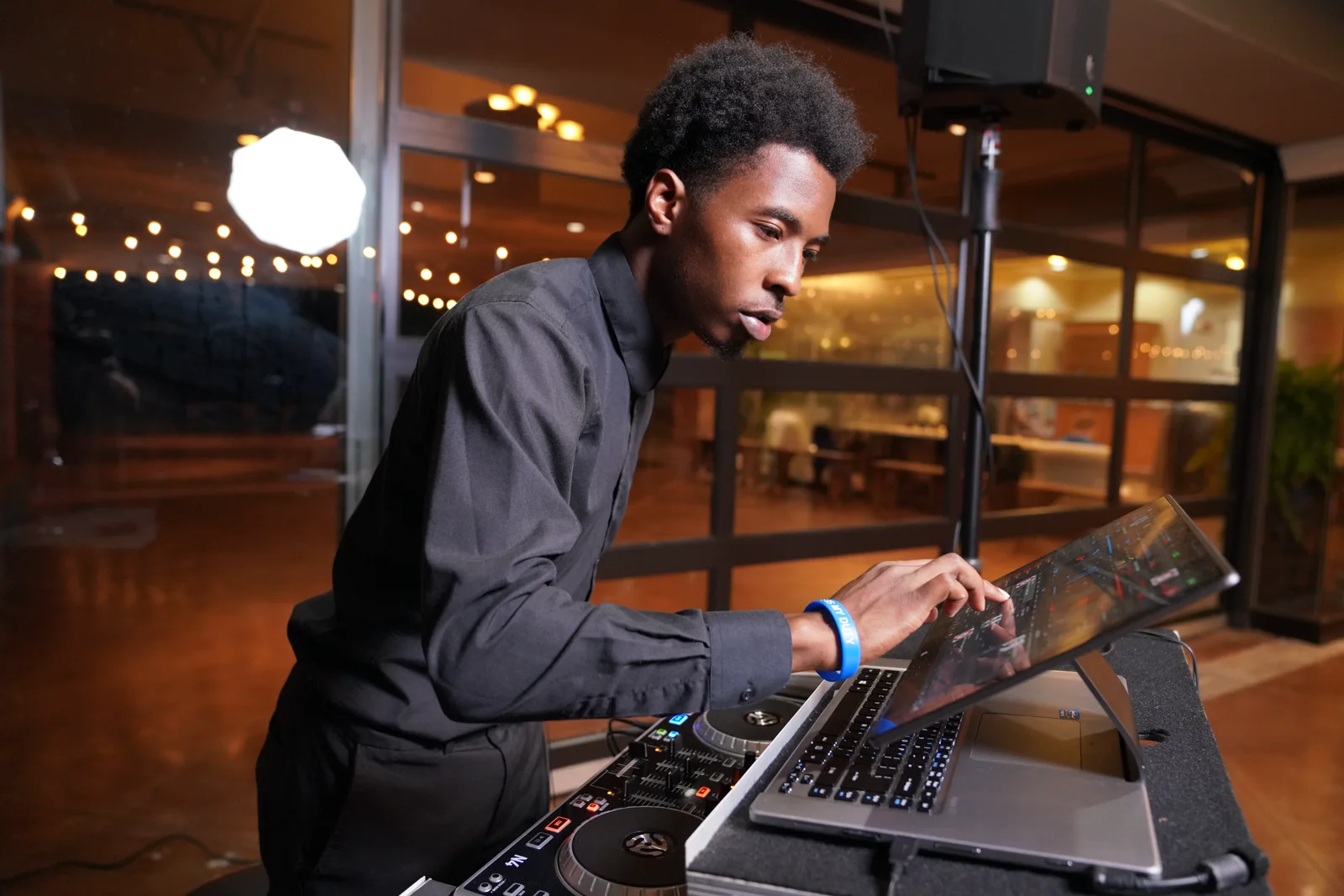
Real editing software shows you the waveform and the beat grid together. I can see every kick drum, snap the cut to it, and add a short crossfade so the two pieces blend instead of bumping. Twenty milliseconds of overlap is usually all it takes, and that’s not something you can eyeball on a phone screen.
There’s also file quality. A song ripped from a video site and re-exported twice starts to sound thin, and thin sounds terrible on a big system in a room like the Michigan League ballroom. I work from clean, full-quality files so the low end still lands when the volume comes up.
Does that mean you can’t try it yourself? Not at all. Sketch the edit however you like, then send me the timestamps. Honestly, that’s my favorite way to work — you make the creative call, and I handle the beat math. Plenty of couples browsing WeddingWire’s first dance ideas land on a song with a great middle section and a rough ending. That’s a five-minute fix, not a problem.
Edits that sound broken (and easy fixes)
Let’s talk about what goes wrong, because the mistakes repeat.
Cutting mid-word. It happens more than you’d think. The fix is easy: move the cut point to the next downbeat, even if that adds two seconds. Two seconds beats a chopped syllable every time.
Killing the build. Some songs earn their big moment with a slow climb. If you remove the climb and keep the peak, the peak stops feeling earned. Keep at least part of the build, then trim elsewhere.
Ending on a fade. A fade-out leaves guests unsure whether to clap. Instead, end on the final strong hit or let one held note ring out. You’ll hear the applause start on its own.
Forgetting the key change. If a track jumps up a key for the last chorus, you can’t splice that section next to an earlier one. It’ll clash. Either keep the key change where it belongs or cut around it entirely.
Making it too short. Yes, this is real. Under two minutes and a first dance can feel rushed, like you’re being hurried off the floor. Two and a half minutes is the sweet spot for a reason.
Getting your edit ready in Ann Arbor
Timing-wise, don’t leave this to the last week. Send me your song choices about a month out. That gives us room to trade a version back and forth if the first cut isn’t quite right, and it means zero stress the week of your wedding.
If you’re taking dance lessons anywhere around Ann Arbor — downtown, Kerrytown, or out toward Ypsilanti — get the edit to your instructor early. Practicing to the full song and then dancing to a cut version on the day is a rough surprise. Same edit, every rehearsal. That’s the rule.
On the day itself, I always keep both versions loaded. If your bustle takes longer than planned or the room needs another beat to settle, having options costs nothing. That’s just good insurance.
One more thing worth saying: a shortened song isn’t a compromise. It’s a better version of the song for the moment you’re using it in. The full track still lives on your playlist forever. The wedding version just gets to the good part faster.
Want a hand with yours? You can meet your DJ first and see how I work, then look through my Detroit wedding guide for how the full timeline fits together. For more music help across every part of the night, there’s plenty waiting on the rest of the blog. Send me the song, tell me your favorite part, and we’ll build a cut that feels like it was always meant to be that way.