
Persian Wedding Songs for a Joyful Aghd
A Persian wedding is really two celebrations wearing one outfit. There’s the aghd — the ceremony at the sofreh, full of sugar cones, honey, and family crowding in close — and then there’s the party, which does not slow down until somebody’s uncle is sweating through his shirt. The right Persian wedding songs carry both. Below you’ll find the traditional pieces for the ceremony, the pop and bandari tracks that own the dance floor, and a plan for blending them with English-language hits so nobody feels left out.
In this article
What makes Persian wedding music different
The short answer is rhythm. Most American party music lives in a straight 4/4 pulse. A huge share of Persian dance music lives in shesh-o-hasht — 6/8 — and that swing is why the floor moves differently. Shoulders lead, hands go up, and people dance facing each other instead of facing a DJ booth.
The second difference is the arc. Persian wedding songs aren’t background music; they mark specific moments. One song blesses the couple at the sofreh. Another calls the room to its feet. Another exists purely so somebody can wave a knife around before the cake gets cut. Once you understand which song does which job, planning gets easy.
And the third? Volume of joy. Persian receptions run loud, long, and generous. Plan for a bigger dance block than a typical American reception, because your guests are not going to sit down at 10 p.m.
Aghd ceremony music and “Mobarak Bad”
The aghd is the heart of the day. The couple sits at the sofreh aghd, the spread with the mirror, candles, honey, herbs, and sweets. Married women hold a cloth overhead while sugar cones are ground above it. It’s beautiful, and the music should stay warm and low so the sound of the ceremony carries.
“Mobarak Bad” is the classic. This traditional blessing song plays as the couple enters or as the sugar-cone moment begins, and everyone knows to clap along. There are dozens of recordings, so pick your family’s favorite version early — grandparents notice.
For the rest of the ceremony, instrumental santoor, tar, or ney recordings do beautiful work under the officiant. Soft, no vocals, low volume. Traditional pieces built on Persian classical modes fill a room without competing with the reading.
For the honey moment and the recessional, families often move to something joyful and modern. “Ey Joone Man” or a bright Andy track works. Just make sure the transition from ceremony volume to celebration volume happens fast — the second the couple stands up, the energy should jump.
Entrance and knife-dance moments
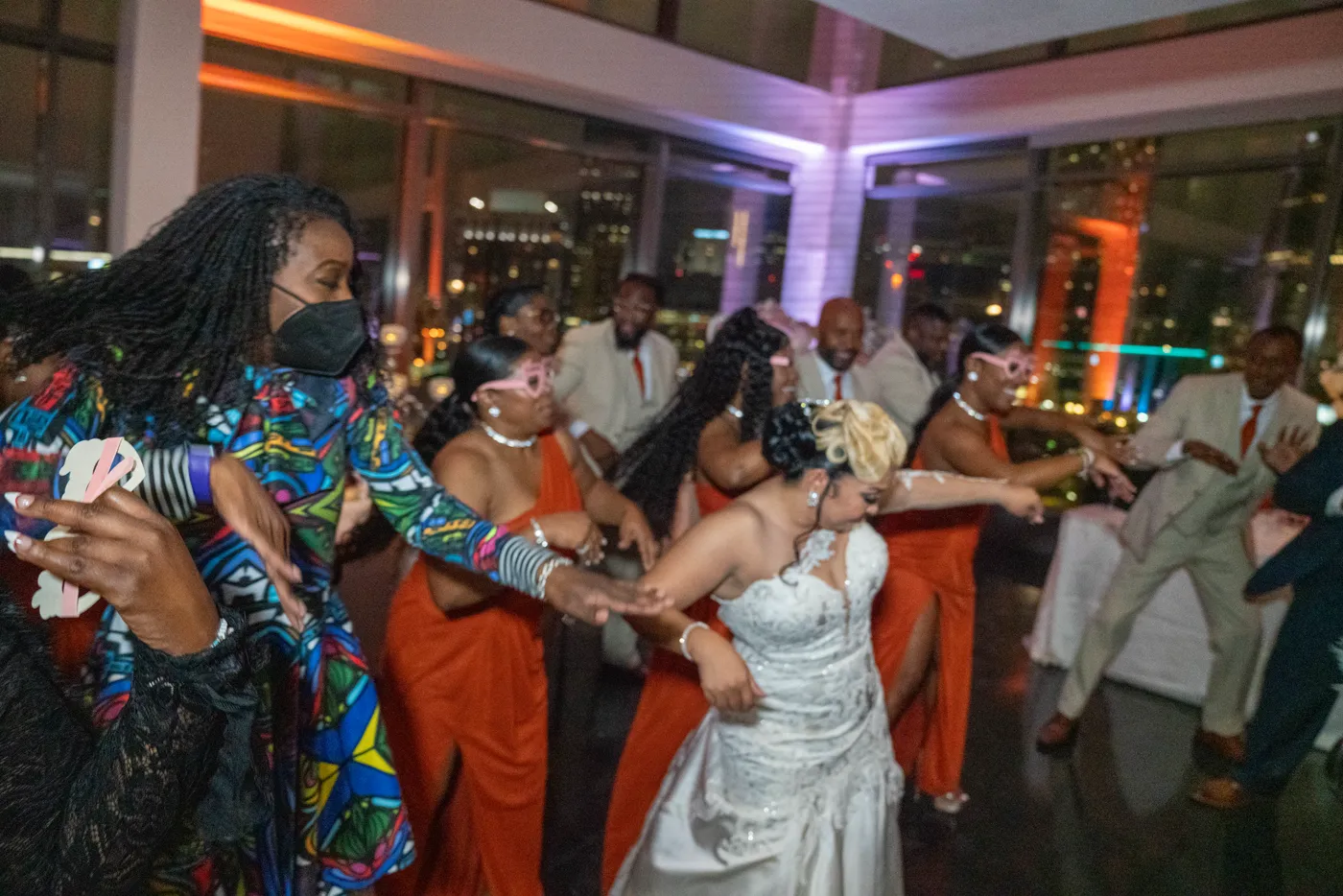
The grand entrance into the reception deserves a real production. Persian families go big here, and I love it. A strong entrance track plus a wall of clapping relatives sets the whole night.
Popular entrance picks include Andy’s up-tempo hits, Shahram Shabpareh classics, and modern Persian pop with a heavy 6/8 push. Some couples add a live daf or tonbak player alongside the track. That live drum layered over a recorded song is one of the best sounds in the wedding world.
Then there’s the knife dance — raghs-e chaghoo. If you haven’t seen it: the cake knife goes missing, guests take turns dancing with it, and the couple has to negotiate (usually with cash) to get it back. It’s playful, it’s chaotic, and it needs a track with real drive underneath. Any strong bandari or 6/8 dance song works, and it should keep going as long as the bit is funny — usually three to six minutes.
The trick is knowing when to end it. That’s a live read, not a schedule.
At a Persian wedding, the music isn’t decoration around the ceremony. It’s how the ceremony tells the room what’s happening next.
Persian pop that fills a floor
Now for the main event. Persian pop from the diaspora has been packing dance floors for 40 years, and the catalog is deep.
Andy is a wedding staple — huge, singalong, generation-crossing. Shahram Shabpareh brings the same nostalgia for older guests. Kamran & Hooman and Black Cats land squarely with the 30-something crowd. Arash bridges Persian and international pop better than almost anyone, which makes him a great transition artist.
For the romantic slot, the golden-era voices still win. Hayedeh, Googoosh, Dariush, and Ebi are the songs your parents will get emotional about. “Soltane Ghalbha” and “Jane Maryam” get requested at almost every Persian wedding I play.
Younger crowds pull toward newer Tehrangeles and Iranian pop — brighter production, faster tempos, more trap influence underneath. Mix a handful in during the late block, not the early one.
Key takeaway: Pick your “Mobarak Bad” recording early, plan a real entrance, and build the dance block around 6/8 rhythm. Then alternate Persian and English sets in roughly 15-minute blocks so every guest gets their moment and nobody gets stranded.
Bandari, baba karam, and the 6/8 rhythm
Here’s what a lot of couples miss when they hand over a playlist: the style of Persian dance music matters as much as the artist.
Bandari comes from southern Iran and the Persian Gulf coast. Fast, drum-forward, and impossible to stand still to. A bandari block is the single most reliable way to fill a floor at a Persian reception. Drop one about 20 minutes into open dancing and watch what happens.
Baba karam is the playful, exaggerated street-dance style — hat tips, shoulder rolls, big character. Guests love it because it invites showing off. One or two baba karam tracks per night is plenty.
Then there’s straight 6/8 pop, which is your bread and butter. It’s the rhythm most guests can dance to without thinking, and it’s where the majority of your night should live.
A quick note on sound: 6/8 music has a lot of low-mid energy from the tonbak and daf. On a weak PA, that turns to mud and the floor thins out. Good subs matter more at a Persian wedding than almost any other kind — something I plan for on every wedding I take on.
Blending Persian songs with English hits
Most Persian weddings in Metro Detroit have a mixed guest list — Persian family, American friends, in-laws from a different background entirely. The blend is the whole game.
My approach is block-based, not shuffled. Fifteen minutes of Persian, fifteen of Top 40 or Motown, back to Persian. Blocks let a dance style build. Shuffling one Persian song into four English ones kills momentum both ways, because neither group gets to settle in.
Bridge songs help too. Arash, certain Black Cats tracks, and Persian remixes of familiar international hits sit comfortably in both worlds. I use those as the seam between blocks so the switch never feels like a hard stop.
One more thing worth planning: tell your DJ which Persian songs carry family weight. Etiquette guides like The Knot’s overview of Persian wedding traditions cover the customs well, but they can’t tell me that your grandmother needs to hear one specific Hayedeh song. Only you can.
Planning it in Canton, Michigan
Canton has one of the most beautifully mixed communities in Wayne County, and I’ve played plenty of celebrations here where three languages showed up on the request list. Whether you’re hosting at a banquet hall along Ford Road, a community space near Summit Parkway, or a venue over in Plymouth, the setup logic stays the same.
Give the ceremony its own sound. The aghd needs clean, quiet coverage — usually a small speaker pair and a lav or handheld mic for the officiant, kept separate from the reception rig. Then let the reception system do the heavy lifting for the dance block.
Talk timelines early. Persian weddings often run longer than the standard five-hour package, so confirm your end time with the venue before you fall in love with a schedule. General planning checklists like the ones at Zola’s expert advice hub are a decent starting frame, then adjust for a longer dance block.
Most of all, hand your DJ the specifics. The version of “Mobarak Bad” your family uses. The three artists your parents grew up on. The one song that has to play before midnight. Give me that, and I’ll build the rest. If you want to see how a full Michigan night flows, my Detroit wedding guide lays it out hour by hour, and there are more music guides covering other traditions. You can also meet your DJ before you decide — I’d rather earn it in a conversation than a contract.