
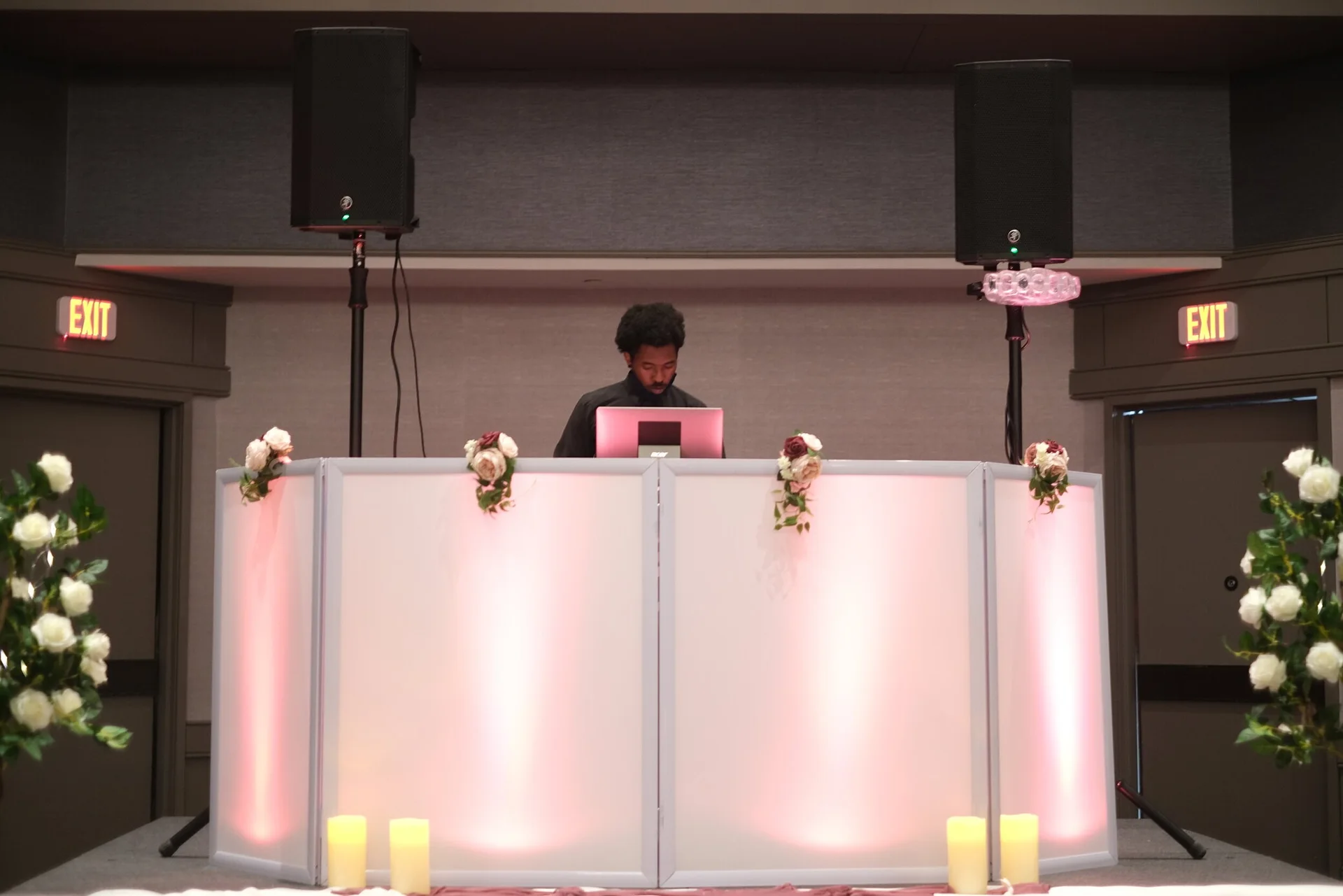
Should You Let Guests Request Songs?
Almost every couple asks me the same thing about a month before the wedding: “Should we let people request songs?” It’s a fair question, and the honest answer is — it depends entirely on how the requests are handled. Left wide open, the song requests wedding guests make can hijack an hour of your reception. Handled well, they can hand you three of the best moments of the night. So let’s walk through both sides, plus the simple system I use to keep control without ever making a guest feel shut down.
In this article
Why this question trips couples up
Here’s the tension. You want your guests to feel welcome and have a great time. You also spent months building a playlist that actually sounds like you two. Those goals can bump into each other around 9 p.m.
Most couples worry about the same nightmare: someone’s cousin marches up to the booth, asks for a song nobody else likes, and the floor clears. That does happen. But it’s not the request that caused it — it’s the DJ who played it without thinking.
Here’s the part worth remembering. Taking a request and playing a request are two different things. A good DJ can take every request with a smile and still only play the ones that serve the room. Once you separate those two ideas, this whole question gets a lot less scary.
So the real decision isn’t yes or no. It’s how much say you want to hand over, and what guardrails you want around it.
The case for taking requests
Let’s start with the upside, because there’s a real one. Requests give me live information about your crowd that no planning form can.
When four different guests ask for the same era in the first hour, that tells me exactly where the night wants to go. Maybe your planning form said pop but the room is begging for country. Requests are the fastest way to learn that before the floor goes cold.
They also create moments you can’t script. A grandmother asking for a song she danced to at her own wedding is a beautiful thing. Play it, watch three generations get up together, and you’ve got a photo you’ll frame. I’ve seen that happen more times than I can count.
And honestly, guests feel included when they can ask. It costs you nothing to let someone feel heard. Even when I don’t play a song, that guest walks away feeling like they were part of the night instead of an extra in it.
The case against a wide-open list
Now the flip side. A completely open request policy can absolutely wreck a reception, and I’ve seen it happen at otherwise beautiful weddings.
The main problem is momentum. Dancing builds in waves, and each wave takes three or four songs to climb. Drop a random request into the middle of a climb and you reset to zero. Do that four times and the floor never gets full at all.
Then there’s the volume problem. Once one guest gets a song played, ten more come up. Now your DJ is running a request line instead of reading the room, and you’ve essentially handed your reception’s soundtrack to whoever is boldest after two drinks.
The last risk is tone. Someone will ask for a song with lyrics you would not want your grandmother to hear at 8 p.m. Someone else will ask for an inside-joke track that means nothing to the other 140 people. Neither is malicious. Both hurt the night.
One more thing worth knowing: an open policy quietly changes how the DJ works. If I’m fielding a line of guests, I’m looking down at a screen instead of out at the room. Watching faces is how I catch that the floor is about to thin out. Take that away and even a great DJ starts guessing.
Taking a request and playing a request are two different jobs. The first one costs nothing. The second one costs momentum — so it has to earn its spot.
What guests actually ask for
Let me pull back the curtain a bit. After hundreds of receptions, the song requests wedding guests hand me fall into four buckets.
The safe classic. “Sweet Caroline,” “September,” “Don’t Stop Believin’.” These are almost always already on my list. Easy yes, and I’ll usually work them in within 20 minutes.
The current hit. Whatever’s big that month. Usually fine, occasionally a slow one that doesn’t fit the moment. I’ll play it, just at the right time.
The niche favorite. A deep album cut or a very specific subgenre. This is where I get careful. It might be a great song, but if 130 people don’t know it, it’s a floor-clearer.
The joke request. Somebody always asks for something ridiculous. I laugh, I say “you got it,” and it quietly never happens. That’s the job.
Roughly 60% of requests I get are already in my plan for the night, which surprises couples every time. The overlap is much bigger than people expect.
Key takeaway: Say yes to accepting requests and no to guaranteeing them. Pair that with a short do-not-play list, and you get the warmth of guest involvement with none of the risk to your dance floor.
How to stay in control without saying no
Here’s what a lot of couples miss: you don’t have to choose between open requests and no requests. There’s a middle setting, and it’s the one I recommend nearly every time.
It works like this. Requests are welcome, but nothing is promised. I take the ask, thank the guest, and then decide whether it fits the moment. If it does, it goes in. If it doesn’t, I find a song that scratches the same itch. Somebody asks for an obscure 2000s emo track? I’ll give them a pop-punk anthem the whole room knows. They still feel heard, and the floor stays packed.
Timing helps too. Late requests are usually the best ones, because by 10 p.m. guests have a real read on the room. Early requests tend to be whatever song was stuck in someone’s head in the car. I weigh them accordingly.
Some couples add a request line on the RSVP card, which I love. You get the requests before the wedding, I get time to plan, and nobody has to walk up to the booth mid-song. If you’d like to see how I build a run of show around all of this, my wedding DJ services page spells it out. The Knot’s list of DJ questions is also a smart thing to bring to any consultation.
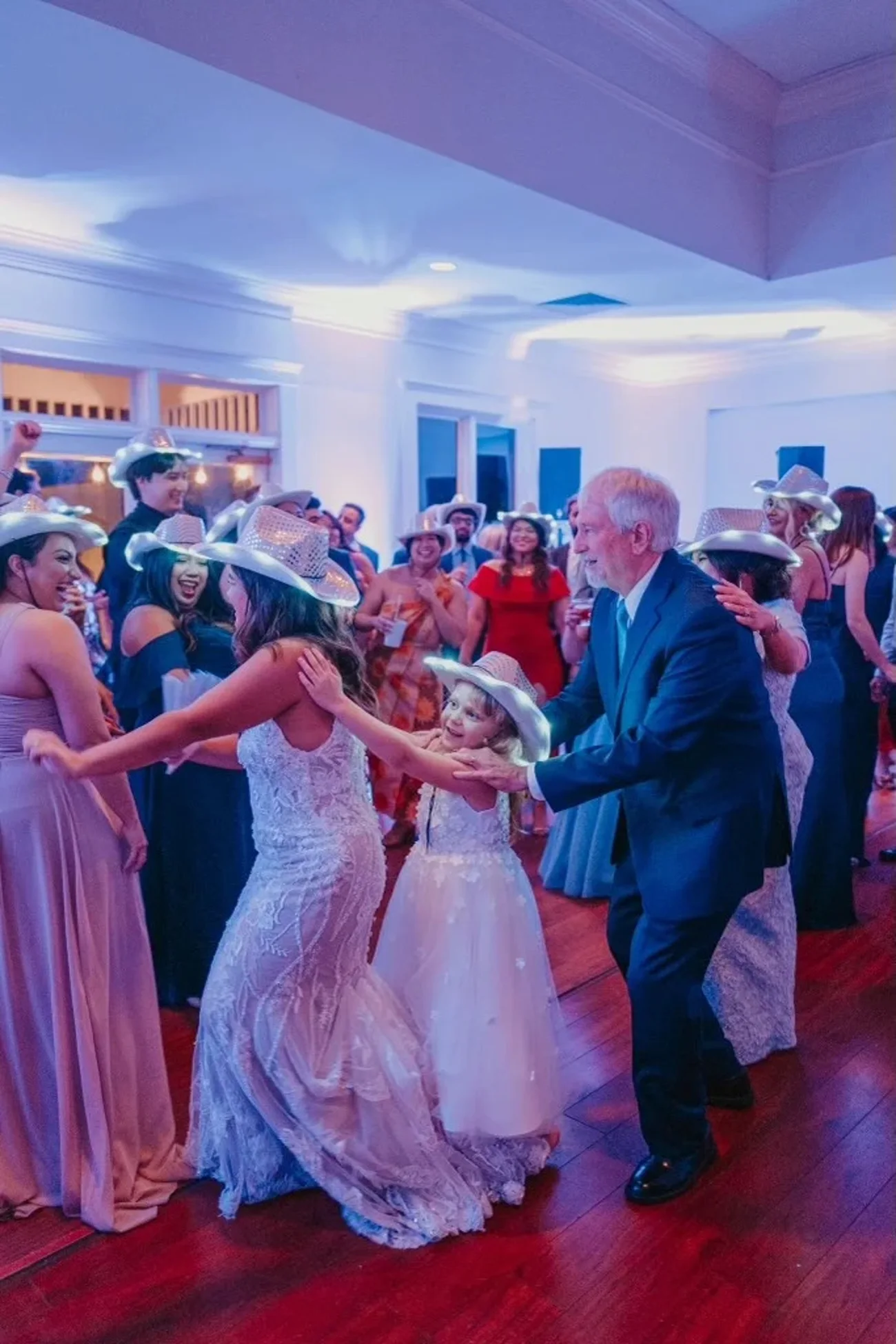
Your do-not-play list is the real fix
If you only do one thing from this whole post, do this one. Write a do-not-play list. It solves 90% of request anxiety before the day even arrives.
Keep it short — 8 to 12 songs or artists is plenty. Include the obvious offenders (that one line dance you can’t stand), anything tied to an ex, and any genre you truly can’t hear at your own wedding. Now I have a clear boundary, and I can turn down a request without you ever being involved.
The magic is that it makes me the bad guy instead of you. When someone asks for a banned song, I just say “the couple asked me to skip that one” with a friendly smile, and it’s over in five seconds. Nobody argues with the DJ. People will absolutely argue with the bride.
Keep the list realistic, though. I’ve seen couples hand me 60 banned songs, and at that point we’re not planning a reception — we’re planning a minefield. If your list is longer than a dozen items, it usually means you’d rather ban a whole genre. Say that instead. It’s clearer for me and far easier to honor on the night.
A well-built do-not-play list also saves you from awkward family politics. If a certain uncle always requests the same three songs, put them on the list quietly and never think about it again. Zola’s planning advice makes a similar point: decisions made early are decisions you don’t have to make in front of a crowd.
Deciding what’s right for your day
So which way should you go? Start with your guest list. A crowd of close friends in one age range can handle a looser policy. A wedding with four generations and a wide mix of tastes needs tighter guardrails.
Then think about your own comfort. If the idea of an unplanned song makes your stomach drop, say so. I’ll run a tighter ship and route everything through your planned list. There’s no wrong answer, and I’d much rather know your preference in advance than guess at 9:45 p.m.
Grosse Pointe weddings are often on the elegant end — a lakeside room off Lake Shore Road, a club near Kercheval, that kind of evening. In those spaces I lean toward a curated approach with requests welcomed quietly at the booth. It keeps the room feeling polished while still letting guests have a voice.
Whatever you decide, decide it before the wedding day. That’s the whole trick. Want more planning help? There’s plenty waiting in our wedding tips section, and you can meet your DJ anytime. For a full picture of how a Detroit-area reception flows hour by hour, my Detroit wedding guide walks through the whole night.