
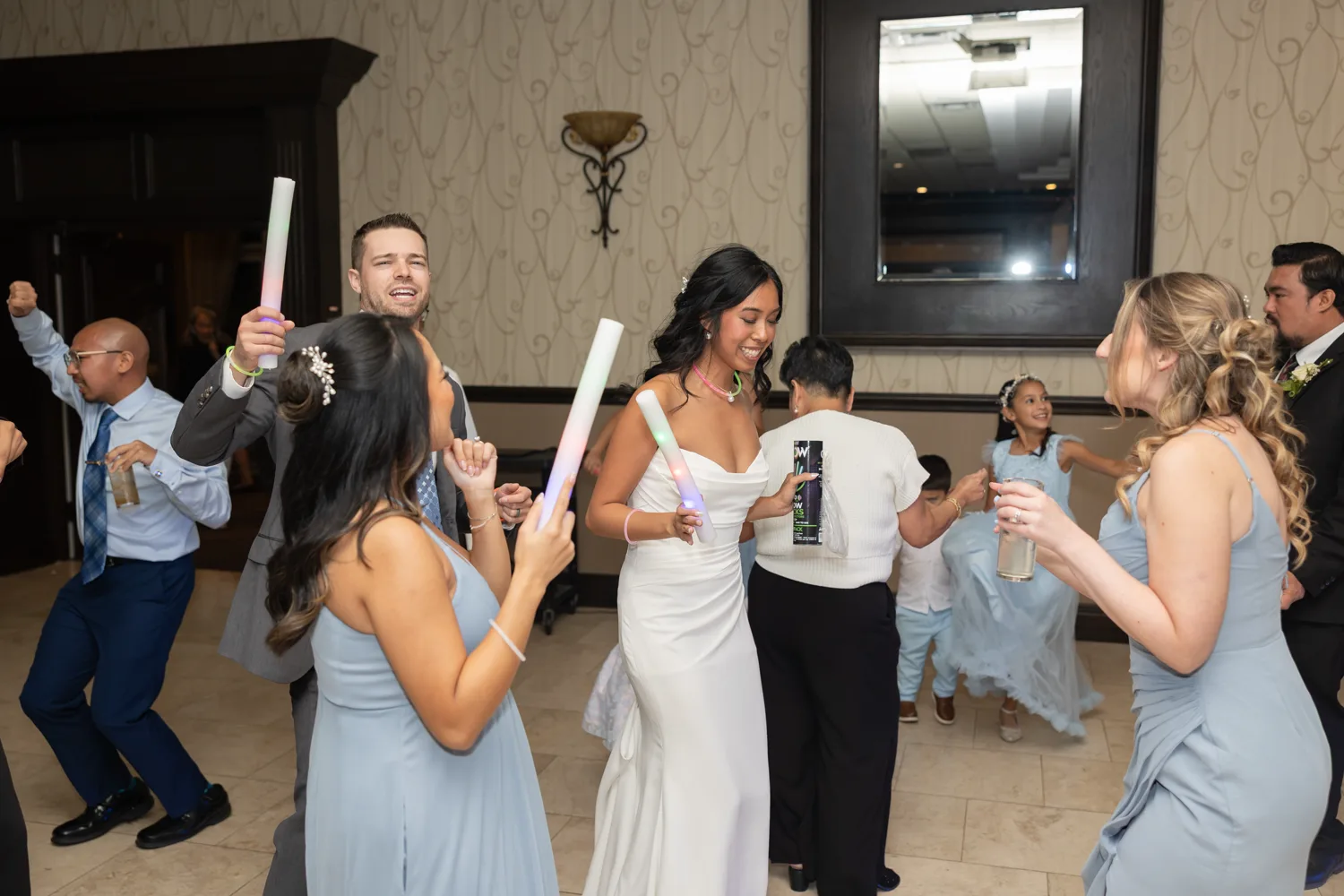
R&B Wedding Songs With Grown-Folks Soul
There’s a certain kind of reception where the lights go warm, the bass sits low, and everybody over 30 suddenly remembers how to move. That’s what good R&B wedding songs do. Some folks spell it R&B, some type “rnb” into the search bar — either way, we’re talking about the same thing: slow jams that feel like a hug and up-tempo grooves that get grown adults out of their chairs without a single instruction. Below is how I build a soulful reception set, from the first slow dance to the last song of the night.
In this article
Why soul music works so well at receptions
Ask me for the safest genre at a wedding and I’ll say this one every time. Here’s why: soul music is built on melody and rhythm that people feel in their chest, not just their ears.
Most guests have a relationship with these songs. Your aunt danced to them in college. Your cousin heard them in the car on the way to school. Your grandparents may know the originals the samples came from. That shared history means the floor fills faster, because nobody has to learn a song before they enjoy it.
There’s a practical reason too. R&B wedding songs sit in a comfortable tempo range, usually between 90 and 115 beats per minute. That’s slow enough for two people to hold each other and fast enough for a group to bounce. You don’t need to be a dancer. You just need a beat you can lean into.
And in Michigan, this music runs deep. Motown started 20 minutes down the road, and that DNA never left our weddings. Play a Temptations record next to an Usher record and the room treats them like family, because in a real way they are.
Slow jams for your first dance
Let’s start with the moment everyone films. A slow jam first dance feels grown, romantic, and a little bit sultry — without tipping into “please turn the camera off” territory.
My most-requested picks: “Spend My Life With You” by Eric Benet and Tamia, “Ribbon in the Sky” by Stevie Wonder, “Adorn” by Miguel, “Beautiful Surprise” by India.Arie, and “You Are” by Charlie Wilson. Each one has a warm melody, a clear structure, and lyrics you can actually quote in a toast.
A quick word of caution. Some famous slow jams sound romantic and are actually breakup songs. I’ve had couples nearly walk down to a track about heartbreak because the melody was pretty. Read the second verse before you commit — that’s where the truth usually lives.
If a favorite runs long, I’ll fade at the two-and-a-half minute mark. Three minutes is plenty of time to be sweet in front of 150 people. Any longer and you’ll start hearing chairs shift.
Up-tempo picks that fill the floor
Now let’s turn it up. Up-tempo soul is my secret weapon for the middle of a reception, right when the crowd needs a lift but isn’t ready for full club energy.
“Before I Let Go” — Frankie Beverly & Maze. If this song doesn’t fill your floor, check the pulse of the room. It’s practically a family reunion anthem, and Beyoncé’s cover brought a whole new generation in.
“Poison” — Bell Biv DeVoe. The intro alone pulls people up. Nobody walks past that opening line without at least pointing at a friend.
“Return of the Mack” — Mark Morrison. Weirdly universal. Guests who claim they don’t dance will absolutely shout this chorus.
“Don’t Stop the Music” — Rihanna. Modern, clean, and a perfect bridge into pop when you want to change lanes.
“Rock With You” — Michael Jackson. Smooth enough for the older crowd, groovy enough for everyone else. Timeless is not too strong a word here.
“Get Me Bodied” — Beyoncé. Save this one for peak hour. It has built-in choreography, which means half the room already knows what to do.
Soul music does something pop can’t: it makes people who “don’t dance” start moving before they notice they’ve decided to.
The 90s and 2000s grown-folks zone
This is the heart of the night for a lot of Michigan weddings. If your guest list skews 30 to 55, this era is where the biggest reactions live.
Think Jodeci, SWV, Blackstreet, Aaliyah, Ginuwine, Mary J. Blige, Boyz II Men, TLC, Next, and 112. These records were made for radio and for basements, so they hold up in a big room with a real sound system. “No Diggity,” “Weak,” “Pony,” and “Real Love” are near-automatic.
Here’s what a lot of couples miss: the 90s block works best as a block. Instead of scattering these songs across three hours, I stack six or seven of them back to back around the 9 p.m. mark. The floor fills, then it stays filled, because guests keep hearing another song they forgot they loved. Scattering them wastes all that momentum.
Just watch the lyrics. A few of these need clean edits, and a couple of them are more grown than your grandmother needs. I keep radio versions on hand for exactly that reason.
Key takeaway: Stack your 90s and 2000s soul into one 25-minute block instead of sprinkling it across the night. Momentum is the whole game — a full floor keeps itself full far more easily than an empty one fills up.
Modern soul that still lands
Newer soul is gorgeous, but a lot of it is built for headphones instead of ballrooms. That doesn’t mean skip it. It means place it carefully.
For cocktail hour and dinner, artists like SZA, H.E.R., Daniel Caesar, Cleo Sol, Giveon, and Lucky Daye are perfect. Warm, current, and easy to talk over. Your younger guests feel seen and nobody has to raise their voice.
For the dance floor, I lean on the ones with real drive: “Snooze,” “Best Part” for a slow moment, “Boo’d Up” by Ella Mai, “Come Through” by H.E.R., and Silk Sonic’s “Smokin Out The Window,” which somehow works for every age in the room. If you want to see which newer soul records are actually connecting right now, the Billboard R&B/Hip-Hop chart is a useful pulse check.
My rough ratio is 70% throwback, 30% modern for the dance portion. Flip that ratio for dinner. It keeps the night feeling current without asking your guests to dance to something they’ve never heard.
One caution with newer records: many of them are built around a slow, floating groove. Beautiful on a Sunday morning, tricky at 9:30 p.m. with a full floor. When a modern track I love has that sleepy tempo, I’ll park it during cocktail hour instead of forcing it into the dance set. The song still gets played, and the floor never pays for it.
How to build a set that never stalls
A great song list can still make a boring night if the order is wrong. Flow is what separates a playlist from a party.
I build in waves. Start the dance portion around 100 BPM with something familiar, climb to about 115 over three or four songs, hold the peak, then drop into a slow jam for two minutes so people can breathe and grab a drink. Then climb again. Guests never get worn out, and the floor never fully empties.
Key mixing detail: match the vibe, not just the tempo. A gritty 90s record next to a glossy modern one can feel like a hard turn even if the BPM lines up. I’ll bridge them with something that shares a little of both. That’s the kind of decision a live person makes and a playlist app can’t. My wedding DJ service page covers how I plan those transitions with couples ahead of time.
Also, protect your last 20 minutes. That’s when I bring back two of the biggest songs of the night. People leave singing, which is exactly how you want your reception to end. WeddingWire’s wedding song library is a solid place to browse if you’re still hunting for a closer.
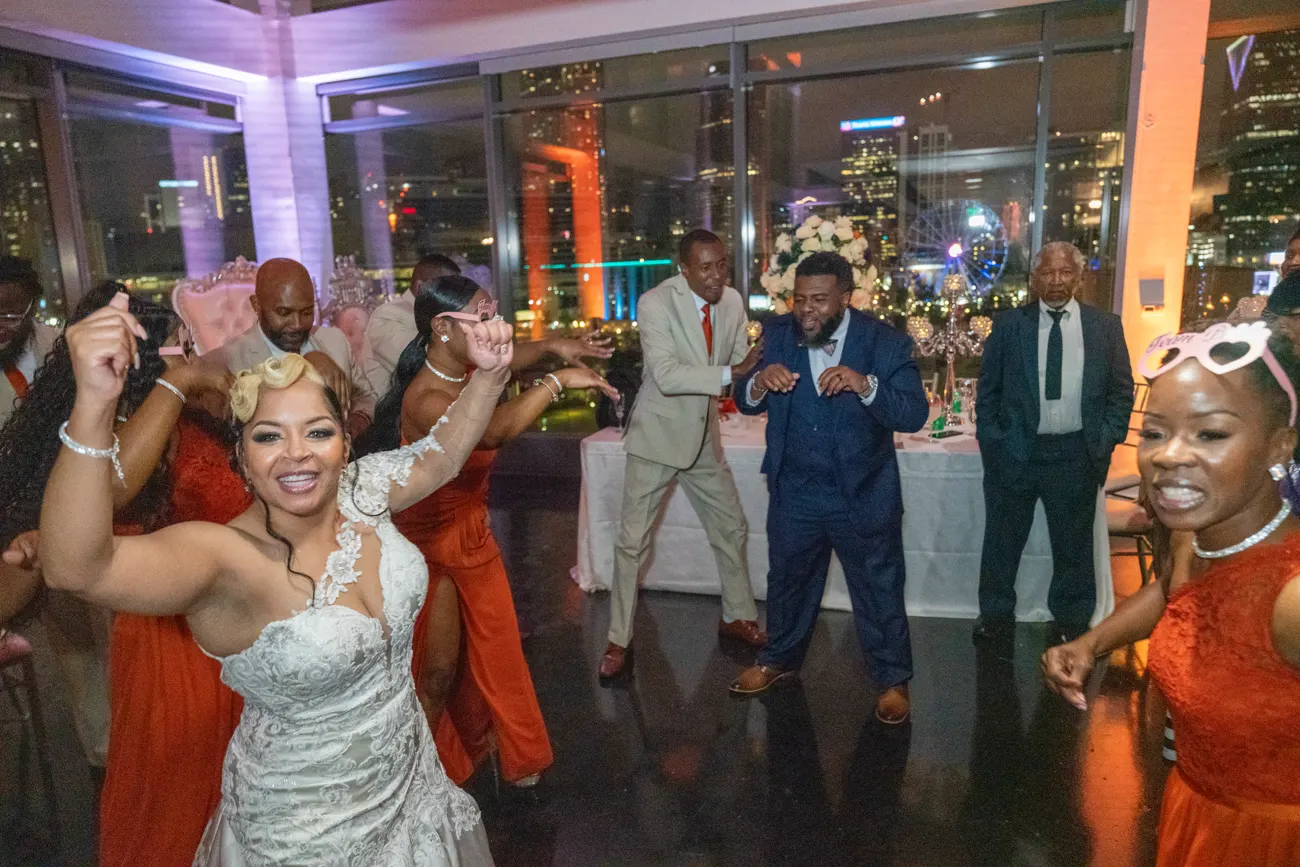
Putting it together in Farmington Hills
Farmington Hills receptions tend to have a wide age range in the room, and that’s actually perfect for this genre. Soul is the one style that reaches from the head table to the grandparents’ table without anybody feeling left out.
Whether you’re celebrating at a historic spot like the Longacre House, a country club off Orchard Lake Road, or a big banquet hall closer to Grand River, the plan stays the same. Start warm during dinner, build through the 90s block, and hold a couple of heavy hitters back for the end. The room does the rest.
Room shape matters more than people expect, too. A long, narrow banquet room needs the dance floor closer to the head table so guests don’t feel like they’re walking to another zip code. A round ballroom lets me put the speakers wider and keep the bass even. Either way, I’d rather see the space ahead of time than guess on the day of.
To get started, send me 12 to 15 songs you love and a short “please don’t play this” list. From there I’ll shape the order around your crowd and adjust live once I see who’s actually dancing. That’s the part you can’t plan on a spreadsheet, and it’s my favorite part of the job.
Want more ideas before you decide? There are plenty of song guides in our music tips section, and you can get to know Tevin if you’d like to hear how I run a night. For a full walkthrough of a Detroit-area reception timeline, my Detroit wedding guide lays it out start to finish. Bring the soul — I’ll bring the speakers.