Reading the Dance Floor in Real Time
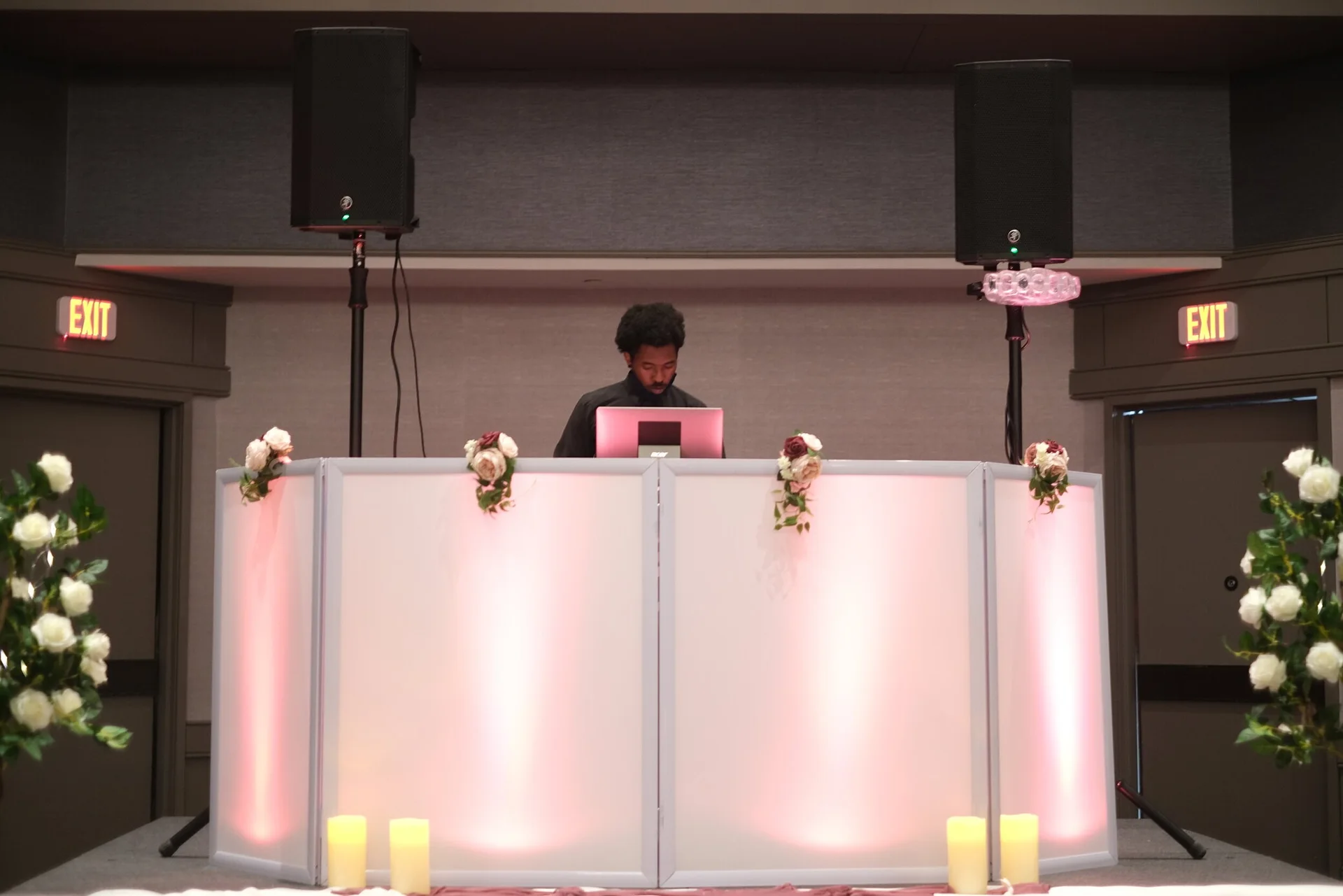
Ask ten couples what makes a great wedding DJ and most will say “good music.” That’s only half of it. The real skill is reading the dance floor — watching a room breathe, catching the second the energy tips, and changing course before anyone notices something almost went wrong. It happens in seconds, usually while the current song is still playing. Here’s what that actually looks like from behind the booth, why a locked playlist can’t do it, and how it keeps your Plymouth reception packed from the first beat to the last.
In this article
What “reading the room” really means
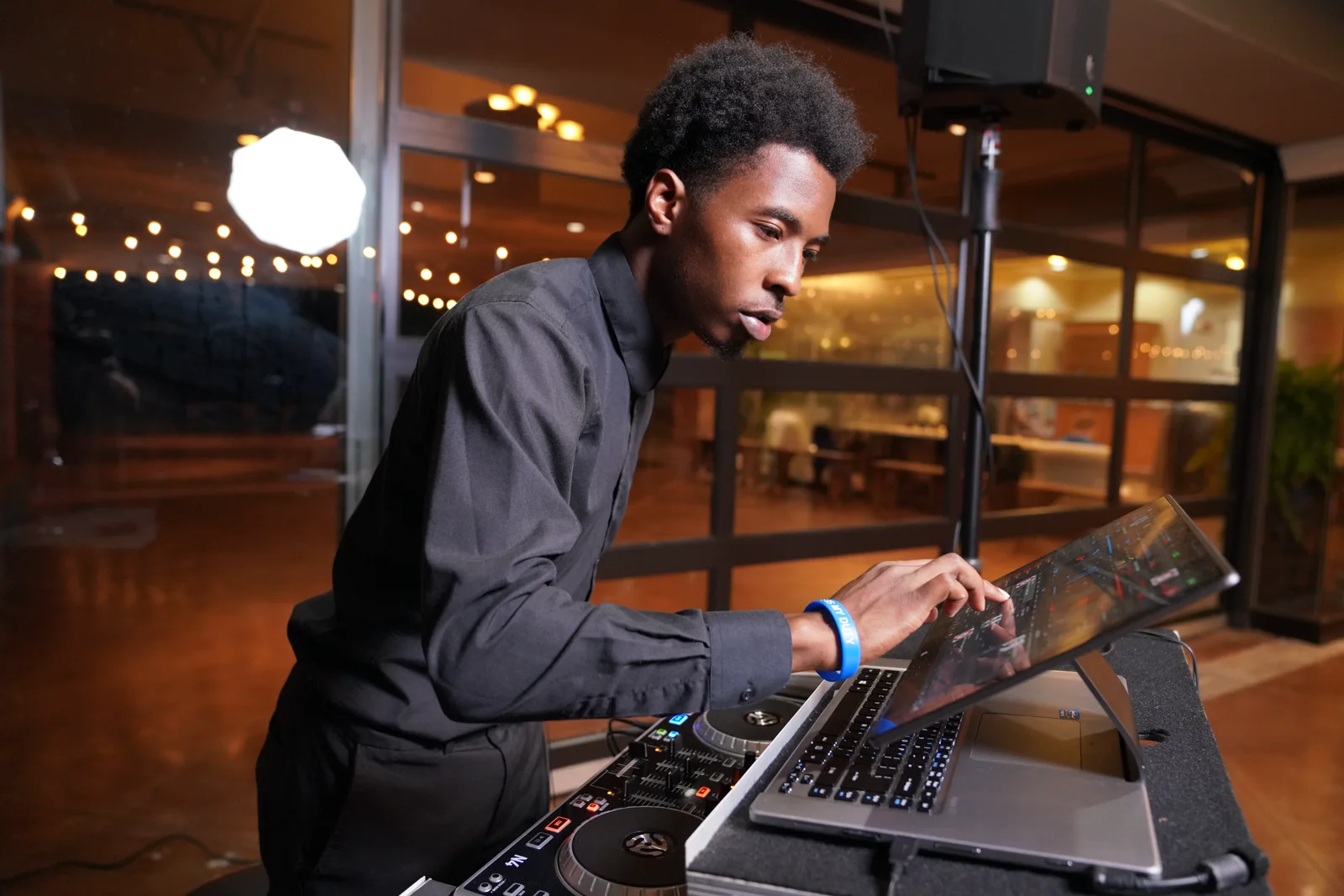
Most people picture a DJ staring at a laptop. In truth, I’m looking at your guests far more than my screen. Reading the dance floor means tracking dozens of tiny signals at once and turning them into one decision: what plays next, and when.
Think of a room like weather. It builds, it peaks, and it can turn on you fast. A song that would have crushed at 9:40 p.m. might empty the floor at 8:15 because the crowd hasn’t warmed up yet. Same song, same speakers, totally different result. Timing is the whole ballgame.
So the job isn’t picking great songs. It’s picking the right great song for the exact moment you’re standing in. That’s a live skill, and it’s the reason two DJs with identical music libraries can give you two wildly different nights.
Here’s the part couples find surprising: the best reads happen before a problem shows up. If I wait until the floor clears to react, I’m already ten minutes late. The goal is to spot the dip while thirty people are still dancing, and quietly steer around it.
The signals a DJ watches for
There’s no magic here. It’s just a lot of small tells, stacked up. Once you know what to look for, a room practically narrates itself.
Floor density. Not just how many people are dancing, but how tightly they’re packed. A loose, spread-out floor is a floor about to shrink. A crowd that keeps drifting toward the middle is a crowd that wants more.
Arms and shoulders. Feet lie. People will stand on a dance floor out of politeness. Shoulders and hands tell you the truth. When arms come up, you’ve got them.
The edges. I watch the ring of guests standing just off the floor with a drink. Those folks are the swing vote. If they start bobbing, the next song can pull them in. If they turn to face their table, energy is leaking.
Age spread. If the floor suddenly looks like it’s only 25-year-olds, I’ve drifted too far into one lane. A good night keeps grandma and the groomsmen out there at the same time, even if it’s not for the same song.
Traffic. Bar lines, bathroom trips, and people wandering out to the patio all spike right before a lull. That’s my cue to hold a proven song a little longer instead of taking a risk.
How a set changes mid-song
Here’s the mechanic nobody sees. A track is roughly three to four minutes long, and I’m making calls the entire time it plays.
Around the first chorus, I know whether the song landed. If it’s working, I let it ride and start lining up something that keeps the same feel but adds a little lift. If it’s soft, I don’t panic — I shorten it. Cutting out early at a natural break is invisible to guests and buys back ninety seconds of momentum.
Sometimes the fix is smaller than a song swap. Dropping the tempo by a few beats per minute, riding a familiar intro a beat longer, or bringing the vocal in early can change how a room responds without changing the track at all. Little moves, big difference.
And sometimes the read says: don’t touch anything. The hardest thing a DJ learns is to leave a working floor alone. If people are screaming the words, that is not the moment to show off with a clever mix. Get out of the way and let them have it.
A dance floor tells you exactly what it wants about thirty seconds before it empties. The whole job is listening that early.
Key takeaway: Reading a room is a live skill built on small signals — floor density, arms up, the guests standing on the edge, and bar traffic. The best DJs react before the floor thins, not after, and they know when to leave a great moment completely alone.
Why a locked playlist can’t react
Plenty of couples ask if they can just hand over a finished playlist. You can, and I’ll honor every must-play on it. But a fixed list has one flaw: it can’t see the room.
Picture this. You built a beautiful 60-song order back in March. On your wedding day, dinner runs 20 minutes long, the toasts get emotional, and your crowd walks onto the floor slow and full. Your list still opens with a high-tempo banger at minute one, because a spreadsheet doesn’t know any of that happened. So the floor sits at eight people, and the night starts on its heels.
A live read fixes that in real time. I’d hold a mid-tempo classic that gets the older crowd up first, then build. Same songs, resequenced live, completely different result. Planning guides at The Knot make the same point about reception timelines: the plan is a starting point, not a script.
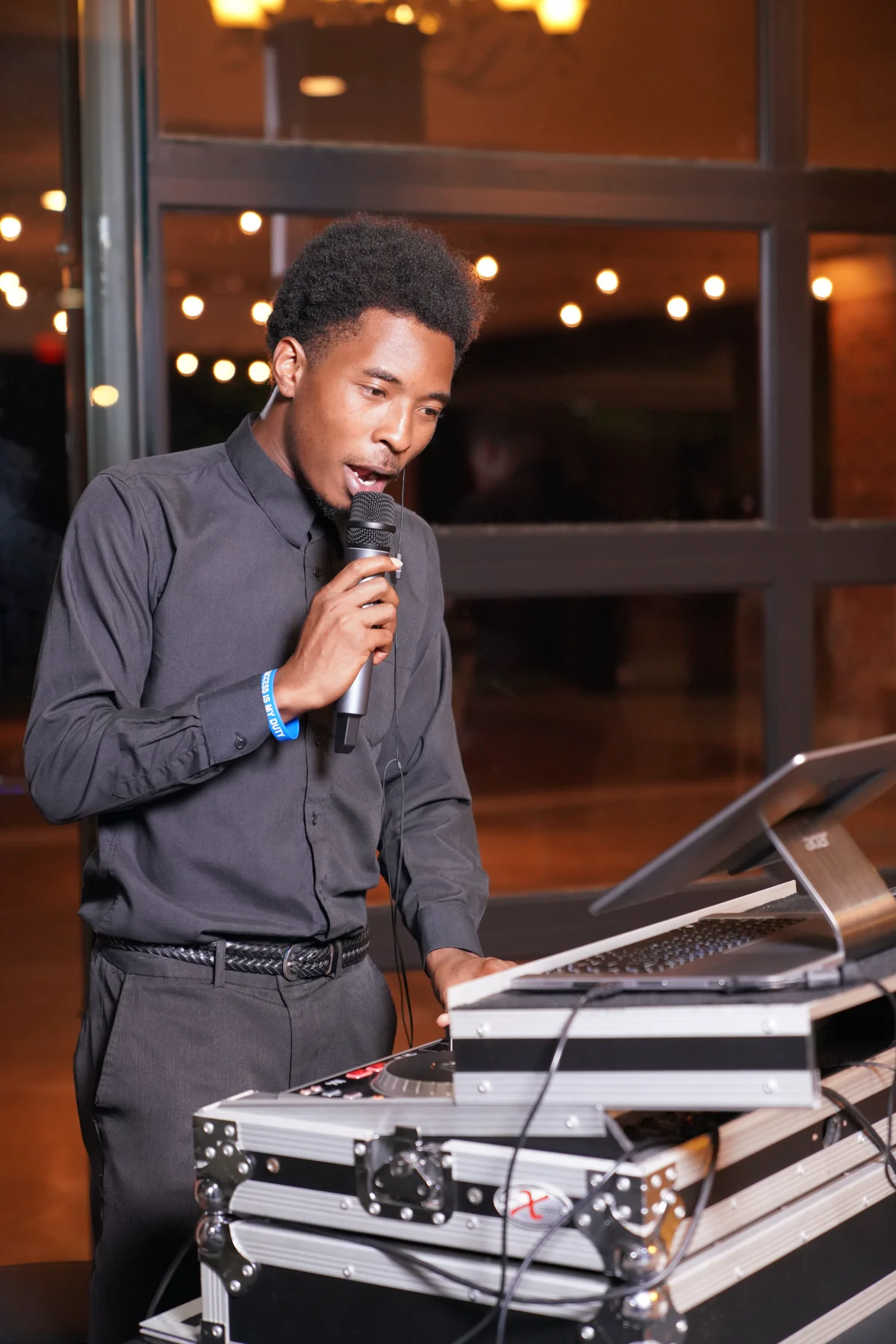
That’s the honest case for a live DJ over a playlist and a speaker. You’re not paying for a song library. You’re paying for the thousand small decisions made while your guests are actually in the room. If you want the full breakdown of how I run a reception, my wedding DJ services page walks through it start to finish.
Handling requests without losing the floor
Here’s what a lot of couples miss: requests aren’t the enemy of a good read. They’re free information. When four different guests ask for the same era in twenty minutes, the room just told me where it wants to go.
That said, not every request gets played immediately, and some don’t get played at all. A slow ballad requested at 10:15 p.m. during peak dancing would flatten the floor. So I hold it, find the natural cool-down window, and play it there. The guest still hears their song, and your night keeps its shape.
I also filter for your list. If you’ve told me no country, no country goes on — even if Uncle Rob asks five times with a very confident smile. Your do-not-play list always beats a request. Always.
The trick is making everyone feel heard. A quick “I’ve got you, give me two songs” keeps guests happy and keeps the floor intact. Nobody feels brushed off, and the momentum survives. That balance is one of the most underrated parts of the gig, and it’s covered in most reception-planning advice, including WeddingWire’s wedding music guides.
How you can help your DJ read the crowd
You don’t have to do much, but a few details make a huge difference. First, tell me who your crowd actually is. “Half my family is Motown, my friends are all 2000s hip-hop, and my in-laws will only dance to one polka” is worth more than a 200-song list.
Second, give me your non-negotiables and your hard no’s. Five to ten must-plays and a short do-not-play list is the sweet spot. Beyond that, leave room to move.
Third, trust the shape of the night. If I hold your favorite song until 10 p.m. instead of playing it at 8:30, it’s because that song deserves a full floor, not a warm-up floor. Every song has a best moment, and part of my job is protecting it.
Last one, and it’s the easiest: dance. Guests follow the couple. When you two step out, the floor doubles within a song. That’s not a theory — I’ve watched it happen at nearly every wedding I’ve played. You’re the most powerful signal in the room. Curious how I work with couples before the day? You can meet your DJ and see how the planning side runs.
Putting it to work in Plymouth
Plymouth throws a nice mix of rooms at you, and each one changes the read. A ballroom night at The Inn at St. John’s carries sound differently than a smaller reception space off Ann Arbor Road or a summer party near Kellogg Park downtown. Bigger rooms need a bigger commitment on each song, because it takes longer for a crowd to travel from the tables to the floor.
Ceiling height matters too. High ceilings soak up energy, so I’ll usually hold proven floor-fillers a bit longer and space the risks further apart. In a tighter room, the crowd feeds off itself faster, and I can experiment more.
Guest count changes the math as well. A 90-person wedding lives or dies on getting 30 people up. A 250-person wedding can carry a slower build, because there’s always a group ready to move. Same skill, different dial settings.
None of this shows up in your timeline document, and that’s fine — it’s my job, not yours. Your job is to pick a DJ who’s actually watching. If you’d like more planning help before the big day, there are more wedding tips waiting, and my Plymouth wedding DJ guide covers venues, timing, and what to expect hour by hour.
At the end of the night, nobody’s going to walk up and compliment your DJ on crowd analysis. They’ll just say they never sat down. That’s the goal, and reading the room is how it happens.