How to Read (and Rescue) a Slow Crowd
We’ve all seen it. Dinner’s done, the music’s playing, and the dance floor is… empty. A slow crowd just sits there, arms folded, everyone waiting for somebody else to go first. It’s the moment couples dread most. But here’s the truth: a quiet room almost never means people don’t want to dance. It means nobody’s given them the right reason yet. Read the signs early and pull the right lever, and you can turn a dead floor into a packed one in a single song. Here’s exactly how I do it.
In this article
Why a crowd goes quiet in the first place
First, let’s clear up the biggest myth. A slow crowd isn’t a bad crowd. Nine times out of ten, people are having a great time — they’re just not on the floor yet. There’s a difference. A quiet dance floor and a quiet room are two totally different problems.
Usually the cause is simple. Nobody wants to be the first one out there. It’s the same reason people hug the walls at a middle-school dance. The music could be perfect, but that fear of being the lone dancer keeps everyone glued to their chairs.
Other times it’s timing. Play the wrong song too early, before the room’s warmed up, and you teach people the floor isn’t ready. So the fix is rarely “play something better.” It’s about giving folks permission and a reason to move — and doing it at the right second.
Reading the early warning signs
A good DJ spots trouble before the floor ever empties. There are tells, and I’m watching for them all night.
Heads and feet. Are people tapping along, nodding, mouthing words? That’s a room that wants to dance — it just needs a nudge. A still room that’s chatting hard is a different story, and I’ll play it differently.
The edge-of-floor crowd. When guests drift toward the floor but hover at the edges, they’re one great song away from committing. That’s my green light to drop a sure thing.
The clock and the bar. A long line at the bar or a room mid-meal tells me it’s not time yet. Pushing dance songs into that moment just wastes my best tracks. Patience now means a packed floor later.
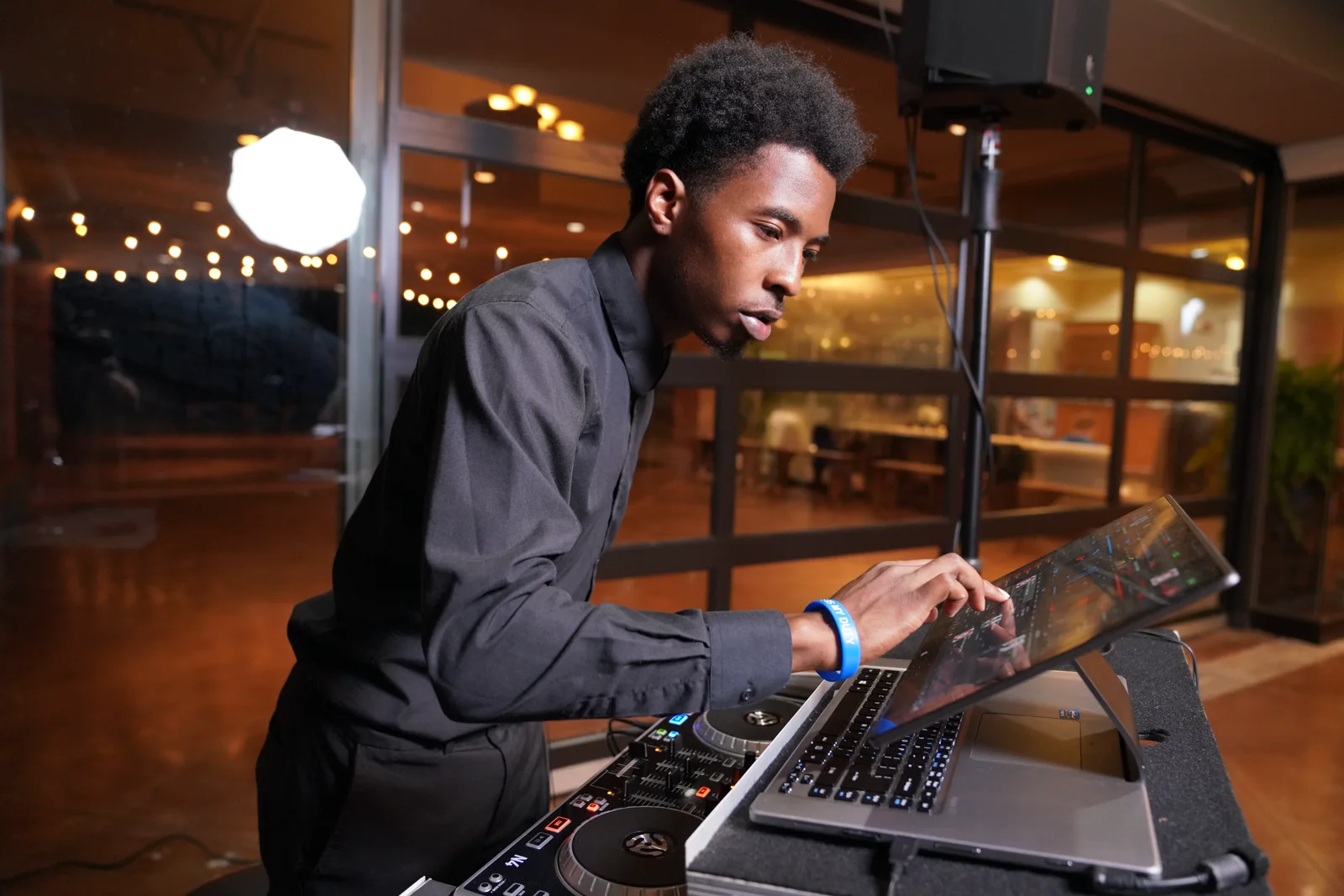
Reading these signs live is the single biggest thing a person does that a playlist can’t. A phone plays the next song no matter what the room is doing. I change course the second I see the energy shift — that’s the whole idea behind my wedding DJ approach. Even the pros at The Knot point to floor-reading as the skill that separates a great reception from a flat one.
Getting the first people up
The hardest part of any night is getting those first five people onto an empty floor. Once they’re up, the rest follow fast. So my whole early strategy is about breaking that ice.
Start with a group everyone. A line dance or a wedding-party call-out gives a crowd a reason to stand together, so nobody feels singled out. Suddenly there are twenty people out there and the floor doesn’t look scary anymore.
Use the couple. When the newlyweds hit the floor and wave people in, guests follow. Nobody wants to leave the couple dancing alone at their own wedding. It’s the easiest ice-breaker there is.
Lean on the ringers. Every crowd has a few people who love to dance. I find them early and feed them their songs first. Those folks become the spark that lights the whole room.
A slow floor isn’t a room that won’t dance — it’s a room waiting for permission. Give the first five people a reason to stand up, and the other hundred will follow.
See the theme? I’m never begging a room to dance. I’m removing the reasons they’re hesitating. Take away the fear of going first, and people go on their own.
Key takeaway: A slow crowd usually just needs permission and a reason, not a better song. Read the tells early, break the ice with a group moment, feed the natural dancers first, and time your sure-thing songs for when the room is finally ready.
The rescue songs that never miss
When a floor needs saving, I reach for songs I know will work. These are my rescue tracks — the ones that pull people up almost every time.
For a Michigan crowd, Motown is my ace. “My Girl,” “Signed, Sealed, Delivered,” a little Temptations — Detroit built this sound, so it lands hard with local guests of every age. It’s home-field advantage, and I use it.
After that, I go to the undeniable crowd unifiers: “September,” “Uptown Funk,” “I Wanna Dance with Somebody.” These songs erase the age gap and give everyone a shared reason to move. When the floor’s empty, they’re the fastest way to fill it.
And I always keep a couple of secret weapons in my back pocket — the songs I’ve watched fill a floor a hundred times. I don’t waste them early. I save them for the exact moment the room needs a jolt.
Using the mic without being cheesy
Here’s what a lot of couples worry about: the cheesy DJ who won’t stop talking and begs people to dance. I get it — nobody wants that guy. The trick is using the mic like a light touch, not a bullhorn.
A good mic moment is short, warm, and gives people a real reason to move. “Grab the person next to you, this next one’s a classic” works. A long, pushy “come on, everybody, let’s fill this floor” does not — it actually makes people less likely to get up, because it reveals the floor is empty.
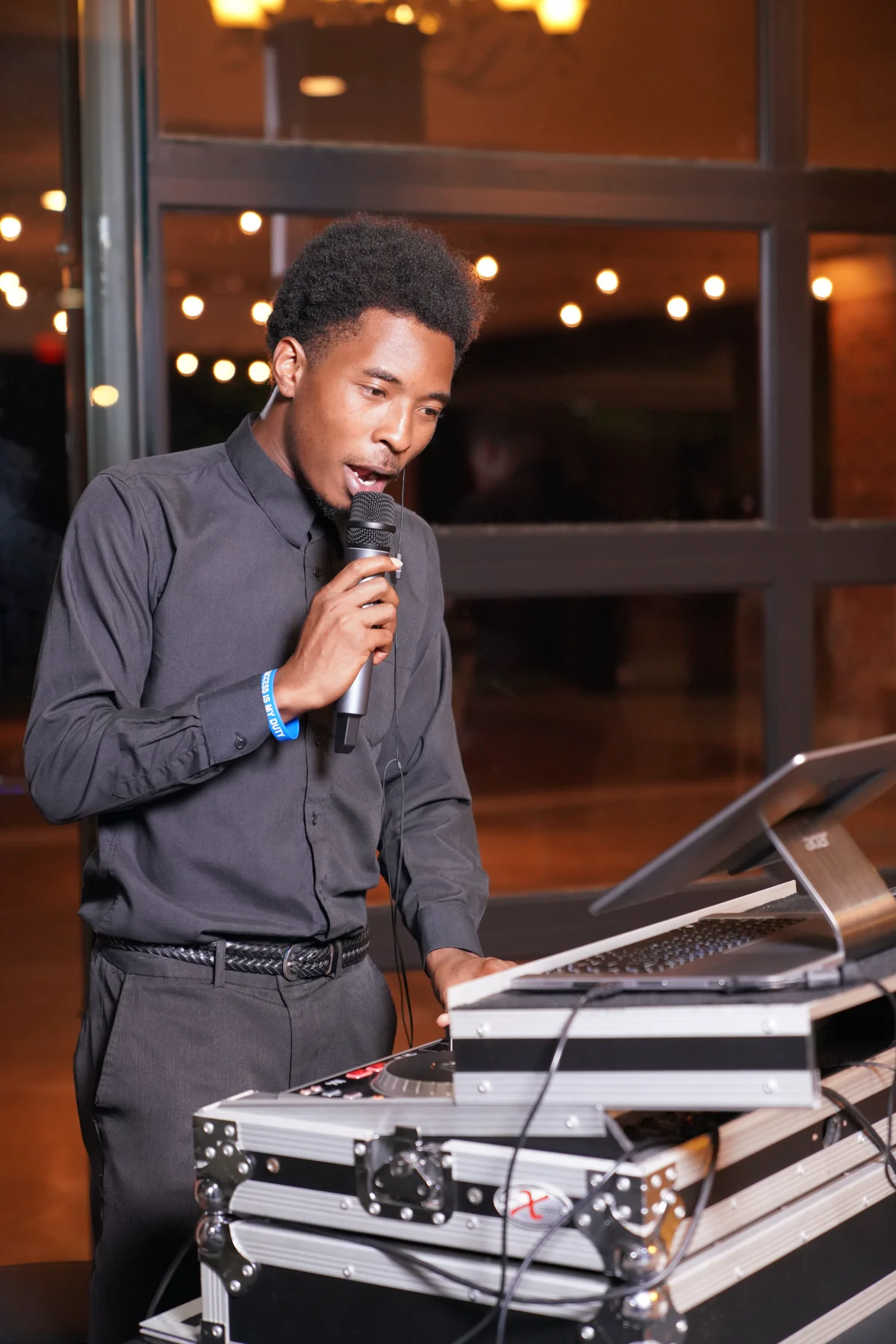
Most of the time, the best mic work is invisible. I’d rather let the right song do the talking and only step in for a quick, genuine nudge. When I do use the mic, it’s to build a moment, not to rescue myself. There’s a full breakdown of how I handle mic work in my wedding DJ approach, but the short version is: less is more.
Preventing a slow start altogether
Here’s what a lot of couples miss: the best rescue is the one you never need. A little planning up front keeps the floor from ever going cold in the first place.
It starts with the timeline. If dinner drags, dessert runs late, and the toasts pile up, the dancing window shrinks and the energy leaks out. So I work with your planner to keep the night moving, with clear moments that build toward the floor instead of stalling in front of it.
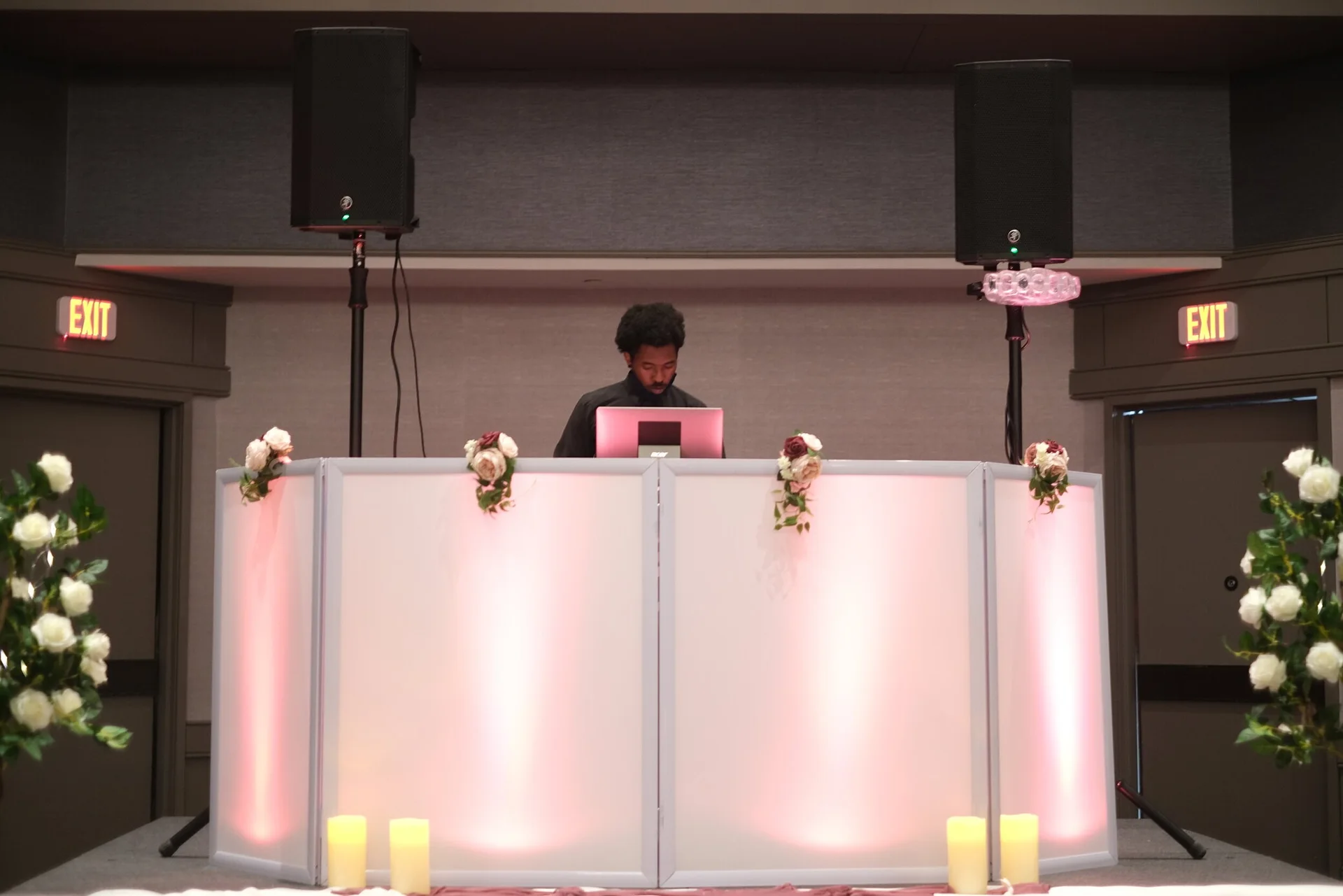
Lighting helps too. A bright, banquet-hall-lit room feels like a meeting; a warm, dimmed floor with a little color feels like a party. That’s a big reason couples add uplighting — it quietly tells guests it’s time to let loose before I play a single dance song.
Finally, the first dance-set song matters more than any other. Open too soft and the room stays seated. Open with something proven and the floor fills before anyone thinks twice. Get that one right, and there’s often nothing to rescue at all.
Planning your Sterling Heights night
So how do you set your own night up to stay hot? Start with a tight timeline, a warm room, and a DJ who reads the floor live instead of pressing play and hoping. That combination handles a slow crowd before it ever forms.
Whether you’re celebrating near Freedom Hill or at a banquet hall off Hall Road, the plan is the same: watch the room, break the ice early, save the sure things, and keep the mic light. Do that, and “slow crowd” never even enters the picture.
Want a hand building it? You can meet your DJ and we’ll map out a night that fills the floor and keeps it full. For more ideas on reading a room, browse more wedding tips anytime — and if you’re planning near Sterling Heights, my Sterling Heights wedding guide covers the whole day. A packed floor is never luck. It’s someone in the booth who’s watching, and ready.