Protecting Your Sacred Hour of Dancing
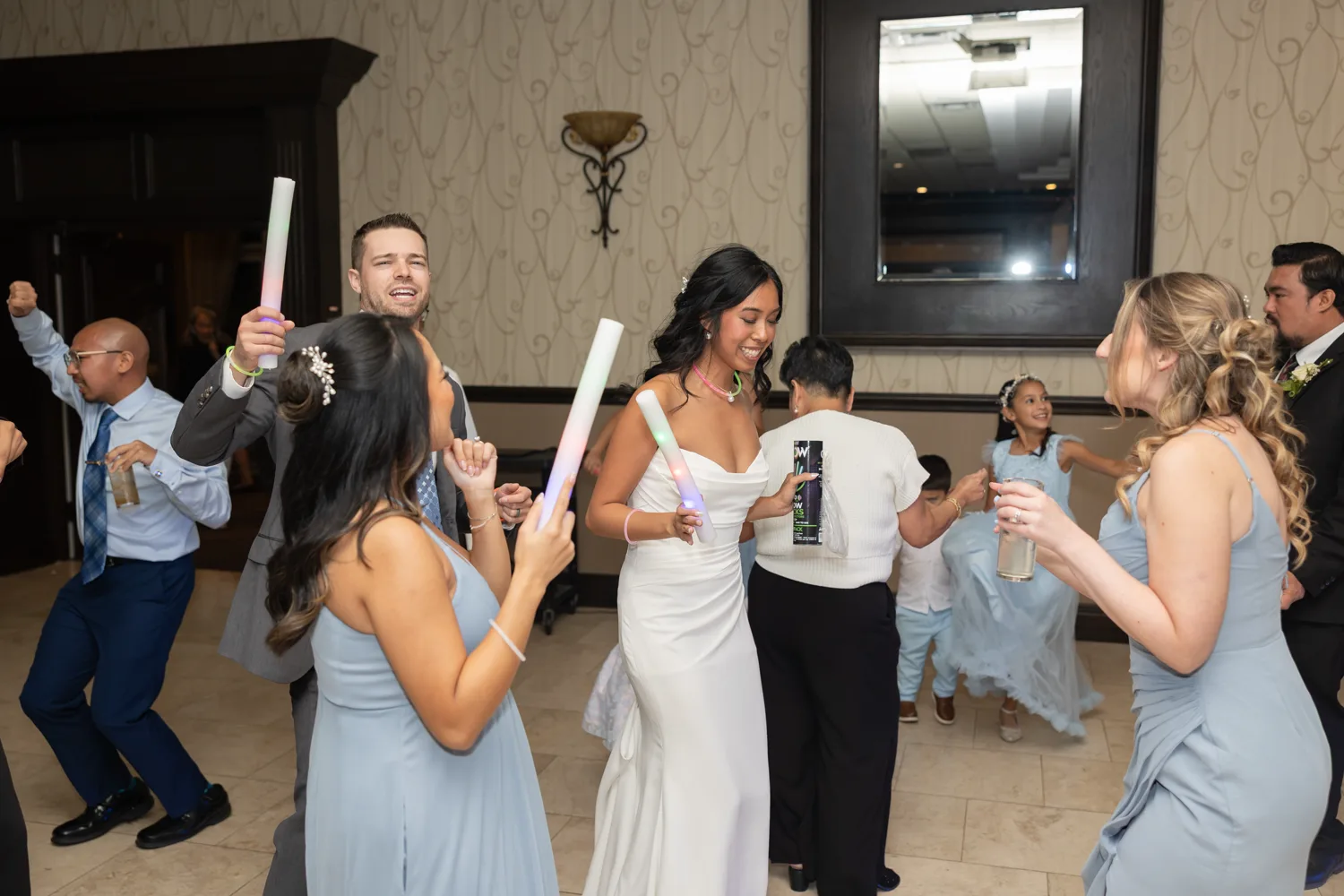
Every wedding has a peak — that stretch when the floor is packed, the lights are low, and everyone you love is dancing at once. I call it the hour of dancing, and it’s the moment couples remember most. Here’s the catch: it’s also the easiest hour to lose. Toss in one poorly timed toast or a long slideshow, and the magic drains out of the room. This guide shows you how to build that sacred hour and, just as important, how to guard it from the little interruptions that quietly kill the energy.
In this article
What the sacred hour really is
The hour of dancing is the uninterrupted block of open dancing near the back half of your reception. No announcements, no cake cutting, no long speeches — just music and your people on the floor. When couples tell me their favorite memory, this is almost always it.
Why does it matter so much? Because energy needs a runway. It takes a few songs to fill a floor, and once it’s full, you want to keep it there. Every interruption sends people back to their seats, and you have to rebuild from scratch. Protect the block, and the whole night peaks.
Think of it like a great movie’s final act. You wouldn’t pause it for announcements. The dance block is your night’s climax, and it deserves the same respect — a clean, uninterrupted run to the finish.
What steals your dance time
So what eats into it? Usually a pile of small things, not one big one. A toast that runs long. A late dinner. A slideshow set up mid-party. A parade of special dances stacked back to back. Each one feels minor, but together they can shave 30 minutes off your floor time.
The sneakiest thief is the mid-dancing interruption. You’ve got a packed floor, and then someone grabs the mic for “just a few words.” The music stops, people sit, and that beautiful energy you built is gone. Rebuilding it takes three or four songs you didn’t have to spare.
Late starts hurt too. If dinner runs 40 minutes over, that time comes straight out of dancing at the end. The band or venue won’t push the exit back, so your peak hour gets squeezed. Guarding the schedule early is how you protect the fun later.
The fix for all of it is planning. When you map the timeline with your DJ ahead of time, you can spot the thieves before they show up. According to The Knot’s reception timeline guide, the receptions that feel the best are the ones that clear the formalities early and leave the back half open for pure dancing.
Building a timeline that protects it
A good timeline is your best defense. The idea is simple: get the structured moments out of the way, then hand the floor over and don’t take it back. That means grouping your formalities instead of sprinkling them through the night.
Here’s a shape I love. Dinner, then toasts right after while people are seated. First dance and parent dances next, flowing straight into open dancing. Cake cutting slipped in quietly during a song, not as a full stop. Then the floor stays open, uninterrupted, to the end. That’s a protected sacred hour.
The order matters more than the exact minutes. As long as the interruptions live in the first half and the dancing owns the second, you’re golden. A DJ who knows how to run a smooth reception flow can build this with you in one planning call.
The best dance hour isn’t the one with the most songs — it’s the one nobody interrupts.
Notice the theme: protect the block by clearing everything else out of its way. You’re not cramming more in. You’re carving out space and defending it.
Key takeaway: Your sacred hour of dancing is the peak of the night, and it’s easy to lose to small interruptions. Group your formalities in the first half, leave the back half wide open, and let your DJ guard the floor so the energy never has to rebuild from zero.
Front-load the interruptions
Here’s what a lot of couples miss: you don’t cut the special moments, you just move them earlier. Toasts, the bouquet toss, the slideshow — all of it can live before the dance block instead of chopping it up. Same moments, better placement.
Take the slideshow. A lot of couples run it mid-party, and the floor empties every time. Move it to dinner, when people are seated and happy to watch, and it lands better and saves your dance time. Win-win.
Same with announcements. Batch them. Instead of grabbing the mic five separate times, your DJ can handle intros, thank-yous, and reminders in a couple of clean moments early on. Then the mic goes quiet and the music takes over. That’s the goal.
How your DJ guards the floor
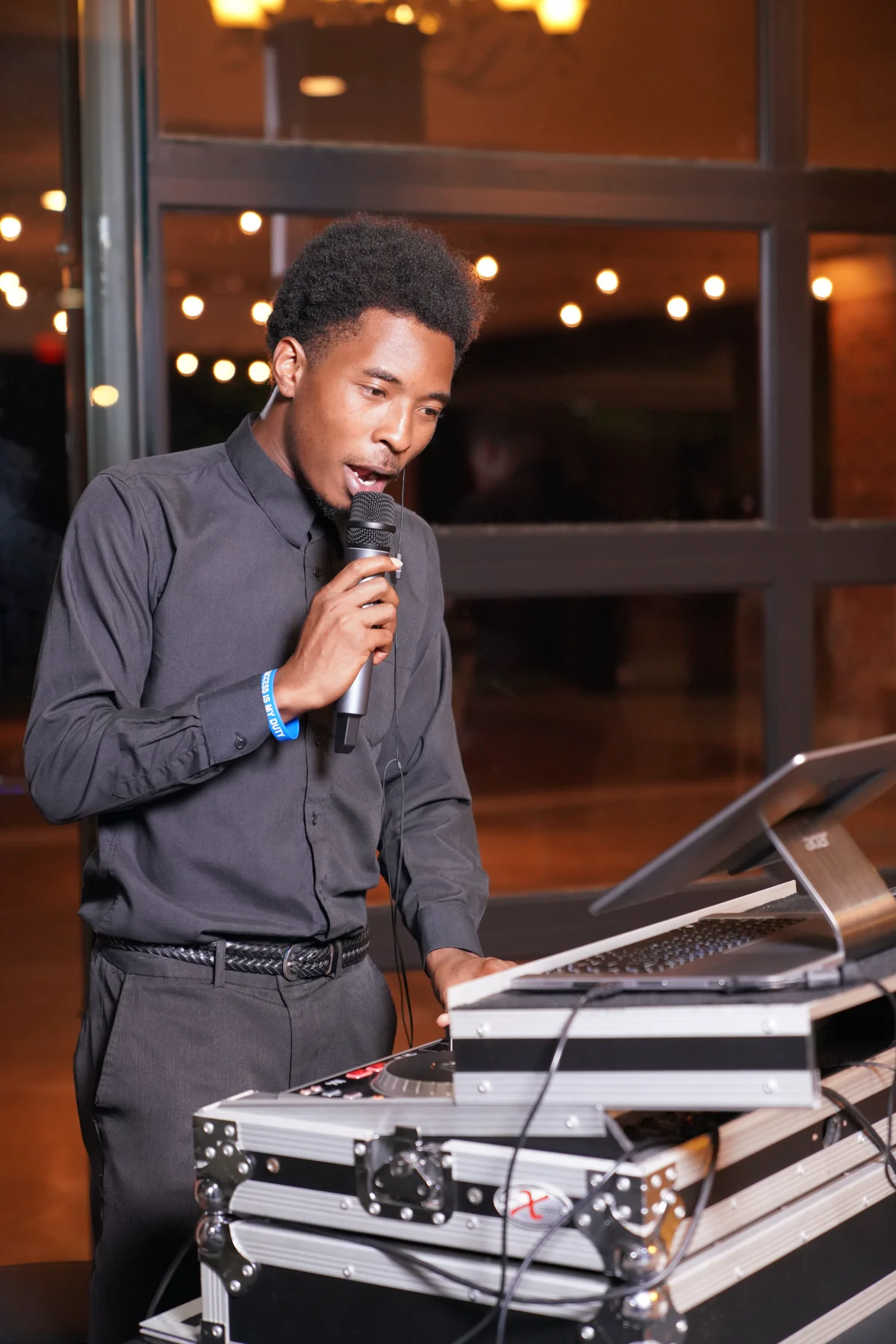
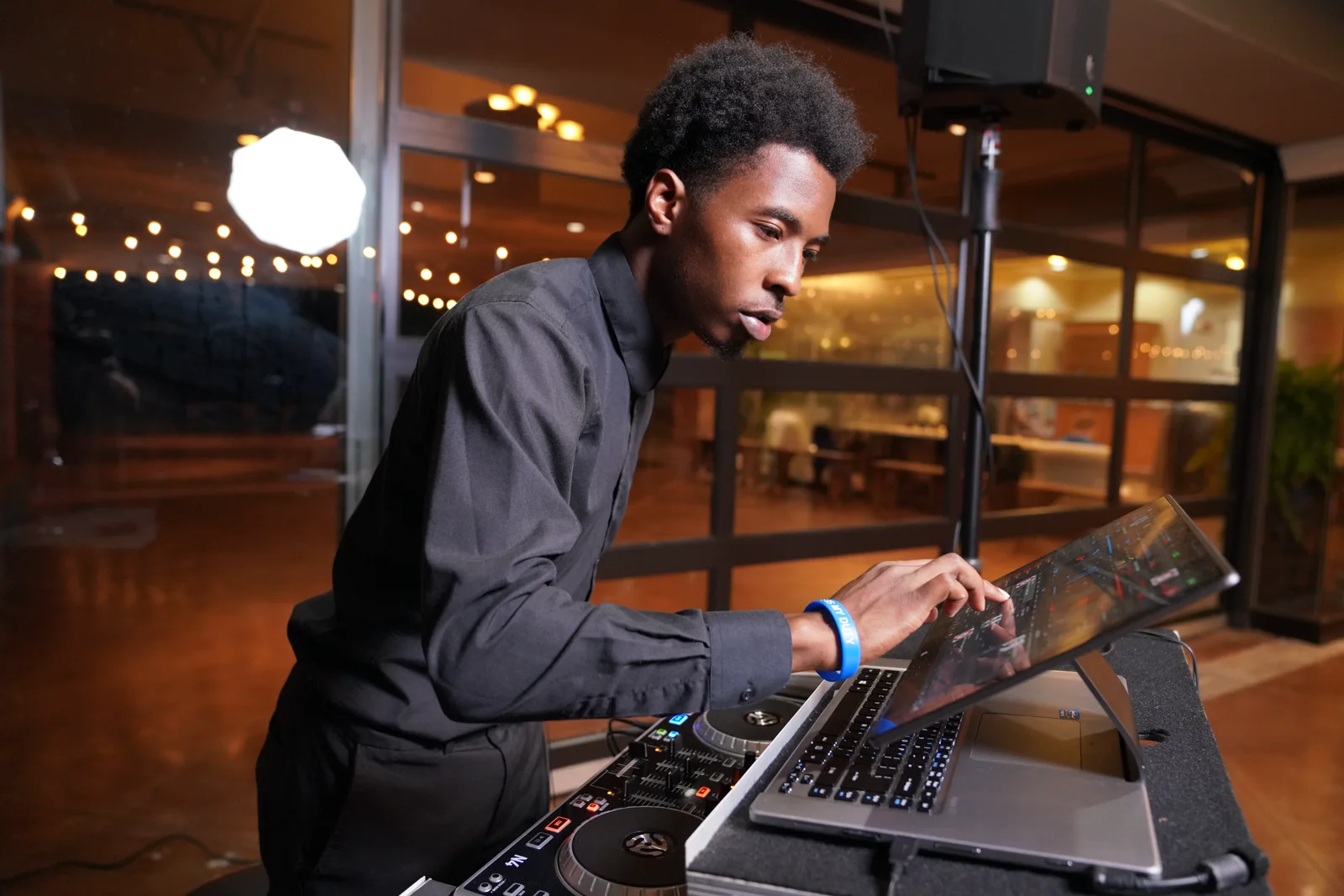
This is where a pro really earns it. During the dance block, my job is to be a gatekeeper. If someone wants the mic mid-party for an unplanned speech, I’ll gently steer it to a better window. Protecting your peak sometimes means saying “let’s do that in a few minutes” with a smile.
I also mix so there’s never a gap. Song bleeds into song, the beat never fully drops, and there’s no dead air for people to wander off in. That seamless run is what keeps a full floor full. A hard stop between tracks is an open invitation to sit down.
And I read the room the whole time. If the energy’s peaking, I ride it. If it dips, I pull a known winner to lift it right back. The couple gets to just dance and be present, because the floor is being watched and protected for them.
Getting vendors on the same page
Protecting the hour is a team sport. Your photographer, planner, caterer, and DJ all touch the timeline, so they all need to know the plan. When everyone agrees the back half is for dancing, nobody accidentally schedules a photo op right through your peak.
The catering pace matters a lot here. If dinner runs long, dancing shrinks. A quick chat between your DJ and caterer about timing keeps the meal on track so your floor time survives. Small coordination, big payoff.
Photographers appreciate a heads-up too. Tell them the dance block is protected, and good ones will grab their key shots early and then shoot candidly without pulling you off the floor. The couples over at WeddingWire’s timeline advice stress this same point — aligned vendors are what make an uninterrupted dance hour actually happen.
Planning it for your Novi reception
So how do you lock this in for your own day? Start with a timeline call with your DJ. Map where every formality lands, then draw a clear line where dancing begins — and agree that nothing crosses it. That one boundary protects the whole night.
Whether you’re celebrating at a hall near Twelve Oaks, out by Novi Road, or anywhere around town, the plan is the same: front-load the moments, guard the block, and let the DJ run interference. Do that, and your peak hour stays yours. For more ideas on shaping the night, browse more reception tips anytime.
At the end of the day, the sacred hour is where your wedding becomes the party you pictured. If you’d like help building and protecting yours, you can meet your DJ and we’ll map the timeline together. And for the full local rundown, my Novi wedding guide covers every part of the day.