Beating the Dinner Lull at Your Reception
There’s a sneaky danger hiding in the middle of every reception, and it’s called the dinner lull. Guests sit down to eat, the energy from the ceremony fades, and if nobody’s steering the room, it can go flat and stay flat. That’s a real problem, because a room that cools all the way down is hard to reheat for dancing later. Good news: the dinner lull is completely beatable. With the right music, a little timing, and a host who’s paying attention, you can keep the room warm through the whole meal — so when it’s time to dance, everyone’s ready to go.
In this article
What causes the dinner lull
Let’s name the enemy first. The dinner lull happens because dinner is naturally the calmest part of the night. People are seated, focused on food, and chatting quietly with their table. That’s fine — but if the calm goes too deep, the party loses its pulse.
The real risk isn’t the quiet itself. It’s what the quiet does to what comes next. When a room fully cools during dinner, you’re starting from zero when you try to open the dance floor. Every DJ knows it’s ten times easier to keep a room warm than to reheat a cold one.
So the goal during dinner isn’t to blast music and force energy. It’s to keep a low, steady warmth going — a gentle current under the meal that never lets the room flatline. Do that, and the pivot to dancing feels natural instead of like starting a stalled engine.
The right music during the meal
Music is your best tool here, and the choice matters more than you’d think. Dinner music should be familiar and warm, not silent and not loud. I lean on songs people quietly recognize — a little soul, some smooth classics, easy sing-along hits played low.
Why familiar? Because a song people know keeps a subtle hum of energy in the room even at low volume. You’ll catch heads nodding and toes tapping between bites. That tiny movement is the room staying alive. A playlist of random background instrumentals does the opposite — it fades into the wallpaper.
The trick is a slow, steady build. I start dinner mellow, then nudge the tempo up gently as plates clear. By the last course, the music is already leaning toward the party without anyone quite noticing. That gentle ramp is the heart of our wedding entertainment approach, and it beats the lull before it even starts.
According to The Knot’s dinner music guide, the receptions that flow best treat dinner as a slow build, not a dead zone. That matches exactly what I see from behind the decks every weekend.
Getting the volume exactly right
Volume is where a lot of weddings trip up. Too loud during dinner and guests have to shout across the table, which stresses everyone out. Too quiet and the room goes eerily silent between conversations. The sweet spot is music you can talk over easily but still clearly hear.
Here’s my rule: during dinner, people should be able to chat at a normal voice without leaning in. The music sits just under the conversation, filling the gaps so there’s never dead air. It’s present but polite.
This is one more reason a live pro beats a phone on a speaker. I’m constantly adjusting volume as the room shifts — up a hair when chatter builds, down when it settles. That live touch keeps the balance right all through the meal, and it’s the kind of thing a set-it-and-forget-it playlist can’t manage.
You don’t beat the dinner lull by cranking the music. You beat it by keeping a warm, steady pulse under the room so it never has to be restarted.
Key takeaway: The dinner lull is easier to prevent than to fix. Play familiar, warm music at a talk-over volume, build the tempo slowly as courses go by, and use a few light mic moments to keep the room connected. A warm room dances the second you open the floor.
Filling dinner with light moments
Music does most of the work, but a few small moments during dinner keep the room engaged too. I don’t mean big productions — just little touches that give guests a reason to look up and smile.
One I love: a quick, warm welcome between courses, thanking everyone for being there. Another is a light shout-out to the couple with a fun fact or a short story. These take 30 seconds, break up the meal, and remind the room it’s a celebration, not just dinner.
Some couples add a soft interactive touch, like a table trivia question read out during the meal or a slideshow that gets a laugh. Keep it low-key — dinner isn’t the time for a big game. But a sprinkle of fun keeps energy from sagging. If you want more ideas along these lines, our couples browse more reception planning tips before the big day.
A table-by-table dinner release can double as a light moment, too. Instead of announcing tables in plain order, I’ll tie each one to a quick, friendly prompt — “table five, you’re up if you’ve known the couple more than ten years.” It gets a laugh, keeps the buffet line from jamming, and gives the room something to react to between courses. Small touches like this add up to a dinner that feels like part of the party instead of a pause in it.
Timing toasts so they help, not hurt
Toasts are a natural energy boost, so where you place them matters. Put them at the right moment and they lift the whole room. Put them wrong and they can actually deepen the lull — like when a long speech runs while people are still hungry and waiting on food.
Here’s what a lot of couples miss: toasts land best when people have food or a drink in hand and aren’t distracted by hunger. I like to slot them during or just after the main course. The room is fed, content, and ready to feel something. That’s when a heartfelt toast really hits.
I also help keep toasts tight. A rambling 10-minute speech drains a room fast. A warm two-minute toast lifts it. A quiet word with your speakers beforehand about keeping it short does wonders — and it keeps the energy climbing toward the dance floor instead of stalling out.
How a DJ reads and warms the room
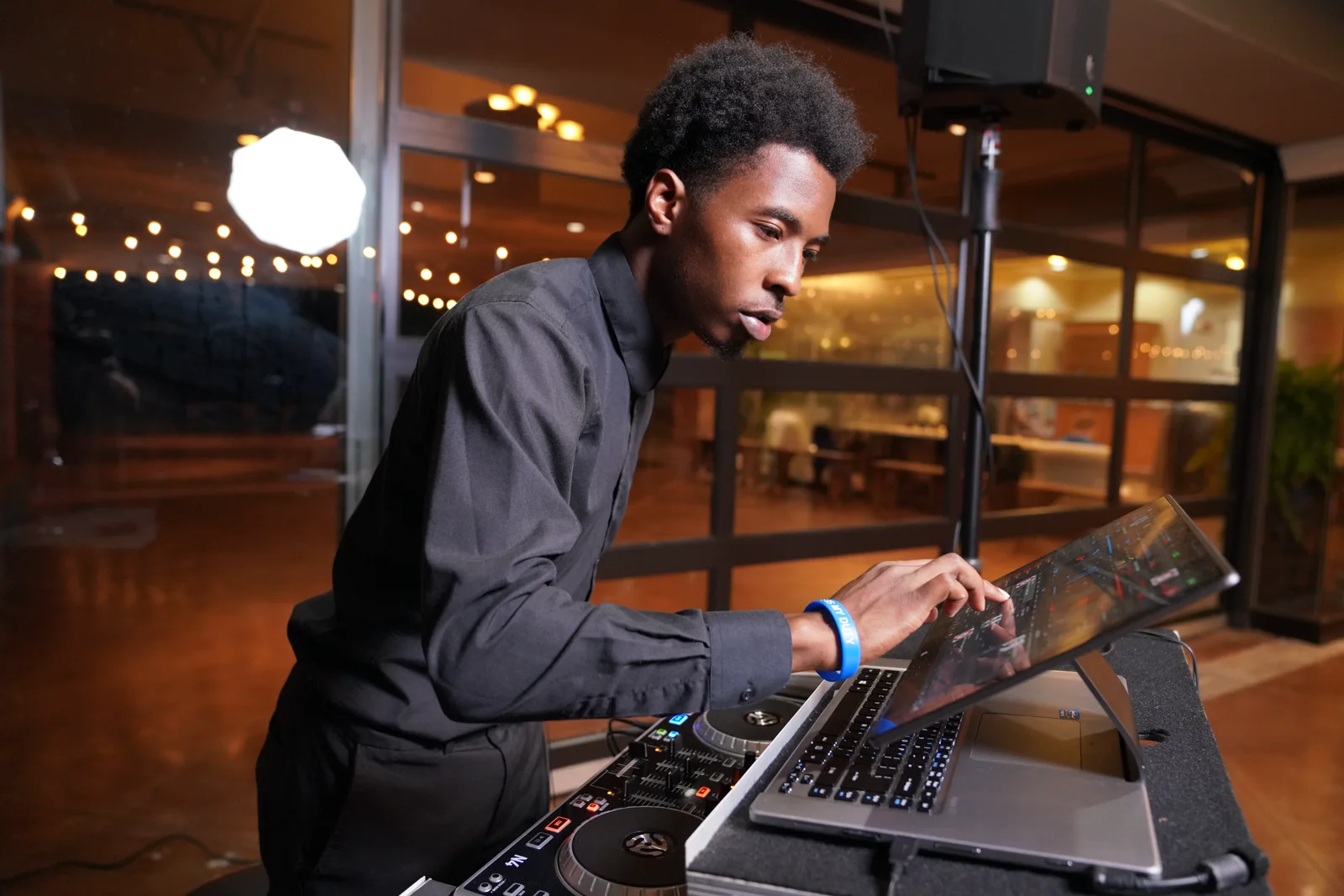
This is where a real pro earns their spot. Beating the dinner lull isn’t about following a playlist — it’s about reading the room minute by minute and responding. That live read is the whole difference between a warm dinner and a dead one.
Here’s what I’m watching during the meal. Are people talking and laughing, or has the room gone quiet? Is the food running late, leaving a gap I need to fill with a slightly livelier song? Are guests finishing up, ready for me to lift the tempo? I adjust to all of it in real time.
When I see the meal winding down, I start bending the music toward the party so the transition is already half done by the time we open the floor. According to WeddingWire’s reception experts, that gentle handoff from dinner to dancing is one of the biggest markers of a night that keeps its energy. A phone can’t feel the room. A person can.
Planning it for your Troy wedding
So how do you set this up for your own reception? Talk with your DJ about your dinner vibe, your music taste, and your timeline. A little planning here goes a long way toward a meal that stays warm instead of going flat.
Whether you’re celebrating near the Somerset Collection area, out along Big Beaver Road, or at a banquet hall in greater Oakland County, the plan is the same: familiar music at the right volume, a slow build, well-timed toasts, and a DJ who reads the room. Do that, and the dinner lull never gets a foothold.
At the end of it all, dinner shouldn’t be a break in your party — it should be a bridge to the best part of it. Keep the room warm through the meal and the dance floor fills itself. If you’d like a hand planning your flow, you can meet your DJ and we’ll map it out together. And for the full picture of your night, our Troy wedding guide covers everything from ceremony to last dance.