When to Open the Dance Floor for Peak Energy
There’s one moment that makes or breaks a wedding reception, and most people don’t even know it’s happening. It’s the second you open the dance floor. Do it at the right beat and the room rushes in like a wave. Do it too early and you’re staring at an empty floor while three brave cousins two-step alone. Timing that first rush is the whole game, and the good news is it’s not luck — it’s a read you can learn. Here’s exactly when to open the floor for peak energy, so your Novi reception hits full swing and stays there.
In this article
Why timing beats the playlist
Everybody obsesses over the song list. And sure, the right songs matter. But here’s the thing I’ve learned over hundreds of receptions: when you open the dance floor matters more than which banger you drop first. The best song in the world lands flat if the room isn’t ready to move.
Think about energy like a wave. All night it’s been building — the entrance, the toasts, a little wine, some laughs. Your job is to catch that wave right as it crests. Too soon and it hasn’t formed yet. Too late and it’s already breaking. Nail the crest and half the room is up before the chorus.
So this isn’t about a magic clock time. It’s about reading the room and moving when the energy is ripe. That’s a skill, and it’s exactly what separates a live DJ from a phone on shuffle.
The signs the room is ready
How do you know the moment’s here? The room tells you, if you’re watching. Here are the tells I look for.
People are done eating. Plates are cleared and forks are down. Nobody dances on a full plate. The volume in the room is rising. Chatter gets louder and faster — that’s rising energy you can literally hear. Feet and heads are moving. When guests start tapping along at their tables, they’re telling you they want to get up.
The couple looks ready. Once you two are loose, smiling, and off your seats, everyone else feels permission to follow. That last one is huge — guests take their cue from the newlyweds more than anything else in the room.
When two or three of those signs line up at once, that’s your window. Don’t wait for a perfect moment that never comes. Move.
This read-the-room instinct is something the pros preach, too. The Knot’s guide to filling the dance floor makes the same point: the packed floors come from timing and reading guests, not from a longer playlist.
The sweet-spot window after dinner
If you want a rough guide, here it is: the sweet spot to open the dance floor is right after dinner winds down and the last big formal moment lands. Usually that’s the parent dances or the cake cut. Those moments naturally pull people’s attention to the floor — so you ride that focus straight into open dancing.
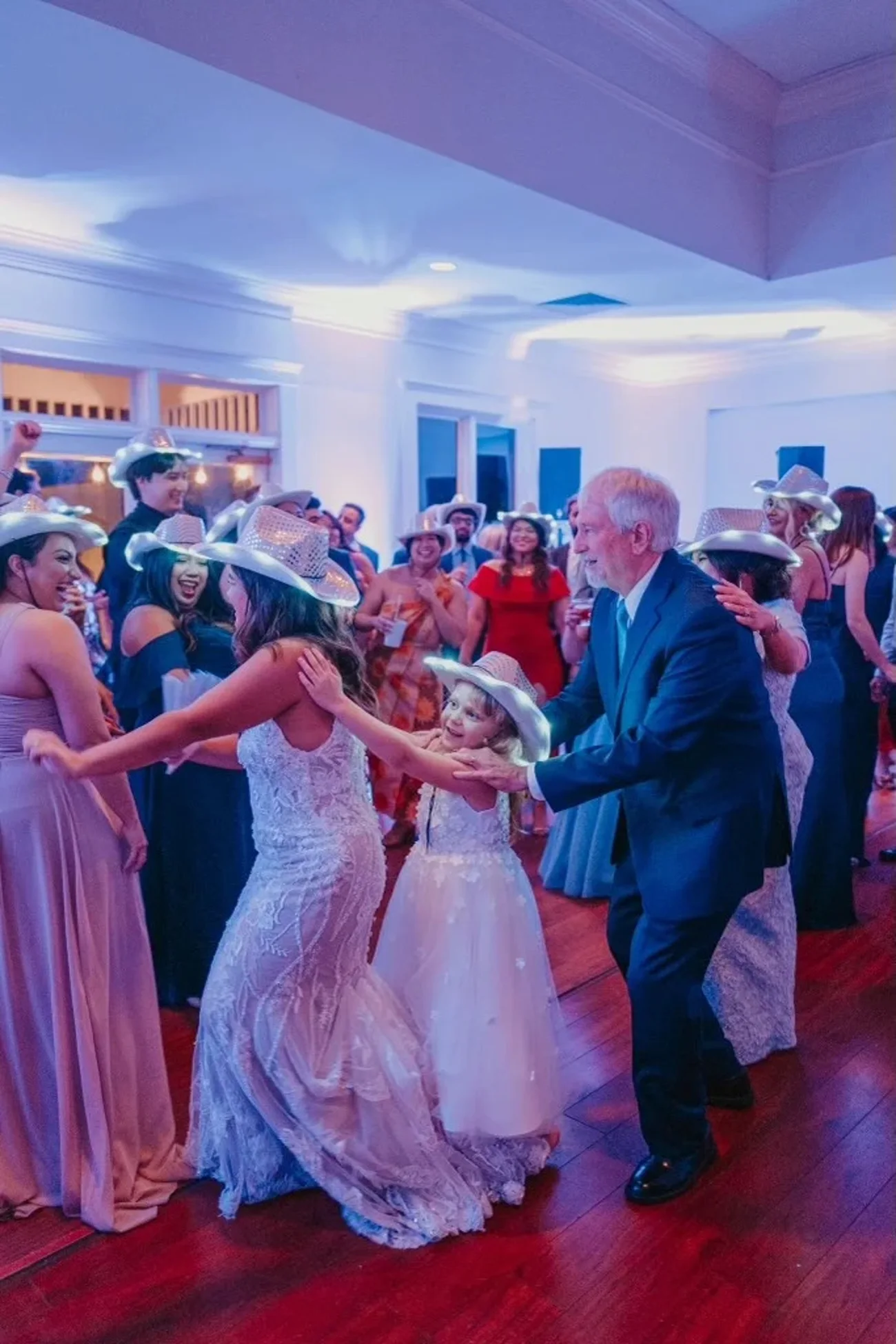
Here’s the move I love: end the parent dances, keep the crowd standing, and roll immediately into a floor-filler everyone knows. No announcement, no dead air, no “okay everybody, time to dance!” You just let one moment flow into the next while the room is already looking at the floor. That’s how you turn a formal moment into a full party in about ten seconds.
The mistake is inserting a gap. If you cut the lights, make a speech, and then try to restart the energy cold, you’ve lost the wave. Flow beats fanfare every time. For the full picture of how I map these transitions across a night, my wedding DJ services page breaks it down.
You don’t announce the dance floor open. You let the last big moment spill straight into the first great song, so the room is dancing before it realizes the party started.
Key takeaway: Open the dance floor right after the last formal moment, while the crowd is already standing and focused. Watch for cleared plates, rising chatter, and a loose, smiling couple. Then flow straight into a floor-filler with no gap. Timing beats the playlist.
How to actually open the floor
Let’s get tactical. When the window opens, here’s the sequence that works almost every time.
First, pick an opener with a wide net — a song three generations recognize in the first two seconds. Think a classic that grandma and your college friends both love. Second, get the couple out first, or a small group of ready dancers. A floor is never empty when the newlyweds start it. Third, build, don’t blast. I like to start strong but leave room to climb, so the next few songs feel like the party is getting better, not peaking on song one.
Fourth, keep the transitions tight. No long pauses between tracks in that first ten minutes — that’s when a fragile floor can empty out. Once thirty or forty people are up and sweaty, you’ve got room to breathe. Before that, hold the momentum like it’s made of glass.
Why opening too early backfires
Now the warning. The most common mistake I see couples push for is opening the floor too early — usually because they’re excited and want to dance. I get it. But an empty floor early can quietly haunt the whole night.
Here’s why. When guests see a bare floor, they assume it’s not time yet, and they settle deeper into their seats. Now you’re fighting to pull them back up later. A room that’s sat down twice is much harder to move than a room that never sat down at all.
Here’s what a lot of couples miss: patience early buys you a packed floor later. Waiting an extra fifteen minutes for the energy to build feels slow in the moment, but it pays off with a rush instead of a trickle. I’d rather open five minutes late to a wave than five minutes early to a puddle. If you want more real-talk planning tips, browse the rest of the blog anytime.
Keeping the energy up once it’s on
Opening the floor is step one. Keeping it full is step two, and it’s just as much about timing. The secret is that you don’t run flat-out the whole time. You ride peaks and valleys on purpose.
After a big run of dance songs, I’ll drop in a crowd sing-along or a slow song to give people a breather. Then I build right back up. That rest is what lets the same crowd dance for two hours instead of burning out in forty minutes. A floor that never rests is a floor that empties early.
I also save a few sure-thing songs for the moments the energy dips. Every crowd has a couple of tracks that snap them back to attention. Knowing when to spend those — and when to hold them — is the difference between a good night and a legendary one. That read only comes from watching real faces in real time. If you’re gathering fresh floor-fillers to hand your DJ, Billboard’s Hot 100 is a handy place to spot the crowd-pleasers.
Timing it at a Novi venue
Let’s make it local. Novi has some gorgeous reception spaces, from big ballrooms near Twelve Mile to elegant halls out toward the Novi Civic Center. The floor plan matters here — a floor tucked far from the tables needs an even stronger, clearer open so guests know it’s go-time.
Whatever your venue, the principle holds: watch the room, wait for the crest, and flow the last formal moment straight into the first great song. Don’t chase a clock and don’t force it early. The wave will come, and when it does, you catch it.
Want a floor that fills in one rush at your wedding? You can meet your DJ and we’ll build the timing around your crowd. And to see how I pace a whole celebration from entrance to last dance, my Detroit wedding guide lays it all out.