
Mid-Tempo Songs to Bridge Slow and Fast
Everybody plans the slow songs and the bangers. Almost nobody plans the songs in between — and that’s exactly where receptions fall apart. Mid tempo wedding songs are the connective tissue of your whole night. They’re the tracks that carry the room from a swaying ballad up to a full-on floor filler without a jarring stop. Get them right and the energy climbs like a smooth road. Get them wrong and you feel the whole party lurch. Here’s how these bridge songs work, and the exact ones I lean on to keep a set gracefully moving.
In this article
What “mid-tempo” actually means for a DJ
Let’s keep it simple. Tempo is measured in beats per minute, or BPM. Slow dances usually sit around 60 to 90 BPM. All-out party songs live up near 120 to 130. Mid tempo wedding songs fill the gap in between — roughly 95 to 115 BPM — where a song has a real groove but isn’t sprinting.
Why does that middle zone matter so much? Because you can’t jump a room from a tearful ballad straight into a rave. The body needs a step in between. A mid-tempo track is that step. It gets toes tapping and heads nodding, and it warms the room up for the big stuff without demanding it right away.
Think of it like driving. You don’t slam from first gear into fifth. You climb through the gears. Mid-tempo songs are your second and third gear — the ones that build momentum so fifth gear actually lands.
Why the in-between songs make or break the night
Here’s a scene I’ve watched too many times at DIY weddings. The playlist goes from a slow “our song” straight into a screaming club anthem. The floor, which was full of swaying couples, suddenly clears. Everyone’s confused. The mood snaps.
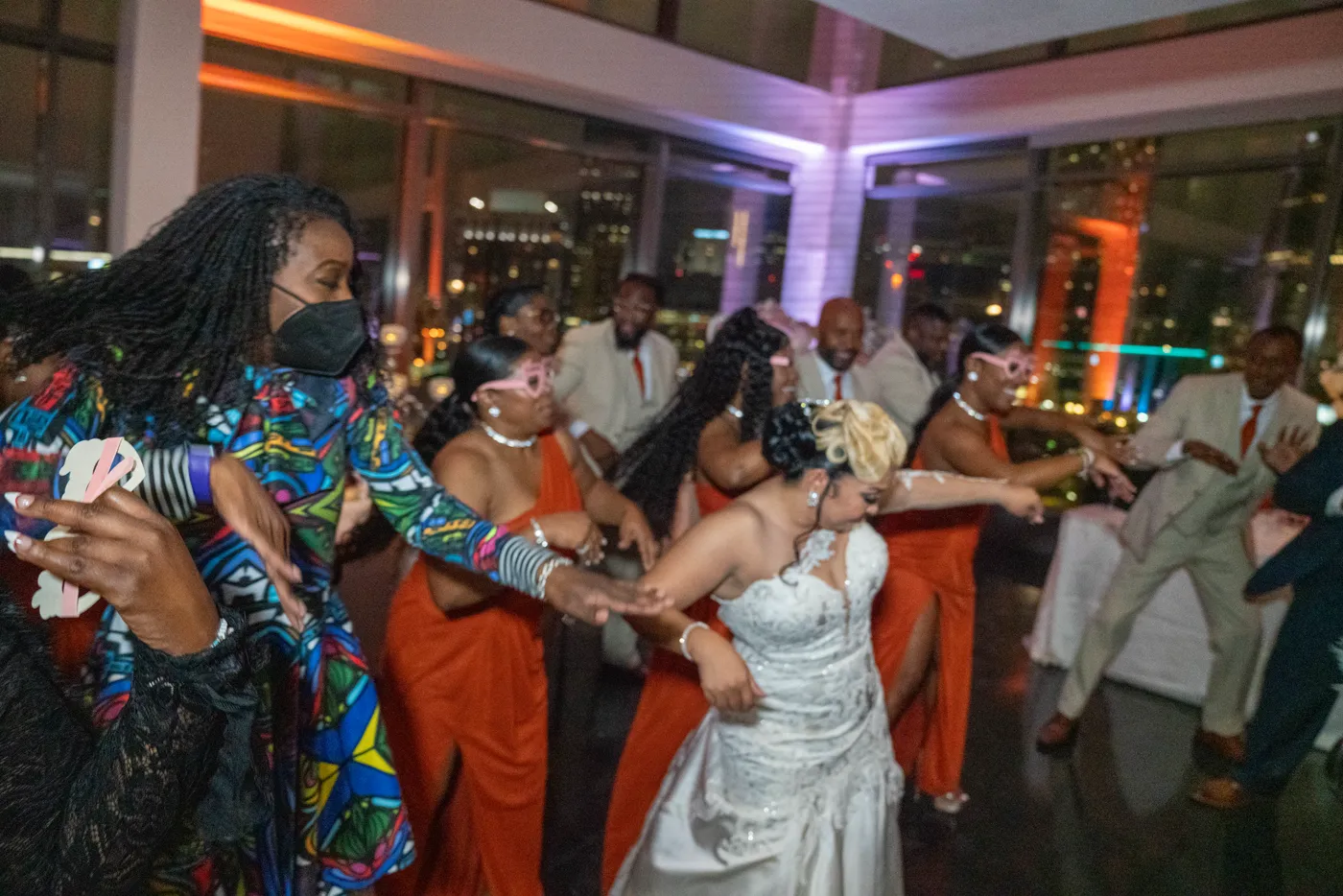
That gap is exactly what mid-tempo songs prevent. They give the room a soft landing and a running start at the same time. A good bridge track keeps the couples who were slow-dancing on the floor while inviting the party crowd to join. Nobody gets whiplash.
The pros know this. Planning experts at The Knot’s reception timeline guide stress that flow, not any single song, is what keeps a floor full. It’s the transitions people feel, even if they can’t name why. And the transitions almost always live in that mid-tempo zone.
My go-to mid-tempo bridge songs
So which songs actually do this job? These are the reliable ones I reach for when I need to move a room without breaking the spell.
“Signed, Sealed, Delivered” — Stevie Wonder. Warm, grooving, and impossible not to move to. A perfect lift out of a slow stretch.
“Can’t Stop the Feeling!” — Justin Timberlake. Bright and bouncy, right in that middle pocket. Every age group nods along.
“I Wanna Dance with Somebody” — Whitney Houston. Feels like a party but the groove is steady enough to build on. Pure joy.
“Valerie” — Mark Ronson & Amy Winehouse. Cool, mid-paced, and it gets hips moving before anyone commits to real dancing.
Notice these aren’t slow, and they aren’t sprints. They’re the smooth in-between that lets me nudge the energy up or ease it down a notch. That flexibility is why they earn a spot in almost every set I play.
Nobody remembers the transitions — they just remember that the night never stalled. That’s the whole point of a mid-tempo song.
Key takeaway: Mid-tempo wedding songs sit around 95 to 115 BPM and act as the bridge between slow moments and full-out dancing. Plan them on purpose and your reception climbs smoothly instead of lurching from one mood to the next.
Bridging up from a slow moment
Some of the trickiest moments at a wedding come right after something tender — the first dance, the parent dances, a heartfelt toast. The room is soft and emotional. Now you have to lift it toward a party without feeling abrupt.
This is where a mid-tempo song shines. Right after the first dance, I don’t slam a banger. I roll into something like “Signed, Sealed, Delivered” that keeps couples close but adds a bounce. Within a minute, more people drift onto the floor. Then, and only then, do I climb toward the bigger stuff.
Here’s what a lot of couples miss: that first song after an emotional moment sets the entire tone for open dancing. Pick it too fast and you scare people off. Pick it too slow and you lose the momentum you just built. A live DJ reads the room’s mood and chooses in real time — that’s the part a set playlist can’t do. If you want to see how I run every part of a reception, that page lays out the full night.
Bringing the room back down gently
Bridges work both directions. Sometimes the floor’s been going hard for 40 minutes and people need a breather — but you don’t want to clear the room to get it. The answer, again, is mid-tempo.
Instead of dropping straight into a slow ballad after a peak, I ease down through a groovy mid-tempo track. It lets the hard dancers catch their breath while keeping bodies on the floor. Then, if I want a slow song, the landing feels natural instead of like someone hit the brakes.
This up-and-down shaping is what keeps a crowd dancing for hours instead of burning out in one big rush. A reception isn’t one long sprint. It’s a series of waves, and the mid-tempo songs are how you steer between the crests and the calm.
Common mid-tempo mistakes to avoid
Even good playlists trip over a few things in this zone. The biggest one? Stacking too many mid-tempo songs in a row. That middle groove is great for moving between moods, but sit there too long and the party never actually peaks. Use bridges to travel, not to park.
Another mistake is ignoring the key and feel, not just the BPM. Two songs can share a tempo and still clash hard if their vibes fight. A cheery pop groove into a moody R&B track can feel jarring even at the same speed. It takes an ear to match not just the pace but the mood.
And here’s a subtle one: don’t waste your best crowd-pleasers as bridges. Save the giant sing-alongs for the peak. Use lesser-known but reliable mid-tempo grooves to do the connecting work, so your biggest guns still land when it counts. Zola’s planners echo this in their reception music advice — pacing beats piling on hits.
Building your Birmingham reception flow
So how do you plan for this without a DJ’s ear? Start by not overthinking the mid-tempo picks yourself. Instead, give your DJ your must-plays and your do-not-plays, then trust them to fill the connective tissue live.
Whether you’re celebrating at a spot downtown near Old Woodward, in a garden off Maple, or in a ballroom nearby, the plan is the same: mark your key moments and let the bridges flex around them. My Birmingham wedding guide covers how the whole night comes together. Want more ideas for shaping your night? Browse more wedding music tips anytime, and if you’d like to talk pacing, meet your DJ and we’ll sketch your flow together.
At the end of the day, your guests won’t walk away raving about a clever transition. They’ll just say the night flew by and the floor was never empty. That feeling — that smooth, unbroken momentum — is built in the in-between songs most people forget to plan.