
Wedding Processional Order, Explained
Figuring out your processional order is one of those wedding details that seems tiny until you’re standing at the back of the aisle wondering who goes when. Don’t worry — it’s simpler than it looks, and there’s a lot of room to make it your own. Below I’ll walk you through the classic order, the popular variations, and how I cue the music so every person’s entrance lands right on the beat. By the end, you’ll have your whole aisle lineup mapped out.
In this article
What the processional actually is
Let’s start simple. The processional is the entrance — the part of your ceremony where your wedding party and family walk down the aisle to their spots, ending with the big moment when you make your entrance. It’s the first thing your guests really watch, so it sets the tone for everything after.
Here’s the good news: there’s no single “correct” way to do it. The traditional order is a helpful starting point, but plenty of couples tweak it to fit their families and their style. Your processional order should feel like you, not a rulebook. Once you know the classic version, you’ll see exactly where you can bend it.
One thing that stays constant, though: the music carries the whole thing. Each group walks to a cue, and the timing of those cues is what makes the entrance feel smooth instead of stop-and-go. That’s where a good DJ earns their spot — more on that shortly.
It also helps to picture the recessional, since the two bookend your ceremony. The recessional is the exit — you and your partner leading everyone back up the aisle after the vows, usually to an upbeat, joyful song. When you map your processional, sketch the recessional at the same time. Planning both together keeps the whole ceremony feeling like one clean arc, opening soft and closing on a high.
The classic processional order
So who walks when? Here’s the traditional order most couples build from, roughly front to back in the timeline. First, the officiant takes their place at the front. Then one partner enters, often with their parents, and waits at the altar.
Next come the wedding party. Typically the grandparents are seated first, then the parents of the partner who’s already entering. After that, the wedding party walks — groomsmen and bridesmaids, either paired up or one side at a time. Then the maid or matron of honor and the best man, followed by any ring bearer and flower kids.
Finally, the star moment: the other partner makes their entrance, usually escorted by a parent or both parents, as everyone stands. That’s the classic flow. For a detailed breakdown with diagrams, Brides’ processional order guide is a handy reference to keep on hand while you plan.
Popular variations that fit real families
Now for the fun part, because real families rarely fit a template. And that’s completely fine. One common change: both partners walk with both parents, which honors everyone and skips the “given away” tradition if that’s not your thing. Another: couples enter together, side by side, which more and more pairs are choosing.
Blended families have great options too. Kids can walk a parent down, step-parents can be included in the escort, and you can seat family in whatever grouping feels right. There’s no rule that says it has to look a certain way — the goal is that everyone you love feels part of the moment.
Here’s what a lot of couples miss: same-sex couples, cultural traditions, and personal touches all reshape the processional beautifully. I’ve cued entrances that honored a family’s heritage, included beloved grandparents in the walk, and even featured a dog as the ring bearer. Your lineup can hold all of that. If you want help mapping a version that fits your family, that’s exactly the kind of thing I sort out when I plan a couple’s ceremony and reception.
Your processional order isn’t a test you can fail — it’s a chance to walk everyone you love into the room in a way that feels like you.
Key takeaway: Start from the classic order — officiant, one partner, grandparents, parents, wedding party, honor attendants, ring bearer and flower kids, then the other partner. Then adjust freely for your family. The music cues each group, so lock the order early and share it with your DJ.
How the music cues each entrance
This is where I come in, and it’s my favorite part. A processional usually uses two or three songs: one for the family and wedding party, and a separate, bigger song for the main entrance. That switch is what makes the star moment feel like a star moment.
My job is to time those cues perfectly. I start the wedding-party song and let it carry each pair down the aisle at an even pace. Then, right as the last attendant reaches the front, I bring in the main song — often building to a swell exactly as the doors open. Done well, guests feel a little chill go up their arms. Done sloppy, the song fumbles and the moment loses its punch.
Live cueing matters here more than almost anywhere. People walk at different speeds, kids stop to wave, and sometimes there’s a happy delay. A DJ watching the aisle can stretch or trim a song on the fly so the music always matches the walk. A pre-set track just plays whether or not you’re ready — and that mismatch is exactly what you don’t want on the biggest entrance of your life.
Timing the walk so it feels right
Let’s talk pace, because timing makes or breaks the feel. Too fast and the walk looks rushed; too slow and it drags. I coach wedding parties to leave a comfortable gap between pairs — usually a few seconds — so each entrance gets its own little moment without long dead space.
The aisle length changes everything. A long aisle in a grand West Bloomfield venue needs a slower, steadier pace so nobody arrives before the song builds. A short aisle in an intimate space moves quicker. I plan the music around the actual distance, which is why I always want to know the venue ahead of time.
For the main entrance, I like to hold a beat. When you reach the doors, a short pause lets guests turn, cameras lift, and the room draws a breath — then the music swells and you walk. That tiny bit of restraint makes the whole thing feel cinematic. Ceremony pros at The Knot stress that pacing is half of what makes a processional feel special, and I couldn’t agree more.
Common processional mistakes (and fixes)
Let’s dodge the usual traps. The biggest one is not settling the order until the day of. Deciding at the rehearsal or the ceremony itself creates confusion and nervous shuffling. The fix is simple: lock your lineup a couple weeks out and share it with your DJ and officiant.
Mistake two is forgetting to plan the music cues. Couples pick beautiful songs but never talk through when each one starts and stops. Without that, the DJ is guessing. A quick planning chat about who walks to what solves it completely and takes maybe 15 minutes.
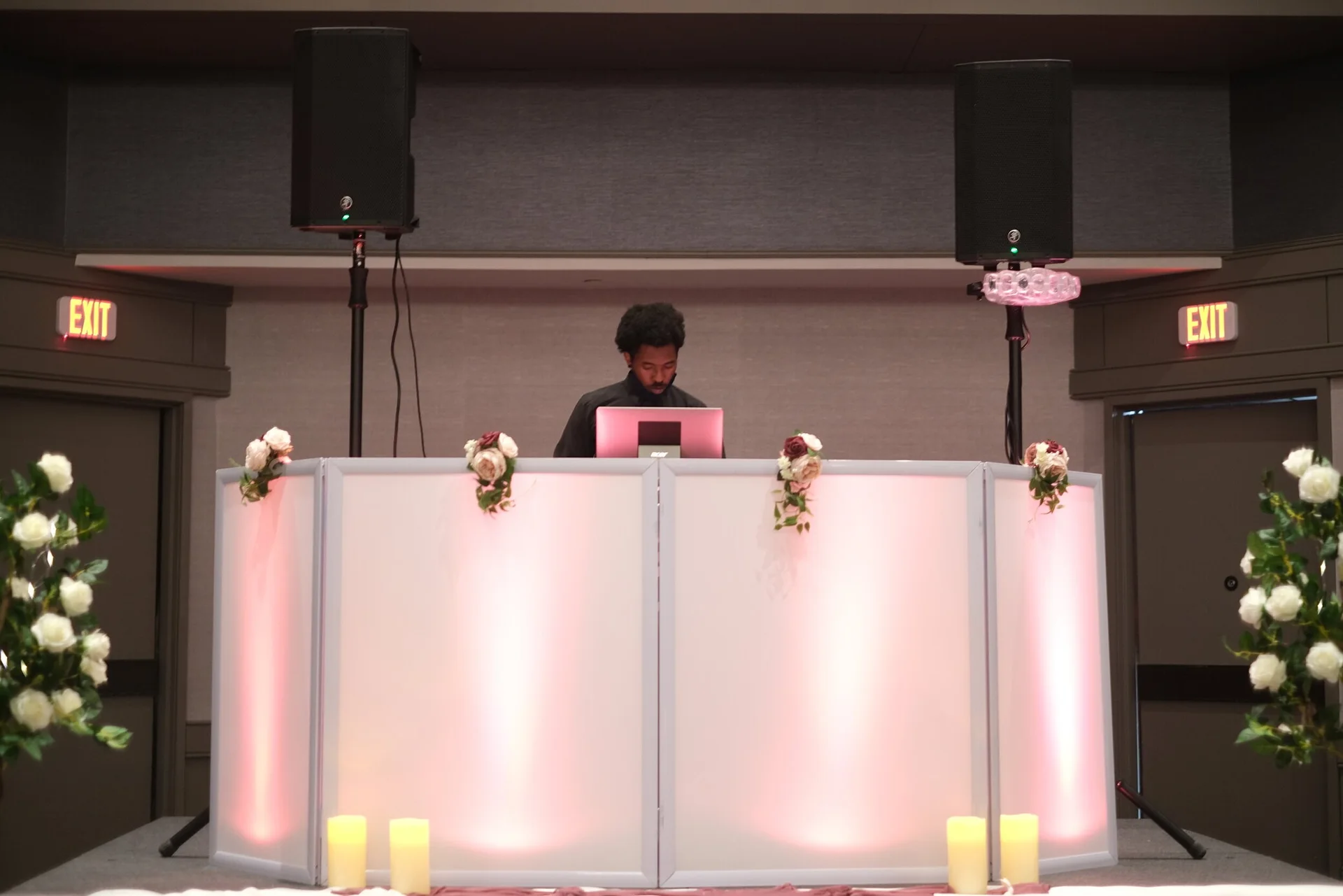
The third trap is skipping the sound check. A crackly speaker or a weak signal can swallow your processional song, especially outdoors. I always test the ceremony sound ahead of time and bring backup so the music is clear from the first note to the last. Little details like that are the whole reason to have a pro on your ceremony, not just your reception. If you’d like more ways to smooth out your day, browse more wedding tips whenever you like.
Planning yours in West Bloomfield
So how do you pull your own processional together? Start by writing out everyone who’ll walk and the order you want, using the classic version as a base. Then adjust for your family until it feels right. Share that final list with your DJ, officiant, and planner so everyone’s on the same page.
Next, pick your songs and talk through the cues. Whether you’re marrying at a lakeside venue off Orchard Lake, in a synagogue or church nearby, or in a garden ceremony at home, a pro will match the music to your aisle and your pace. For a full look at how I plan a whole wedding day, my West Bloomfield wedding guide covers ceremony and reception together.
At the end of the day, your processional order is about walking the people you love into the room in a way that feels true to you. Get the order and the music right, and your ceremony opens on a moment nobody forgets. If you’d like a hand planning it, you can meet your DJ and we’ll map every entrance together.