Getting Cocktail Hour Volume Just Right
Getting the cocktail hour volume right is a quiet little art, and almost nobody talks about it. Too loud, and your guests are yelling over each other and rubbing their temples. Too soft, and the room feels flat, like the party hasn’t started yet. The sweet spot is music people can easily talk over — but still feel humming under the conversation. Here’s how I dial in that level at Royal Oak weddings, so your guests mingle happily and the energy climbs right up to dinner.
In this article
Why cocktail hour volume matters more than you’d think
Think about the moment. Your ceremony just ended, everyone’s buzzing, and now they’ve got a drink in hand and about an hour to catch up. This is when your guests actually talk — where old friends reconnect and the two families finally meet. The music’s job here is not to grab attention. It’s to make the room feel alive without ever getting in the way.
Here’s the problem when it goes wrong. If the music’s cranked, people lean in, cup their ears, and shout. Twenty minutes of that and your guests are worn out before dinner even starts. On the flip side, dead-silent music makes the whole room feel like a waiting area. Nobody relaxes. So the volume you pick sets the entire mood for the next hour.
Good news: this is one of the easiest things to get right when a real person is running the sound. A live DJ hears the room fill up, notices when a laugh gets swallowed, and nudges the level a hair. A phone on a speaker can’t do that — it just plays at whatever volume you set an hour ago.
The sweet spot: talk over it, still feel it
So what’s the target? I aim for music you can talk over at a normal, relaxed voice — no leaning in, no shouting — but still clearly hear and feel. You should be able to name the song if you stop and listen, yet never have to raise your voice to be heard across a small table.
The trick is the low end. I keep the bass gentle but present, so the music has warmth and body without booming. That hum is what makes a room feel like a party instead of an elevator. When the bass sits right, people relax without even knowing why. Their shoulders drop, the chatter picks up, and the space starts to feel full.
Another piece folks miss: the music should live under the crowd, not over it. As more guests arrive and the room gets louder, I lift the level a touch to match. Early on, when it’s quiet, the music stays soft and easy. It grows with the crowd. That gentle rise is the whole secret to a cocktail hour that feels effortless.
Wedding pros feel the same way about this. According to The Knot’s cocktail hour guide, the goal of this stretch is easy conversation and warm background energy — not a concert. Save the big, loud moments for the dance floor later.
Is there a "right" decibel level?
People ask me for a magic number, and I get why. But the honest answer is that a fixed decibel reading only tells half the story. The same level that feels perfect in an empty room feels way too soft once 80 guests are chatting. The crowd absorbs sound, so the number has to move with the room.
That said, comfortable conversation usually sits around a normal speaking level, and I keep the music noticeably below that early on, then close the gap as things warm up. If guests can chat across a table without leaning in, you’re in the zone. If two people at the same table are shouting, it’s too loud — full stop.
There’s a health angle too, and it’s worth a nod. Long stretches of loud sound tire people out and can even bother sensitive ears — older guests especially. Comfortable, moderate levels keep a room happy for the long haul. Cocktail hour should leave your guests fresh for dancing, not fried before dinner even lands.
The perfect cocktail hour volume is music your guests forget is even playing — until it stops, and suddenly the room feels a little empty.
What kind of music fits the level
Volume and song choice work together, so let’s talk tunes. At a soft, conversational level, mellow songs shine — smooth soul, easy jazz, acoustic covers, warm throwback grooves. These fill the space without demanding attention. A heavy club banger played quietly just sounds weird and thin, so I skip those until the floor opens.
I also read your crowd. A Royal Oak reception with a mixed-age guest list might get a little Motown, a little Sinatra, and a few modern songs slowed into an easy groove. The point is a playlist that flatters low volume — songs that sound rich and full even when they’re barely there. If you want a fuller look at how I build a night’s music start to finish, my wedding DJ services page walks through the whole flow.
Here’s a quick tip most couples love: pick a handful of songs that mean something to you two and drop them into cocktail hour. Nobody expects a big dance-floor reaction, so it’s the perfect spot for those personal picks. Guests catch them softly in the background, and you get a little smile every time one comes on.
Key takeaway: The right cocktail hour volume lets guests chat at a normal voice while the music hums warmly underneath. Keep the bass gentle, start soft, and lift the level as the room fills. It’s a live decision, not a set-and-forget number.
How the room itself changes the volume
Here’s what a lot of couples miss: the space itself changes everything. A brick-and-hardwood spot in downtown Royal Oak bounces sound around, so the music carries and I can run it softer. A carpeted ballroom with drapes soaks sound up, so I nudge the level higher to fill the room. Same target, different settings.
Ceilings matter too. High, open ceilings let sound breathe, while low ones trap it and make everything feel louder. Outdoor cocktail hours are their own animal — open air swallows sound fast, so I bring extra coverage so the music doesn’t just vanish two steps from the speaker. This is exactly why I visit or study a venue ahead of time instead of guessing on the day.
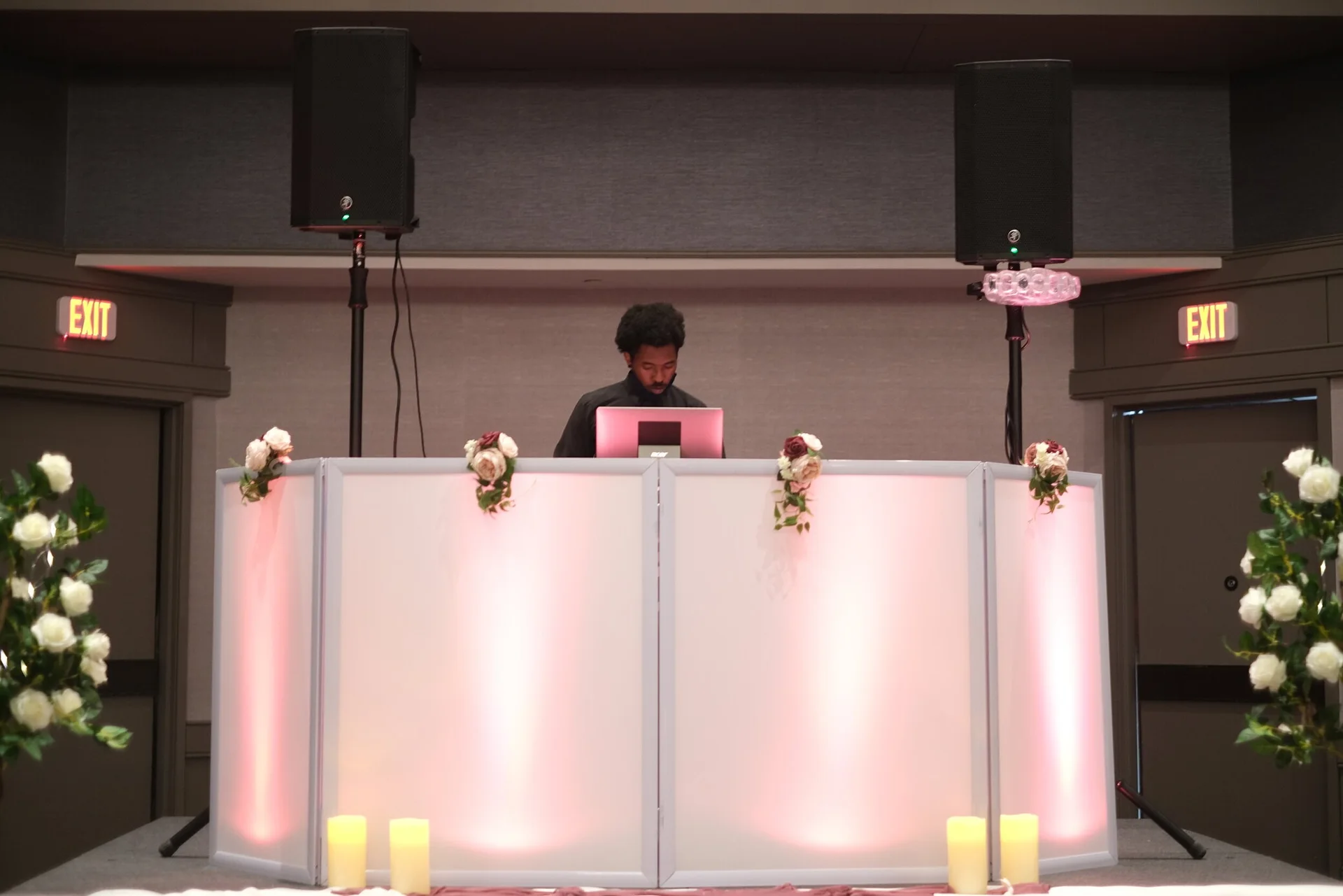
Speaker placement is the other half. I aim for even, gentle coverage across the whole space, not one loud corner by the bar and a dead zone by the windows. When the sound is spread out, I can keep the overall level low and still have music reach every guest. That even spread is what keeps a room comfortable everywhere people gather.
Common volume mistakes (and quick fixes)
Let’s cover the traps, because they’re easy to dodge once you know them. The biggest one is starting loud. Some setups blast the very first song at full reception level, and it feels jarring in a half-empty room. The fix is simple: start soft and grow into it.
Mistake number two is set-and-forget. If nobody’s touching the level, it’ll be wrong for at least part of the hour. The room changes constantly — more guests, louder chatter, the bar line growing — so the sound has to change with it. That’s a live job, plain and simple.
The third one sneaks up on people: forgetting the toasts and announcements. If a quick welcome or a surprise toast happens during cocktail hour, the music has to duck cleanly so the mic cuts through, then rise back after. Fumbling that leaves guests straining to hear the one thing they’re supposed to. A pro handles it in a beat, and nobody notices the dip. Wedding-planning folks at WeddingWire point out that smooth cocktail-hour flow is one of the most underrated parts of a reception — and the volume is a big piece of that flow.
Planning your Royal Oak cocktail hour
So how do you set this up for your own day? Start by telling your DJ what matters most to you — easy conversation, a lively buzz, or a little of both. That one sentence gives them a target to aim for. From there, a pro takes it live and adjusts all hour so you never have to think about it.
Then trust the room. Whether you’re celebrating near the theater district downtown, out by the Detroit Zoo, or in a backyard off Woodward, the same rule holds: soft to start, growing with the crowd, always talk-over-able. Get that right and the hour flies by in the best way. Looking for more ways to smooth out your timeline? Browse more wedding tips whenever you like, and if the city flagship guide would help, my Royal Oak wedding guide covers the whole reception.
At the end of the day, cocktail hour volume is about your guests feeling comfortable and connected. Nail it, and the room warms up on its own — ready to roll straight into dinner and dancing. If you’d like a hand getting it right, you can meet your DJ and we’ll plan a level that fits your crowd and your venue.