Zaffa Wedding Entrance: Grand Arabic Tradition
If you’ve been to an Arab wedding, you know the moment the whole room feels it coming. The drums start, voices rise, and everyone turns toward the doors. That’s the zaffa wedding entrance — the loud, joyful procession that announces the couple like royalty. It’s part parade, part concert, part group hug for two families becoming one. Here’s what it means, how it flows, and how a DJ makes sure it lands perfectly, especially for the many couples celebrating here in Dearborn.
In this article
What is a zaffa, exactly?
Let’s start with the heart of it. The zaffa wedding entrance is a traditional Arab wedding march that brings the bride and groom into their reception. It’s not a quiet walk to the head table — it’s a full celebration built to announce the couple with pride and joy.
The word itself points to a procession, and the vibe is exactly that: a moving wave of music, clapping, and cheering that carries the couple forward. Family and friends surround them, and by the time they reach the floor, the whole room is already on its feet.
You’ll see the zaffa across Lebanese, Egyptian, Palestinian, and other Arab celebrations, with small differences from one family to the next. What stays the same is the feeling. As Brides explains in its guide to the zaffe, this entrance is meant to share the couple’s happiness with everyone in the room at once.
The sound: drums, horns, and voices
Now let’s talk about that unmistakable sound, because it’s the engine of the whole thing. At the center is the drum — usually a big, deep tabl and a hand drum called the derbake that drives the rhythm. When those hit, you feel it in your chest before you hear it in your ears.
Over the top comes the mizmar, a reedy horn that cuts through the room with that bright, celebratory wail. Add clapping, chanting, and traditional songs sung by the crowd, and you’ve got a wall of pure joy. It’s loud on purpose. The whole point is to make sure nobody misses the couple’s arrival.
Here’s the thing a good host understands: this music has a build. It starts, it swells, and it peaks right as the couple hits the floor. My job is to ride that build so the biggest moment of sound matches the biggest moment of the entrance.
How the procession flows
So how does it actually play out? Usually the reception is buzzing, guests are seated or mingling, and then the energy shifts. The lights change, the drums kick in from the back of the room, and the doors open. Here come the couple, often led by the performers, sometimes with family carrying candles, swords, or flags depending on the tradition.
The couple moves slowly through the crowd, soaking it in, while everyone claps and dances alongside. It’s not rushed — the walk itself is the show. By the time they reach the dance floor or their seats, the room is fully warmed up and ready to party.
From there, the zaffa flows straight into the first dance or the opening set. That handoff matters a lot. A smooth transition keeps the energy climbing instead of letting it dip, and that’s a big part of what I plan ahead of time. If you want the full picture of how an evening like this is mapped out, our Dearborn wedding guide lays out the whole night.
Key takeaway: The zaffa is a built moment — the music, the walk, and the crowd all peak together. Nail the timing of that peak and the transition out of it, and your entrance sets the tone for the entire reception.
Where the DJ fits in
You might be wondering what a DJ does when there’s live drumming involved. Quite a lot, actually. Even with a live zaffa band, I’m running the room’s sound, the mic work, and the timing. I make sure the performers are heard clean and loud, cue the lighting, and hype the crowd so the entrance hits the way it should.
If you’re going with a recorded zaffa track instead of a live group, I’m the one selecting it, mixing it, and blending it into your bilingual reception without a bump. Either way, I’m the bridge between the traditional entrance and the modern dance floor that follows. A strong bilingual host also keeps announcements clear for guests who speak Arabic, English, or both.
Here’s what a lot of couples miss: the zaffa isn’t a stand-alone act you can just drop in. It has to connect to everything around it — the dinner timing, the speeches, the dabke line dances later on. When one person is steering the whole flow, those pieces lock together instead of fighting each other. That’s exactly the coordination our full wedding entertainment service is built around.
A zaffa should feel like the room lifts the couple off their feet. My job is to make sure the sound, the lights, and the timing all rise at the exact same second.
Live band or recorded track?
This is one of the first choices couples make, so let’s break it down. A live zaffa band brings unbeatable energy — real drummers, a horn player, and performers who pull the crowd in. It’s spectacular, and if it fits your budget and your family’s expectations, it’s hard to beat.
A recorded zaffa, on the other hand, is simpler and easier on the budget. A good track played through a proper sound system still lands with real power, and it gives you tight control over the length and the timing. Plenty of gorgeous entrances use exactly this route.
There’s also a hybrid many Dearborn couples love: a live drummer or two paired with my sound and mixing. You get the punch of live percussion without booking a full ensemble. Whatever you choose, the sound system underneath has to be up to the job — and that’s on me.
Common mistakes to avoid
Even a beautiful tradition can go sideways without a plan, so here are the traps I watch for. The first is weak sound. A zaffa on an undersized system sounds thin and muddy, and that deep drum needs real power behind it. I size the rig to the room every time.
The second is a clumsy transition out of the entrance. If the music just stops when the couple sits down, the whole room deflates. I always have the next moment cued so the energy carries straight through. The third is poor timing with dinner and speeches — the zaffa should land when guests are ready to feel it, not mid-salad course.
One more: skipping the planning talk. Every family does the zaffa a little differently, and I never assume. We map out your version together first, so nothing gets guessed at on your day. You’ll find plenty of more wedding tips on the blog if you want to keep planning ahead.
Planning your zaffa with me
Here’s how I approach it with couples. We start with a conversation about your family’s traditions, the songs that matter, and whether you want live drummers, a recorded track, or a mix. No two zaffas are the same, and yours should reflect your people, not a template.
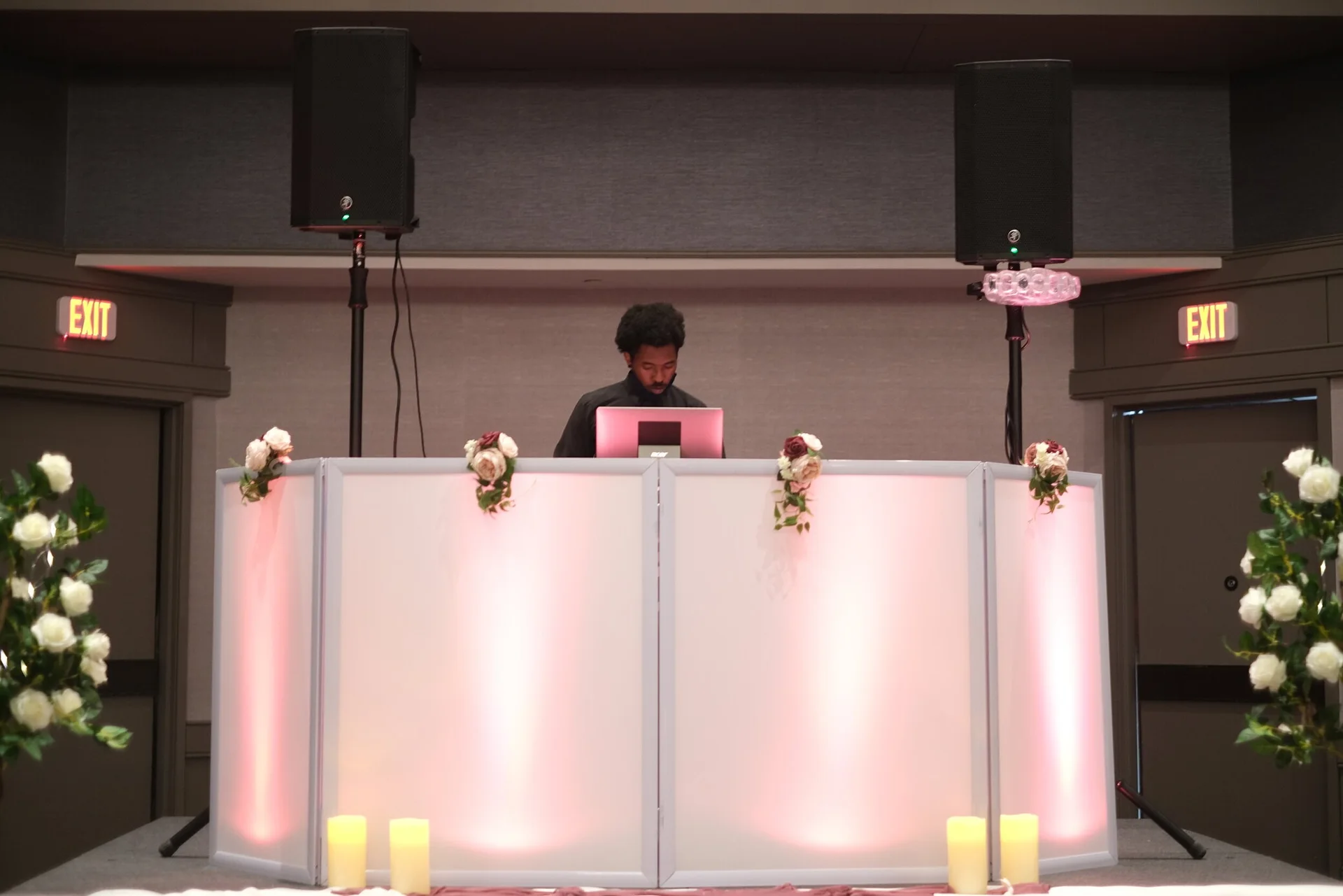
From there, I build the timing around your whole night — entrance, dinner, speeches, dabke, and the open dance floor — so every piece connects. Because I only take one wedding a day, your entrance gets my full attention, with backup gear on hand and a setup that’s done well before your first guest arrives.
Dearborn is home to one of the largest Arab-American communities in the country, and I love being part of these celebrations. If you’re planning one, meet your DJ and let’s talk through your zaffa. Dates fill fast in wedding season, so if you’ve got one in mind, let’s check it while it’s still open.