Yemeni Wedding DJ: Traditions & Music
Planning a Yemeni celebration in Metro Detroit means one thing is non-negotiable: the DJ has to understand the culture, not just the playlist. A good Yemeni wedding DJ knows the party is usually split into separate men’s and women’s halls, each with its own energy, its own music, and its own flow. Dearborn is home to one of the largest Yemeni-American communities in the country, so I’ve had the honor of running these nights, and I want to walk you through exactly how they work — so you can hire with confidence.
In this article
The basics: what makes a Yemeni wedding unique
Let’s set the stage. A Yemeni wedding isn’t a single event — it’s often a series of celebrations spread across several days, building up to the big reception. There’s deep tradition here, strong family involvement, and a real sense of pride in doing things the right way. Dearborn’s own Arab American National Museum is a great window into just how rich these community celebrations run. The music, the timing, and the setup all reflect that.
The biggest thing to know is that many Yemeni weddings are gender-separated, meaning the men and women celebrate in different halls or different spaces. This isn’t a small detail. It shapes the whole plan — the sound setup, the song choices, and how a Yemeni wedding DJ staffs and runs the event. Get this wrong and the night feels off. Get it right and it’s beautiful.
Because customs vary from family to family, I always start with a conversation. Some families keep things fully traditional. Others blend in modern touches or Western hits for the younger crowd. There’s no one-size-fits-all here, and honestly, that’s what makes these weddings so special to work.
One more thing worth saying up front: respect goes a long way. When a DJ shows up already knowing the customs — how the halls are arranged, what’s expected, what’s off-limits — families relax. They can enjoy the celebration instead of managing the vendor. That trust is earned, and it starts before the wedding day.
How the separate halls work
This is the piece people ask about most, so let’s break it down. In a gender-separated Yemeni wedding, the men gather in one hall and the women in another. Sometimes they’re two rooms in the same building. Sometimes they’re two entirely different venues. Either way, each side needs proper sound and its own plan.
The women’s hall is usually where the dancing really takes off. It’s a private, joyful space where women can dress up, remove veils, and celebrate freely — so the music, the volume, and the vibe often run higher and later there. The men’s side tends to have its own rhythm, with traditional music, seating, and its own moments of celebration.
From a logistics standpoint, this means staffing and gear matter. Depending on the setup, you may need sound in both spaces at once. I plan that ahead so neither hall is left with a weak system or a scramble at the last minute. If you want a feel for how I map out a full event start to finish, my rundown of how I run your whole day shows the same care I bring here.
The women’s hall is a private world of its own. A DJ’s job there is to protect that space and still bring the party — and that takes real understanding, not guesswork.
Key takeaway: Most Yemeni weddings run two separate celebrations at once — a men’s hall and a women’s hall, each with its own music, energy, and sound needs. Plan staffing and gear for both, and always confirm the family’s specific customs first.
The music that defines the night
Now for the fun part: the sound. Yemeni wedding music is rich and distinct, often built around the oud, the drum, and traditional rhythms that get the whole room clapping and moving together. There are regional styles too — music from Sanaa sounds different from music of the coastal areas — and knowing those differences shows you did your homework.
A strong set weaves the classics your elders love with the tracks the younger guests request. That might mean traditional Yemeni songs early, then a mix of wider Arabic hits, and sometimes Western pop later in the women’s hall. The Smithsonian Center for Folklife and Cultural Heritage has documented just how central music and communal dance are to Arabian Peninsula celebrations, and you feel that live — the room moves as one.
Here’s my rule: bring your must-play list, your absolute no-list, and any special songs tied to your family. I’ll build around them and read the floor for the rest. And I keep clean, high-quality versions of every track, because a scratchy YouTube rip has no place at a wedding this important.
Running the men’s celebration
Let’s talk about the men’s hall specifically. The energy here is proud and communal — think group singing, traditional dances, and moments where the groom is celebrated by his brothers, cousins, and friends. Some celebrations include the traditional dagger dance and other cultural highlights that deserve the right music and timing.
My job is to support those moments, not steamroll them. So I keep the volume balanced for conversation and hospitality early, then lift the energy when it’s time to dance. Coffee, tea, and greeting guests are a big part of the night, and the music should frame that, not fight it.
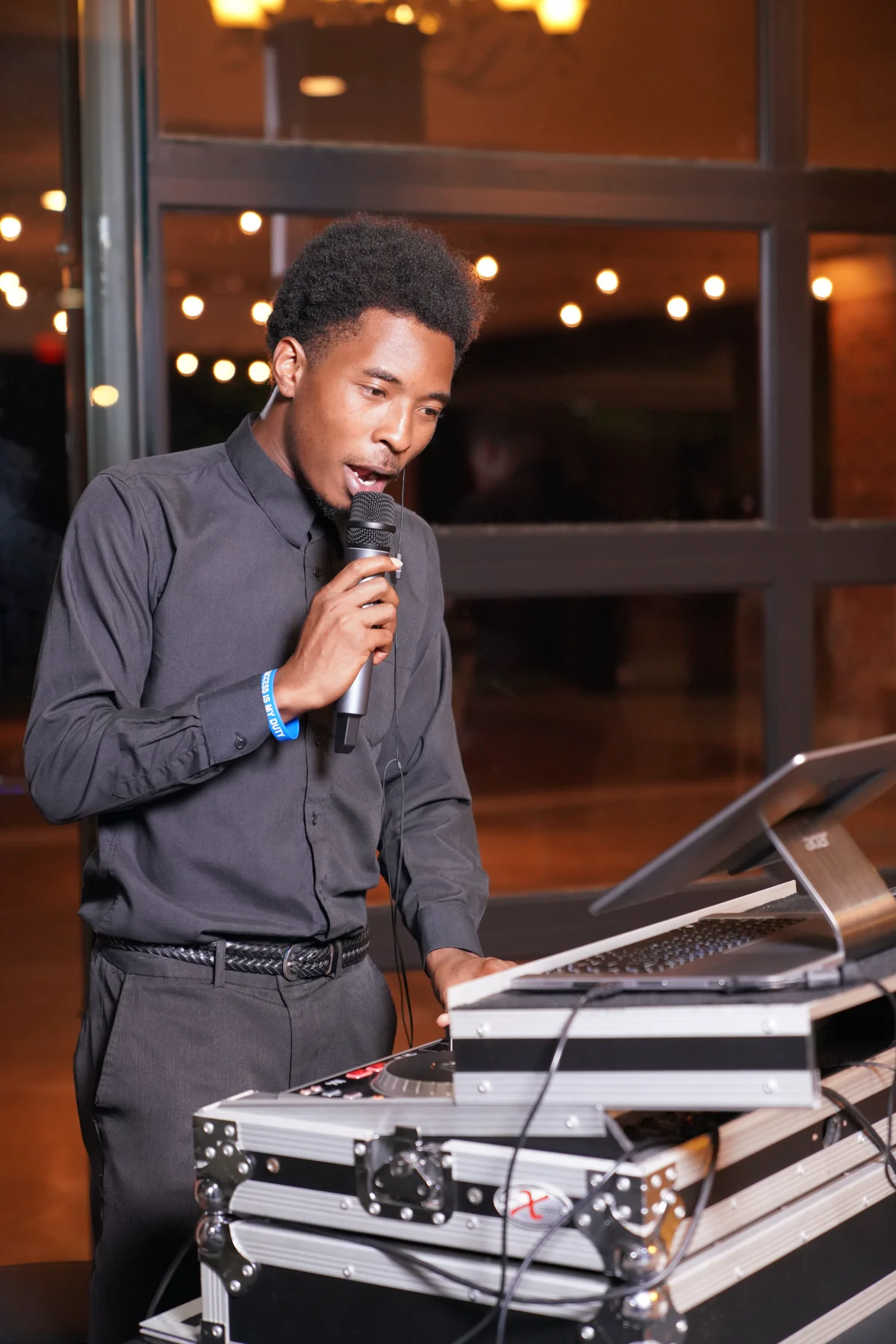
Announcements matter too. When the groom enters or a key moment arrives, a clear, respectful voice on the mic sets the tone. I keep it warm and brief — guiding the room without turning into the center of attention. It’s their celebration, and I’m there to make it flow.
Running the women’s celebration
Here’s what a lot of people outside the culture don’t realize: the women’s hall is often the bigger party. It’s a private, protected space, and that privacy is exactly what lets it get so lively. Women dress in stunning gowns, the dancing runs long, and the music can go full volume without holding back.
Because it’s a private women’s space, families sometimes prefer a female DJ or specific arrangements for that hall — and I’ll always talk that through honestly and help coordinate whatever makes your family most comfortable. The goal is a celebration where every woman in the room feels free to let loose. Respecting that boundary is the whole job.
Musically, this side often leans into the danciest tracks of the night: traditional favorites, big Arabic pop, and modern hits that keep multiple generations on the floor. The henna moments, the bride’s grand entrance, and the group dances all get their own cues. When the timing is tight, the whole hall feels like one big, joyful family.
Volume is part of the culture here, and I lean into it. These celebrations are meant to be felt, so a sound system that carries the drums and the bass without distorting is a must. I balance that power with clean vocals for the announcements, so the energy stays huge while every word still lands clearly across the room.
What to ask before you book
Before you hire anyone, ask a few key questions — they’ll save you stress. First: have you worked Yemeni or Arabic weddings before, and do you understand gender-separated setups? Experience with the culture is worth more than a flashy light show. Second: can you cover both halls, or do we need a second setup?
Then get into the music. Ask if they keep a real library of Yemeni and Arabic tracks, and whether they’ll learn your family’s specific must-plays. A DJ who says “just send me a Spotify link” the week before probably isn’t ready for a wedding this meaningful. Finally, confirm backup gear — a dead speaker in the women’s hall is not an option.
Cost matters too, and honest pricing beats surprises. Ask what’s included, what an extra hall or extra hours cost, and whether there are hidden fees. For more planning help across every kind of celebration, browse more wedding tips whenever you’re ready. Good questions now mean a smooth night later.
Why Dearborn families trust Skan
There are many DJs around Dearborn and Metro Detroit, so why do families call me for their Yemeni celebrations? It comes down to respect and preparation. I take the time to learn your family’s customs, I plan for separate halls instead of being surprised by them, and I keep clean, high-quality music that honors both tradition and the younger crowd.
I also only take one event a day. Your celebration gets my full attention — never a rushed setup squeezed between two other bookings. Sound for both halls, your must-play list, and your key moments all get dialed in before the first guest arrives. Backup gear rides with me every time, because your wedding deserves zero technical drama.
Most of all, I treat these nights as the honor they are. When a family trusts me with a celebration this important, I don’t take it lightly. If you have a date in mind, let’s talk it through — you can see how I run Detroit celebrations for the full picture, and feel free to meet your DJ before you book. Wedding season fills fast, so reach out while your date is open.