
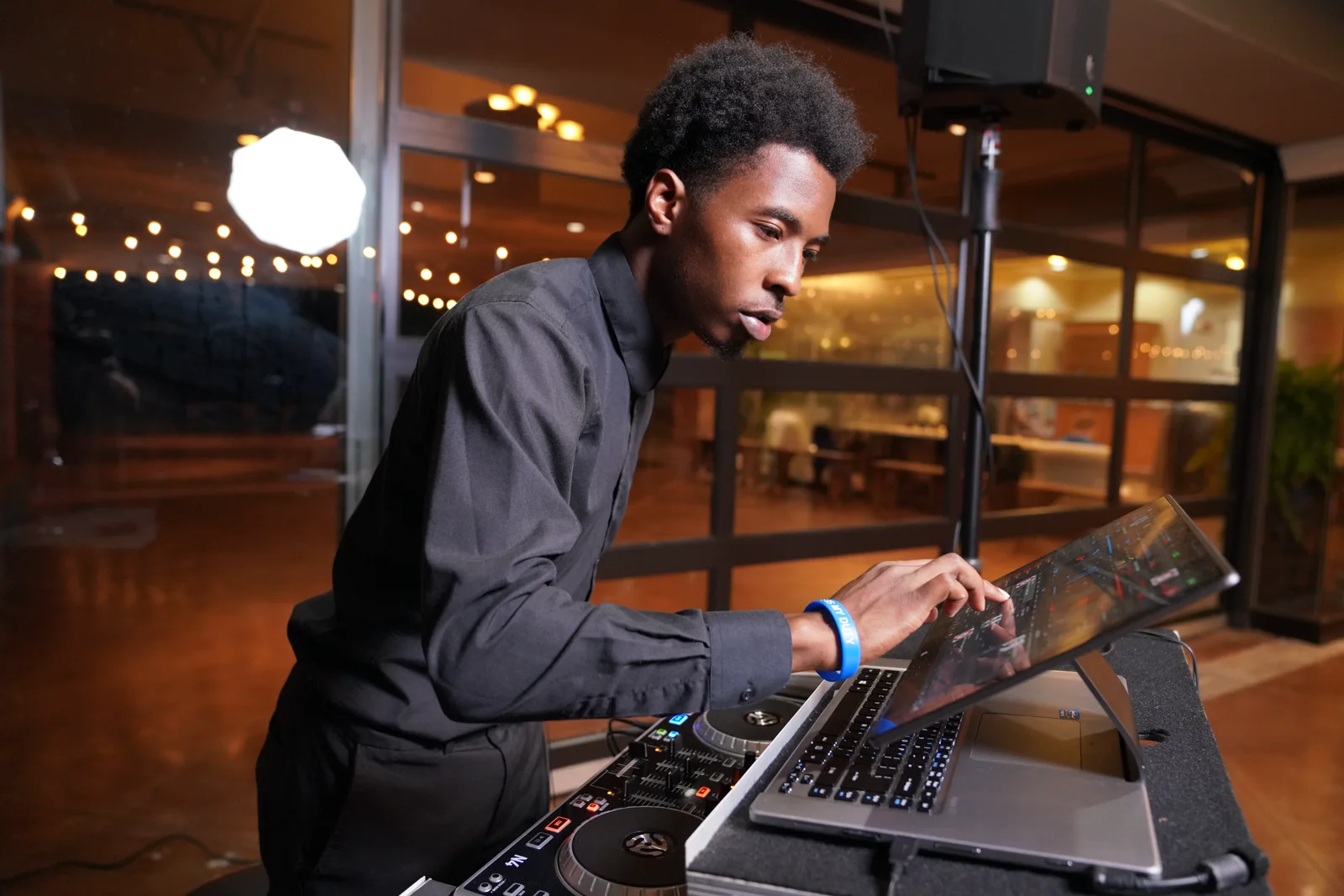
Why DJs Use Haze to Make Lights Pop
Ever wonder why a concert looks so electric but your buddy’s backyard party with the same colored lights looks kind of flat? The secret isn’t the lights at all — it’s the air. Haze for lighting is a light, invisible mist that fills a room so every beam suddenly becomes a solid ray you can see cutting through the space. Without it, a light just makes a dot on the floor. With it, that same light draws a sharp line across the room and your dance floor starts to feel like a real show. Here’s exactly what haze does, why nearly every pro uses it, and how to know if it’s right for your night.
In this article
What haze actually is
Let’s clear up the mystery first. Haze is a super-fine mist made from a water-based fluid, pushed out by a small machine called a hazer. You can’t really see the mist itself — it just hangs in the air as a thin, even layer. Think of it like the light morning fog you sometimes see over a field, but way lighter and totally controlled.
That thin layer is the whole point. When a beam of light travels through it, the tiny droplets catch the light and make the beam visible from the side. So instead of light landing invisibly and hitting the floor, you actually see the shape of the beam moving through the room. That’s the “wow” you feel at a concert, and it’s the same reason a DJ reaches for haze for lighting at a wedding or party.
Here’s the part most people don’t expect: a hazer doesn’t make the room smoky or hard to breathe. Done right, guests never notice a cloud at all. They just notice that the lights suddenly look amazing. The haze is doing all the work quietly in the background.
Why haze makes lights pop
So why does this matter so much? Because light is invisible until it hits something. A laser or a moving light shooting across an empty room does its job, but your eye only catches the dot where it lands. All that cool movement in between? Wasted — unless there’s something in the air for the beam to show up against.
That’s where haze changes everything. Fill the air with a fine mist and every beam becomes a solid, sweeping line. Suddenly your dance floor has depth. The lights feel like they’re reaching out and wrapping around the crowd instead of just dotting the ceiling. It’s the difference between a photo and a movie.
This is the concert look everybody wants, and it costs a lot less than people think. You don’t need a hundred lights. You need a few good ones and the haze to reveal them. The planning pros at The Knot’s wedding lighting guide point out the same thing: atmosphere is what turns a beam from a point into a picture. That one small machine does more for the vibe than doubling your light count ever could.
Notice something in that photo? The beams look like ribbons, not dots. That’s haze at work. Pull it out of the room and those same lights would just glow quietly on the ceiling. It really is that dramatic a change.
Haze vs. fog: what’s the difference?
People mix these two up all the time, so let’s sort it out. Fog is thick and low. It rolls across the floor in a big cloud, like the dry-ice effect you’ve seen for a first dance. It’s dramatic, but it clears fast and you can definitely see it.
Haze is the opposite. It’s thin, even, and long-lasting. It fills the whole room at a low level and just hangs there, doing its quiet job of revealing beams. You want haze for the all-night concert glow. You want fog for a short, jaw-dropping moment like a grand entrance or a first dance.
Honestly, the best events use both at the right times. A blanket of haze all night to keep the lights sharp, plus a burst of low fog for one or two big moments. Used together, they cover the whole spread — steady atmosphere plus a couple of showstoppers. If you’re curious how special effects and light layers stack together, my lighting and effects service page walks through the full toolkit.
Light is invisible until it hits something. Haze gives every beam something to hit — that’s the whole magic in one sentence.
Is haze safe and will it set off alarms?
This is the question I get most, and it’s a fair one. The short answer: quality haze fluid is water-based and used at concerts, weddings, and theaters every single night. It’s designed to be safe for a room full of people. Nobody’s going home with a cough.
The bigger worry is smoke alarms, and that’s a real thing to plan for. Some venues have very sensitive detectors that can read a heavy haze as smoke. The fix is easy: I keep the haze light, aim it away from detectors, and always check with your venue first. Vendor guides like WeddingWire’s lighting overview say the same — confirm effects with your venue early. Many places in Clinton Township are totally fine with it, and we just check ahead of time so there are zero surprises.
Key takeaway: Haze is a thin, water-based mist that makes light beams visible, turning ordinary lights into a concert-style show. It’s safe and long-lasting, but always clear it with your venue first so a sensitive smoke alarm doesn’t crash the party.
Here’s what a lot of couples miss: it’s not about pumping out more haze, it’s about pumping out just enough. A pro dials it in so the beams pop but the air still looks clear. Too much and you get a foggy room nobody wanted. The right amount and guests never even know it’s there — they just think your lights look incredible.
When haze is worth it (and when to skip it)
Haze isn’t for every single event, and I’ll always tell you straight. If your celebration is a bright daytime brunch with sun pouring through the windows, haze won’t show up — you need a darker room for the beams to read. Save it for evening receptions and dim spaces where the lights can actually shine.
It shines brightest during open dancing. Once the lights come down and the floor fills up, a little haze turns the whole room into a party you can feel. For a wedding, that usually means the reception after dinner, right when you want the energy to climb. That’s the sweet spot.
When should you skip it? Outdoor events where the wind carries it away, super-sensitive venues that say no, or any daytime setting. Beyond those, haze is almost always worth the small cost. It’s one of the cheapest ways to make a room look ten times more expensive than it is.
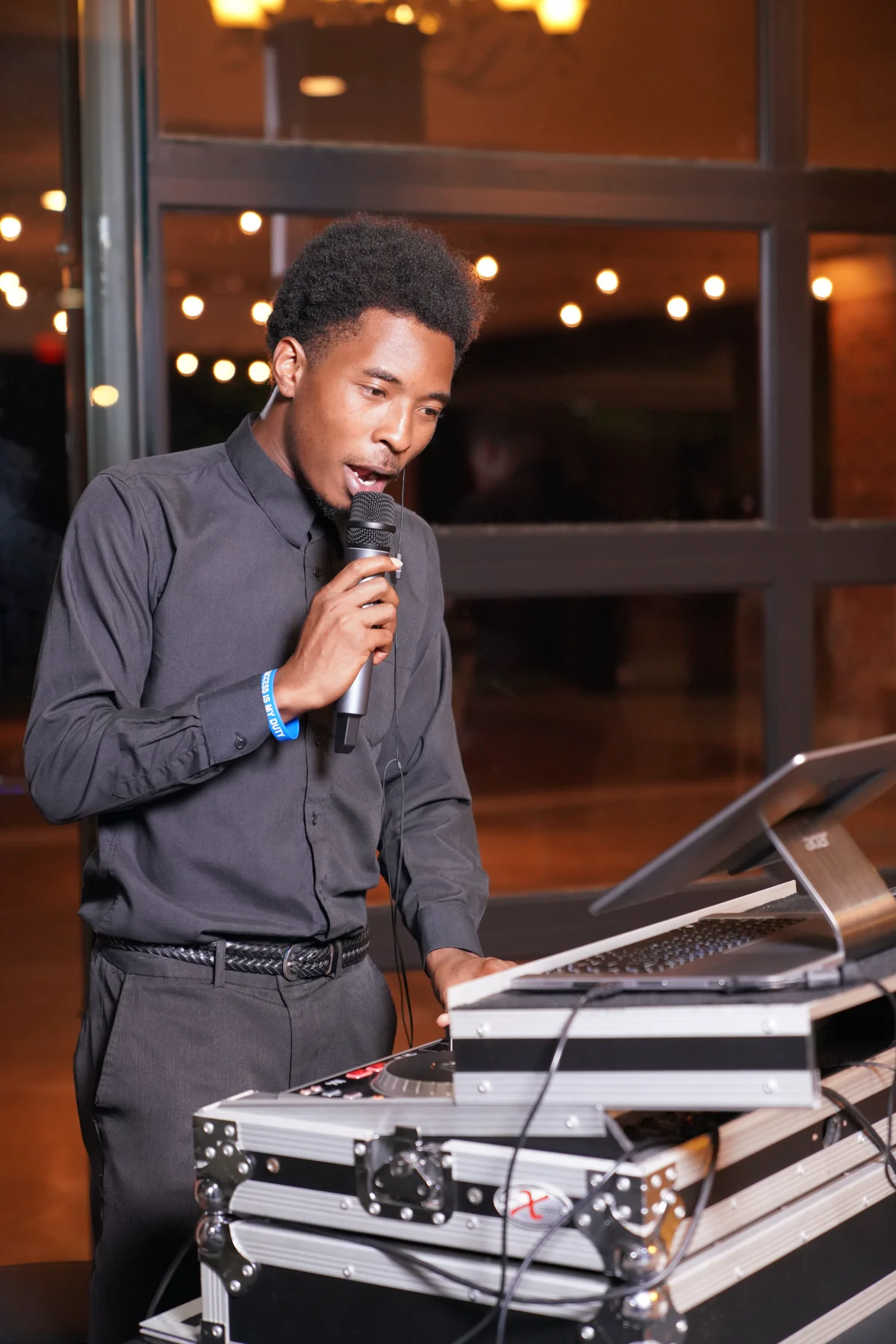
How a DJ sets it up right
This is where experience matters. Anyone can point a hazer at a room and hit the button. Getting it to look pro takes a feel for the space, the airflow, and the timing. Too early and it settles before the party starts. Too much and the room clouds over.
When I set up haze for lighting, I start it low and slow before dancing begins, so a soft, even layer builds naturally. I watch the air currents from doors and vents, because a strong draft can push the haze to one side and leave the beams patchy. Then I top it up gently through the night to hold that steady, sharp look.
The other half of the job is pairing the haze with the right lights and songs. A moving beam sweeping over the crowd during a big drop, with haze revealing every line, is a moment people remember. It’s all one show, and the haze is the quiet ingredient that ties the light and the music together.
Planning it for your Clinton Township event
So how do you make this happen for your own night? Start by asking your venue two things: can the room get dark enough, and are the smoke detectors okay with light haze? Once those are a yes, you’re set for the concert look.
From there, lean on your DJ to handle the rest live. Whether you’re celebrating near the Clinton River, out by Partridge Creek, or in a hall off Hall Road, the approach is the same: light haze all night, sharp beams over the floor, and maybe a burst of low fog for one big moment. For more ideas on lights, music, and flow, browse more event tips anytime — and if you’re mapping out the whole reception, my Clinton Township wedding guide covers the night from entrance to last song.
At the end of the day, haze is a small touch that makes a huge difference. It’s the reason a room full of ordinary lights suddenly feels like a show. Want to see how it’d look at your event? You can meet your DJ and we’ll build a light plan around your space. A little mist in the air, and your dance floor turns into the best seat in the house.