
Why a Soundcheck Matters and When It Happens
You’ll never see it on the wedding photos, but a soundcheck is the reason your night sounds effortless. It’s that quiet stretch before guests arrive when your DJ walks the room, tunes the system to the space, and makes sure the mic won’t screech during your vows. Most couples never think about it, and that’s the point — when the sound is right, nobody notices the sound at all. Here’s what actually happens during that hour, why it matters more than the gear itself, and when it fits into your Northville wedding timeline.
In this article
What a soundcheck really is
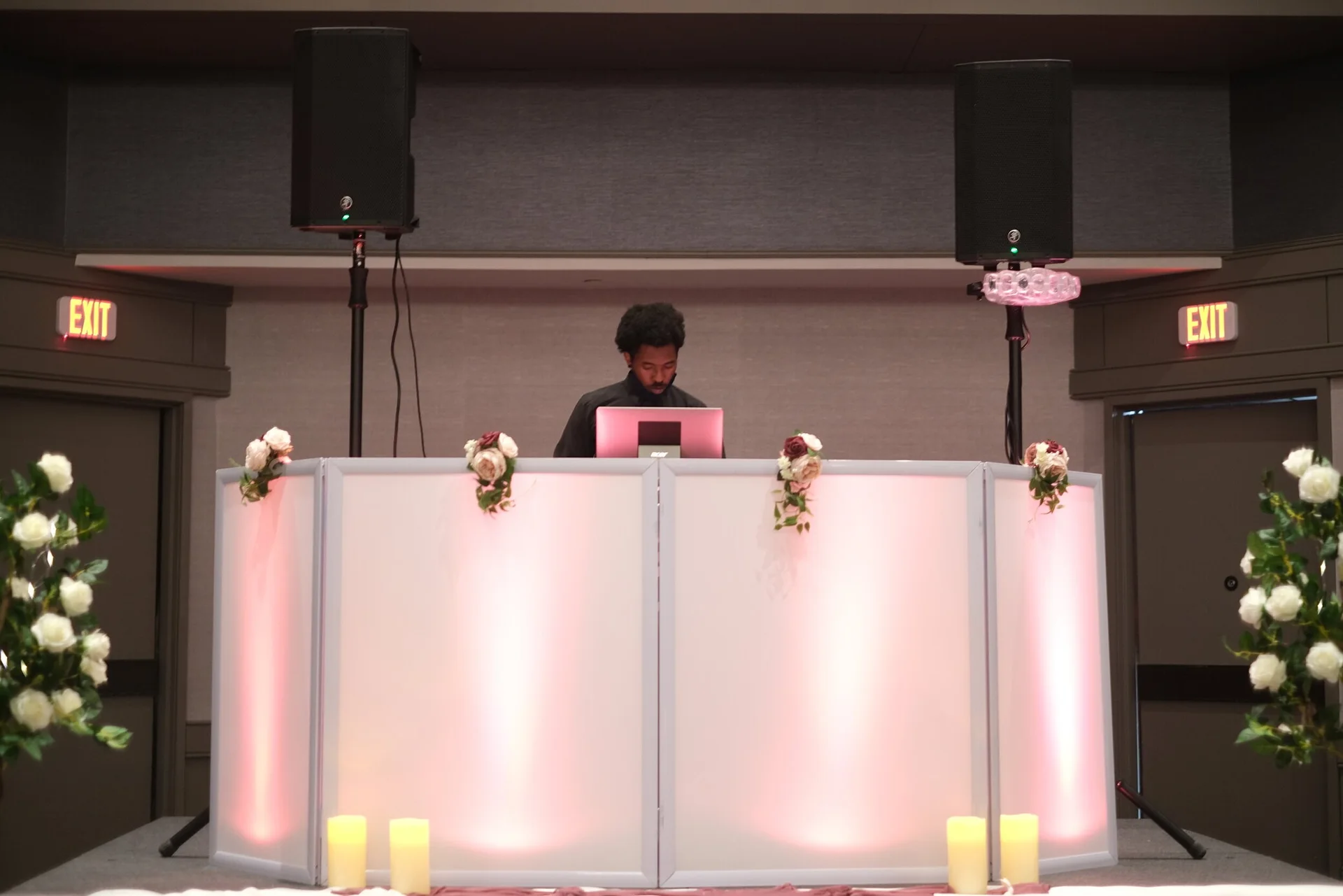
Let’s start simple. A soundcheck is the tune-up your DJ does before the party, once the speakers are up and cabled. I play a few test tracks at different volumes, walk to the far corners, and listen for how the room handles the sound.
Then I adjust. Maybe the bass is bouncing off a hardwood floor and needs to come down. Maybe the far tables sit under a low ceiling that muddies vocals. Every room fights back a little differently, so I shape the system until it sounds even everywhere, not just loud near the booth.
It’s a small window — usually thirty to forty-five minutes — but it’s the difference between “the DJ was good” and “I couldn’t hear the toast.” The gear is only as good as the tuning behind it.
I also set the emotional cues during this window, not just the volume. The first-dance song gets queued and level-matched so it doesn’t blast in louder than the toast that came before it. The processional track gets trimmed so it starts on the right note. Little things, sure — but those little things are what make the night feel like it was rehearsed, even though your guests never saw a single practice run.
Why the room changes everything
Here’s the thing most people don’t realize: the same speakers sound totally different in two rooms. A cozy carpeted parlor and a big glass atrium need completely opposite settings. So the check isn’t optional busywork — it’s how the sound gets matched to your actual space.
Hard surfaces bounce sound around and create echo. Soft ones soak it up. An empty room also sounds different than a full one, because bodies absorb sound too. That’s why I set a baseline early and leave a little headroom for when the seats fill up. Then I nudge it during the night as the crowd grows.
Outdoor and tented spaces flip the problem entirely. There, sound has almost nothing to bounce off, so it fades fast and the wind scatters it around. I handle that with speaker placement and coverage instead of raw volume, aiming the sound across your guests rather than over their heads. Same goal, different playbook — and knowing which one your space needs is the whole reason the check happens first.
Sound pros back this up. As the engineers at Sound On Sound explain, a live room’s shape and materials shape the sound as much as the speakers do. So a great system with no room tuning is like a sports car nobody bothered to steer.
When the soundcheck happens
Timing is the question I get most, so let’s lay it out. The soundcheck happens after setup and before guests walk in — usually about an hour to ninety minutes before your first event, whether that’s the ceremony or cocktail hour.
I arrive early to build the system first: speakers, cables, mixer, mics. Only once everything’s powered and stable do I run the check. That order matters. You can’t tune what isn’t fully built yet. So a good DJ blocks out real setup time and never rushes in at the last minute.
For an outdoor ceremony that moves indoors for the reception, I’ll often check twice — once at each spot — because those are two different rooms with two different problems. Want the full picture of how I map out a wedding day? My wedding day timeline breaks down every step in order.
A soundcheck is the work no guest ever claps for. And that’s exactly why it matters — when it’s done right, all anyone hears is a perfect night.
The microphone test that saves your toasts
If there’s one part of the check I never skip, it’s the microphone. Toasts and vows are the most emotional words of the whole day, and there’s no second take. So the mic has to be right the first time.
During the check, I test each wireless mic at the spot where it’ll actually be used — the head table, the ceremony arch, the dance floor. I listen for feedback, that awful screech that happens when a mic gets too close to a speaker. Then I set the levels so a soft-spoken maid of honor and a booming best man both come through clear. Nobody should have to shout into a mic on your wedding day.
I also keep a backup mic charged and ready. Batteries die, hands fumble, things happen. A quiet swap keeps the moment rolling while a missing backup turns a sweet toast into an awkward pause.
Key takeaway: A soundcheck tunes the system to your specific room, tests every microphone where it’ll be used, and sets levels before guests arrive. It’s invisible work — but it’s the reason your toasts land clean and your dance floor sounds full instead of harsh.
What happens when nobody checks
Here’s what a lot of couples miss: the horror stories they’ve heard at other weddings almost always trace back to a skipped soundcheck. The screeching mic during vows. The music that’s crystal clear up front but a muddy wall of noise in the back. The best man whose toast nobody could hear.
None of those are bad-luck accidents. They’re the sound of a system that was plugged in but never tuned. Someone showed up, dropped the speakers, hit play, and hoped for the best. Hope is not a plan.
The fix is boring and it works: show up early, build it right, and take the time to check. That’s it. A little patience up front is what keeps your reception from becoming one of those stories people tell for years — for the wrong reasons.
There’s a feedback story behind almost every complaint, too. That ear-splitting screech happens when a live mic drifts too close to a speaker, and it’s completely preventable. During the check, I walk each mic to its real spot and listen for the first hint of it, then set the levels just under that line. Handle it early and it never shows up during your vows — skip it, and it picks the worst possible moment to arrive.

Why a pro checks and a playlist can’t
A phone playlist through a rental speaker skips the check entirely, and it shows. There’s nobody in the room listening, adjusting, or fixing the feedback when it starts. The sound just is whatever it is, good spot or bad.
A live DJ does the opposite all night long. I set a baseline during the check, then keep tuning as the room changes — louder as the floor fills, softer during dinner, crystal-clear for the toasts. The check is the start of that job, not the end of it.
That ongoing attention is the whole value of a person over a playlist. You’re not just paying for songs; you’re paying for someone whose job is making sure every one of them sounds right. Curious how I work? You can meet your DJ before we ever talk dates.
Fitting it into your Northville timeline
So how do you plan for it? The easy answer: give your DJ real load-in time and don’t schedule guests to arrive the same minute the truck does. An hour of setup plus a proper check keeps the whole day calm.
Northville has some gorgeous spots for a wedding — from historic downtown venues off Main Street to open lawns near Maybury State Park — and each one has its own sound quirks. An old brick hall echoes; a tented lawn swallows sound. Whatever you pick, the plan is the same: arrive early, tune to the room, test the mics. For more day-of planning help, browse more wedding tips anytime.
At the end of the day, the goal is a night where the sound just disappears into the memory — where your vows carry, your toasts land, and the floor sounds full from the first song to the last. If you’d like help making that happen, my Northville wedding guide and I are ready to plan it with you.