What Guests Expect at a Dearborn Arabic Wedding
Guests at a Dearborn Arabic wedding arrive expecting a night that moves — big entrance, big sound, and a dance floor that barely rests. If you’ve been to one, you know the feeling: the drums hit, the whole room turns, and suddenly everyone is on their feet before the couple even sits down. That energy isn’t an accident. It’s built into the traditions, and it’s exactly what your guests are hoping for. Here’s what people expect from the zaffa to the last song, and how a DJ who knows the flow keeps it all soaring.
In this article
The zaffa: the entrance everyone waits for
Ask anyone what they remember from a Dearborn Arabic wedding and the zaffa comes up first. It’s the grand procession that announces the couple — drums, horns, singing, sometimes dancers, and a wave of energy that rolls through the whole hall. Guests don’t just watch it. They feel it in their chest.
Here’s the thing about the zaffa: the timing has to be perfect. The drummers, the music, and the couple’s walk all need to land together. When it clicks, the room erupts. When it drags or the sound cuts out, the magic leaks away. So this is the one moment where a DJ has to be locked in with the live performers, cueing the transition so the beat never drops.
Your guests are expecting this to be the high point of the entrance. Deliver it well and you set the tone for the entire night. Everyone knows right away: this is going to be a real party.
Family is the heart of the night
An Arabic wedding is a family affair in the truest sense. Grandparents, cousins, little kids, close friends who might as well be family — everyone is part of the celebration. That shapes what guests expect from the music, too. The night has to work for every generation in the room at once.
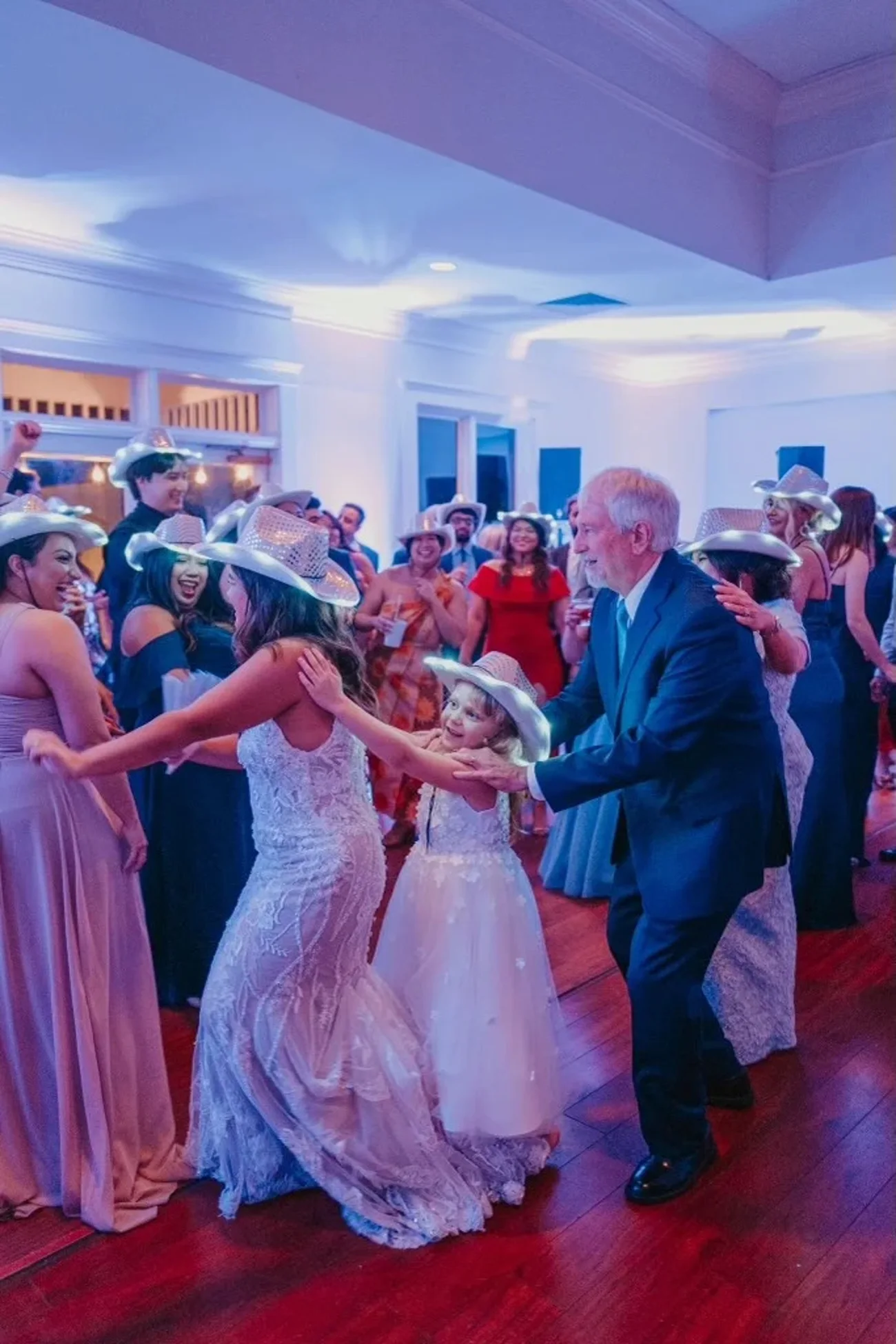
What does that look like in practice? Older relatives want the classic songs they grew up on. The couple’s friends want current hits and dabke sets that go hard. Kids just want to run and dance. A good DJ threads all of that together so nobody sits out for long. One minute it’s a beloved oldie for the aunties, the next it’s a floor-filler for the younger crowd.
Family involvement also means honoring key moments — special dances, shout-outs, and the little rituals each family holds dear. I always check in ahead of time so I know exactly who and what to feature. If you want to see how I handle the full flow of a reception, our wedding DJ page walks through it step by step.
Volume norms: yes, it should be loud
Let’s talk about volume, because it trips up DJs who don’t know these crowds. At many weddings, “keep it comfortable” is the rule. At a Dearborn Arabic wedding, guests expect the music to be big, full, and powerful — especially during the zaffa and the dabke sets. Low volume reads as low energy here.
That doesn’t mean painful. It means a system with enough headroom to fill a large hall with clean, punchy sound. The drums should thump. The vocals should soar. And during dinner or a special dance, the level comes right back down so people can talk and feel the emotion. It’s all about knowing when to push and when to ease off.
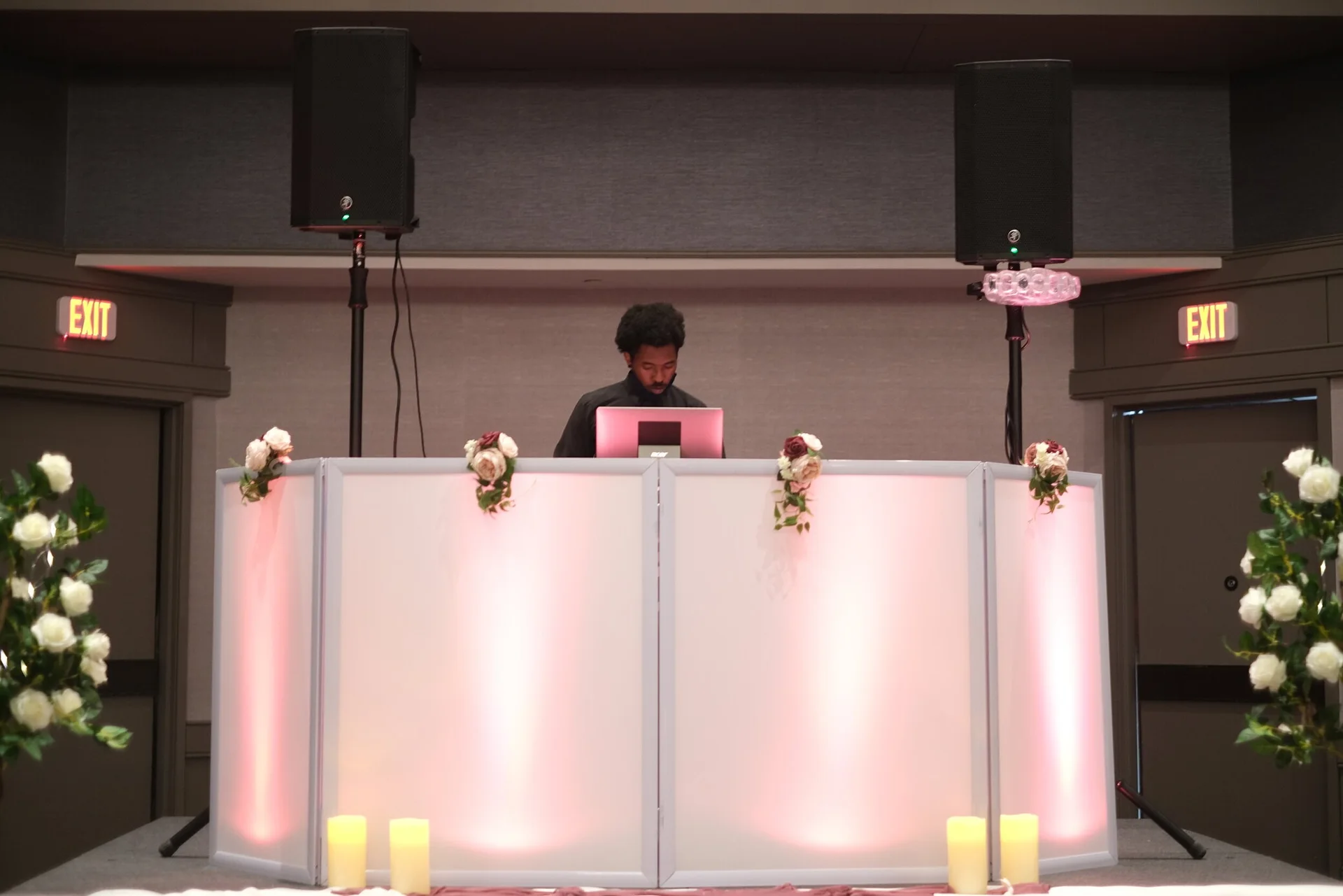
This is why gear matters. A DJ showing up with a small setup for a 400-guest hall is going to disappoint. The right sound reinforcement, placed well, is what makes the whole room feel alive instead of thin. For a look at how loud is too loud, the CDC’s guide to sound levels is a handy reference — a pro balances big energy with everyone’s ears in mind.
At a Dearborn Arabic wedding, energy is the language. Guests don’t remember the playlist — they remember how alive the room felt.
The music mix guests expect to hear
So what’s actually on the setlist? A great night blends a few worlds. Classic Arabic songs and beloved singers ground the celebration. Dabke sets get the line dances going. And Western pop, hip-hop, and throwbacks keep the younger crowd and out-of-town guests locked in.
The skill is in the blend. You can’t play three hours of one style and expect the whole room to stay up. You read who’s on the floor and you feed them. When the aunties are dancing, you ride that wave. When the college crowd takes over, you shift. Back and forth, all night, so the floor never empties.
Guests also expect the big cultural moments to be handled with care and the right songs. A DJ who knows the tradition knows which track belongs where. That knowledge is the difference between a night that flows and one that stalls in awkward gaps. For couples building their timeline, The Knot’s guide to Arabic wedding traditions is a helpful primer on the customs your families may want featured.
Key takeaway: Guests at a Dearborn Arabic wedding expect three things above all — a powerful zaffa entrance, music that works for every generation, and big, clean sound that matches the energy of the traditions. Hit those and the room takes care of itself.
Here’s what a lot of couples miss when they book: not every DJ has run these weddings before. Booking someone who’s only done quiet dinner receptions and hoping they’ll figure out the zaffa is a gamble. The flow, the volume, the song knowledge — it all comes from experience, and it shows within the first ten minutes of the night.
Keeping the dance floor packed
A packed floor is the goal, and Arabic weddings make it easier because dancing is baked into the culture. Still, keeping the energy up for hours takes real skill. The trick is pacing — knowing when to peak, when to breathe, and when to bring it back louder than before.
I watch the floor constantly. If a dabke line is forming, I extend it. If people are drifting to their seats, I drop a song I know will pull them back. Never a dull stretch, never a dead transition. The music has to feel like one continuous ride, not a stack of separate tracks.
Requests are part of it, too. Families love to hear their favorites, and honoring a heartfelt request in the moment earns huge goodwill. A flexible DJ who can pivot on the fly keeps everyone feeling seen — and keeps them dancing.
Why the right DJ matters so much
By now you can see the pattern. Every expectation guests bring — the zaffa, the family moments, the volume, the mix — runs through one person: the DJ. Get that choice right and the whole night flows. Get it wrong and even a beautiful hall feels flat.
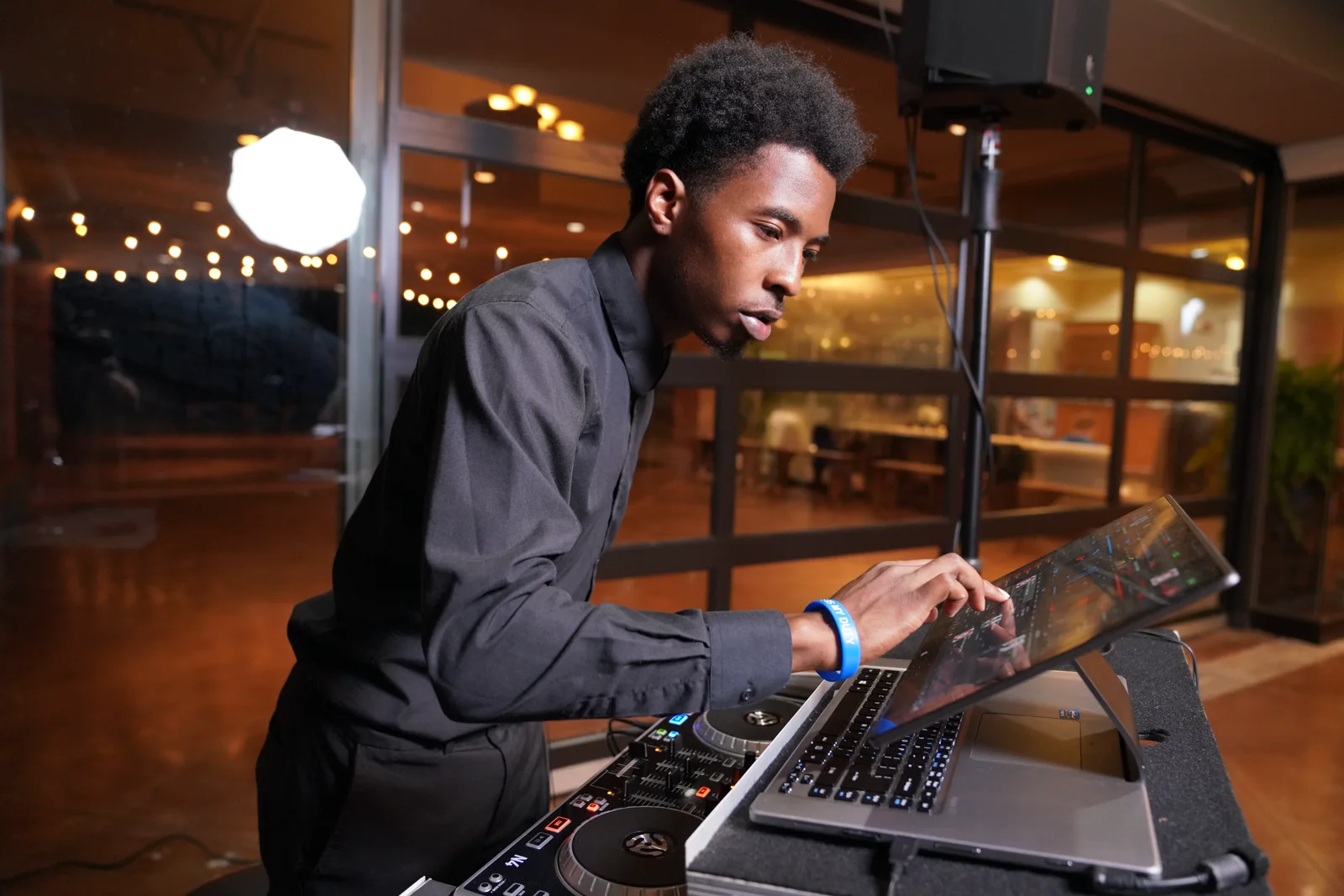
A DJ who knows these weddings does the invisible work that makes it all look easy. Coordinating with the zaffa performers. Reading a 300-person room. Balancing five generations of music taste. Keeping the sound huge but clean. None of that happens by accident, and none of it happens with a playlist on shuffle.
That’s the part I love most about these nights — they demand everything, and when it clicks, there’s nothing like it. If you want to know how I think about cultural celebrations and the care I bring to each one, you can meet your DJ and we’ll talk through your family’s traditions together.
Planning yours in Dearborn
Pulling a great night together in Dearborn starts with the details that make your family’s celebration unique. Which zaffa style? Which classic songs are non-negotiable? Who gets a special moment? The more I know, the more the night feels like yours and not a generic template.
Whether you’re celebrating in a big banquet hall off Ford Road, a venue near Michigan Avenue, or anywhere across the Dearborn area, the expectations are the same and the playbook holds: honor the traditions, match the energy, and keep every generation moving. Do that, and your guests leave saying it was the best wedding they’ve been to all year.
Above all, remember that your guests already know what a great night feels like — they’ve been to these weddings their whole lives. Your job is simply to give them that feeling, done right. For more ideas on planning and cultural moments, browse more wedding tips anytime, and for the full local rundown, my Dearborn wedding guide covers everything from venues to timelines. When you’re ready, I’d love to help make your night one people talk about for years.