Wedding DJ vs Band Sterling Heights: Honest Guide
Weighing the wedding DJ vs band Sterling Heights choice before you sign a contract? Smart move — it shapes the whole feel of your reception, so it’s worth getting right. Here’s the good news: both a great band and a great DJ can throw a wonderful party. They just differ on price, on how many kinds of music they can cover, and on how well they flex for a big, mixed guest list. I’m Tevin, and after hundreds of Michigan weddings, I’ll lay out the honest trade-offs so you can choose with a clear head.
In this article
The core difference, plainly
Let’s define the two paths first. A live band performs your music on real instruments, giving you a show and that in-the-room buzz. A DJ plays the actual recordings your guests grew up on, mixed nonstop to keep the floor alive. Both are great choices. They just deliver the celebration in different ways.
The simplest way to picture it: a band is spectacle, a DJ is range plus a host who runs the whole night. That framing quietly answers a big chunk of the wedding DJ vs band Sterling Heights debate, because it points you straight at what you value most for your reception. For a neutral take, The Knot’s band-vs-DJ guide weighs the same trade-offs.
And remember, neither is automatically the fancier pick. A flat band and a checked-out DJ are both a letdown. What truly matters is the pro’s experience and how sharply they read your crowd — that’s the real dividing line, whichever format you choose.
What each option really costs
Let’s talk numbers honestly. A live wedding band typically runs $4,000 to $10,000, because you’re paying a full lineup of musicians along with their gear, travel, and rehearsal time. It’s a big production, and the invoice reflects all of it.
A professional wedding DJ costs considerably less. My packages start at $999 for six hours and $1,299 for eight, with emcee service, pro sound, and backup gear already included. That difference isn’t a downgrade — it’s budget you can move to your photographer, your caterer, or your honeymoon fund.
That said, don’t just chase the lowest price. A bargain-bin “DJ” with a single speaker is nothing like a seasoned pro, and the gap shows the moment the dance floor stalls. Zola’s cost guide puts a typical wedding DJ in the $1,000 to $2,500 range, and that experience is what keeps your guests dancing.
Playing to a diverse Sterling Heights crowd
Here’s where Sterling Heights makes this choice interesting. It’s one of the most diverse communities in Michigan, and wedding guest lists here often blend cultures, generations, and musical tastes under one roof. Your reception might need Motown, Top 40, and a set of cultural favorites all in the same night — and that’s where a DJ really shines.
A DJ can pull from thousands of tracks across every genre, era, and language, then read which group is ready to dance and serve them their song. A band, no matter how skilled, is limited to what they’ve rehearsed. If your family brings specific cultural music — a traditional line dance, a favorite from the old country — a DJ can have the real recording ready to go.
At a Sterling Heights wedding, the floor can hold four generations and three cultures at once. A DJ’s whole job is making sure every one of them hears their song before the night ends.
That flexibility is the difference between a floor that empties between styles and one that never clears. I plan with you first — your must-plays, your do-not-play list, the cultural moments that matter — then read the room live and fill the gaps. My guide to how we run your whole day shows exactly how that planning comes together.
Song variety and live requests
Variety is a DJ’s home turf. Want a 90s throwback, then a current chart-topper, then a classic your grandparents adore — back to back with no gear swap? A DJ handles it effortlessly. A band has to stay inside its rehearsed setlist, which is beautiful but finite.
Requests seal the deal for a lot of couples. When a guest asks for a specific song mid-reception, a DJ can usually have it playing within a minute; a band either knows it or they don’t. So if a lively, guest-driven playlist matters to you, the DJ carries a clear advantage.
There’s the sound itself, too. A DJ plays the studio recording, so your first dance sounds exactly like the version you fell for. Some couples love a band’s live reinterpretation; others want the original, note for note. Only you can settle that one — just make sure you talk it through before committing.
Key takeaway: For a diverse Sterling Heights guest list, a DJ’s endless variety and lower cost usually win, while a band wins on live spectacle. Match the choice to your crowd and your priorities, not to a trend.
Space and setup in your venue
Space is the practical factor couples forget until the floor plan arrives. A full band needs a real stage, solid power, and room for instruments and monitors. In some Sterling Heights halls, that footprint quietly trims your guest count or shrinks the dance floor everyone came to use.
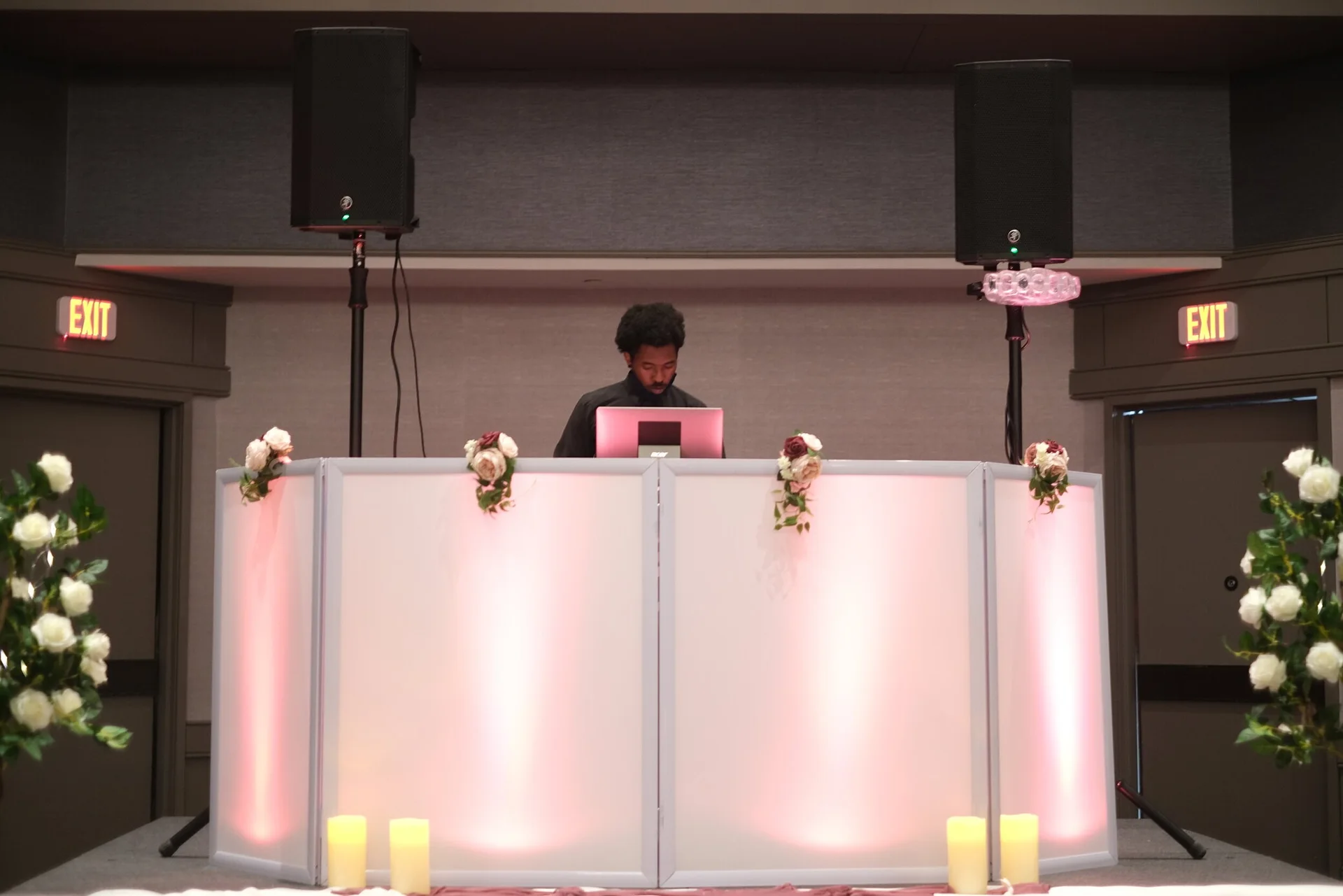
The area’s venues range from large banquet halls that host 300-plus to more intimate rooms, and a ten-piece band can overwhelm a smaller space in both size and volume. A DJ setup is compact, slides into almost any layout, and scales the sound to the room so the music fills it without pinning guests to the walls.
Volume flexibility matters more than people expect. From one console, a DJ keeps dinner soft enough for conversation, then lifts the energy the second it’s time to dance. If your venue enforces a sound limit, that precise control shifts from convenient to genuinely valuable.
The both-worlds option
Here’s what a lot of couples miss: you don’t always have to pick just one. A popular setup pairs live music for the ceremony and cocktail hour — a soloist or a small ensemble — with a DJ for the reception dancing. You get elegant live moments early and endless variety once the floor opens.
You can also add a live layer to a DJ, like a sax player or a percussionist riffing over the mix on the big tracks. It brings live energy without a full band’s price tag or stage footprint. Not every couple needs it, but it’s a fun option to keep in mind, especially for a crowd that loves a little extra flair.
How to make the call
Ready to decide? Start with your budget, since it narrows the field fast. Then rank what matters most: cost, live show, song variety, cultural range, or fitting your room. Whatever lands at the top of that list is usually pointing right at your answer.
Whichever way you lean, hire experience over a bargain. Read the reviews, ask how many weddings they play a year, and confirm that the person you meet is the one who shows up on your date — that last point is especially big with DJs. Keep digging into the details with more wedding tips as you plan.
If a DJ feels like the fit, I’d be glad to be in the running. Over a decade behind the decks, a 5.0 Google rating, and one wedding a day so your night gets my full focus. For a closer look at how I run receptions in the area, my Sterling Heights wedding guide covers the whole picture, and you’re always welcome to meet your DJ first. Sterling Heights dates fill fast in season, so if you have one in mind, let’s check it while it’s open.