What’s in a Wedding DJ Package?
You start pricing entertainment and immediately hit a wall of confusing tiers. So what’s actually inside a wedding DJ package, and why do two quotes for “the same thing” look so different? Here’s the honest truth: the price tag only tells half the story — the inclusions tell the rest. Once you know what to look for, comparing DJs gets easy, and you stop overpaying for fluff or underpaying and getting burned. Let me decode every piece so you know exactly what you’re buying.
In this article
Coverage hours: the biggest variable
Let’s start with the number that moves the price the most: hours. A wedding DJ package is usually priced by how long the DJ is playing, and that’s the first thing to compare when two quotes look different. Six hours versus eight hours is a real gap, and it changes what your night can hold.
Think about what your day actually needs. If your ceremony and reception are in the same place, six hours often covers it. If you want ceremony music, cocktail-hour sound, and a full reception — possibly at a separate ceremony site — you’ll want eight. My Silver package is six hours; my Gold package is eight and adds dedicated cocktail-hour sound. Same DJ, just more of the day covered.
Here’s the catch to watch for: cheap quotes sometimes hide short hours. A rock-bottom price for four hours isn’t a deal if your reception runs six. Always compare the hours first, then the price. That one habit saves couples a lot of confusion.
Once you’ve matched the hours, the rest of the comparison gets a lot clearer. Everything below is what should be riding inside those hours.
MC and emcee services
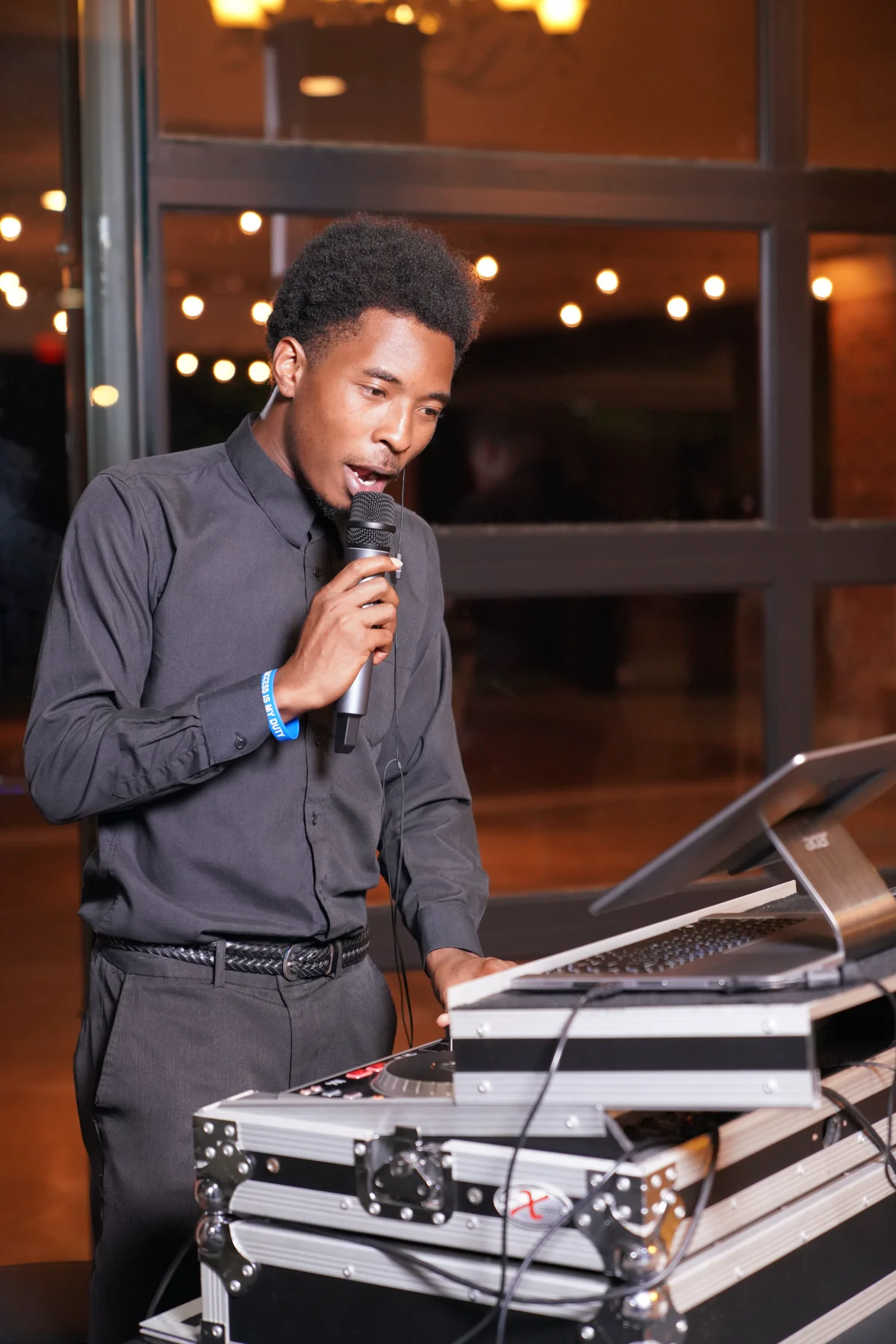
Here’s what a lot of couples miss: a good DJ isn’t just playing music, they’re running your night on the microphone. That’s the MC, or emcee, role, and it’s one of the most valuable pieces of the whole package — even though it doesn’t show up as a shiny line item.
The emcee makes the announcements, introduces the wedding party, cues the first dance and the toasts, and keeps the whole timeline flowing so nobody’s standing around confused. A confident MC is the difference between a smooth, effortless reception and an awkward one where guests aren’t sure what’s happening next. Make sure this is included, not an upsell.
Ask how they handle the mic, too. You want someone clear and warm, not a cheesy hype-man shouting over your night. According to Zola’s DJ questions guide, the emcee style is one of the most important things to nail down before you book — because it sets the tone for the entire reception.
Key takeaway: A real wedding DJ package includes emcee service, not just music. The mic work — announcements, introductions, and timeline flow — is what actually makes your reception feel smooth. If it’s listed as an add-on, that’s a red flag.
Sound system and microphones
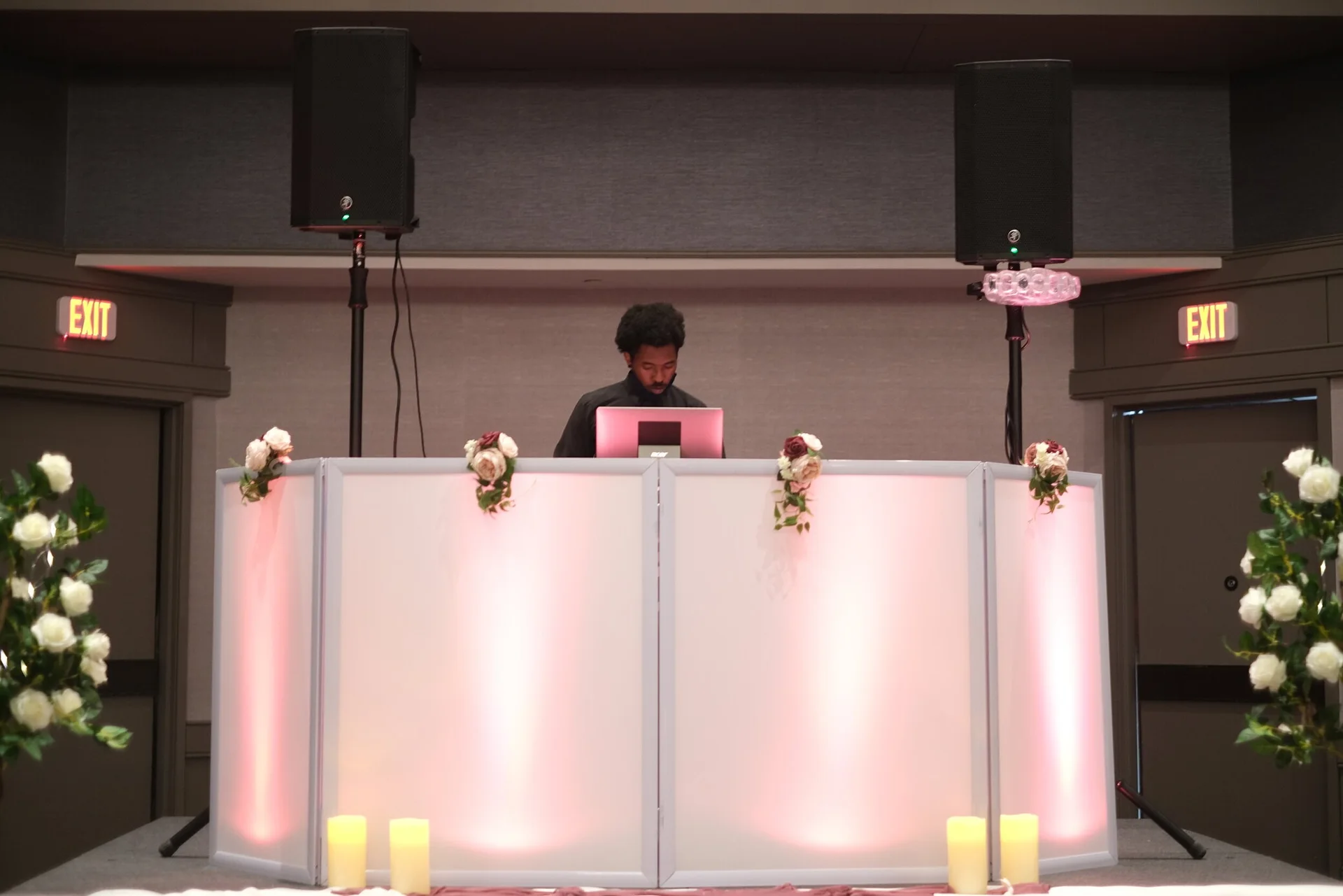
Every package should include a professional sound system sized to your venue — not a couple of consumer speakers that distort when the floor fills up. This is easy to overlook because “sound system” sounds obvious, but the quality gap between setups is huge. Clean, even sound is what makes a first dance feel like a movie instead of a phone speaker.
Microphones matter just as much. A solid package comes with at least a couple of wireless mics — one for the officiant, one for the toasts, and ideally a backup. According to The Knot’s reception timeline guide, speeches are where audio most often goes wrong, so tested mics and a backup are non-negotiable.
Speaking of backups — ask if the DJ carries spare gear. A pro brings a backup speaker, spare mics, and a second music source, so “the sound cut out” never becomes part of your wedding story. That’s a quiet inclusion that separates the pros from the weekend hobbyists.
Planning and the custom playlist
The best part of a real package happens before your wedding day: the planning. A good DJ meets with you, learns your must-plays, your absolute do-not-play list, and the moments that matter to your family. Then they build a custom playlist and timeline sheet around your day — not a template they reuse for everyone.
This planning is where the magic actually comes from. A packed floor isn’t luck; it’s a DJ who knew your crowd going in and then read the room live to fill the gaps. When you compare packages, ask how much planning and coordination is included. If the answer is “just send a spreadsheet,” keep looking.
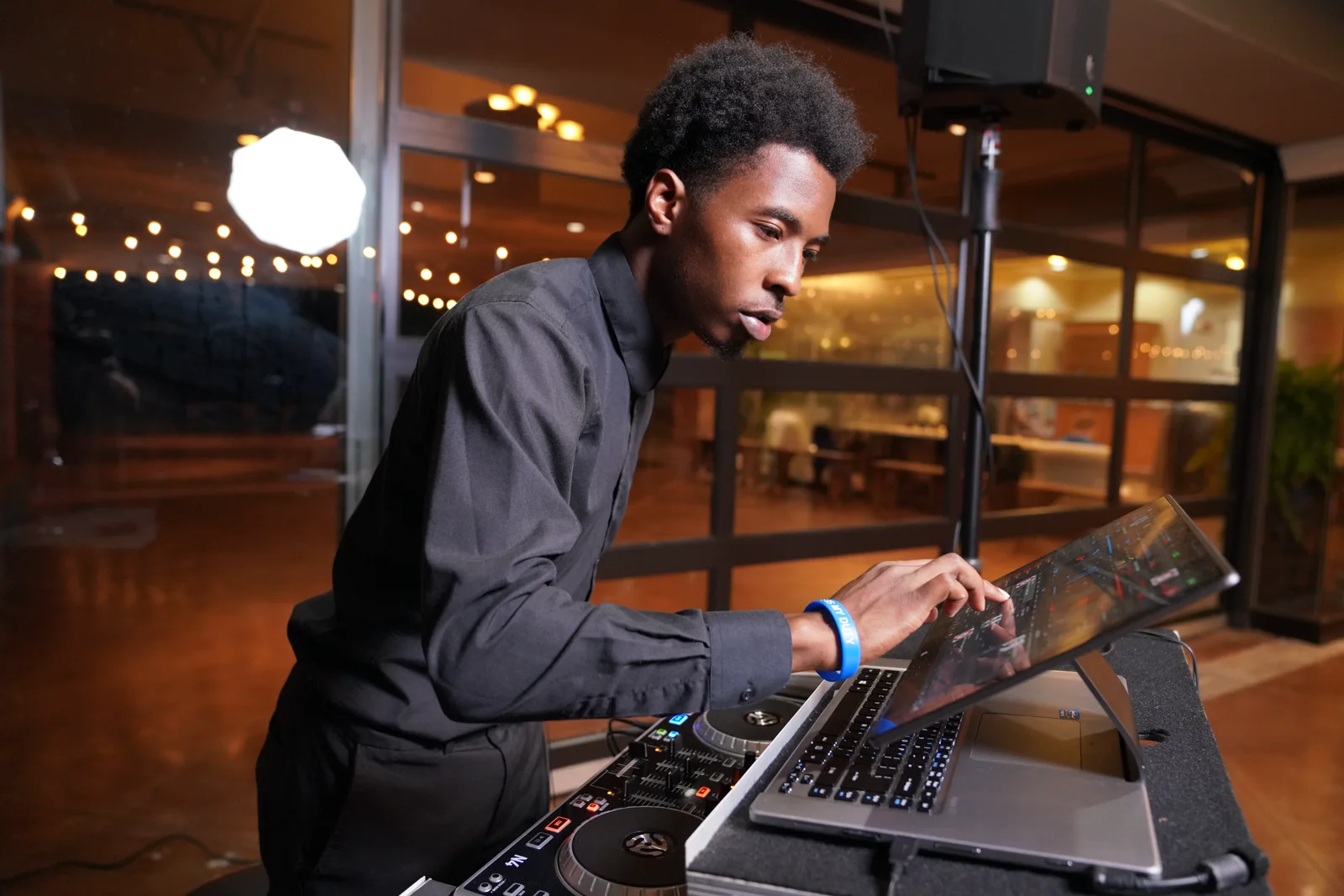
Because I only take one wedding a day, your planning gets my full attention — never a rushed call squeezed between other couples. If you want to see how I map the whole day from ceremony to send-off, my breakdown of how we run your day walks through every piece in order.
Lighting and popular add-ons
Most base packages include some dance-floor lighting to get the party going. Beyond that, the common add-ons are where you customize. The most popular by far is uplighting — wireless, battery-powered fixtures that wash your venue walls in your colors and completely change the mood of the room.
Other add-ons you’ll see include extra coverage hours, cocktail-hour sound, a second ceremony setup, and sometimes photography bundled in. None of these are required, but they’re nice to know about so you can build the package that fits your day. My uplighting starts as a simple add-on that you can layer on whenever the room calls for it.
The key with add-ons is honesty about what you actually need. A good DJ won’t push a giant lighting rig on a small room. They’ll tell you what makes a real difference and what’s just spend. That kind of straight talk is worth as much as any single feature.
The details hiding in the fine print
Before you sign, read past the headline price. Ask three quick questions. Does the price include setup and breakdown time, or is that extra? Is travel to your venue included? And is there a fee for the DJ to arrive early and set up before guests, which most weddings need?
My packages include setup two hours prior and full breakdown, with no hidden fees — because surprise charges are a terrible wedding gift. Not every quote works that way, so always confirm. A clear, all-in number is a sign you’re dealing with a pro who respects your budget.
Also confirm the deposit, the balance schedule, and whether the DJ you meet is the DJ who shows up. Some larger companies book you with a smooth salesperson, then send whoever’s free that weekend — so get the exact performer named in the contract. Get it all in writing. For more help comparing your options, browse more wedding tips on the blog whenever you like.
One more small thing that pays off: ask how the DJ takes requests on the night. A good package includes taking live requests and reading the floor, not just pressing play on a locked list. That flexibility is part of what you’re paying for, and it’s the reason your floor stays full when the energy shifts.
How to pick the right package
So how do you actually choose? Start with your timeline. Count the real hours your day needs — ceremony, cocktail hour, reception — and pick the coverage that fits. Then make sure the essentials are all included: emcee service, pro sound, wireless mics, backups, and real planning.
After that, add only what genuinely improves your day. For most couples, that’s uplighting and maybe an extra hour. Skip anything that doesn’t earn its place. A great package is honest and simple, not a maze of tiers designed to confuse you into spending more.
If you’re planning a wedding around Clarkston or anywhere in Metro Detroit, I’d love to walk you through exactly what fits your day. My Clarkston wedding guide shows how I run a full celebration, and you can always meet your DJ before you book. Reach out and let’s build the package that’s right for your night.