What a Wedding DJ Does All Day
Play a few songs, say a few words, go home — that’s what people think a wedding DJ does. If only. The truth is your DJ is working long before the first guest arrives and long after the last dance ends, and most of the real work never shows on the dance floor. Let me pull back the curtain on a full wedding day, hour by hour, so you know exactly what you’re paying for at your West Bloomfield reception.
In this article
Weeks before: the planning nobody sees
The wedding day actually starts weeks ahead. Long before I load a single speaker, we’ve talked through your timeline, your must-play songs, your do-not-play list, and the names of every person in your grand entrance. That planning is a huge part of what a wedding DJ does, and it’s why the day itself runs smooth.
I build a minute-by-minute plan and share it with your venue and your photographer, so everyone’s working from the same script. When the toast is supposed to happen, when the cake gets cut, when the parent dances land — it’s all mapped. That way, nobody’s guessing on your wedding day, and you’re not the one chasing down details in your gown.
I also learn how to pronounce every name correctly. It sounds small, but botching the maid of honor’s name during the grand entrance is exactly the kind of thing couples never forget. So I practice. The prep is invisible, but it’s the foundation the whole night stands on.
Honestly, the couples who are happiest at their reception are the ones I planned with most closely. When the groundwork is solid, the day feels effortless — and that’s the goal. My full breakdown of how I run your whole day walks through every planning piece in order.
Load-in and setup, hours early
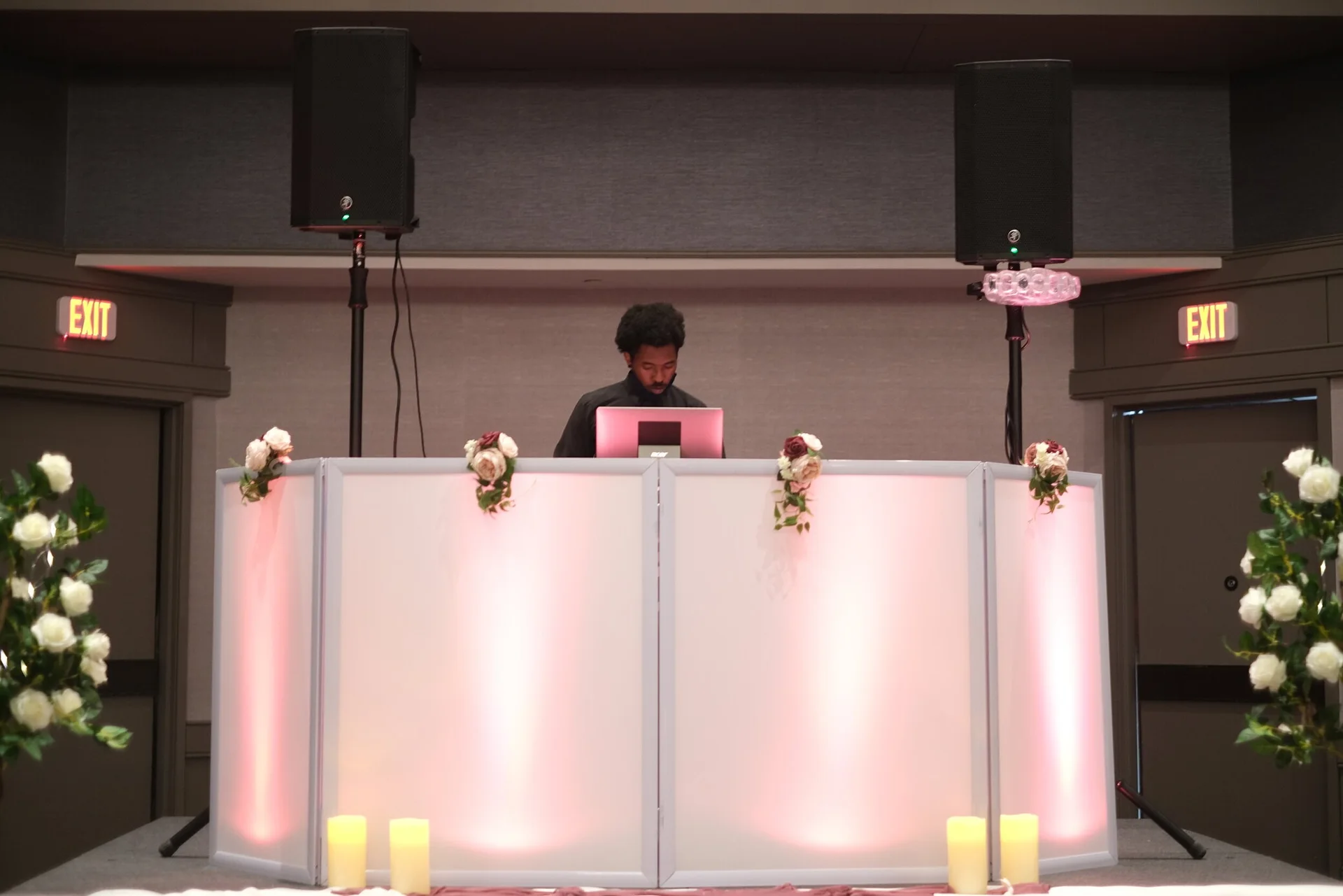
On the day itself, I arrive hours before your guests — usually two to three, depending on the venue. Load-in is real physical work: hauling speakers, subwoofers, lighting, cables, the booth, and backup gear from the van into the room and setting it all up cleanly. None of this is glamorous, but it’s what makes the night look effortless.
Setup isn’t just plugging in. I place speakers for even coverage so the back tables hear the same clean mix as the head table. I hide cables so nobody trips and the photos look tidy. I position the booth where it commands the floor but stays out of your ceremony shots. Every choice is deliberate, and I’ve made them enough times to move fast.
By the time your first guest walks in, I’ve already been working for hours. The magic on the dance floor is built on a lot of quiet setup nobody sees.
Because I only take one wedding a day, your setup never gets rushed to squeeze in another event. I show up early, I take my time, and I get it right — because there’s no do-over on a wedding.
Sound check and the walkthrough
Once the gear is up, the tuning begins. An empty hall sounds bright and echoey; a full room of guests and linens soaks up that echo. So I sound-check with the empty room in mind and adjust as people arrive, so your vows and toasts land crisp instead of boomy. I test every microphone twice — the officiant’s, the toast mics, the handhelds — and I keep backups ready.
I also do a walkthrough with your coordinator and photographer. We confirm the timeline, the cue for the grand entrance, and the signals we’ll use during the night. According to The Knot’s reception timeline guide, mismatched timing between vendors is one of the most common day-of hiccups — so this quick huddle saves everyone stress later.
Key takeaway: A wedding DJ works a full day, not a few hours. Weeks of planning, hours of load-in and sound tuning, a vendor walkthrough, then hosting and reading the room all night — the songs are only the visible part of a much bigger job.
This is also when I test the effects and lighting cues if you’ve booked them, so nothing surprises us during the first dance. When guests start arriving, I’m already playing warm background music — and they’d never guess I’d been working since the afternoon.
Ceremony and cocktail hour
If I’m handling your ceremony, the pressure is real — there are no retakes on “I do.” I cue the processional and recessional music precisely, make sure the officiant’s mic is crisp so every guest hears the vows, and keep the sound gentle and clear. It’s the most emotional moment of the day, and the audio has to be flawless.
Then comes cocktail hour, which sets the mood as guests mingle. I keep the music light and easy — present but never loud enough to force a shout. Meanwhile, I’m often moving gear or adjusting the reception setup behind the scenes, and coordinating with the coordinator on exactly when to call everyone in for the grand entrance.
This stretch looks calm from the outside, but I’m juggling several jobs at once: music, logistics, and timing. That multitasking is a core part of what makes a DJ worth the money — you never see the plates spinning, you just enjoy a smooth flow.
Running the reception
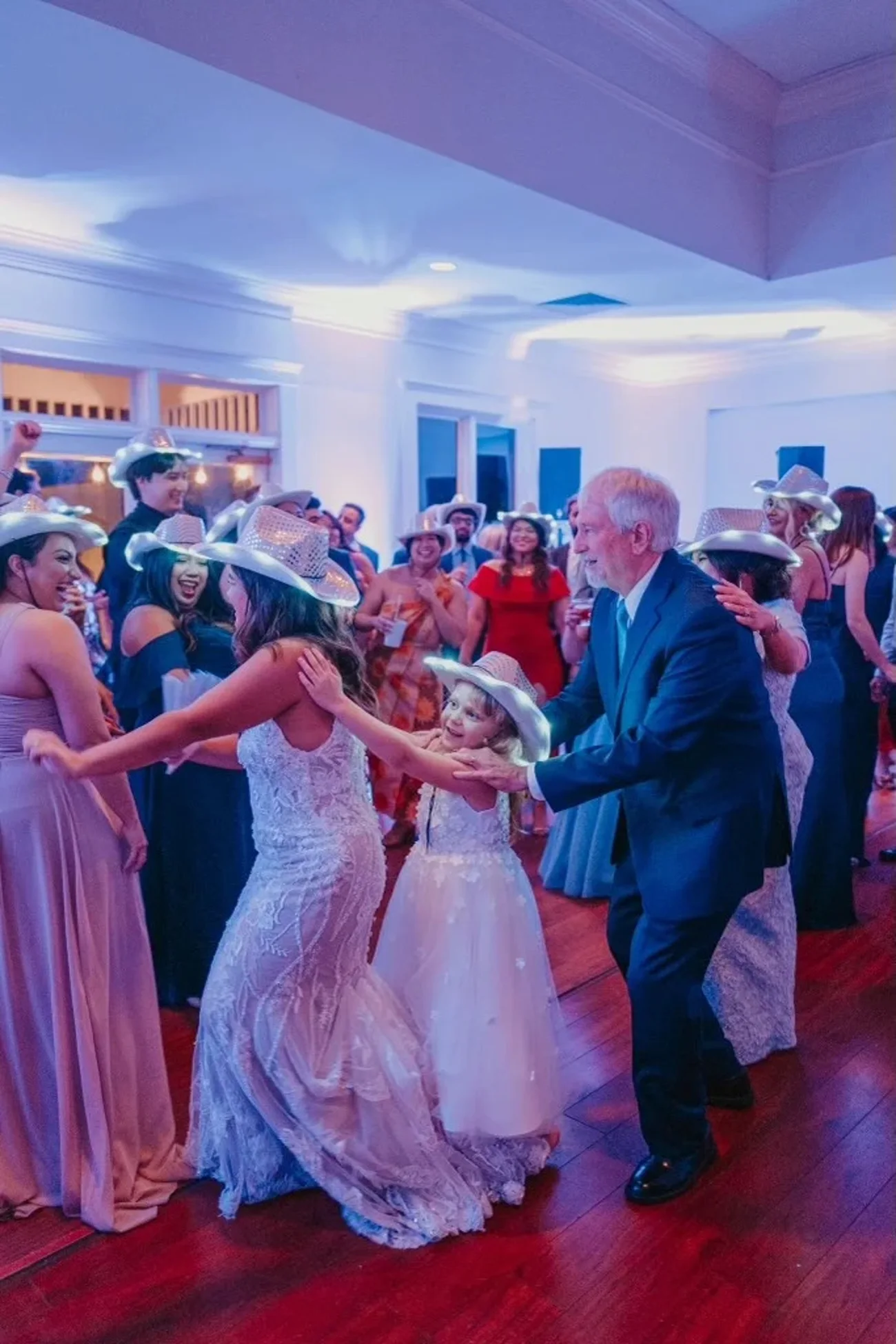
The reception is where it all comes together, and it’s a lot more than pressing play. I run the grand entrance with energy, cue the first dance at the right emotional beat, and time the toasts, parent dances, cake cutting, and open dancing so the night flows without a dull gap. Every transition is planned but flexible.
Behind the music, I’m the traffic controller for your whole reception. I signal the kitchen and coordinator so dances don’t collide with dinner service. I keep an eye on the clock so we hit every moment you care about before the night ends. And I adjust constantly, because no timeline survives perfectly in real life.
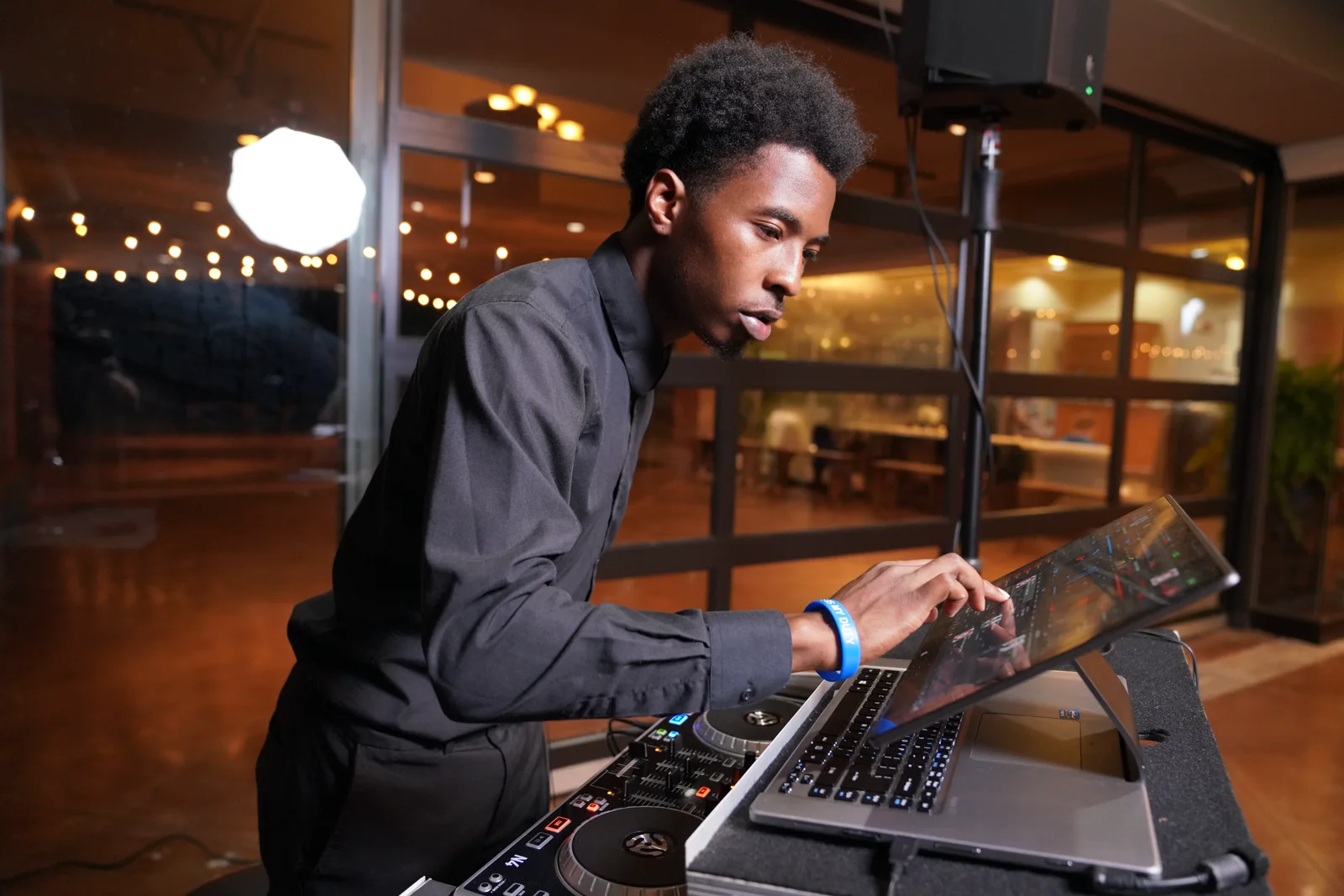
When something goes sideways — a speech runs long, a family member wants a surprise song, the timeline slips — I adjust on the fly so you never feel the bump. That calm problem-solving is exactly what experience buys you.
Emcee duties and reading the room
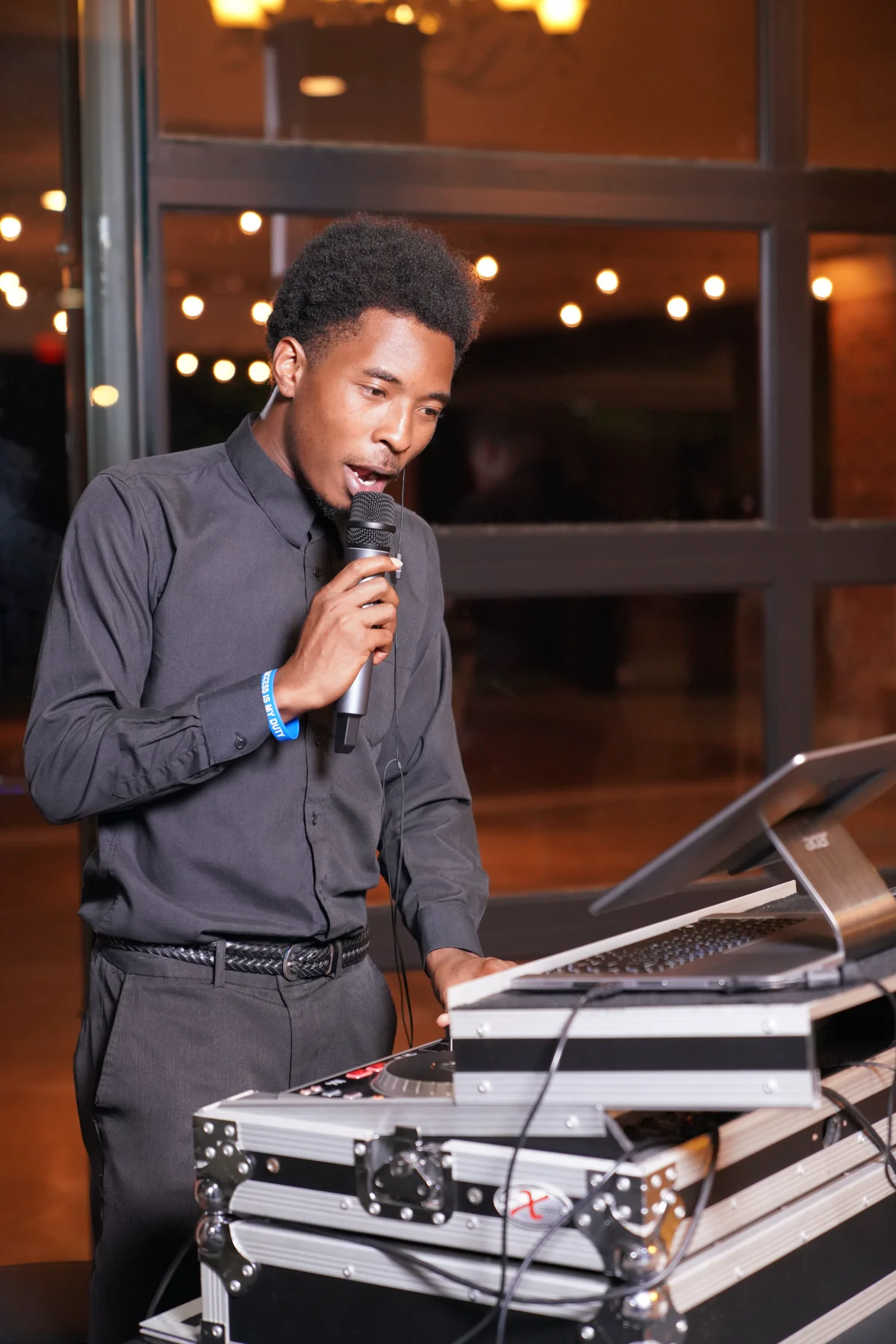
Here’s what a lot of couples underestimate: the DJ is also your emcee. I make the announcements, guide guests through each moment, and keep the energy up between the big beats — all in a warm voice that fits your vibe, never a cheesy game-show act. As WeddingWire’s guide to wedding DJs points out, hosting is a core part of the role, and good hosting is what keeps a reception feeling connected instead of scattered.
And all night, I’m reading the room. When the older crowd starts drifting to their seats, I drop a song that pulls them back. When the energy spikes, I ride it hard. A locked playlist can’t do that — a DJ watching the floor can. That live read is the difference between a full dance floor and an empty one.
It’s genuinely two jobs at once: mixing the music and hosting the event. Doing both well, for five or six hours straight, takes focus and stamina most people don’t picture when they imagine a DJ. For more on how it all fits together, browse more wedding tips on the blog.
Teardown and the quiet finish
When the last song fades and your guests head out glowing, my day still isn’t done. I break down every piece of gear — speakers, lights, cables, the booth — and load it all back into the van, quietly, while you enjoy your send-off. Teardown usually takes an hour or more, long after the party’s memories are made.
So the next time you wonder what a wedding DJ does all day, picture this: weeks of planning, hours of setup, a full night of hosting and mixing, and a late teardown — all so your day feels effortless. That’s the real job, and it’s why experience matters. If you want to see how I run weddings across the area, my Detroit wedding guide covers the whole picture, and you can always meet your DJ before you book. Let’s make your day one you’ll never forget.