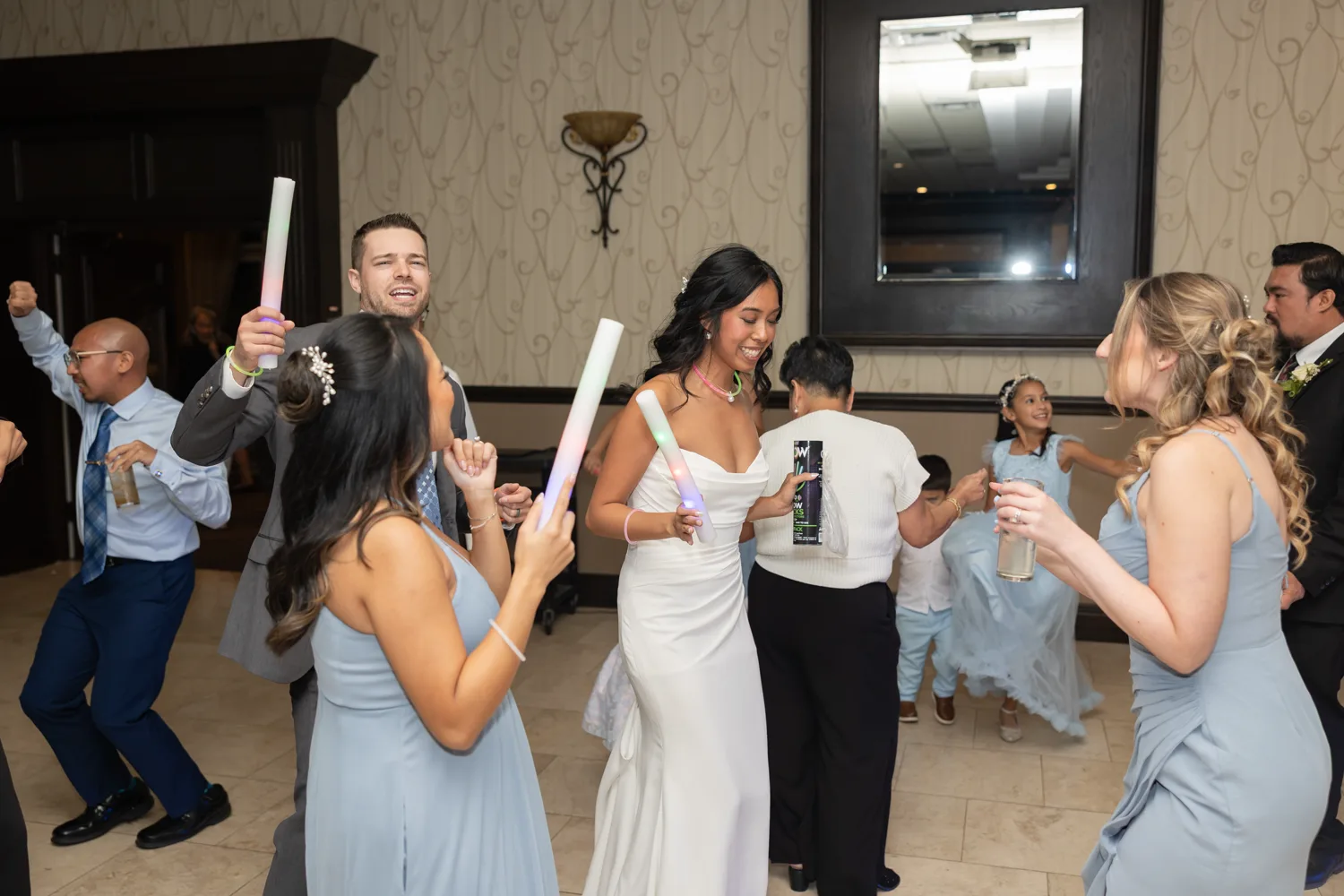

The Song Request QR Code: Yes or No?
You’ve seen them at weddings lately — a little sign on each table with a song request QR code. Guests scan it, type in a song, and it lands on the DJ’s screen. Sounds handy, right? But here’s the honest question every couple asks me: does it actually help the night, or does it quietly wreck the dance floor? The real answer is “it depends,” and the difference comes down to how it’s set up. Let’s walk through the yes, the no, and the smart middle ground for your Canton reception.
In this article
What a song request QR code actually does
Let’s start with the basics. A song request QR code is a scannable square that opens a simple form on a guest’s phone. They type a song title, hit send, and it pops up in a queue the DJ can see. No walking up to the booth, no shouting over the music.
On paper, it’s a neat idea. Shy guests who’d never approach the DJ can now toss in the song that would get them dancing. And you, the couple, get a peek at what your friends actually want to hear. More voices, less awkwardness — what’s not to love?
Well, a lot, if it’s handled badly. The tool itself is neutral. Whether it makes or breaks your floor depends entirely on the person reading those requests. That’s the part nobody puts on the little table sign, so let’s dig into both sides.
The case for saying yes
There’s a real upside here, so let’s give the “yes” its due. A QR code pulls requests out of the shadows. Some of your best floor-fillers will come from guests who’d never work up the nerve to walk over and ask in person.
It also makes guests feel included. When someone’s song gets played, they feel seen — and they dance harder for the rest of the night. That little dopamine hit spreads. Suddenly the whole table is invested in the music instead of watching from their chairs.
And it saves your DJ from a common headache: the person who stands at the booth for ten minutes listing songs while the floor waits. A quick scan-and-send keeps that energy moving. Handled well, it’s one more tool a sharp wedding DJ and MC can use to keep the room happy.
For a broader look at how couples are using digital tools at weddings now, The Knot’s take on song requests is a solid, balanced read that lines up with what I see in real rooms.
The case for saying no
Now the flip side, because it’s just as real. An open QR code with no filter is a recipe for chaos. Picture 30 requests flooding in at once — half of them clashing genres, a few totally wrong for the moment, maybe one that’s genuinely inappropriate.
Here’s the danger: a request queue can turn your DJ into a jukebox. Instead of reading the room and building energy, they’re just playing whatever pops up next. The floor lurches from a packed pop song to a random deep cut nobody knows, and the energy crashes. That’s the nightmare scenario.
There’s also the guest-feelings trap. If someone sends a request and it never plays, they might feel snubbed — even when skipping it was the right call. Without a plan, a helpful tool becomes a source of small tensions. That’s the “no” case in a nutshell.
A song request QR code doesn’t ruin or rescue a wedding — the DJ reading it does. The tool is only as smart as the hands it’s in.
Notice the pattern in both cases? Every problem traces back to filtering. An unfiltered queue is a liability. A filtered one is an asset. That single decision changes everything.
Key takeaway: A song request QR code is neither good nor bad on its own. With a DJ filtering requests live — playing the gems, skipping the floor-killers — it’s a real asset. Left wide open with no filter, it can flatten your dance floor fast.
Who filters the requests?
This is the whole ballgame. A request queue needs a gatekeeper, and that gatekeeper has to be your DJ — not the code, and definitely not the loudest guest. The requests are suggestions, not commands.
Here’s how I handle it. Every request that comes in gets weighed against two things: the current energy on the floor and your do-not-play list. A great request at the right moment? It goes in, and I’ll even give the guest a little shout-out. A song that would kill the vibe? It waits, or it quietly doesn’t happen.
That judgment call is exactly what you’re hiring a human for. A phone playlist can’t feel the room tighten up when the wrong song starts. A real DJ can, and adjusts in real time — you can read more wedding tips on live crowd reading in the blog, and my Canton wedding guide covers how the whole reception is steered.
The smart middle ground
So do you say yes or no? For most couples, the answer is a smart yes — with guardrails. You get the perks of guest input without handing over the wheel.
Here’s the setup I recommend. Turn on the QR code, but make it clear on the sign that requests are “suggestions the DJ may play.” That one word, may, sets the right expectation. Guests feel invited without expecting a guarantee, so nobody’s offended if their pick doesn’t land.
Then pair it with your do-not-play list ahead of time. Any banned song that comes through gets an automatic pass. Between that filter and live crowd reading, you get the best of both worlds: fresh ideas from your guests and a floor that never crashes — a balance the pros at Zola’s expert advice hub recommend for guest input, too. That’s the sweet spot.
Setting it up the right way
If you go for it, a few small choices make a big difference. First, decide when the code goes live. I like to open it after dinner, once dancing starts — not during the ceremony or toasts when it’s a distraction.
Second, keep the sign simple and kind. Something like, “Got a song that’ll get you dancing? Scan and send — the DJ will work in the best ones.” Warm wording keeps expectations friendly and realistic. Guests read the tone, not just the words.
Third, brief your DJ before the day. Walk through your must-plays, your do-not-plays, and how open you want the floor to be. When your DJ knows your taste, they can honor guest requests that fit your vibe and skip the ones that don’t. A quick chat ahead of time makes the whole night smoother.

The final verdict
So, yes or no? My honest answer: yes, if your DJ filters it live — and a hard no if they don’t. The tool is fine. The gatekeeper is everything. That’s the one line to remember.
Think of the QR code like a suggestion box, not a remote control. Your guests get a voice, your DJ keeps the wheel, and your floor stays packed. When those roles are clear, a request code is a small, fun bonus that makes people feel part of the party.
The bottom line is trust. Hire a DJ who reads the room and honors your list, and a QR code becomes a nice extra instead of a risk. Want to talk through the right setup for your night? Come meet your DJ and we’ll build a plan that keeps your guests happy and your floor full from the first song to the last.